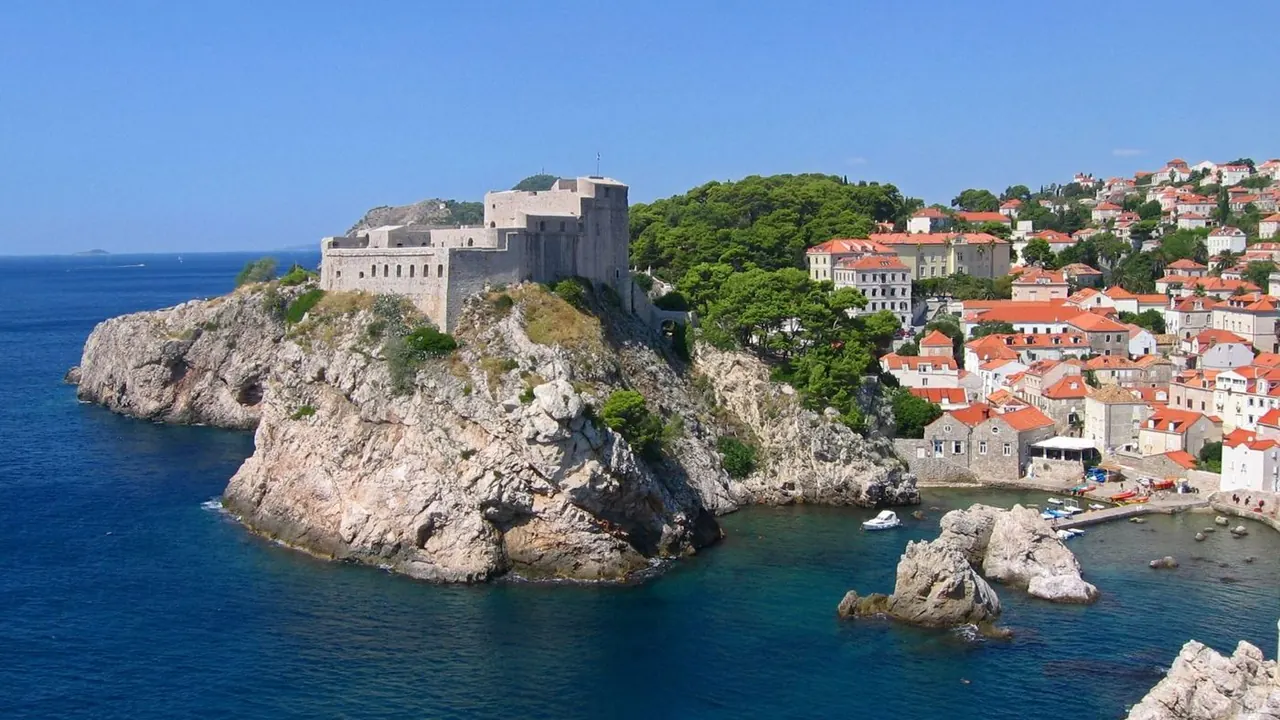
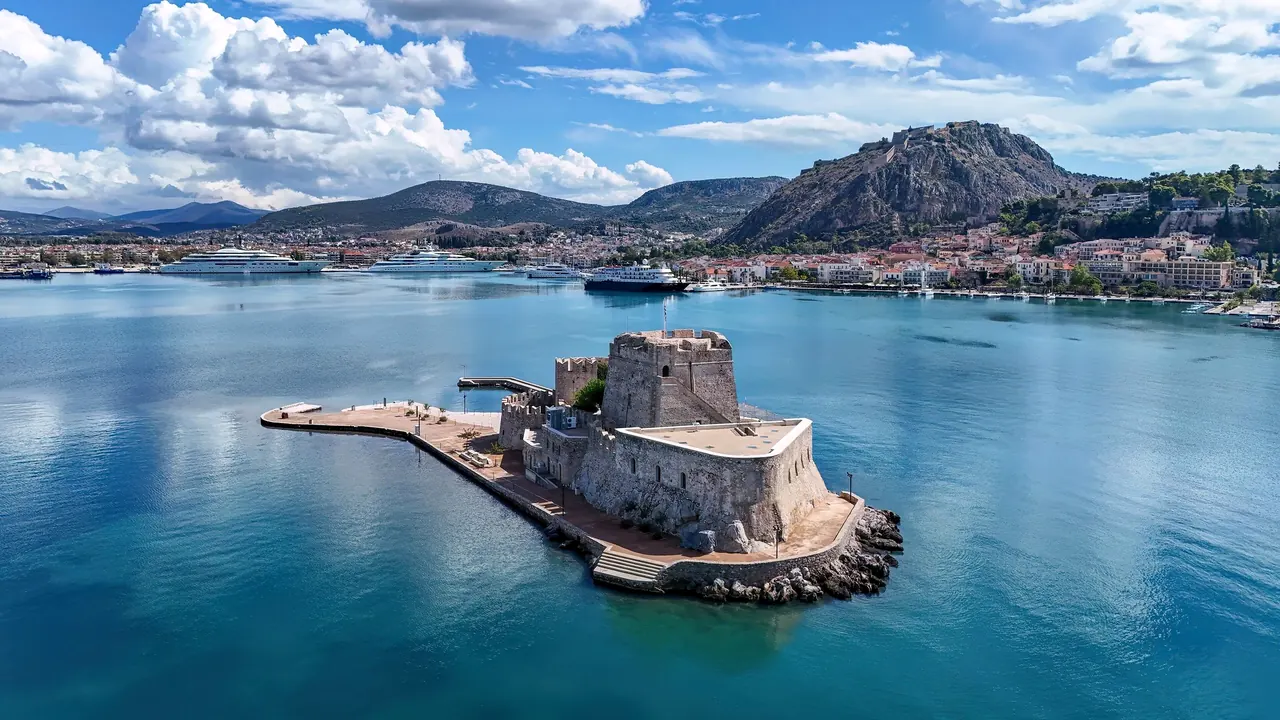
Photos: Dubrovnik by Natalia Semenova, CC BY 3.0, cropped; Nafplio by Giles Laurent, CC BY-SA 4.0, cropped.
Dubrovnik or Nafplio?
Our verdict in twelve categories, each scored against the same fixed benchmark cities, and the climate month by month, so you can choose for your trip.
Choose Dubrovnik for
- culture and sights
- getting around
- nature and the outdoors
Dubrovnik suits the traveller who wants one extraordinary walled city and the sea around it. The ramparts, the Stradun and the monasteries make a richer set of sights than Nafplio's. Swimming off the rocks and taking boats out to Lokrum and the Elafiti islands give a stay more variety on the water, and there are a few more places for a drink after dark. You pay for it, though. This is a costly place, and summer crowds in the narrow streets are part of the deal.
Choose Nafplio for
- prices
- day trips
- live music and the arts
Nafplio is the better choice for a slower, cheaper trip, and for anyone who sees the town as a base rather than the whole point. Its old town and Palamidi fill a couple of relaxed days. The real wealth lies a short drive away: Mycenae, Tiryns and the theatre at Epidaurus, with Corinth and the islands of Hydra and Spetses within reach. Hire a car, eat in tavernas at fair prices and accept that evenings end gently.
Scoreboard
Twelve categories on one fixed scale from 0 to 100. The shaded stretch is the gap between the two.
Your match
Pick a travel style or drag the sliders, and both match scores follow your weighting.
Too close to call, 1 point apart
Wins on culture and sights and getting around with your weighting.
Wins on prices and day trips with your weighting.
What matters to you?
Category by category
What the scores mean for a trip.
Beaches & swimming
Both look onto warm, clear water with pebble beaches, but Dubrovnik gives a summer stay more ways to swim. Swimmers drop in straight off the rocks below the seaward walls, at Banje and in the coves of Lapad and Babin Kuk. Boats then open up Lokrum, the quieter Elafiti bays and the sandy cove at Sunj on Lopud.
Nafplio's swimming is gentler and more modest. Arvanitia is a quick dip below the cliffs, Karathona's pine-backed bay offers sand 3km away, and Tolo has the sunbeds and tavernas. The sheltered gulf is calm, but the beaches are small and crowded on summer weekends.
Food & drink
Dubrovnik eats a little better, as long as you leave the Stradun. Ston's oysters and mussels, black risotto and pasticada, and the reds of the Peljesac peninsula are worth seeking out in the konobas of Lapad, Gruz and Konavle.
Nafplio's taverna cooking is steady rather than memorable. Gulf octopus, slow-cooked lamb and Nemea's agiorgitiko are good, and the gelato and loukoumades are a treat, but the busy squares lean on tourist menus. In both places the range stops at the local cuisine.
Culture & sights
Dubrovnik is the deeper visit. A full circuit of the walls, the Franciscan pharmacy, the Rector's Palace, the Dominican paintings and Fort Lovrijenac make up one of the most complete old towns in Europe. They easily fill two or three days.
Nafplio has a lovely old town of its own, with Venetian, Ottoman and neoclassical houses, plus Palamidi, the Bourtzi and the Mycenaean armour in the Archaeological Museum. Its history as Greece's first capital gives it weight, but the list in town is shorter and lighter.
Nightlife
Neither is a party town, but Dubrovnik gives a summer evening a bit more to do. You can watch the sunset from the bars cut into the rocks, then find wine bars in the lanes and a club inside the Revelin fortress.
Nafplio's evenings are a long dinner and then a drink on the harbour front or off Syntagma Square, with no real clubs at all. It livens up when Athenians arrive on summer weekends.
Nature & outdoors
Dubrovnik's setting is the more dramatic one: limestone mountains falling into an island-strewn sea. Mount Srd, kayaking out to Lokrum, the lakes of Mljet and cycling on the Elafiti islands give it more variety. Much of that variety is on or across the water.
Nafplio's outdoors starts at the edge of town, with the path around Akronafplia, the coastal trail to Karathona and limestone crags for climbers. The fir forests and gorges of Mainalo inland are a longer drive. In both places the summer heat pushes walking into spring and autumn.
Day trips
This is where Nafplio pulls clearly ahead. Tiryns, Mycenae and Epidaurus are all within forty minutes, so you can see one of the great clusters of the ancient world without moving hotel. Corinth, Nemea, Hydra, Spetses and Mystras extend the list further.
Dubrovnik's day trips have a different appeal: crossing borders. The Bay of Kotor and Perast in Montenegro, Trebinje and Mostar in Bosnia and Herzegovina, and Ston's walls closer to home make good days out. Summer queues at the borders can eat into them.
Good for families
The two are evenly matched for families, and both work best for a beach-centred stay. Dubrovnik offers more small adventures, with the cable car, boats to Lokrum and the aquarium in the St John fortress. But its stairs defeat pushchairs, and cruise-day crowds wear children out.
Nafplio is flatter and calmer underfoot. The harbour front suits an evening stroll, and the water at Karathona and Tolo is shallow. Beyond the castles and the boat to the Bourtzi, though, there is little aimed at children.
Getting around
Dubrovnik is easier without a car. City buses link Lapad, Babin Kuk and Gruz with the Pile gate, and ferries and taxi boats reach the islands and Cavtat. Even so, the steep stairways make walking between districts harder than the map suggests.
Nafplio's old town is flat and walkable end to end, but beyond it the buses are thin. Most visitors hire a car to reach the ancient sites and beaches, which means competing for parking in summer.
Shopping & style
Neither is a shopping destination, and an hour or two covers either. Dubrovnik's best buys are Konavle embroidery, coral and filigree jewellery, and figs and candied peel from the Gunduliceva Poljana market. In Nafplio you take home komboloi, Argolid olive oil, citrus preserves and Nemea wine, and its small galleries give the lanes a slightly more browsable feel.
Affordability
Nafplio is much easier on the wallet. Taverna meals and site fees are fair, and only weekend and high-summer rooms in the old-town mansions push costs up.
Dubrovnik is expensive by any Mediterranean measure. Rooms near the Old Town, meals on the main streets, the walls, the cable car and boat trips all add up. Staying in Lapad or Cavtat and coming in spring or autumn helps, but it never becomes cheap.
Live music & performing arts
Both come alive only in summer, and Nafplio's high point is the more memorable. Ancient Greek drama is performed at dusk in the theatre of Epidaurus, famous for its acoustics, and the town has its own summer classical music festival.
Dubrovnik's Summer Festival has a long pedigree, with theatre and concerts at Fort Lovrijenac and in the Rector's Palace atrium. Outside July and August, though, both towns offer only the occasional concert.
Wellness & relaxation
Neither has a bathing tradition, and the spas in both belong to larger hotels. The calm is different in kind. Dubrovnik is restful only away from the Old Town in high season, on the Elafiti islands or in Cavtat. Nafplio's slow harbour rhythm is calming in the town itself, and Loutraki's thermal water and the springs at Methana are within a drive.
When should you go?
Pick your month. The climate figures are measured averages, not a forecast.
Dubrovnik in July
Nafplio in July
Daytime high, °C
Rainfall in the month, mm
Where the figures come from
Dubrovnik has no rain gauge within 25 km of the centre, so its rainfall comes from a gridded climate dataset read at the city rather than from a gauge further away.
Dubrovnik's sunshine is measured 83 km from the centre, at Mostar.
Nafplio's temperatures are measured 89 km from the centre, at Kalamata Airport.
Nafplio has no rain gauge within 25 km of the centre, so its rainfall comes from a gridded climate dataset read at the city rather than from a gauge further away.
Temperature and rainfall are climate normals, averaged over the years shown. Dubrovnik: 1999-2020 (sunshine 1991-2020, rainfall 1991-2020) normals, Dubrovnik / Cilipi (15.3 km from centre). Nafplio: 1991-2020 normals, Kalamata Airport (88.8 km from centre).
Dubrovnik's dry, warm season is short. From June to August the days reach about 29°C, the sea is warm enough for long swims and rain is rare. The water is still pleasant in September, but the rain returns that month and builds into a very wet autumn and winter, with November the wettest month at about 179mm. April and May are the comfortable months for walking the walls and the steep lanes before the heat arrives.
Nafplio runs hotter, drier and sunnier all year. July and August reach about 32°C, which makes midday at Mycenae or Epidaurus hard work, and the town barely sees rain from May to August. Its swimming season lasts from June through September, and the sea is still around 23°C in October, when the days are mild and dry enough for the ancient sites. Winters are milder and less wet than Dubrovnik's, and the rain only sets in properly in November.
Which traveller are you?
For a beach and sun trip, Dubrovnik has the edge. You can swim off the rocks below the walls or at Banje, and taxi boats run to Lokrum, Lopud's sandy cove and Cavtat. Nafplio's beaches at Arvanitia, Karathona and Tolo are pleasant but smaller.
On a trip with a tight budget, Nafplio is far easier. Taverna meals, wine and site fees stay fair, and rooms in Tolo or outside the walls cost less. Dubrovnik is expensive in almost every way, from rooms to the walls and boat trips.
For travellers drawn to ancient Greece, Nafplio has no rival here. Tiryns, Mycenae's Lion Gate and the theatre at Epidaurus are all within an easy drive. In summer you can watch ancient drama performed where it was first staged.
Before you go
| Measure | Dubrovnik | Nafplio |
|---|---|---|
| Official language | Croatian | Greek |
| Currency | Euro (EUR) | Euro (EUR) |
| Sockets | CF230 V, 50 Hz | CF230 V, 50 Hz |
| Driving side | Right | Right |
| Time zone | UTC+1, UTC+2 in summer | UTC+2, UTC+3 in summer |
| Emergency number | 112 | 112 |
| Elevation | 10 m | 6 m |
| Main airport | Dubrovnik Ruđer Bošković Airport (DBV)16 km from centre76 non-stop destinations | Athens Eleftherios Venizelos International Airport (ATH)109 km from centre173 non-stop destinations |
| Public holidays this year | 14 days | 15 days |
By the numbers
| Measure | Dubrovnik | Nafplio |
|---|---|---|
| City population | 41,562 | 14,532 |
| People per km² | - | 433 |
| Museums within 10 km | 7 | 5 |
| UNESCO World Heritage sites within 50 km | 3 | 2 |
| Swim season, months above 21 °C | 5 months | 5 months |
Where else could you go?
Every comparison below shares a destination with this one, so you can follow Dubrovnik or Nafplio somewhere new.
- Kotorvs Dubrovnik
- Budvavs Dubrovnik
- Mostarvs Dubrovnik
- Athensvs Nafplio
- Sarajevovs Dubrovnik
- Splitvs Dubrovnik