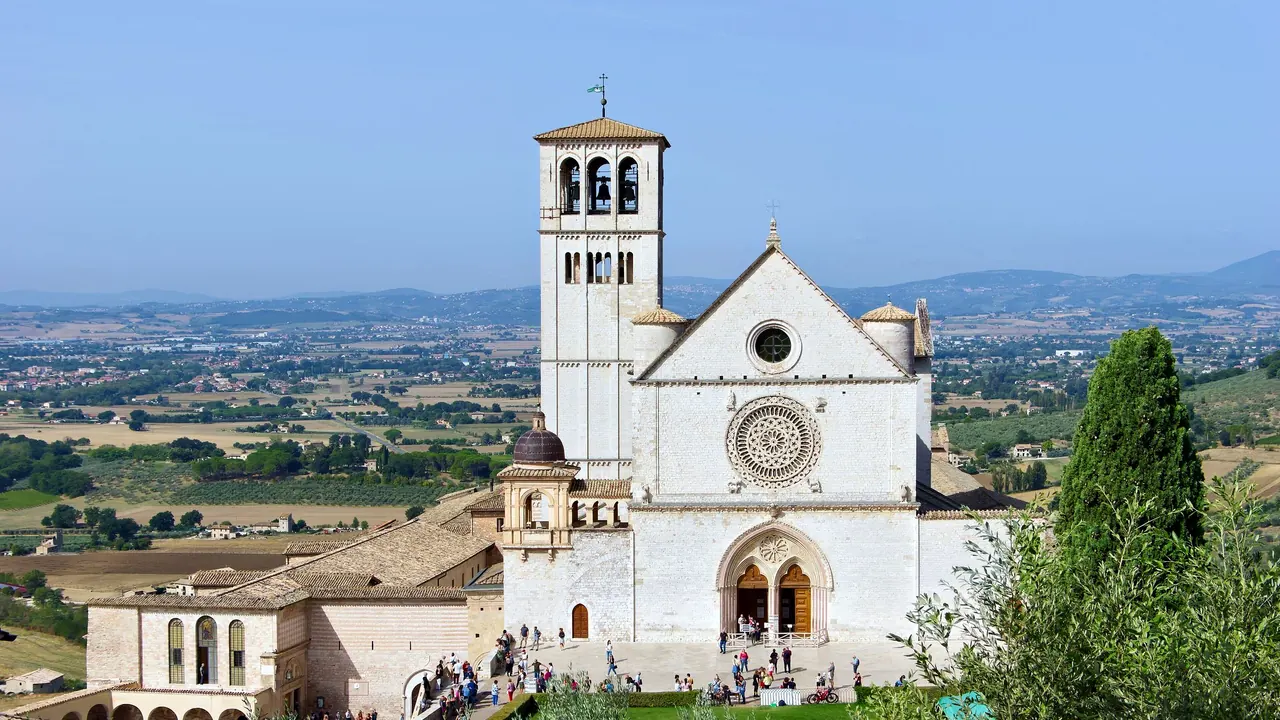
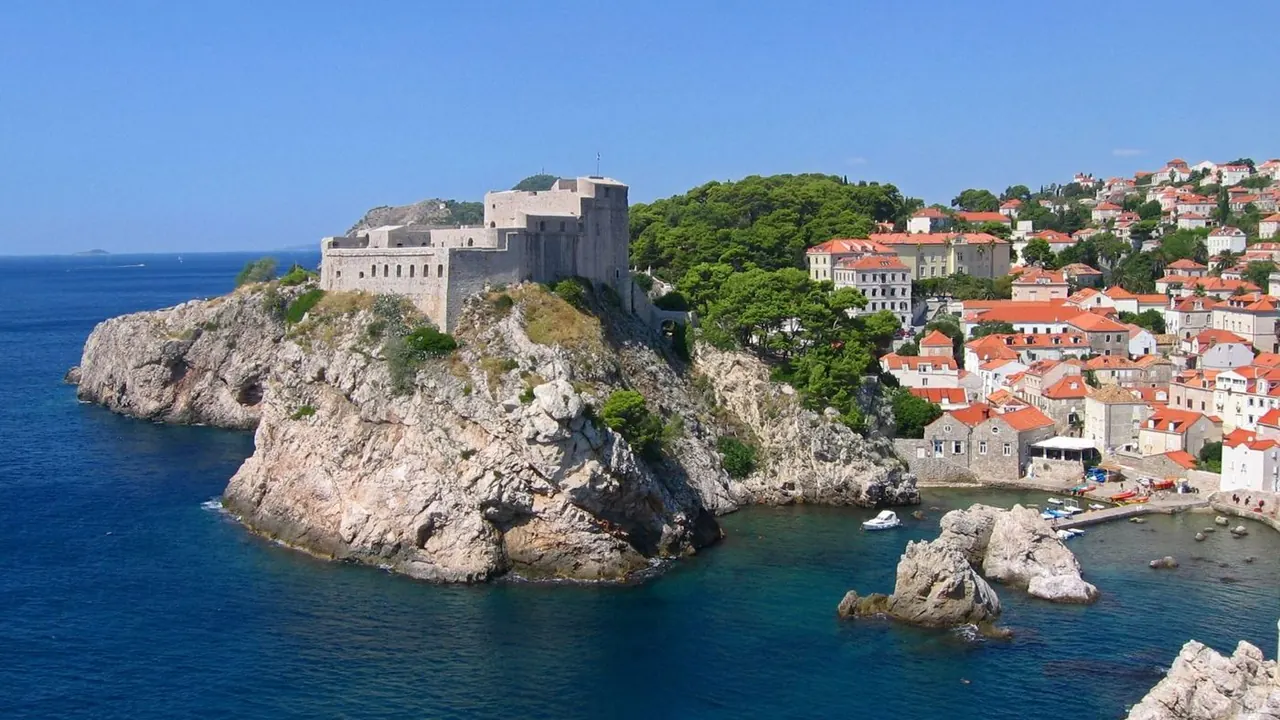
Photos: Assisi by Berthold Werner, CC BY-SA 4.0, cropped; Dubrovnik by Natalia Semenova, CC BY 3.0, cropped.
Assisi or Dubrovnik?
Our verdict in twelve categories, each scored against the same fixed benchmark cities, and the climate month by month, so you can choose for your trip.
Choose Assisi for
- prices
- day trips
- wellness
Assisi suits a slow, quiet trip built around art, faith and the Umbrian countryside. It is the better base for touring hill towns like Spello, Perugia, Gubbio and Orvieto, it costs noticeably less, and its silent evenings after the tour groups leave are the reason to come, not a drawback. Bring or hire a car to get the most from it.
Choose Dubrovnik for
- beaches
- nightlife
- families
Dubrovnik is the pick if you want the sea alongside the sights. Its walled Old Town matches Assisi for historic grandeur, but here the day can also include a swim off the rocks, a boat to Lokrum or the Elafiti islands, and a drink below the walls at sunset. It is the easier choice with children and for evenings out, but you pay far more for it, especially in summer.
Scoreboard
Twelve categories on one fixed scale from 0 to 100. The shaded stretch is the gap between the two.
Your match
Pick a travel style or drag the sliders, and both match scores follow your weighting.
Wins on prices and day trips with your weighting.
Wins on beaches and nightlife with your weighting.
What matters to you?
Category by category
What the scores mean for a trip.
Beaches & swimming
This is where the two are furthest apart. Assisi sits in the hills of central Italy, a couple of hours from either coast, and its only nearby swimming is at the small lido beaches of Lake Trasimeno, warm but shallow and a little murky. For most visitors a swim means a hotel or agriturismo pool.
Dubrovnik puts the clear Adriatic at the foot of its walls. People swim off the rocks below the seaward ramparts, at Banje and along the Lapad and Babin Kuk coves, and boats run to quieter water on Lokrum, the Elafiti islands and Cavtat. Expect pebble and concrete rather than sand, apart from the cove at Sunj on Lopud.
Food & drink
Both cuisines are simple and regional, and both have to be found away from restaurants feeding the crowds at the main sights. Assisi's cooking comes from the land: strangozzi with black truffle, Castelluccio lentils, wild boar, torta al testo and Monte Subasio olive oil, with Sagrantino from Montefalco to drink.
Dubrovnik has a slight edge in range and occasion. Its table is the sea, with black risotto, octopus salad and the oysters and mussels of Ston, plus Peljesac reds, and the morning market at Gruz adds something Assisi lacks altogether. A lunch at an oyster farm near Ston or a konoba in Konavle is the kind of meal worth planning a day around.
Culture & sights
These two are broadly level, but they reward very different kinds of looking. Assisi is about painting and pilgrimage: the stacked Basilica of San Francesco, with frescoes by Cimabue, Simone Martini, Lorenzetti and the Giotto cycle, sets the tone, and Santa Chiara, the Temple of Minerva and the Porziuncola fill out a calm two days.
Dubrovnik is about the city as a whole. The walk around its unbroken walls, the marble Stradun, the Rector's and Sponza palaces and Fort Lovrijenac form an intact ensemble whose story includes the 1667 earthquake and the 1991-92 siege. Its museums are small, and summer daytime crowds in the narrow streets are the price of seeing it.
Nightlife
Assisi has essentially none. Evenings are dinner, perhaps a glass of Sagrantino and a walk through empty floodlit lanes, and anyone wanting a bar crawl heads half an hour to Perugia.
Dubrovnik at least gives you a night out in summer: drinks at the bars cut into the rocks below the walls, small wine and cocktail bars off the Stradun and a club inside the Revelin fortress. It is a compact, seasonal scene that thins out from November to March, but it is a clear step up from Assisi.
Nature & outdoors
Assisi's outdoors is hill country. Monte Subasio rises straight behind the town, with a path through holm-oak woods to the Eremo delle Carceri and on to open summit meadows, while the valley below suits easy cycling between Spello, Bevagna and Montefalco, and the Sibillini make a bigger outing by car.
Dubrovnik offers more variety because it has both mountain and sea. You can climb Mount Srd, kayak around the walls to Lokrum, walk between villages on the Elafiti islands or spend a day among the saltwater lakes and pines of Mljet. In both places, summer heat makes spring and autumn the better seasons for walking.
Day trips
Assisi is the stronger base, because Umbria's best towns cluster tightly around it. Spello is minutes away, Perugia and Spoleto are an easy train ride, and Gubbio, Todi, Deruta, Montefalco and Orvieto, with Cortona and Montepulciano over the Tuscan border, make a different outing every day.
Dubrovnik's day trips are more exotic but more spread out. The Bay of Kotor in Montenegro, Trebinje and Mostar in Bosnia and Herzegovina add other countries to a stay, yet summer border queues can eat hours. Closer at hand, Cavtat, Ston and the Elafiti islands are simple boat or road trips.
Good for families
Dubrovnik is the easier choice with children. Calm, clear coves in Lapad, the boat to Lokrum with its peacocks, the cable car and the small aquarium in the St John fortress give them something beyond sightseeing, though stairs and summer crowds still make the Old Town tiring.
Assisi is safe and welcoming but offers children very little. Its great sights are hushed churches, its lanes are steep and stepped, and apart from the Rocca Maggiore and a walk on Monte Subasio, most families find themselves spending their days by a pool in the valley.
Getting around
Both are small, steep centres best explored on foot, so expect stairs either way. Assisi's advantage is the railway along the valley to Perugia, Spello, Foligno and Spoleto, although the station is 4km below the old town and the smaller hill towns really need a car.
Dubrovnik has no rail at all, but its car-free Old Town is linked to Lapad, Gruz and Babin Kuk by a simple bus network, and boats from Gruz and the Old Harbour handle the islands and Cavtat. The single coast road clogs at the Pile gate in summer.
Shopping & style
Neither is a shopping destination, and in both the streets near the sights are given over to souvenirs. In Assisi these are mostly religious, with rosaries and Tau crosses, but hand-woven Umbrian linens with Assisi embroidery, Deruta ceramics, truffle products and Sagrantino are worth seeking out. Dubrovnik's better buys are Konavle embroidery, coral and silver filigree, lavender, and the dried figs and candied orange peel sold at the Gunduliceva Poljana market.
Affordability
Assisi is clearly the cheaper stay. The basilicas and most churches cost nothing to enter, convent guesthouses offer plain, clean rooms at low prices, and valley agriturismi are good value, so only meals near the basilicas and feast-day hotel rooms carry a premium.
Dubrovnik is expensive by any Mediterranean standard, with summer rooms near the Old Town priced like a big Western European capital, and the walls, cable car and boat trips all charged separately. Staying in Lapad, Gruz or Cavtat and coming in spring or autumn helps, but it remains the costlier trip.
Live music & performing arts
Neither city has much of a year-round stage, so timing matters more than choice. Assisi's music is sacred: organ and choral concerts in the basilicas around religious feasts, and Calendimaggio in spring, when the town's two quarters compete in medieval costume and song. For opera or jazz you go to Perugia.
Dubrovnik's moment is high summer, when the Summer Festival, held since 1950, puts theatre, concerts and dance in open-air settings such as Fort Lovrijenac and the Rector's Palace atrium. Outside July and August there is little beyond occasional symphony and chamber concerts.
Wellness & relaxation
Assisi is the more restful of the two, though not because of spas. Its calm comes from the place itself: still mornings and evenings once the groups have gone, convent retreats and silent walks to the Eremo delle Carceri.
Dubrovnik's crowded summer Old Town is the opposite of restful, and its spas are hotel facilities in Lapad, Babin Kuk and towards Ploce. To unwind there, choose spring or autumn, or stay on the Elafiti islands or in Cavtat, where the pace follows the harbour.
When should you go?
Pick your month. The climate figures are measured averages, not a forecast.
Assisi in July
Dubrovnik in July
Daytime high, °C
Rainfall in the month, mm
Where the figures come from
Assisi's temperatures are measured 51 km from the centre, at Frontone.
Assisi has no rain gauge within 25 km of the centre, so its rainfall comes from a gridded climate dataset read at the city rather than from a gauge further away.
Dubrovnik has no rain gauge within 25 km of the centre, so its rainfall comes from a gridded climate dataset read at the city rather than from a gauge further away.
Dubrovnik's sunshine is measured 83 km from the centre, at Mostar.
Temperature and rainfall are climate normals, averaged over the years shown. Assisi: 1991-2020 normals, Frontone (50.5 km from centre). Dubrovnik: 1999-2020 (sunshine 1991-2020, rainfall 1991-2020) normals, Dubrovnik / Cilipi (15.3 km from centre).
Assisi has an inland climate with clear seasons. Winters are cold, with January highs around 7°C, and July reaches about 30°C, which makes the steep lanes and the climb up Monte Subasio hard going in the middle of the day. The best walking, in town and in the hills, is from April to early June and again in September and October. Rain builds through the autumn, though, and November is the wettest month.
Dubrovnik is milder in winter but much wetter, with roughly 179mm of rain in November, so the cool half of the year is often grey and damp. June to August is dry and very sunny. Rain returns in September, but the sea stays warm enough for swimming from June to early October and reaches about 25°C in July. High summer is equally hot in both places. For sightseeing with some swimming, Dubrovnik is best in late May, June and early September, while Assisi is at its finest in spring and early autumn.
Which traveller are you?
For a beach and sun trip, Dubrovnik is the only real choice. You can swim in clear Adriatic water every summer day without leaving the city. From Assisi, the nearest swim is a shallow lake 45 minutes away, so a pool is the realistic option.
On a trip on a tight budget, Assisi lets the money go much further, and the sightseeing and regional trains to nearby hill towns cost little. Dubrovnik can be done cheaply only with compromises, and it still ends up the dearer trip.
On a family trip with children, Dubrovnik is the better pick, because the sea turns sightseeing days into something children look forward to. Assisi suits older children who enjoy history, but younger ones will find several days of hushed churches and steep lanes long.
Before you go
| Measure | Assisi | Dubrovnik |
|---|---|---|
| Official language | Italian | Croatian |
| Currency | Euro (EUR) | Euro (EUR) |
| Sockets | CFL230 V, 50 Hz | CF230 V, 50 Hz |
| Driving side | Right | Right |
| Time zone | UTC+1, UTC+2 in summer | UTC+1, UTC+2 in summer |
| Emergency number | 112 | 112 |
| Elevation | 424 m | 10 m |
| Main airport | Perugia San Francesco d'Assisi – Umbria International Airport (PEG)9 km from centre17 non-stop destinations | Dubrovnik Ruđer Bošković Airport (DBV)16 km from centre76 non-stop destinations |
| Public holidays this year | 13 days | 14 days |
By the numbers
| Measure | Assisi | Dubrovnik |
|---|---|---|
| City population | 27,605 | 41,562 |
| People per km² | 147 | - |
| Museums within 10 km | 14 | 7 |
| UNESCO World Heritage sites within 50 km | 2 | 3 |
| Swim season, months above 21 °C | - | 5 months |
Where else could you go?
Every comparison below shares a destination with this one, so you can follow Assisi or Dubrovnik somewhere new.