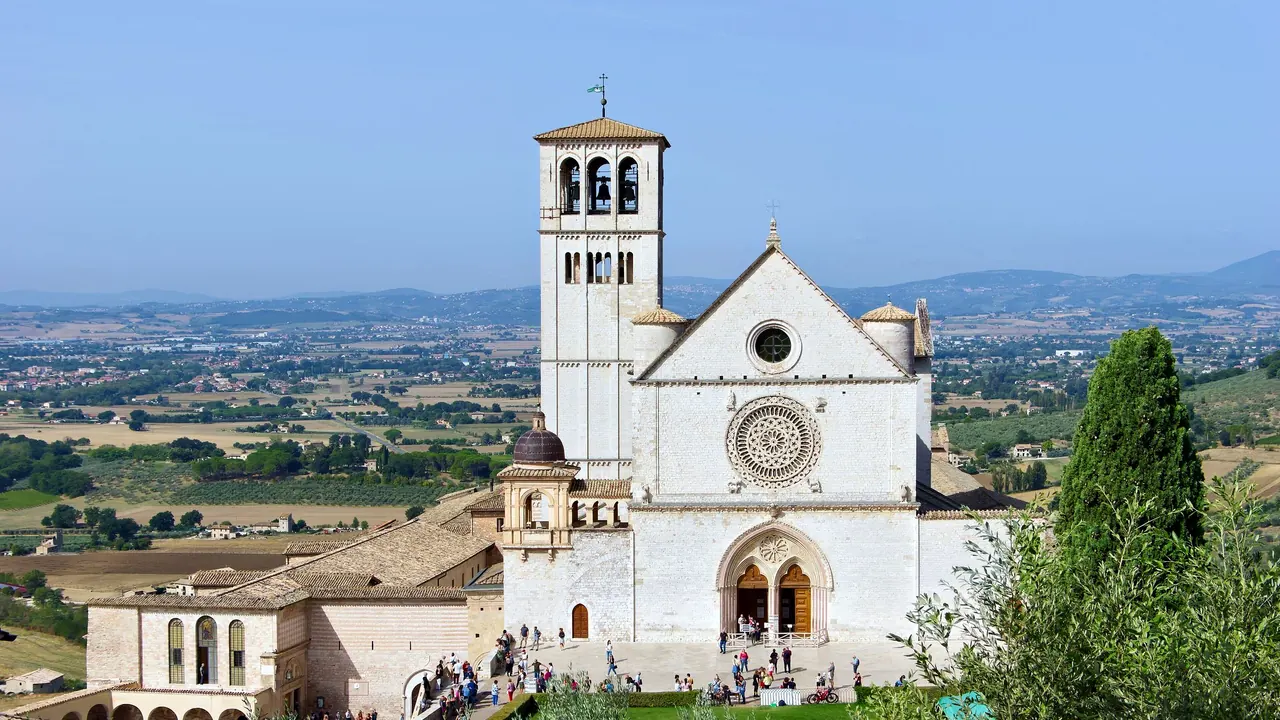
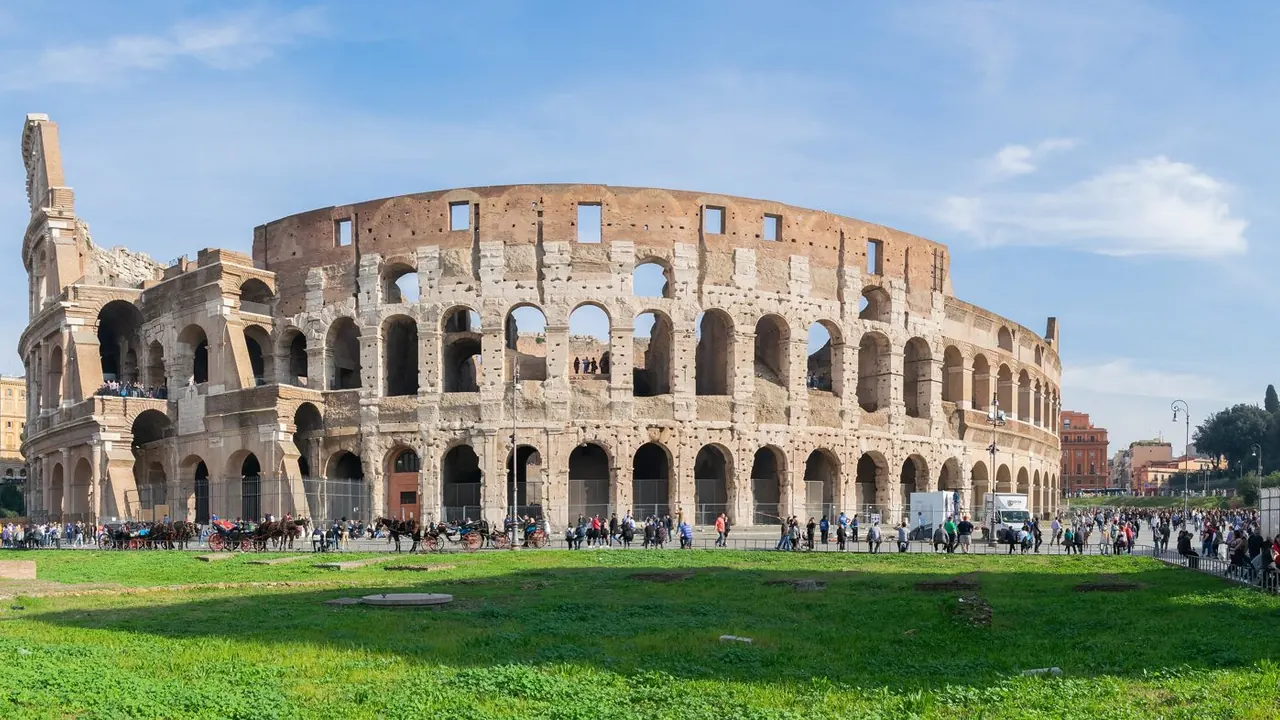
Photos: Assisi by Berthold Werner, CC BY-SA 4.0, cropped; Rome by Tournasol7, CC BY-SA 4.0, cropped.
Assisi or Rome?
Our verdict in twelve categories, each scored against the same fixed benchmark cities, and the climate month by month, so you can choose for your trip.
Choose Assisi for
- prices
- nature and the outdoors
Assisi suits a slower, quieter trip. It is one great basilica and a small stone town on a hillside, with Monte Subasio rising behind and the Umbrian hill towns all around. It is cheaper than Rome and very still once the tour groups have left. Choose it for a few calm days of frescoes, country walks and long rural dinners, or as a base for touring Umbria by car.
Choose Rome for
- nightlife
- shopping
- live music and the arts
Rome is the bigger trip by a wide margin. It has ancient ruins, the Vatican and the Baroque churches, a food culture of its own, opera at the Baths of Caracalla, serious shopping and evenings that go on late in the piazzas. It costs more and it is louder, but for a first visit to Italy, or for anyone who wants a week with plenty to see and do, Rome is the place.
Scoreboard
Twelve categories on one fixed scale from 0 to 100. The shaded stretch is the gap between the two.
Your match
Pick a travel style or drag the sliders, and both match scores follow your weighting.
Wins on prices and nature and the outdoors with your weighting.
Wins on nightlife and shopping with your weighting.
What matters to you?
Category by category
What the scores mean for a trip.
Beaches & swimming
Neither city is a beach destination, but only Rome gives you the sea at all. Ostia's dark volcanic sand is half an hour away by suburban train, and Fregene is a quieter choice to the north. In midsummer the water is warm, if rarely clear.
From Assisi either coast is about two hours away. The nearest swimming is the shallow, slightly murky lake water at Trasimeno's small lidos, so a hotel pool is more realistic there.
Food & drink
Assisi feeds you well within a narrow range: truffled strangozzi, Castelluccio lentils, torta al testo, Subasio olive oil and Sagrantino from Montefalco. The better meals are in side-lane trattorias and country agriturismi, away from the set menus near the basilica.
Rome is in another league for eating. It has its own repertoire of carbonara, cacio e pepe and Jewish-style artichokes, real street food, neighbourhood markets and artisan gelato. It also has far more places to choose from, as long as you head for Testaccio, Monti or Trastevere rather than the streets around the big sights.
Culture & sights
Assisi has one world-class monument, the double Basilica of San Francesco with its Giotto and Cimabue frescoes. Around it are Santa Chiara, the Temple of Minerva and the Rocca, and two unhurried days see it all.
Rome is on a different scale. The Colosseum, Forum and Pantheon are only the start, before the Vatican Museums, the Borghese and Caravaggios in ordinary churches. A week there still means leaving things out.
Nightlife
Assisi's evenings are a dinner, a glass of Sagrantino and a walk through empty floodlit lanes, and many visitors come for exactly that. Rome offers a proper night out. Aperitivo leads into crowded wine bars in Trastevere, cocktails in Monti and student drinking in San Lorenzo, though even Rome favours drinks outdoors over clubbing.
Nature & outdoors
The two are broadly level for the outdoors, but the experience is different. In Assisi the landscape starts at the town walls. Monte Subasio's woods and summit meadows are a walk from your door, and the valley below is gentle cycling country between Spello and Montefalco.
Rome's green spaces are man-made and historic: the villa parks and the ancient Appian Way, which makes a fine bike ride. Lakes, chestnut woods and mountain hiking start in the Alban Hills and the Apennines, which you reach by transport.
Day trips
Both are excellent bases, and Rome has the edge. Assisi sits in the middle of Umbria. Spello, Perugia and Spoleto are short train rides along the valley line, while Gubbio, Todi and the wine villages of Montefalco and Bevagna are much easier with a car.
Rome offers a wider spread of trips. Ostia Antica, Tivoli's villas and the Etruscan tombs at Tarquinia and Cerveteri are close by, and fast trains reach Florence and Naples. Orvieto works from either city, and Assisi itself makes a day out from Rome.
Good for families
Neither is built for children, but Rome copes better. It has gladiators, catacombs and the Bioparco and rowing boats in Villa Borghese to break up the sightseeing, plus a children's museum near Piazza del Popolo.
Assisi is safe and calm, but its sights are silent frescoed churches and its streets are steep steps. Families do best staying at a valley agriturismo with a pool and making short trips up into town.
Getting around
Both are cities for walking, with different problems. Assisi's centre takes twenty minutes end to end but climbs steeply, and the station is 4km below in the valley. Beyond the rail line you need a car for touring Umbria.
Rome's sights are spread across a larger, flatter centre, where cobbles, scooters and heat wear you out. The metro barely reaches the historic core, and a car is more trouble than it is worth.
Shopping & style
Assisi's shops are mostly rosaries and Franciscan souvenirs. Among them you can find hand-embroidered linen, Deruta ceramics, olive oil and truffle products. Rome is a real shopping city, with the fashion houses around the Spanish Steps, young designers and vintage in Monti, antique dealers on Via dei Coronari and the huge Porta Portese flea market on Sundays.
Affordability
Assisi is the cheaper stay. Its great churches cost nothing to enter, and convent guesthouses and valley farm stays keep rooms affordable outside the big feast days.
In Rome the main cost is a room in the centre, which is expensive, small and hard to find in spring and autumn, and the major museums charge substantial fees. Everyday eating is fair value in both cities as long as you avoid the tables nearest the sights.
Live music & performing arts
In Assisi the music is mostly sacred, with organ and choral concerts in the basilicas, plus the costumed Calendimaggio festival in spring. Rome has the Teatro dell'Opera, summer opera among the ruins of Caracalla, the Santa Cecilia orchestra and a long-running jazz club scene, so music lovers have something to hear on most nights.
Wellness & relaxation
Neither city has a bathing culture, and spa options are thin in both. The calm comes from different places. Assisi offers stillness itself: convent retreats, silent walks to the Eremo delle Carceri and empty lanes at dawn.
Rome is noisy, but it does have real thermal water nearby. The Acque Albule pools are at Bagni di Tivoli, and there are open-air hot springs around Viterbo. In the city, the villa gardens and the Aventine are the places to find some quiet.
When should you go?
Pick your month. The climate figures are measured averages, not a forecast.
Assisi in July
Rome in July
Daytime high, °C
Rainfall in the month, mm
Where the figures come from
Assisi's temperatures are measured 51 km from the centre, at Frontone.
Assisi has no rain gauge within 25 km of the centre, so its rainfall comes from a gridded climate dataset read at the city rather than from a gauge further away.
Rome's sunshine is measured 31 km from the centre, at Vigna Di Valle.
Temperature and rainfall are climate normals, averaged over the years shown. Assisi: 1991-2020 normals, Frontone (50.5 km from centre). Rome: 1991-2020 normals, Roma / Ciampino (15.1 km from centre).
Assisi sits inland and higher up, so it is cooler than Rome all year. Winter afternoons in Assisi reach only about 7°C in January, while Rome stays mild enough for sightseeing in a coat. Spring and early autumn suit both cities best for walking. In Assisi that means May and September, and October is fine for hiking on Subasio. Rome stays pleasant a little longer at both ends of the season.
High summer is hot in both. Rome reaches about 31°C in July and August, with long, very sunny days and the sea at about 25°C, which is the only time a swim at Ostia really works. Assisi is a degree or two cooler, though its steep lanes still feel hard work at midday. Rain sets in from September in both cities and peaks in November, heavier in Rome at about 114mm. July is the driest month in each.
Which traveller are you?
On a food and nightlife trip, Rome is the clear choice. It has the four Roman pastas, supplì and pizza al taglio, and Testaccio's market, followed by aperitivo and late wine bars in Trastevere and Monti. Assisi is quiet by eleven, and Perugia is the nearest place with nightlife.
For a trip on a tight budget, Assisi stretches the money further. Its basilicas are free, convent guesthouses offer simple rooms, and valley agriturismi are good value. Rome's centre is expensive for rooms, and the Vatican, Colosseum and Borghese all charge for entry.
On an outdoors trip, Assisi lets you walk straight out of town onto Monte Subasio, up to the Eremo delle Carceri and the summit meadows, or cycle the valley to Spello and Bevagna. Rome's outdoors means park rides on the Appian Way and trips out to the hills.
Before you go
| Measure | Assisi | Rome |
|---|---|---|
| Official language | Italian | Italian |
| Currency | Euro (EUR) | Euro (EUR) |
| Sockets | CFL230 V, 50 Hz | CFL230 V, 50 Hz |
| Driving side | Right | Right |
| Time zone | UTC+1, UTC+2 in summer | UTC+1, UTC+2 in summer |
| Emergency number | 112 | 112 |
| Elevation | 424 m | 21 m |
| Main airport | Perugia San Francesco d'Assisi – Umbria International Airport (PEG)9 km from centre17 non-stop destinations | Rome–Fiumicino Leonardo da Vinci International Airport (FCO)23 km from centre242 non-stop destinations |
| Public holidays this year | 13 days | 13 days |
By the numbers
| Measure | Assisi | Rome |
|---|---|---|
| City population | 27,605 | 2,748,109 |
| People per km² | 147 | 2,135 |
| Museums within 10 km | 14 | 178 |
| UNESCO World Heritage sites within 50 km | 2 | 8 |
| Swim season, months above 21 °C | - | 5 months |
Where else could you go?
Every comparison below shares a destination with this one, so you can follow Assisi or Rome somewhere new.