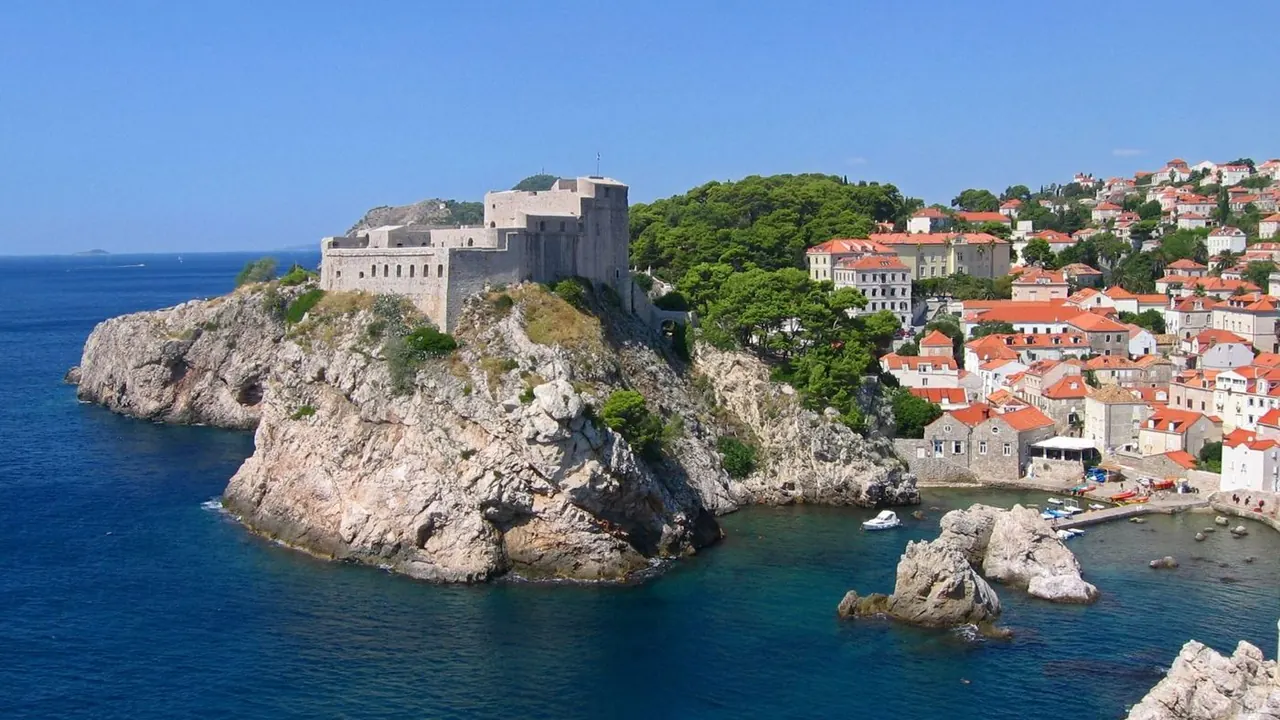
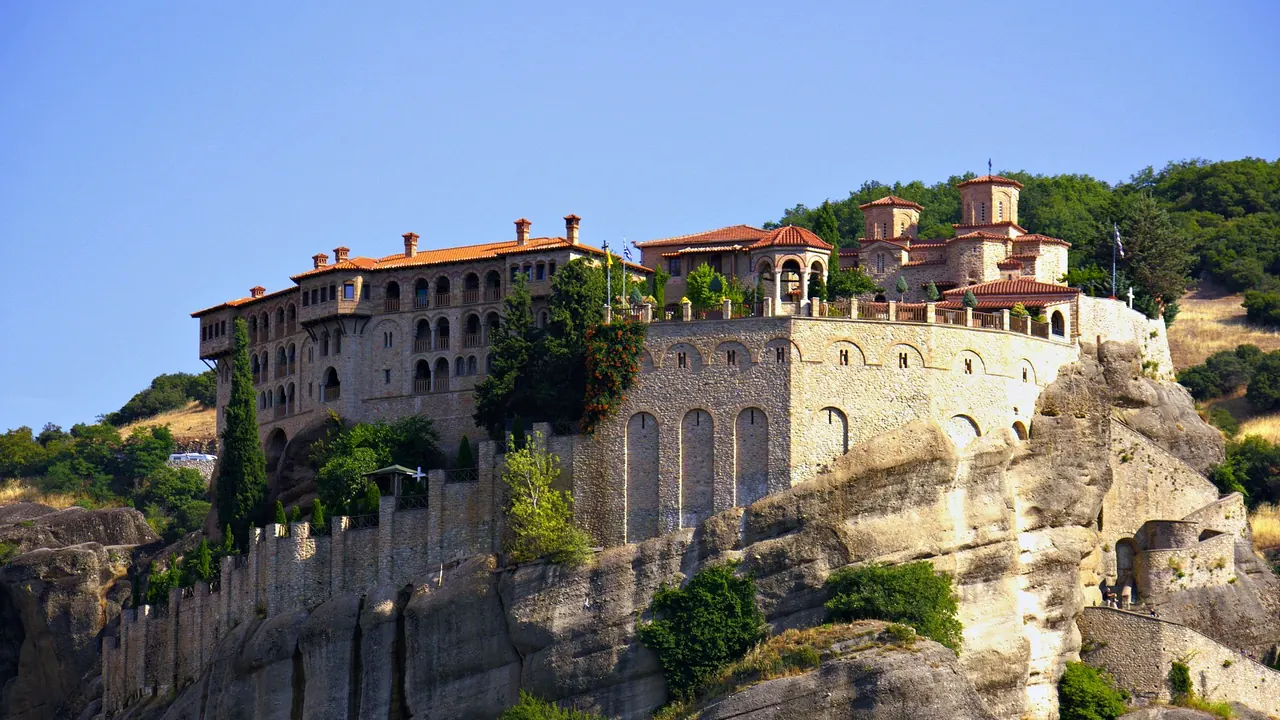
Photos: Dubrovnik by Natalia Semenova, CC BY 3.0, cropped; Kalambaka by José Barbosa, Pexels License.
Dubrovnik or Kalambaka?
Our verdict in twelve categories, each scored against the same fixed benchmark cities, and the climate month by month, so you can choose for your trip.
Choose Dubrovnik for
- beaches
- nightlife
- getting around
Dubrovnik suits a summer trip by the sea with a famous old town to explore. Walled streets and palaces, swimming off the rocks, boats out to the islands and a day out to Kotor and Perast in Montenegro all fit into one stay, with a drink overlooking the water in the evening. It is the better choice for couples and families who want swimming, sightseeing and a little evening life in the same place, as long as they accept high prices and crowded streets in high season.
Choose Kalambaka for
- prices
- nature and the outdoors
Travellers who come for the landscape will be happier in Kalambaka. The monasteries of Meteora stand on rock pillars directly behind the town, and footpaths, climbing routes and the Pindos forests all start from there. It costs far less and is much quieter than Dubrovnik. There is no sea and almost nothing to do after dinner, though, so it works best as a stop of a couple of nights on a longer tour of Greece.
Scoreboard
Twelve categories on one fixed scale from 0 to 100. The shaded stretch is the gap between the two.
Your match
Pick a travel style or drag the sliders, and both match scores follow your weighting.
Wins on beaches and nightlife with your weighting.
Wins on prices and nature and the outdoors with your weighting.
What matters to you?
Category by category
What the scores mean for a trip.
Beaches & swimming
This is not a close call. Dubrovnik is a real swimming destination. People swim from pebble coves and concrete platforms at Banje, Lapad and below the seaward walls, and quieter bays, including the sandy cove at Sunj on Lopud, are a short boat ride away.
Kalambaka is on the edge of the Thessalian plain, well inland, so swimming means a hotel pool or a cold mountain river in the Pindos.
Food & drink
Dubrovnik eats better, as long as you avoid the Old Town's tourist menus. Ston oysters, black risotto and Peljesac reds at a konoba in Lapad or Konavle are a step above most meals in Kalambaka.
Kalambaka offers heavier mountain food: grilled lamb, bean soups, pies and tsipouro with meze, usually at a table with a view of the rocks at dusk. It is honest and filling, but every taverna serves much the same menu.
Culture & sights
Both have a single main attraction, but Dubrovnik's is broader. A whole walled city of palaces, monasteries and churches, with Fort Lovrijenac and the Mount Srd museum, fills two or three days.
Kalambaka's culture is almost entirely the Meteora monasteries: frescoed chapels, refectories and icon collections on top of the pillars, reached by steps cut into the rock. They are extraordinary, but once you have seen them the plain modern town offers little more beyond its Byzantine church.
Nightlife
Neither is a place for a big night out, but Dubrovnik at least has evenings worth staying up for. In summer there are sunset drinks at the bars cut into the rocks, wine bars in the lanes off the Stradun and a club inside the Revelin fortress.
Kalambaka's evenings end with dinner and perhaps a drink on the central square. Anyone wanting more has to drive half an hour to the student bars in Trikala.
Nature & outdoors
Kalambaka is the stronger place for being outdoors, because the landscape is right at the town's edge. Footpaths lead from the back streets up between pillars around 400m high, climbers come for the long conglomerate routes, and the Pindos forests and the Aspropotamos valley are a short drive west.
Dubrovnik's nature is coastal and more about views. You can kayak around the walls, ride the cable car up Mount Srd, and visit the saltwater lakes of Mljet and the walking paths on the Elafiti islands.
Day trips
Dubrovnik's location near the borders gives it more varied day trips. Kotor and Perast in Montenegro, and Trebinje or Mostar in Bosnia, add whole different countries to the trip, and Cavtat and the Elafiti islands are easy by boat. Summer queues at the borders are the main drawback.
From Kalambaka the trips are into mountain Greece: Trikala's old Varousi quarter, the smoked cheeses of Metsovo, and Ioannina's lakeside castle. All of them are much easier with a car.
Good for families
Dubrovnik gives children more to do. There are calm coves in Lapad, boat rides to Lokrum, the cable car, an aquarium and the walls themselves, though the stairs and summer crowds are hard going with a pushchair.
In Kalambaka, older children may love the trails or a beginners' climbing session. Younger ones tend to tire of long flights of steps, quiet monastery interiors and dress codes, so one or two nights is usually enough.
Getting around
Dubrovnik is easier without a car. A simple bus network connects Lapad, Gruz and Ploce to the Pile gate, and taxi boats cover the islands, but the steep stairways make walking between districts tiring.
Kalambaka is flat and quick to cross on foot, and unlike Dubrovnik it has a rail link towards Athens and Thessaloniki. The problem is getting up to the monasteries several kilometres above town, where buses are infrequent. Most visitors end up hiring a car, taking taxis or joining a tour.
Shopping & style
Neither is a shopping destination. Dubrovnik has slightly more worth taking home: Konavle embroidery, silver filigree and candied orange peel from the Gunduliceva Poljana market. In Kalambaka the choice comes down to painted icons, honey, herbs and tsipouro, some of it sold by the monasteries themselves.
Affordability
Kalambaka is much cheaper. Guesthouse rooms, taverna meals and monastery entry fees all cost little, and prices only rise at hotels facing the rocks or over Orthodox Easter.
In summer, Dubrovnik charges what a Western European capital would for rooms near the Old Town. The walls, the cable car and boat trips add up quickly, and even staying out in Gruz or visiting in spring only partly reduces the cost.
Live music & performing arts
Dubrovnik has something to offer here, though only in season. The Summer Festival in July and August puts theatre, concerts and dance on stage at Fort Lovrijenac and in the Rector's Palace atrium, and the symphony orchestra plays through the year.
Kalambaka has almost nothing beyond a summer folk evening or a taverna musician. Byzantine chant at a monastery service is moving, but it is worship rather than a performance.
Wellness & relaxation
The two are broadly level. Neither has a bathing tradition, and spa facilities in both are limited to a few hotels. The difference lies in where to find calm: in Dubrovnik it means leaving the Old Town for Cavtat or the Elafiti islands, while in Kalambaka the town itself is quiet, sleeps early and has slow mornings with the light on the rocks.
When should you go?
Pick your month. The climate figures are measured averages, not a forecast.
Dubrovnik in July
Kalambaka in July
Daytime high, °C
Rainfall in the month, mm
Where the figures come from
Dubrovnik has no rain gauge within 25 km of the centre, so its rainfall comes from a gridded climate dataset read at the city rather than from a gauge further away.
Dubrovnik's sunshine is measured 83 km from the centre, at Mostar.
Kalambaka's temperatures are measured 68 km from the centre, at Larissa Airport.
Kalambaka's station stands 164 m below the city centre, so the centre is likely a little cooler than the figures say.
Kalambaka has no rain gauge within 25 km of the centre, so its rainfall comes from a gridded climate dataset read at the city rather than from a gauge further away.
Temperature and rainfall are climate normals, averaged over the years shown. Dubrovnik: 1999-2020 (sunshine 1991-2020, rainfall 1991-2020) normals, Dubrovnik / Cilipi (15.3 km from centre). Kalambaka: 1991-2020 normals, Larissa Airport (68.1 km from centre).
Dubrovnik's swimming season runs from June to early October. The sea warms to about 26°C in August, and the summer is hot but not punishing. Spring and late September are better for walking the walls and the Old Town in comfort. Rain returns in September and builds through the autumn, and November and December are the wettest months, with 179mm and 162mm. Winter is mild but grey and damp.
Kalambaka is inland and has stronger extremes. July reaches about 34°C, too hot for the exposed trails between the rocks, while winter highs are close to Dubrovnik's but with noticeably less rain. April, May and late September into October are the best months, warm and sunny enough for hiking around Meteora without the summer heat. In midsummer the two places swap roles: Dubrovnik is at its best, while Kalambaka is at its hardest going.
Which traveller are you?
For a beach and sun trip, Dubrovnik is the obvious choice. It has clear Adriatic water, swimming off the rocks below the walls, and boats to Lokrum and the Elafiti islands. Kalambaka is more than two hours from the sea, so a pool is the only option.
On an outdoors trip, Kalambaka has the edge. You can walk from your hotel up old monks' paths between the Meteora pillars, climb bolted routes on the rock, and head west for rafting and fir forests in the Pindos. Dubrovnik's sea kayaking and island walks are good, but the setting is gentler.
On a tight budget, Kalambaka goes much further. Family guesthouses, generous taverna meals and small monastery entry fees keep costs low. Dubrovnik is the most expensive place in Croatia, and even staying in Lapad or Gruz only takes the edge off.
Before you go
| Measure | Dubrovnik | Kalambaka |
|---|---|---|
| Official language | Croatian | Greek |
| Currency | Euro (EUR) | Euro (EUR) |
| Sockets | CF230 V, 50 Hz | CF230 V, 50 Hz |
| Driving side | Right | Right |
| Time zone | UTC+1, UTC+2 in summer | UTC+2, UTC+3 in summer |
| Emergency number | 112 | 112 |
| Elevation | 10 m | 237 m |
| Main airport | Dubrovnik Ruđer Bošković Airport (DBV)16 km from centre76 non-stop destinations | Thessaloniki Macedonia International Airport (SKG)146 km from centre90 non-stop destinations |
| Public holidays this year | 14 days | 15 days |
By the numbers
| Measure | Dubrovnik | Kalambaka |
|---|---|---|
| City population | 41,562 | 8,372 |
| People per km² | - | 4,925 |
| Museums within 10 km | 7 | 0 |
| UNESCO World Heritage sites within 50 km | 3 | 1 |
| Swim season, months above 21 °C | 5 months | - |
Where else could you go?
Every comparison below shares a destination with this one, so you can follow Dubrovnik or Kalambaka somewhere new.
- Kotorvs Dubrovnik
- Budvavs Dubrovnik
- Mostarvs Dubrovnik
- Sarajevovs Dubrovnik
- Thessalonikivs Kalambaka
- Splitvs Dubrovnik