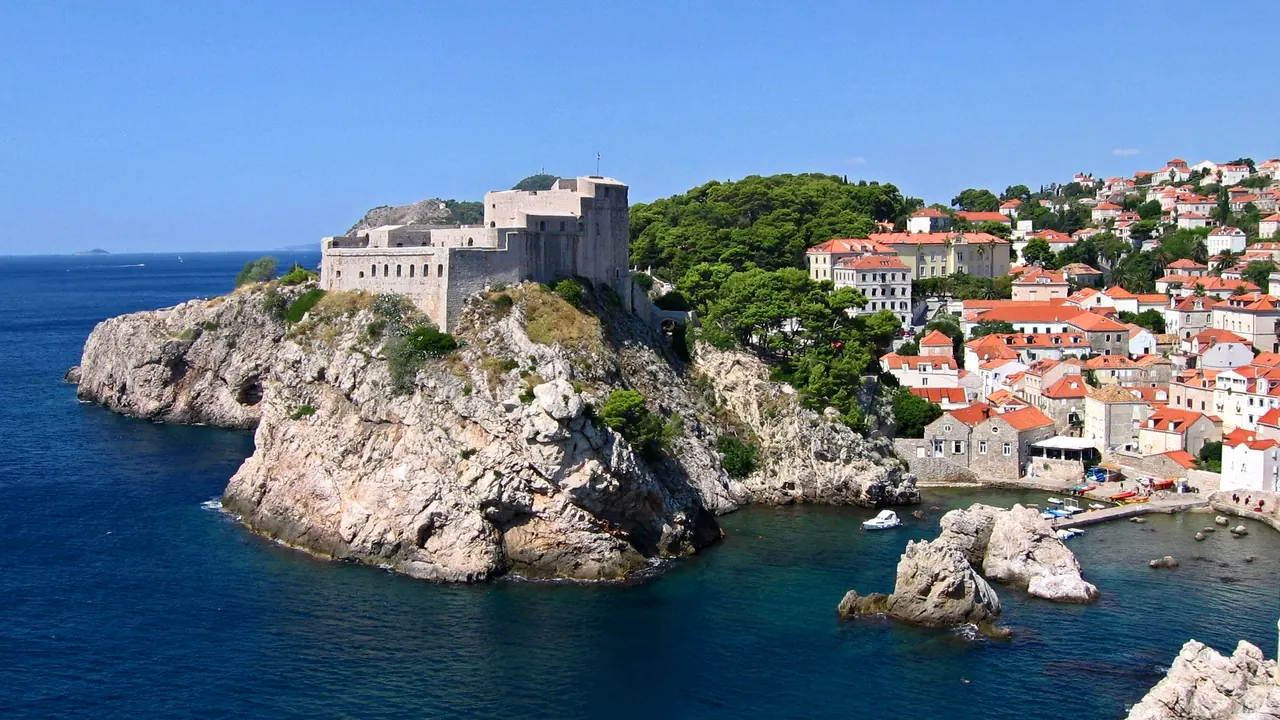
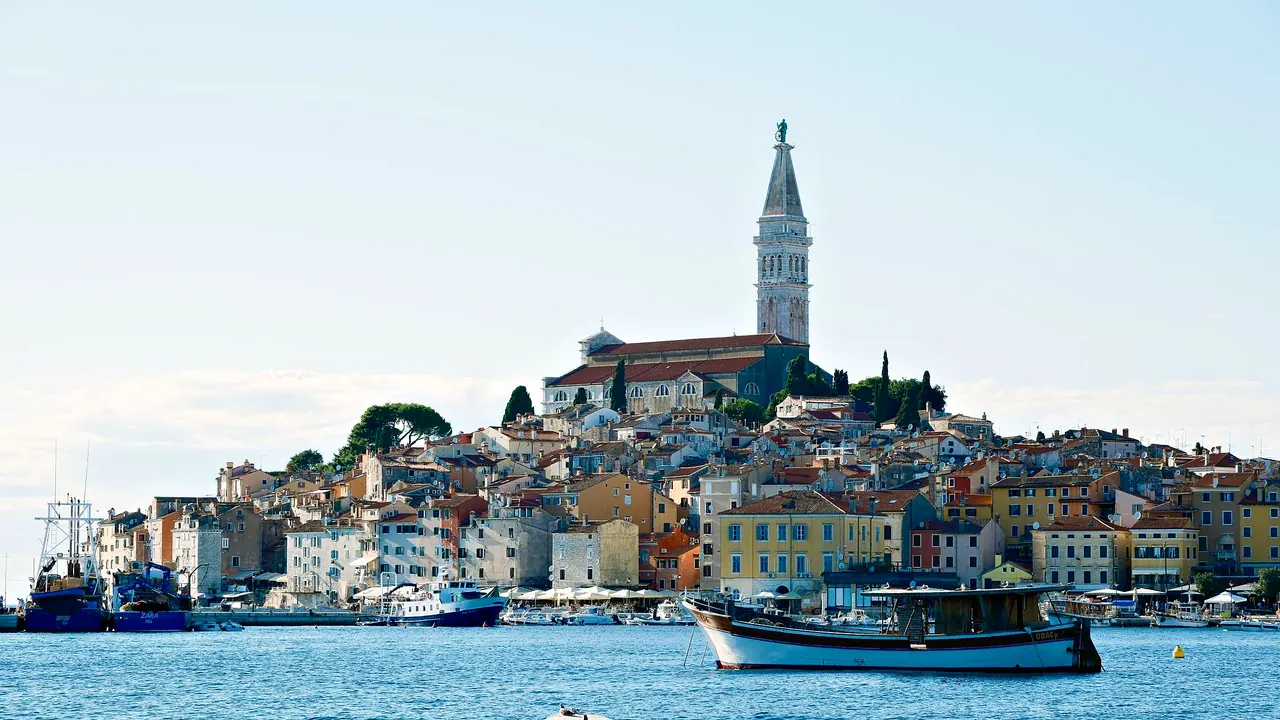
Photos: Dubrovnik by Natalia Semenova, CC BY 3.0, cropped; Istria by Ramon Karolan, Pexels License.
Dubrovnik or Istria?
Our verdict in twelve categories, each scored against the same fixed benchmark cities, and the climate month by month, so you can choose for your trip.
Choose Dubrovnik for
- getting around
- beaches
- nature and the outdoors
Dubrovnik suits a traveller who wants one extraordinary walled town at the heart of the trip, with the sea right below it and boats out to Lokrum and the Elafiti islands. You don't need a car, the sights fit into a few days, and Montenegro's Bay of Kotor makes a memorable outing. In return you accept high costs, summer crowds and food that takes some seeking out.
Choose Istria for
- food and drink
- families
- prices
Istria is the better choice for a longer, slower trip with a car. Roman Pula, Venetian Rovinj and the hill towns of the interior fill the days, and truffles, olive oil and Malvazija sit at the centre of them. It is easier on families and on budgets, with campsites, resort villages and shallow bays near Medulin, and it suits people who would rather move between places than stay in one.
Scoreboard
Twelve categories on one fixed scale from 0 to 100. The shaded stretch is the gap between the two.
Your match
Pick a travel style or drag the sliders, and both match scores follow your weighting.
Wins on getting around and beaches with your weighting.
Wins on food and drink and families with your weighting.
What matters to you?
Category by category
What the scores mean for a trip.
Beaches & swimming
Both offer clear water and swimming from rocks and pebbles rather than sand, so pack water shoes for either. Dubrovnik's swimming is close at hand: the rocks below the walls, Banje beach and the Lapad coves. Lokrum, the Elafiti islands and Lopud's sandy Sunj cove are a boat ride away.
Istria spreads its swimming along a much longer coast. The wild coves of the Kamenjak cape are the highlight, Medulin has some rare shallow bays, and Poreč and Umag have easy resort shorelines. Reaching the best spots usually means driving rather than walking or taking a boat.
Food & drink
Food is where Istria pulls well clear. Inland around Motovun and Buzet you find truffles, boškarin beef and olive oils among the finest anywhere. The coast adds Lim Bay oysters and good fish restaurants in Rovinj and Novigrad, and cellar tastings of Malvazija and Teran become part of the day.
Dubrovnik's Dalmatian cooking is good but narrow: grilled fish, black risotto, Ston oysters and Pelješac reds. Many Old Town tables are aimed at day crowds, so eating well means heading out to the konobas of Lapad, Gruž or Konavle.
Culture & sights
Both have a deep stone heritage, but in very different shapes. Dubrovnik is a single complete walled town. You walk the walls, then the Stradun past the Rector's Palace and the Franciscan monastery, all within a few compact days, though summer daytime crowds are the cost.
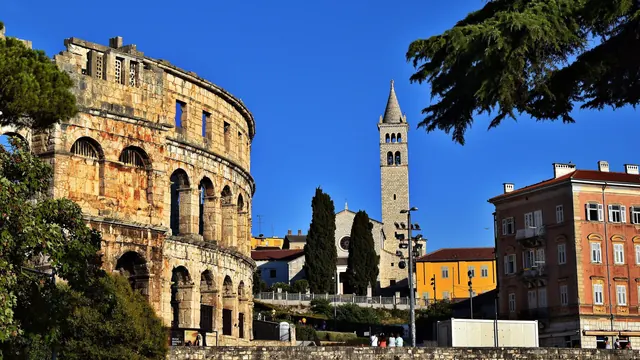
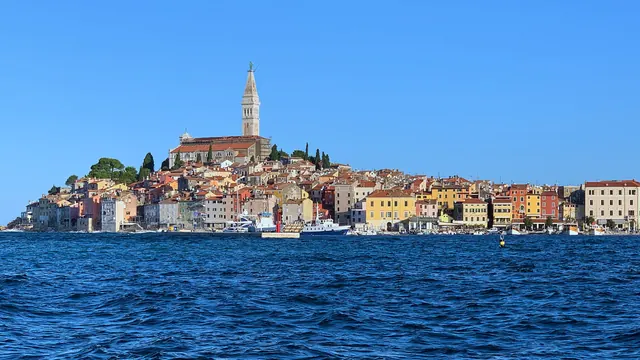
Istria's sights are scattered across Roman, Byzantine and Venetian layers: Pula's Arena, the gold mosaics of the Euphrasian Basilica in Poreč, Rovinj on its near-island and hill towns such as Motovun and Hum. Seeing them takes longer and means travelling between places, but the reward is more variety.
Nightlife
A night out in Dubrovnik stays within one small patch of the city: a sunset drink at the bars cut into the rocks below the seaward walls, then the wine and cocktail bars in the lanes off the Stradun, with a club inside the Revelin fortress for anyone who wants to dance. From November to March most of it closes and the Old Town is quiet by midnight.
Istria spreads its evenings across several towns instead. Rovinj's waterfront and Poreč's old town fill with terraces on summer nights, the Medulin coast adds beach bars and seasonal clubs, and Pula, a port city with students, keeps bars going around the Arena all year. Serious clubbers will be disappointed in either.
Nature & outdoors
Dubrovnik's outdoors is dramatic and tied to the sea: steep limestone above an island-scattered coast, the climb up Mount Srd, kayaking round the walls and, further out, the saltwater lakes and pine forest of Mljet.
Istria's landscape is softer, with red-earth vineyards, olive groves and oak valleys. Its strength is cycling, above all on the old Parenzana railway line, with hiking on Učka and windsurfing off Kamenjak. In both places, spring and autumn suit walking better than midsummer.
Day trips
Istria has the richer choice, because the region itself is a map of day trips. The hill towns, Rovinj, Poreč and the Brijuni islands are all close. Just beyond it, Piran, Trieste, the Postojna caves and even Ljubljana are within a couple of hours.
Dubrovnik's outings are fewer but distinctive, with two other countries nearby: the Bay of Kotor and Perast in Montenegro, and Trebinje and Mostar in Bosnia and Herzegovina. Summer border queues can stretch those days badly, so the easy hops are Cavtat, Ston and the Elafiti islands.
Good for families
Istria has long been built for family seaside stays. It has campsites with pools, water parks near Poreč and Novigrad, the dinosaur park near Funtana and a boat out to the small safari park on the Brijuni islands, so plenty is made with children in mind.
Dubrovnik gives children memorable moments, such as the walls, the cable car and the boat to Lokrum, but little is designed for them, and its stairways defeat pushchairs. Families there do best staying in Lapad or Babin Kuk, near the beaches.
Getting around
The real difference is a car against no car. In Dubrovnik, the car-free Old Town, the city buses from Lapad and Gruž to the Pile gate and the boats to the islands cover a stay, although steep stairs make walking harder than the map suggests.
Istria is easy to cross by road, with a good motorway and short distances. Buses only link the main coastal towns, though, so the hill towns, wineries and many beaches need your own car, and in summer the parking near them fills early.
Shopping & style
Neither is a shopping destination, and anyone after fashion will find little in either. Istria has the edge because what it sells is worth carrying home: truffle products from Motovun, single-estate olive oil, wine from the cellar door, and craft studios in Grožnjan and on Rovinj's Grisia street.
Dubrovnik is mostly souvenirs. The better finds are Konavle embroidery, silver filigree jewellery, and the candied orange peel and figs of the morning market on Gunduliceva Poljana.
Affordability
Both are expensive in July and August, but Dubrovnik is dearer by some way. Rooms near the Old Town cost as much as in a major Western European capital, and the walls, the cable car and the boats add up. Staying in Lapad or Cavtat and coming in spring or autumn helps.
Istria leaves more room to economise. Campsites, private apartments, inland farm stays, simple tavern meals and wine bought from the producer keep a trip within reach in a way Dubrovnik rarely allows.
Live music & performing arts
Live performance is a summer pleasure in both, but it takes a different shape in each. Dubrovnik gathers almost everything into one long festival in the walled town itself, so plays, dance and classical music happen in fortresses, palace courtyards and squares you walk past by day. In winter its own symphony orchestra and the odd church concert keep some music going, which is more than most places this size can offer.
Istria spreads its summer stages across the region. Big open-air concerts and the film festival use the Roman Arena in Pula, while in the hill town of Grožnjan young musicians perform in small squares and churches. Away from the summer months, Pula's theatre is about all that stays open, so neither destination is worth a trip in the colder months for performances alone.
Wellness & relaxation
Istria is the more restful choice. You can stay in a stone farmhouse among olive groves and linger over lunch in the hill towns, and Istarske Toplice, a sulphur spa in the Mirna valley, has been in use since Roman times.
Dubrovnik has no bathing tradition, only hotel spas, and its Old Town in summer is anything but calm. For quiet there, stay on the Elafiti islands or in Cavtat and come outside high season.
When should you go?
Pick your month. The climate figures are measured averages, not a forecast.
Dubrovnik in July
Istria in July
Daytime high, °C
Rainfall in the month, mm
Where the figures come from
Dubrovnik has no rain gauge within 25 km of the centre, so its rainfall comes from a gridded climate dataset read at the destination rather than from a gauge further away.
Dubrovnik's sunshine is measured 83 km from the centre, at Mostar.
Istria's temperatures are measured 57 km from the centre, at Trieste.
Istria has no rain gauge within 25 km of the centre, so its rainfall comes from a gridded climate dataset read at the destination rather than from a gauge further away.
Temperature and rainfall are climate normals, averaged over the years shown. Dubrovnik: 1999-2020 (sunshine 1991-2020, rainfall 1991-2020) normals, Dubrovnik / Cilipi (15.3 km from centre). Istria: 1991-2020 normals, Trieste (56.5 km from centre).
Both places share the same summer peak. Highs reach 29°C in July and August in each, and the sea warms to about 26°C by August, so June to September is the swimming season in both. Dubrovnik's water stays a little warmer at either end of the season. Midsummer heat makes steep streets and bare hillsides tiring in both, so May and late September are better for walking and sightseeing.
They differ in the rest of the year. Dubrovnik has very dry, sunny summers, but heavy rain arrives in September and October and peaks at around 179mm in November, although its winters stay mild. On the Istrian coast the rain is spread more evenly through the year, with a wetter autumn, but winters are cooler, around 9°C in January, which makes Istria the less appealing choice out of season.
Which traveller are you?
For a short city break, Dubrovnik is the clear choice. You can cover the walls, the Stradun and Fort Lovrijenac on foot in two or three days, and Lokrum is a short boat ride away. You won't need a car, while Istria asks you to drive between towns.
On a family trip with children, Istria works better. The resort villages around Poreč, Umag and Medulin have pools and playgrounds, the region adds water parks and a dinosaur park, and its shallow bays suit small swimmers. Dubrovnik, by contrast, is mostly stairs.
On a food and nightlife trip, choose Istria for the eating: truffles grated over fuži, oysters from the Lim Bay and Malvazija tasted in hillside cellars. Evenings in both are a similar small, summer affair of drinks by the water, so the food decides it.
Before you go
| Measure | Dubrovnik | Istria |
|---|---|---|
| Official language | Croatian | Croatian |
| Currency | Euro (EUR) | Euro (EUR) |
| Sockets | CF230 V, 50 Hz | CF230 V, 50 Hz |
| Driving side | Right | Right |
| Time zone | UTC+1, UTC+2 in summer | UTC+1, UTC+2 in summer |
| Emergency number | 112 | 112 |
| Elevation | 10 m | - |
| Main airport | Dubrovnik Ruđer Bošković Airport (DBV)16 km from centre76 non-stop destinations | Pula Airport (PUY)34 non-stop destinations |
| Public holidays this year | 14 days | 14 days |
By the numbers
| Measure | Dubrovnik | Istria |
|---|---|---|
| Population | 41,562 | - |
| Museums within 10 km | 7 | - |
| UNESCO World Heritage sites within 50 km | 3 | - |
| Swim season, months above 21 °C | 5 months | 4 months |
Where else could you go?
Every comparison below shares a destination with this one, so you can follow Dubrovnik or Istria somewhere new.
- Kotorvs Dubrovnik
- Budvavs Dubrovnik
- Mostarvs Dubrovnik
- Sarajevovs Dubrovnik
- Hvarvs Dubrovnik
- Plitvice Lakesvs Istria