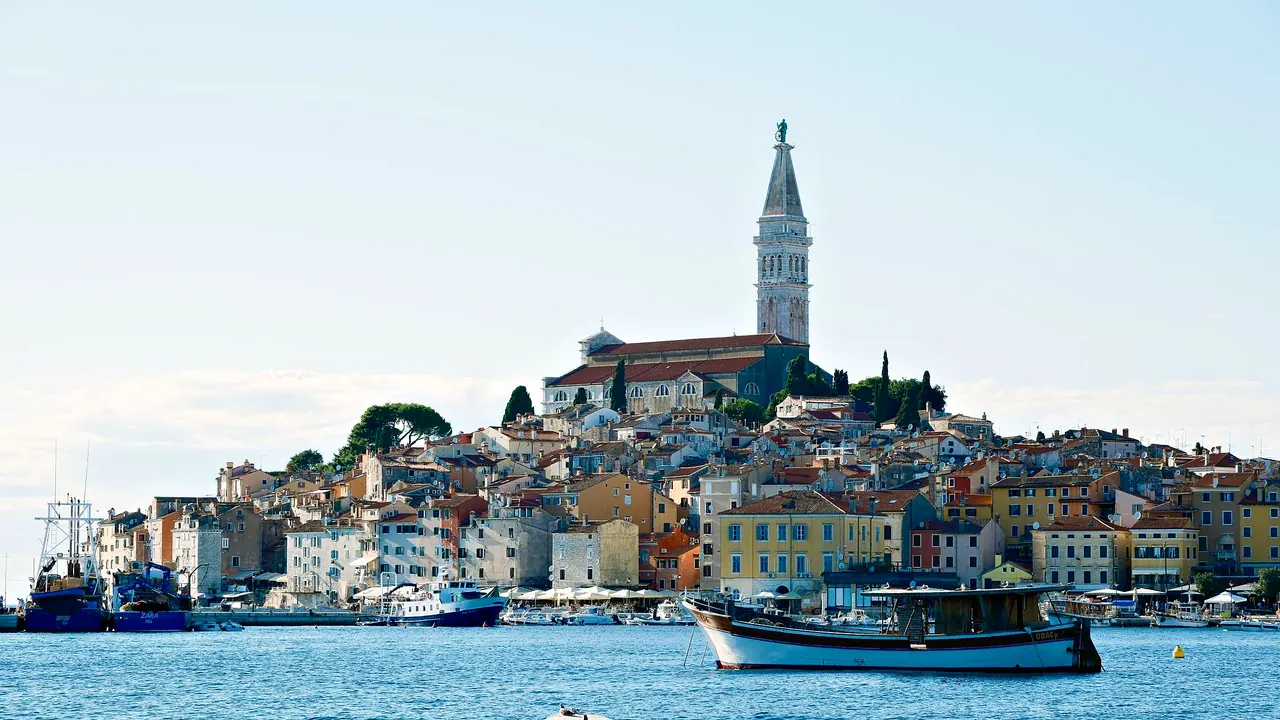
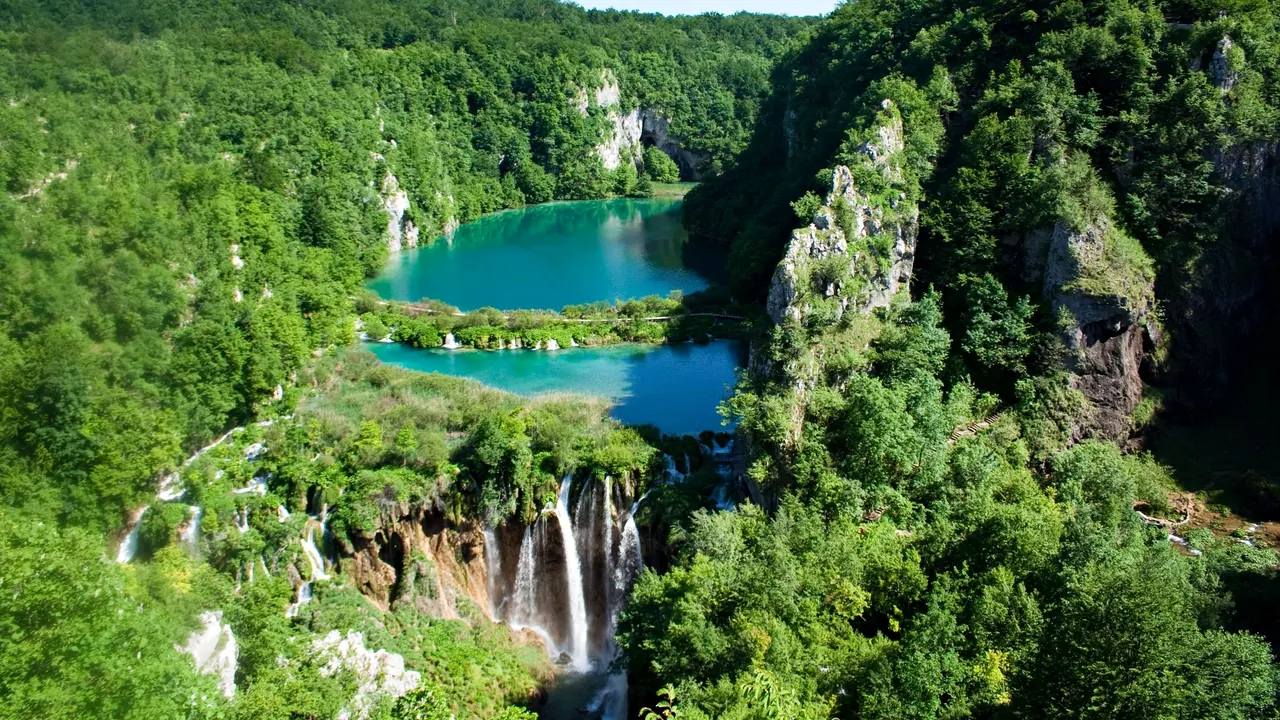
Photos: Istria by Ramon Karolan, Pexels License; Plitvice Lakes by Pablo BM from London, England, CC BY 2.0, cropped.
Istria or Plitvice Lakes?
Our verdict in twelve categories, each scored against the same fixed benchmark cities, and the climate month by month, so you can choose for your trip.
Choose Istria for
- beaches
- culture and sights
- food and drink
Istria suits a longer stay that mixes several kinds of day: swimming in clear water from rocky coves, truffle and seafood cooking, Roman Pula and Venetian Rovinj, and a hill town or wine road for every free afternoon. It works well as a base for a week or more, and Slovenia and Trieste are close enough to add on.
Choose Plitvice Lakes for
- nature and the outdoors
- prices
Plitvice Lakes is a trip built around one thing, and it does that thing very well: terraced lakes, waterfalls and boardwalks through beech and fir forest, with quiet village guesthouses and early starts on the trails. Most people give it a night or two between Zagreb and the coast. Anyone who wants beaches, good restaurants or evenings out should plan the rest of the trip somewhere else.
Scoreboard
Twelve categories on one fixed scale from 0 to 100. The shaded stretch is the gap between the two.
Your match
Pick a travel style or drag the sliders, and both match scores follow your weighting.
Wins on beaches and culture and sights with your weighting.
Wins on nature and the outdoors and prices with your weighting.
What matters to you?
Category by category
What the scores mean for a trip.
Beaches & swimming
Istria has a whole coastline to choose from. There are rocky coves and limestone ledges with very clear water, wild bays at Kamenjak, shallow ones near Medulin and easy resort shores at Poreč and Umag. Expect pebbles, rocks and concrete platforms rather than sand.
Plitvice has nothing like this. Bathing in the lakes is not allowed, so a summer swim means the cool green Korana river at Slunj or below the park, and the sea is a long drive away.
Food & drink
Istria is a food destination in its own right. Truffles are grated over fuži in Motovun and Buzet, and there is slow-cooked boškarin beef, oysters from the Lim Bay, fish restaurants in Rovinj ranging up to fine dining, and wine cellars open for tastings across the western hills.
Plitvice feeds you well but simply: spit-roast lamb, river trout and dishes cooked under the iron bell in roadside inns, with local cheese and brandy alongside. The choice runs thin after a night or two, which matters less on a short stay.
Culture & sights
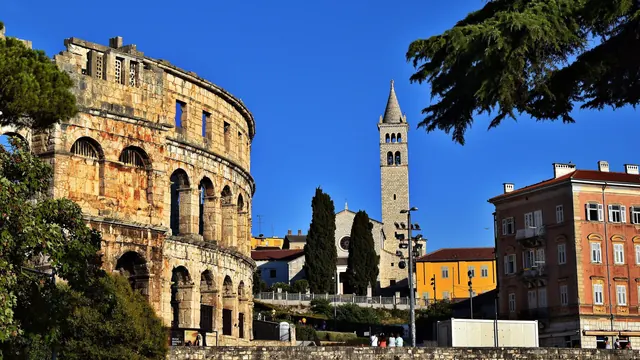
Istria has two first-rank monuments, Pula's Arena and the gold mosaics of the Euphrasian Basilica in Poreč. Around them are Rovinj's old town, Poreč's Roman street grid and walled hill towns such as Motovun and Hum. The museums are small, but the stone towns easily fill several days.
Around Plitvice, the heritage is the landscape itself. The water mills of Rastoke, the ruined Drežnik fortress and the memorials to the first deaths of the 1991 war make an afternoon at most.
Nightlife
Neither is a place for late nights, but Istria at least has evenings out. Terraces and cocktail bars line Rovinj's waterfront and Poreč's old town, Pula's bars around the Arena stay open all year, and there are seasonal beach clubs near Medulin in summer. At Plitvice, dinner is followed by silence, which suits visitors who want to be at the gates at opening time.
Nature & outdoors
This is where Plitvice leads. Istria has nothing to match sixteen lakes stepping down over travertine barriers and waterfalls, with boardwalks over the cascades and forest that changes colour with the seasons. The Barać caves, rafting on the Korana and hikes on Velebit can stretch a stay further.
Istria's outdoors are gentler and different in kind. You can cycle between hill towns on the old Parenzana railway route, climb Učka for views over the Kvarner Gulf, kayak off Kamenjak, or take a boat to the Brijuni islands or into the Lim Bay.
Day trips
Istria makes a natural touring base. Its hill towns, coastal towns and wine roads are all close by, and across the border Piran, Trieste, the Postojna and Škocjan caves and even Ljubljana make good days out.
From Plitvice the list is shorter: Rastoke nearby, Bihać and the Una falls in Bosnia, and Tesla's birthplace at Smiljan. Zadar and Zagreb are at the limit of a day out, which is why most people pass through rather than stay and tour.
Good for families
Istria is set up for family summers. There are campsites and resort villages with pools around Poreč, Umag and Medulin, water parks, a dinosaur park and an aquarium in an old fort in Pula. The shallow bays near Medulin and Premantura suit small children best.
Plitvice delights children for a day, with fish in the clear water, the electric boat and the little train. But the narrow, wet boardwalks mostly have no railings and need close watching, pushchairs struggle on them, and swimming is not allowed.
Getting around
Both are easiest with a car, and Istria is slightly easier to manage without one. Its motorway puts the main towns within about an hour of each other, and coastal buses link Pula, Rovinj, Poreč and Umag. The hill towns and wineries still need your own wheels, and in summer the resort roads are slow and the car parks fill early.
Inside the park at Plitvice you get around on foot, by electric boat and by panoramic train, and some village guesthouses are within walking distance of an entrance. Intercity buses stop at the gates, but beyond them local transport hardly exists.
Shopping & style
In both places the things worth bringing home are edible, and neither is a trip for fashion or design. Where they differ is range. Over a week in Istria you can fill the boot of the car with truffles from the hill towns, oil from the estate that pressed it, wine from the cellar where you tasted it and pršut from a farm stall. For something that is not food, there are the galleries and craft studios of Rovinj's old town and Grožnjan.
Plitvice offers a much smaller version of the same thing. Farmers by the roadside sell cheese, honey and fruit brandy, which make good presents. Beyond that there are only the souvenir kiosks at the park gates, and no nearby town worth browsing.
Affordability
Plitvice is the gentler of the two on a budget. Village guesthouses and country inns are fairly priced, though the summer park fee and the hotels by the gates push costs up. A spring or autumn visit gives the best value.
In July and August, Istria's coast is priced like other popular Mediterranean resorts, and Rovinj is especially dear. Campsites, private apartments, inland farm stays and wine bought from the producer bring costs down, and so does coming in June or September.
Live music & performing arts
Istria has a summer programme worth planning around: open-air concerts and the long-running Pula Film Festival in the Roman Arena, and young musicians playing in Grožnjan's squares and churches. Plitvice has nothing beyond the odd folk music evening, so for concerts you would need to go to Zagreb or Zadar.
Wellness & relaxation
Istria offers more ways to unwind. You can stay in a farmhouse among olive groves, take long lunches in the hill towns, use the spas in resort hotels, or visit the sulphur springs of Istarske Toplice in the Mirna valley, in use since Roman times.
Plitvice has no spa tradition, only a few hotel saunas. Its calm comes from silent evenings at a guesthouse in an outlying village among the fir forest, and from an early walk round the lakes before the groups arrive.
When should you go?
Pick your month. The climate figures are measured averages, not a forecast.
Istria in July
Plitvice Lakes in July
Daytime high, °C
Rainfall in the month, mm
Where the figures come from
Istria's temperatures are measured 57 km from the centre, at Trieste.
Istria has no rain gauge within 25 km of the centre, so its rainfall comes from a gridded climate dataset read at the destination rather than from a gauge further away.
Plitvice Lakes has no weather station within reach, so its figures come from a gridded climate model rather than a measured record, and read a broad area rather than one spot.
Temperature and rainfall are climate normals, averaged over the years shown. Istria: 1991-2020 normals, Trieste (56.5 km from centre). Plitvice Lakes: 2001-2020 normals, NASA POWER reanalysis grid, no weather station within 90 km.
On Istria's coast the beach season runs from June to September. Daytime highs reach 29°C in July and August and the sea warms to 26°C. These are also the sunniest months, and July is the driest of the year at about 45mm. August brings a few more showers, and from September the rain grows heavier, peaking in October and November. Winter is cool and grey rather than harsh. Spring and early autumn are the pleasant months for hill towns and cycling, when the midsummer heat has not yet arrived or has gone.
Plitvice is inland and higher up, so it is cooler and wetter in every month. Summer days peak a couple of degrees below the coast, which makes them comfortable for long walks on the trails. In winter the highs barely rise above freezing and the falls can freeze under snow. Rain falls all year and is heaviest in autumn, at around 140mm in both September and November. Late spring and early autumn give the mildest walking weather.
Which traveller are you?
For a beach and sun trip, Istria is the clear choice. It has very clear, warm sea from June to September, wild coves at Kamenjak and easy resort shores around Poreč. Swimming is banned inside Plitvice, and the nearest sea is two hours away over the mountains.
On an outdoors trip, Plitvice Lakes is the stronger pick. Boardwalks over the waterfalls, forest trails to viewpoints, rafting on the Korana and the Velebit ridges nearby fill several active days. Istria's outdoors are gentler, with cycling on the Parenzana and hiking on Učka.
For a food and nightlife trip, choose Istria. Truffle pasta in the hill towns, Lim Bay oysters, Malvazija poured in the cellar and harbour-front terraces in Rovinj and Pula fill the evenings. Plitvice offers a good spit-roast lamb dinner and then silent villages after dark.
Before you go
| Measure | Istria | Plitvice Lakes |
|---|---|---|
| Official language | Croatian | Croatian |
| Currency | Euro (EUR) | Euro (EUR) |
| Sockets | CF230 V, 50 Hz | CF230 V, 50 Hz |
| Driving side | Right | Right |
| Time zone | UTC+1, UTC+2 in summer | UTC+1, UTC+2 in summer |
| Emergency number | 112 | 112 |
| Main airport | Pula Airport (PUY)34 non-stop destinations | Zagreb Franjo Tuđman International Airport (ZAG)66 non-stop destinations |
| Public holidays this year | 14 days | 14 days |
By the numbers
| Measure | Istria | Plitvice Lakes |
|---|---|---|
| Swim season, months above 21 °C | 4 months | - |
Where else could you go?
Every comparison below shares a destination with this one, so you can follow Istria or Plitvice Lakes somewhere new.
- Krkavs Plitvice Lakes
- Dolomitesvs Istria
- Bračvs Plitvice Lakes
- Hvarvs Plitvice Lakes
- Krkavs Istria
- Tuscanyvs Istria