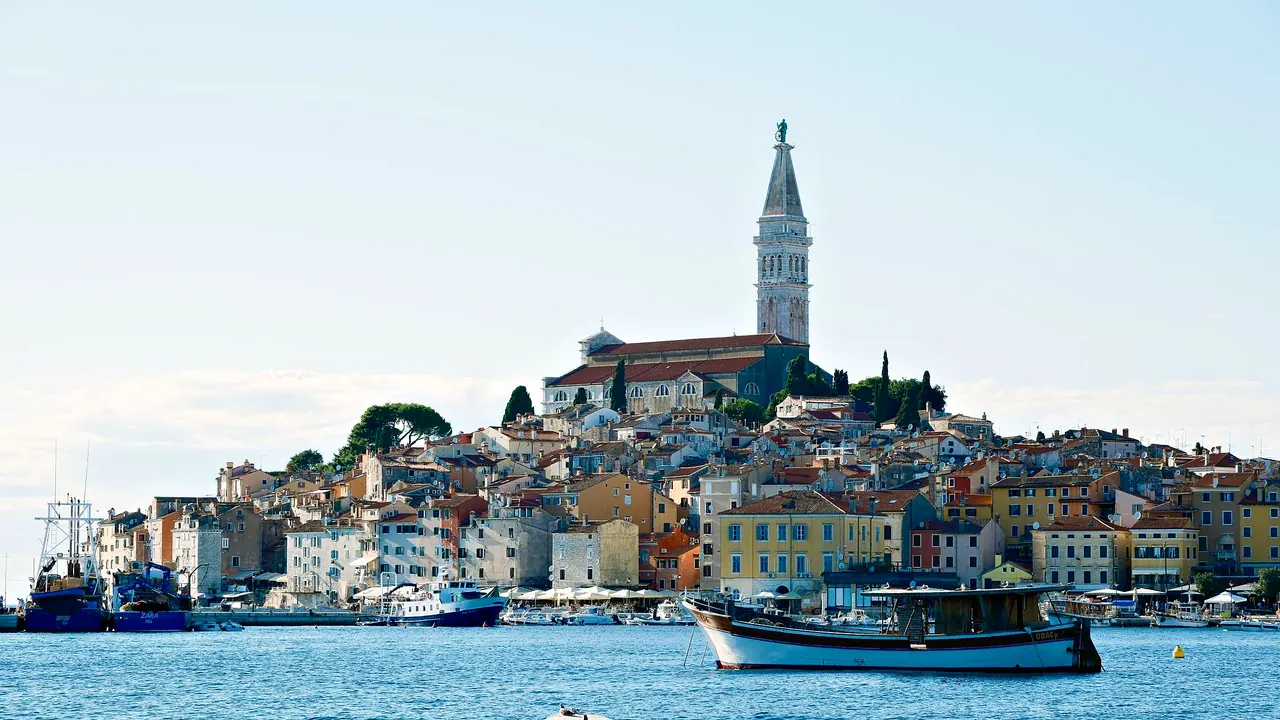
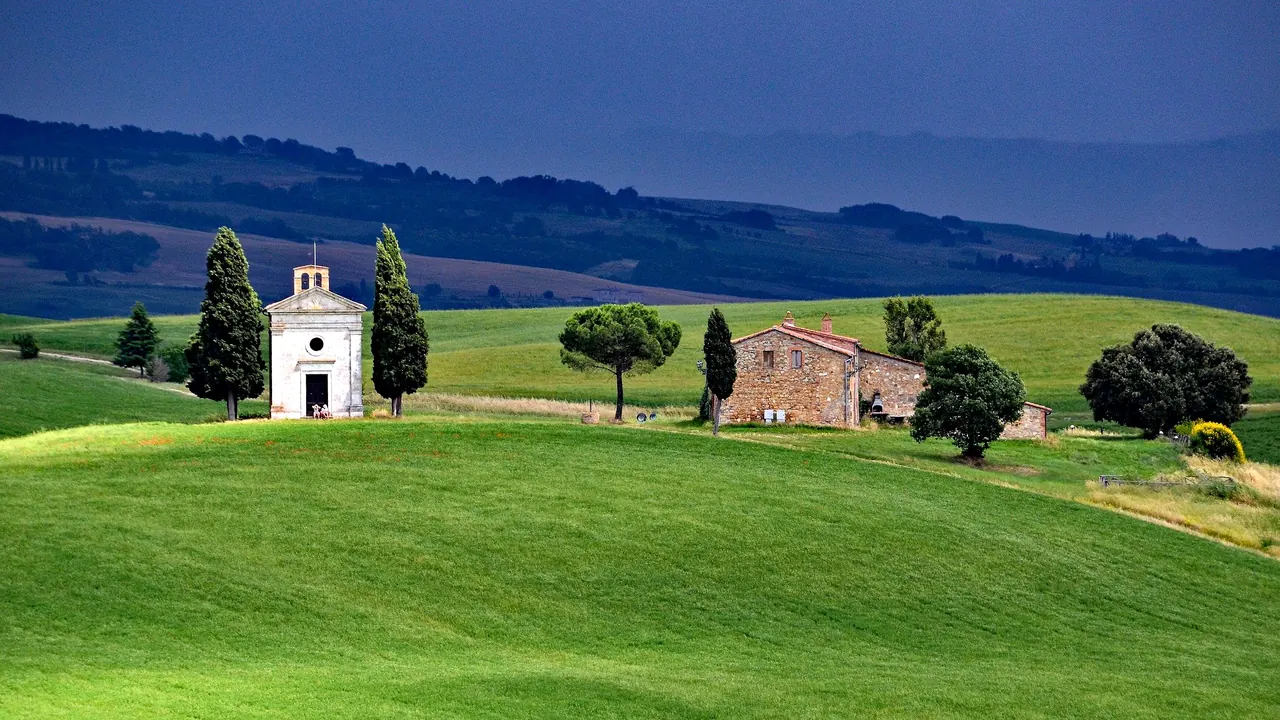
Photos: Istria by Ramon Karolan, Pexels License; Tuscany by Hervé Simon, CC BY-SA 2.0, cropped.
Istria or Tuscany?
Our verdict in twelve categories, each scored against the same fixed benchmark cities, and the climate month by month, so you can choose for your trip.
Choose Istria for
- prices
- families
Istria suits travellers who want the sea and the countryside in one small region. You can swim off rocky coves in very clear water in the morning and have a truffle lunch in Motovun or Grožnjan in the afternoon, and Piran and Trieste are within easy reach. Nothing is far away, campsites and private apartments keep costs down, and the resort villages work well for families. It makes for a slower, smaller trip.
Choose Tuscany for
- shopping
- wellness
- live music and the arts
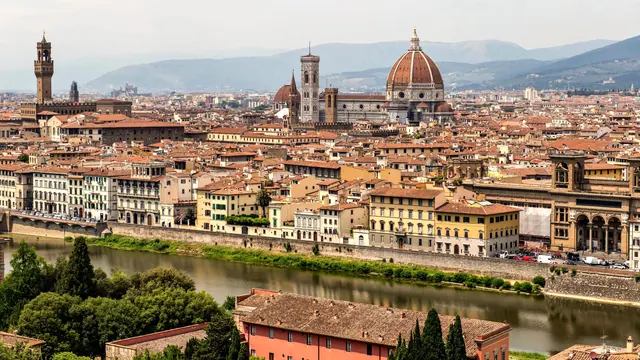
For art, architecture and depth, Tuscany is the stronger choice by a distance. Florence, Siena and the hill towns make a culture trip with no equal, the food and wine go further, and hot springs, opera and Florentine craft add things Istria cannot match. The trade-off is that its sandy coast is a separate trip from the cities, and Florence in high summer is hot and crowded.
Scoreboard
Twelve categories on one fixed scale from 0 to 100. The shaded stretch is the gap between the two.
Your match
Pick a travel style or drag the sliders, and both match scores follow your weighting.
Wins on prices and families with your weighting.
Wins on shopping and wellness with your weighting.
What matters to you?
Category by category
What the scores mean for a trip.
Beaches & swimming
The two coasts are about equal for swimming but feel nothing alike. Istria is rock and pebble almost all the way round, with very clear water, wild coves at Kamenjak and Premantura and concrete bathing platforms at the resorts. Sand is rare and water shoes help, but the region is small enough that the sea is never far from where you stay.
Tuscany is where you find sand: the long, ordered beach clubs of Versilia, the pine-backed strands of the Maremma and the sandy bays of Elba. Its coast is a separate place from Florence and the hill towns, though, so you either plan a beach stay or drive out to it.
Food & drink
Istria cooks closer to Venice than to the rest of Croatia. Truffles are grated over fuži in the hills around Motovun and Buzet, oysters come from the Lim Bay, the western hills press some of the finest olive oil anywhere, and Malvazija is poured in small family cellars. It is a fine table, though a compact one.
Tuscany has more to offer and more depth. Florence's market halls, tripe carts and Oltrarno trattorias make a food trip on their own. The wine roads run from Chianti Classico to Brunello in Montalcino and Vino Nobile in Montepulciano, with estate lunches along the way. Both regions have truffles and cellar-door tastings, but Tuscany has far more of them to build a trip around.
Culture & sights
Istria's sights are a handful of strong single pieces: Pula's Arena, the gold mosaics of the Euphrasian Basilica in Poreč and walled hill towns such as Motovun and Hum. Add the Dance of Death fresco at Beram and a few small museums, and a few days covers it all.
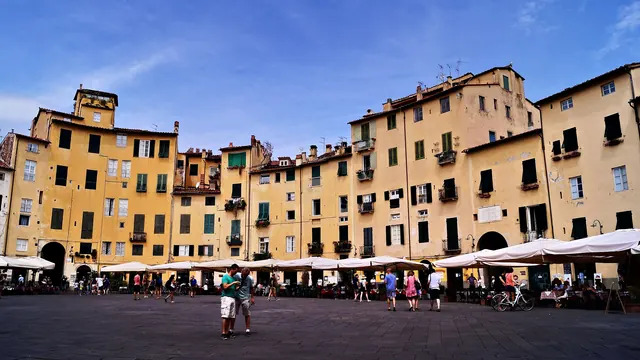
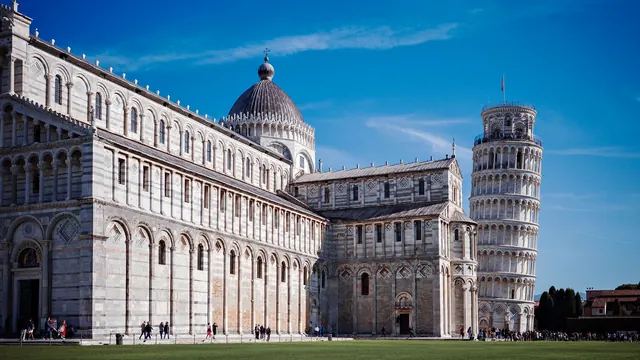
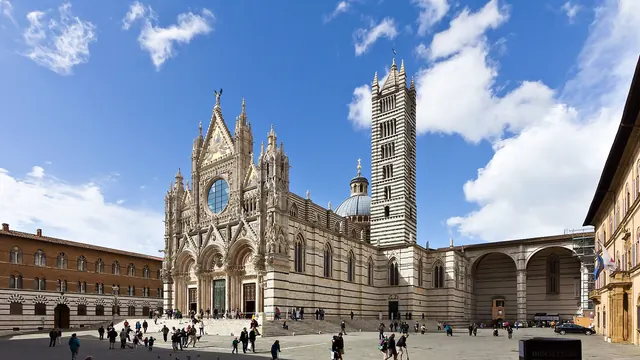
Tuscany is in another league, because the Renaissance began here. Florence alone holds the Uffizi, the Accademia's David and Brunelleschi's dome in one walkable centre. Siena, Pisa, San Gimignano, Lucca and Arezzo could each fill a day of their own.
Nightlife
Neither region is a nightlife destination, and in both an evening usually means a long dinner and a drink outdoors. In Istria that happens on the harbour fronts of Rovinj and Poreč or in Pula's student bars around the Arena, with a few seasonal clubs near Poreč and Medulin.
Tuscany has a little more range. Florence's crowds gather on the steps of Santo Spirito and in the Oltrarno wine bars all year. In summer the beach clubs and dance halls of Versilia stay open until dawn, which makes it the stronger choice if you want to dance.
Nature & outdoors
Istria is gentle cycling country, with the Parenzana railway path, signposted routes between hill towns and the Kamenjak cape for kayaking and windsurfing. Its one real mountain hike is Učka, at about 1,400m.
Tuscany has more ground and more variety. Chianti and the Val d'Orcia give the classic walks and bike rides between hill towns. The Apuan Alps, rising to nearly 2,000m, the beech forests of the Casentino, the Maremma park and the islands of the Tuscan Archipelago add real mountains, wild coast and diving.
Day trips
Istria's day trips are short ones. The region is so small that the hill towns, Rovinj and Poreč, the wine roads and the boat to Brijuni are close from wherever you stay. The border adds to it: Piran and Trieste are about an hour away, and the Postojna and Škocjan caves or Ljubljana make a day in Slovenia.
Tuscany has far more to choose from, and its outings carry more weight. Siena, Lucca, Pisa, San Gimignano and Volterra are easy from Florence or a Chianti farmhouse, and Montalcino, Montepulciano and Pienza make a wine loop in the south. Beyond the border it reaches into three more regions: Bologna in Emilia-Romagna by fast train from Florence, the Cinque Terre in Liguria by train from Pisa, and Assisi, Perugia and Orvieto in Umbria by car from southern Tuscany. The price is distance. Tuscany is much larger than Istria, so where you stay decides which of these you can do in a day.
Good for families
Both work well for families, in different ways. Istria was built for family vacations, with big campsites and resort villages with pools around Poreč, Umag and Medulin, water parks, a dinosaur park near Funtana and short drives everywhere. The catch is the rocky beaches, so small children do best in the shallow bays near Medulin and Premantura.
Tuscany's version is a farmhouse with a pool and animals, combined with the sandy, shallow, lifeguarded beaches of Versilia and the Maremma. Pinocchio's park at Collodi and cycling on Lucca's walls are easy wins with children, but the Florence galleries test young patience.
Getting around
Both are car country once you leave the towns. Istria is small, with a motorway down the west side and no main towns much more than an hour apart. Buses only link the coastal towns, though, so you need your own car for hill towns, wineries and beaches, and the resort roads are slow in high summer.
Tuscany's advantage is the rail line through Florence, Pisa, Lucca, Arezzo and Viareggio, which makes a car-free trip along it easy. Chianti, the Val d'Orcia and the Maremma still need a car, the drives are longer and more winding, and reaching the islands means planning ferries.
Shopping & style
Shopping in Istria means stocking up on food and drink: truffle products in Motovun and Buzet, single-estate olive oil, and Malvazija and Teran from the cellar. Beyond that there are a few galleries on Rovinj's Grisia street and in Grožnjan.
Tuscany offers real craft and style. Florence has leather workshops around Santa Croce, goldsmiths on the Ponte Vecchio, bookbinders in Oltrarno and the luxury houses of Via de' Tornabuoni. Around the region you can add alabaster from Volterra, marble from Pietrasanta and the big designer outlets of the Arno valley.
Affordability
Neither region is cheap in summer, and the expensive spots are similar: Rovinj's rooms in Istria, and central Florence, Chianti villas and the Versilia beach clubs in Tuscany. Istria has a slight edge in cheaper places to stay, from campsites and private apartments to inland farm stays, and its distances are short.
In Tuscany the savings come from basing yourself in Lucca, Arezzo or the Maremma rather than Florence or Siena, though car hire for the countryside adds to the bill. In both, simple tavern meals and wine bought from the producer keep costs down.
Live music & performing arts
Istria's main stage is Pula's Roman Arena on summer nights, which also hosts the long-running film festival, and Grožnjan fills with young musicians giving concerts in summer. Out of season there is little to plan around.
Tuscany has a real musical tradition. Florence has the Maggio Musicale Fiorentino and its opera house, Lucca holds Puccini recitals all year, and his operas are staged by the lake at Torre del Lago each summer. Siena's Accademia Chigiana adds concerts in palaces and churches.
Wellness & relaxation
Istria relaxes you mainly through its pace: a stone farmhouse among olive groves and long lunches in the hill towns. It has one historic spa, Istarske Toplice in the Mirna valley, and the resort hotels on the coast have their own spas.
Tuscany sits on hot springs. The grand pump rooms of Montecatini Terme, the warm open-air pools at Saturnia, the steaming medieval bath of Bagno Vignoni and the woodland pools of Bagni San Filippo make taking the waters a trip in itself. A farmhouse in the Val d'Orcia then adds the same slow countryside Istria offers.
When should you go?
Pick your month. The climate figures are measured averages, not a forecast.
Istria in July
Tuscany in July
Daytime high, °C
Rainfall in the month, mm
Where the figures come from
Istria's temperatures are measured 57 km from the centre, at Trieste.
Istria has no rain gauge within 25 km of the centre, so its rainfall comes from a gridded climate dataset read at the destination rather than from a gauge further away.
Tuscany has no rain gauge within 25 km of the centre, so its rainfall comes from a gridded climate dataset read at the destination rather than from a gauge further away.
Tuscany's sunshine is measured 71 km from the centre, at Pisa / S. Giusto.
Temperature and rainfall are climate normals, averaged over the years shown. Istria: 1991-2020 normals, Trieste (56.5 km from centre). Tuscany: 1995-2020 (sunshine 1991-2020, rainfall 1991-2020) normals, Firenze / Peretola (5.6 km from centre).
The two follow a similar summer pattern, but Tuscany runs hotter. On the Istrian coast, July and August reach about 29°C and the sea about 26°C. June and September are still warm enough for swimming, and midsummer brings the longest sunny days. Where most visitors stay in Tuscany, August peaks near 33°C, which is too hot for long afternoons in Florence's streets. May, June, September and early October are the better months there for walking around towns.
In both regions autumn brings the rain. It starts in September in Istria and in October in Tuscany, and by November rainfall reaches up to 124mm. Winters are mild but grey, with highs around 10°C. Spring is when Tuscany's countryside turns green and when Istria is best for cycling and hiking, before the heat arrives.
Which traveller are you?
For a culture and arts trip, Tuscany is the clear pick. Pula's Arena and the mosaics in Poreč fill a couple of days in Istria. Florence's Uffizi and David, Siena's Campo and towns such as San Gimignano and Pienza fill a week.
On a relaxing and wellness trip, Tuscany wins again. Istria offers a quiet farmhouse pace but just one historic spa. Tuscany has hot springs from Montecatini Terme in the north to Saturnia in the Maremma, plus Bagno Vignoni's medieval bath in the Val d'Orcia.
For a beach and sun trip, the choice comes down to what you want underfoot. Istria keeps very clear water close to any base, off the rocky coves of Kamenjak and Rovinj. Tuscany's sand is at Versilia and on Elba, well away from the art cities.
Before you go
| Measure | Istria | Tuscany |
|---|---|---|
| Official language | Croatian | Italian |
| Currency | Euro (EUR) | Euro (EUR) |
| Sockets | CF230 V, 50 Hz | CFL230 V, 50 Hz |
| Driving side | Right | Right |
| Time zone | UTC+1, UTC+2 in summer | UTC+1, UTC+2 in summer |
| Emergency number | 112 | 112 |
| Main airport | Pula Airport (PUY)34 non-stop destinations | Florence Airport, Peretola (FLR)46 non-stop destinations |
| Public holidays this year | 14 days | 13 days |
By the numbers
| Measure | Istria | Tuscany |
|---|---|---|
| Population | - | 3,729,641 |
| Swim season, months above 21 °C | 4 months | - |
Where else could you go?
Every comparison below shares a destination with this one, so you can follow Istria or Tuscany somewhere new.
- Umbriavs Tuscany
- Elbavs Tuscany
- Cinque Terrevs Tuscany
- Plitvice Lakesvs Istria
- Dolomitesvs Istria
- Lake Gardavs Tuscany