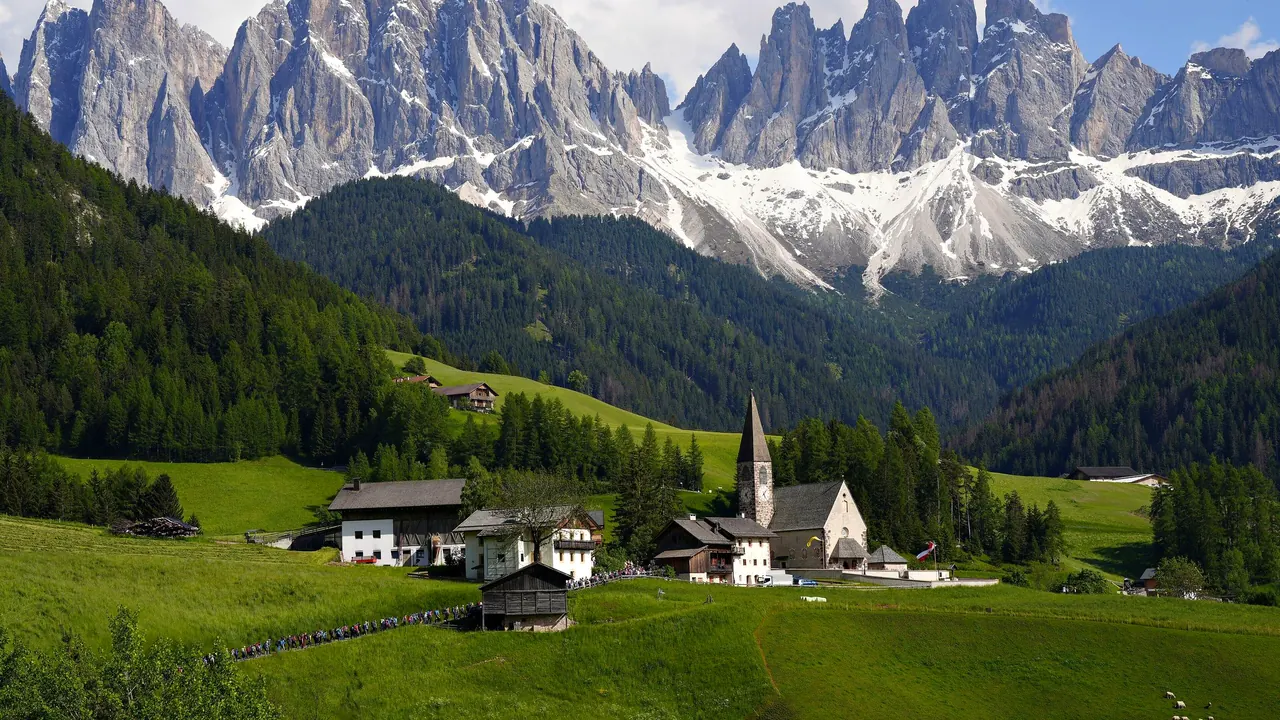
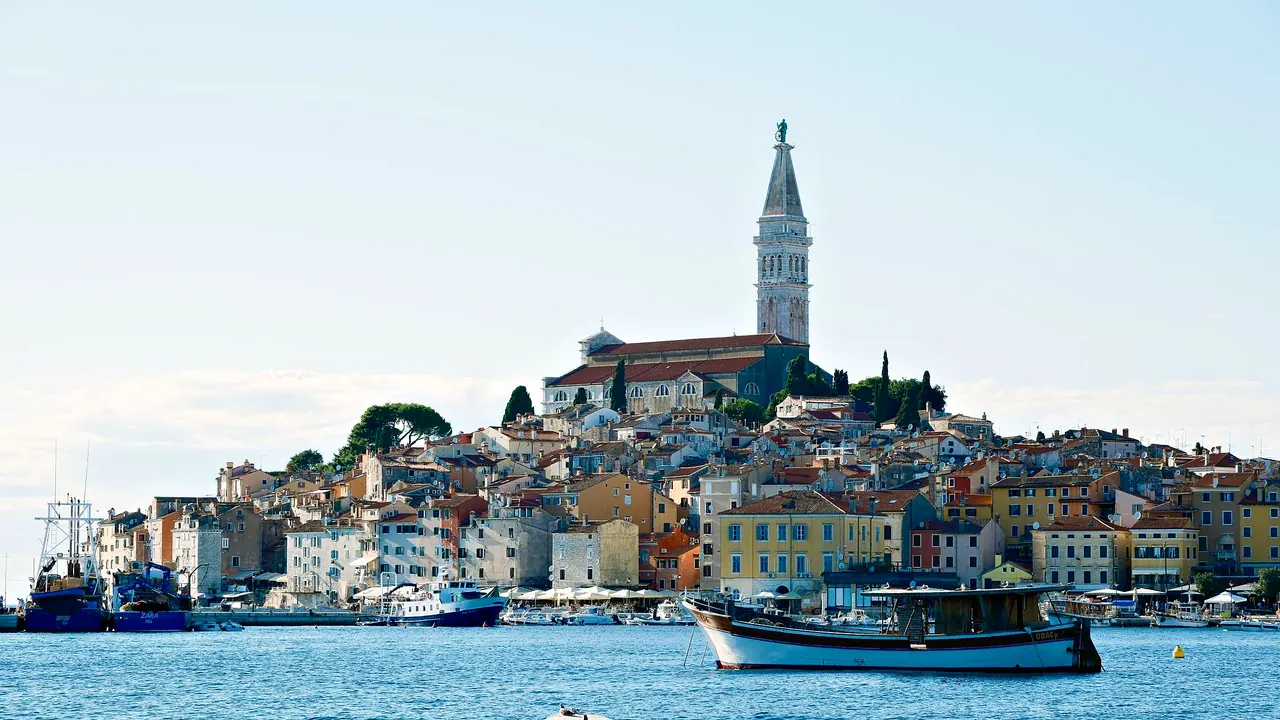
Photos: Dolomites by Chensiyuan, CC BY-SA 4.0, cropped; Istria by Ramon Karolan, Pexels License.
Dolomites or Istria?
Our verdict in twelve categories, each scored against the same fixed benchmark cities, and the climate month by month, so you can choose for your trip.
Choose Dolomites for
- nature and the outdoors
- wellness
- shopping
The Dolomites suit a trip planned around the mountains themselves. Lifts carry you from the village onto high pasture, lunch is at a hut terrace and the via ferrate lead onto the rock. In winter the linked ski valleys take over. Families with children who like open meadows do well here, and the hotel spas of South Tyrol make the evenings restful. In return you accept quiet nights, very little swimming and steep prices in the main seasons.
Choose Istria for
- beaches
- culture and sights
- nightlife
Istria is the better pick for a summer by the sea with plenty to fill the days between swims. You get clear water off the rocky coves of Kamenjak and Rovinj, Roman Pula and the mosaics of Poreč, and truffle towns on the hills inland, with Trieste and Piran a short drive away. Evenings are livelier and the costs a little gentler. The landscape is soft rather than dramatic, though, and there is no skiing.
Scoreboard
Twelve categories on one fixed scale from 0 to 100. The shaded stretch is the gap between the two.
Your match
Pick a travel style or drag the sliders, and both match scores follow your weighting.
Wins on nature and the outdoors and wellness with your weighting.
Wins on beaches and culture and sights with your weighting.
What matters to you?
Category by category
What the scores mean for a trip.
Beaches & swimming
Swimming is where Istria pulls well ahead. Its coast offers very clear sea from June to late September, entered from pebbles, smooth limestone ledges and resort platforms rather than sand. There are wild coves around Kamenjak, gentler bays near Medulin and rocky headlands just outside Rovinj.
In the Dolomites the famous high lakes such as Braies and Misurina are for rowing and photographs, not for bathing. Real swimming means going down to the lidos and lawns of Lake Caldaro, or to the north tip of Lake Garda, about an hour from Trento.
Food & drink
Both eat well, but they come from different kitchens. The Dolomites mix Alpine and Italian cooking: speck, canederli and strudel, followed by a proper espresso. Lunch on a hut terrace after a morning on the trail, Lagrein and Gewürztraminer from the slopes below Bolzano, and a surprising number of high-end kitchens in Alta Badia are the highlights.
Istria tastes of the Venetian Adriatic. Truffles from the Motovun forests are grated over fuži, oysters come from the Lim Bay, and fish dominates the menus in Rovinj and Novigrad. Malvazija and Teran are poured in small cellars across the hills. Choose the mountains for hearty dishes and Alpine wine, and the coast for truffles and seafood.
Culture & sights
Istria has the stronger sights. Pula's Arena still stands to its full height, the Euphrasian Basilica in Poreč keeps its sixth-century mosaics, and Rovinj and the hill towns of Motovun, Grožnjan and Hum reward slow wandering through stone streets.
In the Dolomites the landscape itself is the heritage, and the built sights sit in the valleys. Bolzano has its arcades and the Ötzi museum, Trento has the frescoed Castello del Buonconsiglio, and there are Novacella Abbey and the First World War tunnels on the passes. They make good rainy-day outings rather than reasons to come.
Nightlife
Neither is a party destination, but Istria has more to offer after dark. On summer nights the terraces of Rovinj's waterfront and Poreč's old town fill up, beach bars and a few seasonal clubs open around Medulin, and Pula's students keep bars going all year.
The Dolomites go to bed early. In winter there is après-ski in Selva, Ortisei, Canazei and Cortina, but it winds down by early evening, and in summer most villages are silent by eleven.
Nature & outdoors
Here the Dolomites have few rivals anywhere. Pale towers such as the Tre Cime and Seceda rise straight out of meadows, lifts reach high ground from almost every village, and the range offers the Alta Via 1, the First World War via ferrate and, in winter, the vast Dolomiti Superski area.
Istria's countryside is gentle by comparison: vineyards, oak valleys and the single ridge of Učka at about 1,400m. Its strength is cycling, with the old Parenzana railway route crossing viaducts into the interior, along with kayaking off Kamenjak and boat trips into the Lim Bay and out to Brijuni.
Day trips
Istria comes out slightly ahead because it is so compact. Hill towns, coastal towns and the Brijuni boat are close to any base, and Piran, Trieste, the Postojna caves and even Ljubljana lie within easy range across the border.
The Dolomites offer excellent outings from Bolzano, including Merano, Bressanone, Verona by train and Innsbruck over the Brenner. From the high valleys, though, every trip starts with a slow pass road, so it helps to split your stay.
Good for families
Both work well for children, and the Dolomites have a slight edge in summer. The near-flat paths of the Alpe di Siusi and the Armentara meadows, lifts that do the climbing, huts with farm animals and summer toboggan runs make for easy days, and the ski schools are well run in winter. Rainy days are the weak spot, with no zoos or theme parks.
Istria fills those gaps with water parks near Poreč, the dinosaur park at Funtana and the aquarium in a Pula fort. Its rocky beaches, steep polished cobbles and midsummer heat suit older children better than toddlers, who are happiest in the shallow bays near Medulin.
Getting around
Both are easiest with a car, but for different reasons. In the Dolomites you can manage in a single valley thanks to trains along the Adige and Puster valleys, buses over the main passes and lifts linking whole ski areas. Crossing between valleys means slow hairpin roads that are crowded in summer.
Istria has a fast motorway and short distances between towns. Coastal buses link Pula, Rovinj and Poreč, but the hill towns, wineries and most beaches are hard to reach without a car, and parking fills early in July and August.
Shopping & style
The Dolomites have the edge for shopping, thanks to their crafts. Ortisei's woodcarvers have worked for centuries, loden and food shops line Bolzano's medieval arcades, Cortina has a short street of boutiques, and the Advent markets of Bolzano, Merano and Bressanone are famous across the Alps.
In Istria shopping mostly means food to take home: truffle products from Motovun and Buzet, estate olive oil and wine bought at the cellar door. Grožnjan's galleries and Rovinj's Grisia street add some art.
Affordability
Neither is cheap in high season, but Istria is the easier on a budget. Campsites, private apartments, inland farm stays and simple tavern meals keep costs reasonable, especially in June or September.
The Dolomites are expensive in both the ski season and midsummer. Cortina and Alta Badia rank among Italy's costliest resorts, and lift passes and guided climbs add to the bill. Staying in Val di Fassa, Val di Fiemme or the valley towns helps, as does half board.
Live music & performing arts
Bolzano and Trento give the Dolomites a concert and theatre season that runs through the year, with a regional orchestra and Bolzano's long-established piano competition. Summer brings musicians onto alpine meadows and hut terraces, and in autumn Merano holds its festival in the old spa halls.
Istria's performances belong to summer and centre on Pula's Roman Arena, which holds open-air concerts and the long-running film festival. In the same months, young musicians fill the squares and churches of Grožnjan. Out of season, Pula's theatre is about all there is. In both places the music adds to a trip rather than giving you a reason to go.
Wellness & relaxation
The Dolomites are clearly better for wellness. South Tyrol's mountain hotels are built around saunas facing rock walls and heated outdoor pools. The old hay bath survives around Völs am Schlern, and Merano's thermal baths sit beside its river promenade. Silent village nights add to the rest.
Istria relaxes you mainly through its pace: a stone farmhouse among olive groves, long lunches in the hill towns and the Roman-era sulphur springs of Istarske Toplice. Beyond those, you are relying on resort hotel spas on a busy summer coast.
When should you go?
Pick your month. The climate figures are measured averages, not a forecast.
Dolomites in July
Istria in July
Daytime high, °C
Rainfall in the month, mm
Where the figures come from
Istria's temperatures are measured 57 km from the centre, at Trieste.
Istria has no rain gauge within 25 km of the centre, so its rainfall comes from a gridded climate dataset read at the destination rather than from a gauge further away.
Temperature and rainfall are climate normals, averaged over the years shown. Dolomites: 1991-2020 normals, Dobbiaco (22.3 km from centre). Istria: 1991-2020 normals, Trieste (56.5 km from centre).
The two peak at almost opposite moments. In the Dolomites, June to September brings the best walking weather, with July and August daytime highs around 22°C. Those are also the wettest months, July bringing about 130mm, so it pays to start early and be off the high ground by afternoon. June and September are calmer and fresher. From late autumn to early spring the days hover close to freezing, and that is the time for the ski slopes, not for walking.
Istria is warm from June to September and hot in July and August, at around 29°C, with long sunny days and the sea reaching 26°C in August. That heat makes walking the inland hill towns hard going in midsummer, so May, June and September suit sightseeing better. The rain arrives in autumn and peaks in November at about 102mm, while winter stays mild but too cool for the beach. In high summer the Dolomites offer cool air, and in spring and autumn Istria is the more comfortable of the two.
Which traveller are you?
On a beach and sun trip, Istria is the clear choice. Its clear sea stays warm from June to late September, with wild coves at Kamenjak and shallow bays around Medulin, while the Dolomites can offer only lakes and valley pools.
For an outdoors trip, the Dolomites are in a different league. You can walk the Alpe di Siusi, do the Tre Cime circuit, take hut-to-hut routes and via ferrate, and ski the Sella Ronda in winter. Istria's cycling and its walks on Učka are pleasant but much gentler.
For a culture and arts trip, Istria offers more to see. Pula's Arena, the gold mosaics in Poreč and walled hill towns like Motovun and Hum outshine the Dolomites' valley-town museums, although Bolzano's Ötzi museum makes a fine day.
Before you go
| Measure | Dolomites | Istria |
|---|---|---|
| Official language | Italian | Croatian |
| Currency | Euro (EUR) | Euro (EUR) |
| Sockets | CFL230 V, 50 Hz | CF230 V, 50 Hz |
| Driving side | Right | Right |
| Time zone | UTC+1, UTC+2 in summer | UTC+1, UTC+2 in summer |
| Emergency number | 112 | 112 |
| Main airport | Venice Marco Polo Airport (VCE)103 non-stop destinations | Pula Airport (PUY)34 non-stop destinations |
| Public holidays this year | 13 days | 14 days |
By the numbers
| Measure | Dolomites | Istria |
|---|---|---|
| Swim season, months above 21 °C | - | 4 months |
Where else could you go?
Every comparison below shares a destination with this one, so you can follow Dolomites or Istria somewhere new.
- Austrian Alpsvs Dolomites
- Plitvice Lakesvs Istria
- Lake Gardavs Dolomites
- Bavariavs Dolomites
- Lake Comovs Dolomites
- Krkavs Istria