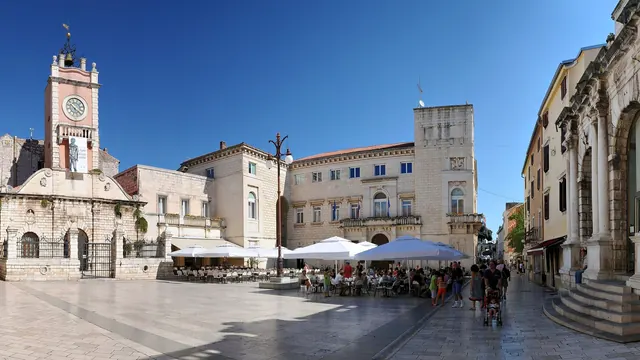
Photos: Dalmatia by Edwardwexler at English Wikipedia, CC BY-SA 3.0, cropped; Ischia by Pipito93, CC BY-SA 4.0, cropped.
Dalmatia or Ischia?
Our verdict in twelve categories, each scored against the same fixed benchmark cities, and the climate month by month, so you can choose for your trip.
Choose Dalmatia for
- nightlife
- culture and sights
- nature and the outdoors
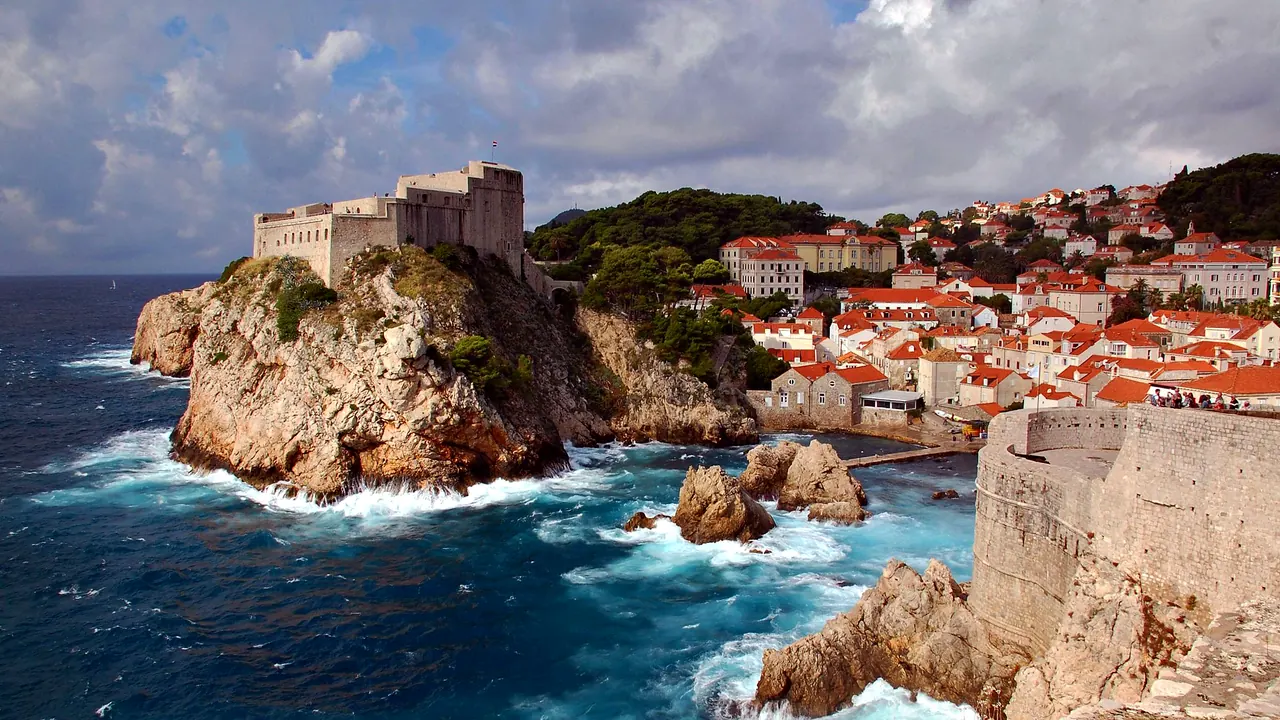
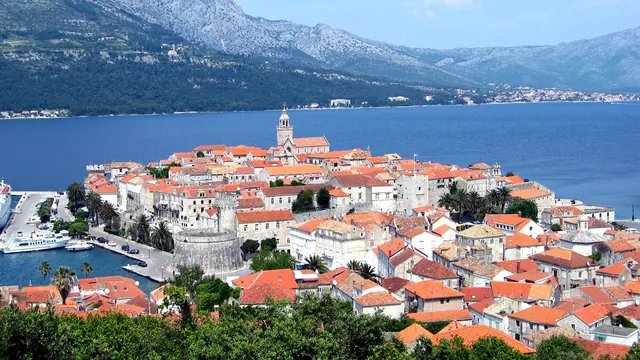
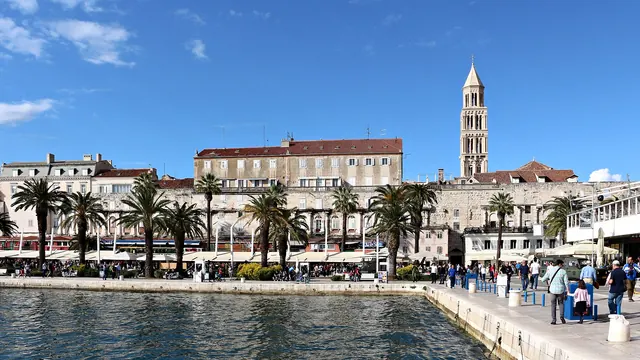
Dalmatia suits a traveller who wants to keep moving. It has a long coast of walled towns, from Split's Roman palace to Dubrovnik's ring of walls, with Trogir and Šibenik in between. There are ferries and catamarans out to Hvar, Brač and Vis, sailing among the Kornati and rafting in the Cetina gorge, and summer nights in Split's lanes or Hvar's harbour. It takes planning and some long drives, but it gives you much more to see, do and stay up for.
Choose Ischia for
- wellness
- prices
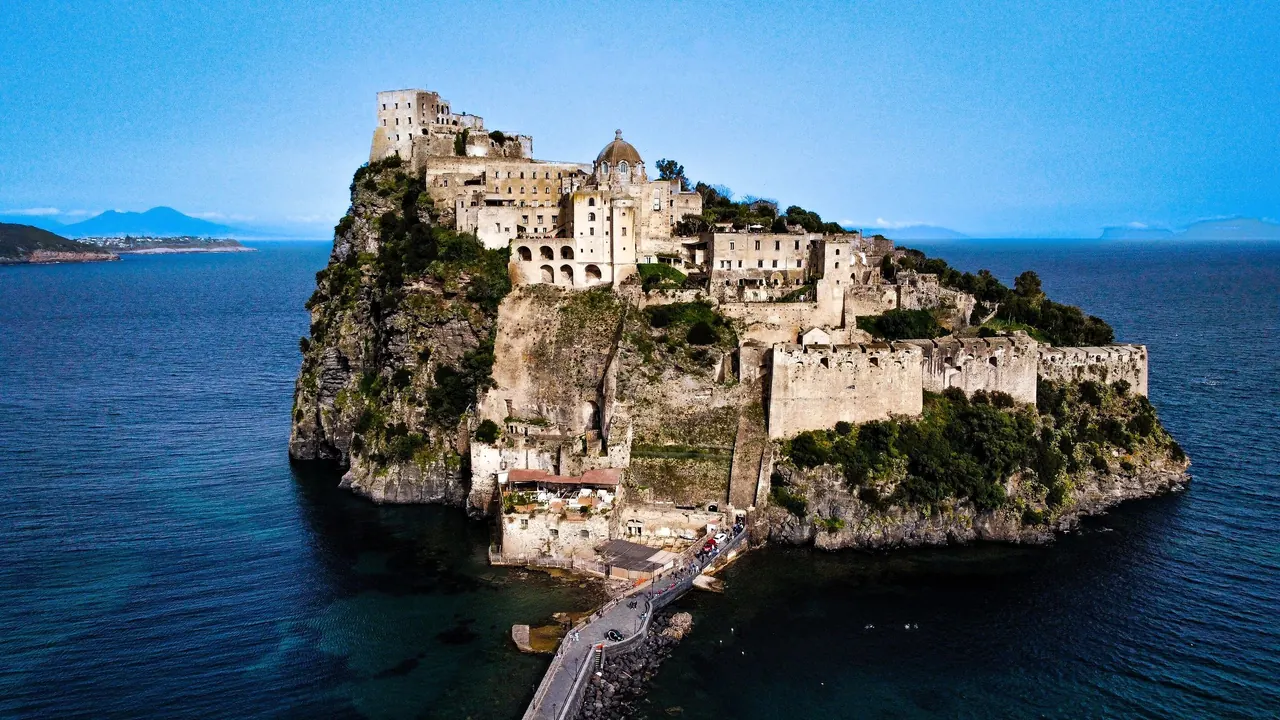
Ischia is for someone who wants to stop. The trip revolves around warm water: terraced thermal parks, hotel pools fed by hot springs, Sorgeto's sea pools and a slow daily rhythm that ends with dinner. There is a small amount of heritage on the island and very little nightlife. When you want more, Naples, Procida and the Phlegraean Fields are a short boat ride away.
Scoreboard
Twelve categories on one fixed scale from 0 to 100. The shaded stretch is the gap between the two.
Your match
Pick a travel style or drag the sliders, and both match scores follow your weighting.
Wins on nightlife and culture and sights with your weighting.
Wins on wellness and prices with your weighting.
What matters to you?
Category by category
What the scores mean for a trip.
Beaches & swimming
Both seas are warm from early summer to early autumn, but Dalmatia has far more shoreline to choose from. There is the pine-backed pebble run of the Makarska Riviera, the shifting shingle spit of Zlatni Rat at Bol, and coves on Vis, Hvar and the Pakleni islands reached by small boat. The pebble and rock shore is the reason the water is so clear.
Ischia's advantage is sand, which most of Dalmatia lacks. There is the long dark volcanic curve of Maronti, the calm shallow bay of San Montano and Citara facing the sunset. Beyond these the island is mostly rock and small coves, and it simply has fewer of them than a coast with a thousand islands.
Food & drink
Both kitchens are simple and local, but Dalmatia has more depth, and its wine is the bigger draw. Peka baked under an iron bell, cuttlefish risotto, morning markets in Split and Zadar, Plavac Mali from Pelješac and Hvar, Pošip on Korčula and Ston's oysters make eating part of the route.
Ischia has one dish to seek out, rabbit braised in terracotta, along with harbour seafood and Biancolella whites from the slopes of Epomeo. Half-board spa hotels and the lack of markets or street food make the range narrower, and the good meals are in the hill villages and on the west coast.
Culture & sights
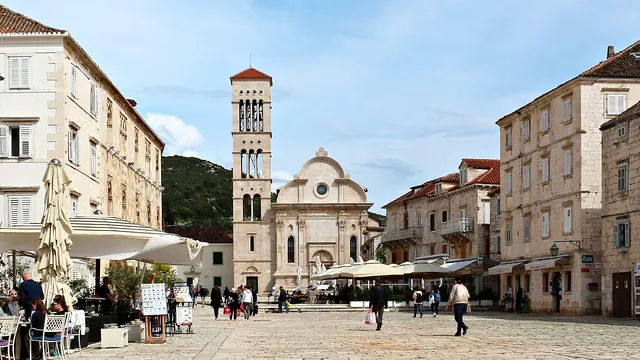
This is one of the widest gaps between the two. Dalmatia has a chain of first-rank stone towns: the lived-in Roman palace at Split, Dubrovnik's complete walls and Rector's Palace, Trogir's island old town, Zadar's forum beside St Donatus and the ruins of Salona. Seeing it well means travelling between them.
Ischia has one major sight, the Aragonese Castle on its rock off Ischia Ponte. It also has a remarkable small museum at Lacco Ameno, where Nestor's Cup recalls one of the oldest Greek settlements in the West. After that there are gardens, churches and fishing lanes, and serious heritage means crossing to Naples.
Nightlife
Dalmatia has real summer nightlife. Hvar town's harbour cocktail bars and its beach clubs on the islets reached by water taxi keep going long past midnight. Split's palace lanes fill with small crowded bars, and Makarska and Bol have resort strips.
Ischia is a dinner-and-passeggiata island. The waterfront at Ischia Porto has wine bars and a couple of discos in high summer, while Sant'Angelo and Forio wind down after sunset drinks. Anyone after a club night should choose Dalmatia, though in both the season is short.
Nature & outdoors
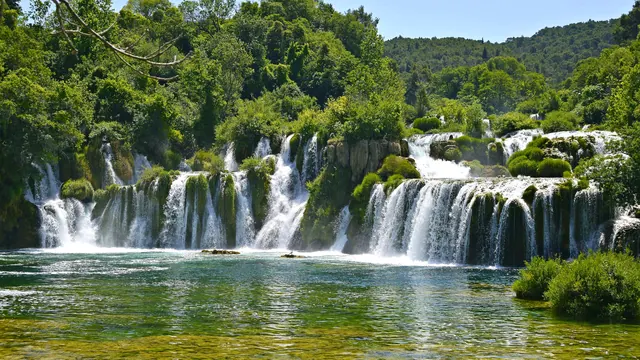
Dalmatia's outdoors is on another scale. You can sail through the bare white Kornati or among a thousand islands, kayak Mljet's saltwater lakes, see the travertine falls of Krka, raft the Cetina gorge, and climb Biokovo or the cliffs of Paklenica.
Ischia's landscape is smaller and volcanic: chestnut woods and vineyards up Monte Epomeo, steam vents on the south coast, and snorkelling and diving in the marine reserve around the island. It is greener than many expect, but a week covers it. In both places spring and autumn are better than summer for walking.
Day trips
Dalmatia's outings mostly stay on its own coast and islands. From Split, ferries and catamarans go to Stari Grad, Bol or remote Komiža on Vis. From Dubrovnik the Elaphiti islands are a short sail away, and Ston and the Pelješac wineries are an easy drive. Kotor's bay and Mostar's Ottoman bridge are road trips across a border, and Mostar makes a long day.
Ischia's trips start at the ferry quay and lead to places quite unlike the island. You can reach Naples and its archaeological museum, the Roman amphitheatre and Solfatara crater of the Phlegraean Fields, little Procida, and Capri in summer. Pompeii and Herculaneum need the ferry and then the local train, which makes a long day. Anyone planning several outings should stay at Ischia Porto.
Good for families
Both work for a sea-and-pool family vacation, and neither has much built for children. In Dalmatia, resort towns like Makarska, Baška Voda and Bol keep everything near the shore, and there are sandy bays around Nin. Most beaches are pebble, though, so pack water shoes, and Dubrovnik's steps are hard going with a pushchair.
Ischia has gentle sand at San Montano and Maronti, and its thermal parks, with pools at different temperatures, make easy water days. Steep villages and crowded summer buses are the drawbacks, and older children may get restless after a week without boat days.
Getting around
Dalmatia is easier to cover, though it takes more ground. A good motorway and reliable buses link the towns, and catamarans from Split, Dubrovnik and Zadar reach the islands. Distances are long, villages are easier with a car, and car ferries need booking ahead in August.
Ischia is small but awkward. One looping road carries slow, packed summer buses, and microtaxis and water taxis fill the gaps. A car is more trouble than it is worth, so most visitors pick one base and stay close to it.
Shopping & style
Neither is a shopping destination. What you buy reflects each place. Dalmatia's best buys are food and crafts: olive oil, Hvar lavender, Pag lace and wine bought from the cellar, with Split's green market by the palace walls. Ischia puts its shops on one evening stroll between Ischia Porto and Ischia Ponte, selling linen, sandals, ceramics, limoncello and cosmetics made with the thermal waters.
Affordability
The two cost roughly the same, but the costs build up differently. In Dalmatia, Dubrovnik's old town and Hvar town are among the dearest places on the Mediterranean, while private rooms around Zadar and Šibenik and inland konobas bring costs down sharply. Ischia is priced as an ordinary Italian resort, where half-board spa hotels include the pools, but sunbeds, thermal park entry and boat trips mount up. Both are noticeably cheaper outside July and August.
Live music & performing arts
Dalmatia has far more to attend. The Dubrovnik Summer Festival puts theatre and classical music in courtyards and on fortress terraces, opera comes to Split's Peristyle, and the Croatian National Theatre in Split plays year-round. Klapa singing can turn up in an old-town square.
Ischia's offer is a few summer events: chamber concerts in the Mortella gardens that William Walton created, film screenings at the castle and village band processions. For opera you take the boat to Naples.
Wellness & relaxation
Here Ischia is in a different league. Dozens of hot springs feed hotel pools and terraced thermal parks that step down to the sea. Sorgeto's spring warms rock pools in the sea even on winter evenings, there are ancient steam caves at Cavascura, and mud treatments are a local tradition.
Dalmatia has no bathing culture, and its spas are inside resort hotels. What it offers instead is fjaka, slow summer idleness, best found in a stone house on Vis, Lastovo or the car-free Elaphiti islands in June or September.
When should you go?
Pick your month. The climate figures are measured averages, not a forecast.
Dalmatia in July
Ischia in July
Daytime high, °C
Rainfall in the month, mm
Where the figures come from
Dalmatia's temperatures are measured 53 km from the centre, at Split / Marjan.
Dalmatia has no rain gauge within 25 km of the centre, so its rainfall comes from a gridded climate dataset read at the destination rather than from a gauge further away.
Dalmatia's sunshine is measured 53 km from the centre, at Split / Marjan.
Ischia's temperatures are measured 36 km from the centre, at Grazzanise.
Ischia has no rain gauge within 25 km of the centre, so its rainfall comes from a gridded climate dataset read at the destination rather than from a gauge further away.
Temperature and rainfall are climate normals, averaged over the years shown. Dalmatia: 1991-2020 (sunshine 1971-2000) normals, Split / Marjan (53.2 km from centre). Ischia: 1991-2020 normals, Grazzanise (36 km from centre).
Summer is much the same on both. Daytime highs reach about 31°C in July and August, and the sea is warm enough to swim from June into early October. Ischia's summer is the drier of the two, with almost no rain from June to August, and its sea is a degree or so warmer. The Dalmatian coast gets a little more sunshine. Ischia also holds its heat longer, staying around 28°C in September when Dalmatia has eased to 25°C, so it is the better choice for a beach week at the end of summer.
July and August are too hot for climbing Dubrovnik's steps or the paths up Monte Epomeo. Spring is the best time for walking and sightseeing on both. April and May are warm, sunny and fairly dry, and early June is still comfortable before the heat builds. September brings the first heavy rain, more than double August's on both. October is wet, with over 100mm, and November is the wettest month of all. Winters are mild but damp. That suits Dalmatia's towns rather than its sea, while Ischia's hot springs give a cool-season visit a reason of its own.
Which traveller are you?
On a relaxing and wellness trip, Ischia is the clear choice. Its thermal parks at Citara and Lacco Ameno, hotel pools fed by hot springs, Sorgeto's warm sea pools and its mud treatments make rest the whole point. Dalmatia has quiet island villages but no bathing tradition.
For a culture and arts trip, Dalmatia gives far more. It has Diocletian's Palace in Split, Dubrovnik's walls, Trogir and Šibenik's stone cathedral, plus summer festivals in palace courtyards and klapa singing. Ischia's castle and Greek finds fill a couple of days at most.
On a food and nightlife trip, Dalmatia is the livelier and better-fed choice. You get konoba cooking, Hvar and Pelješac wines and Ston oysters, then Split's crowded palace bars or Hvar's late harbour and islet beach clubs. On Ischia, evenings mostly end after dinner and a stroll.
Before you go
| Measure | Dalmatia | Ischia |
|---|---|---|
| Official language | Croatian | Italian |
| Currency | Euro (EUR) | Euro (EUR) |
| Sockets | CF230 V, 50 Hz | CFL230 V, 50 Hz |
| Driving side | Right | Right |
| Time zone | UTC+1, UTC+2 in summer | UTC+1, UTC+2 in summer |
| Emergency number | 112 | 112 |
| Main airport | Split Saint Jerome Airport (SPU)69 non-stop destinations | Naples International Airport (NAP)131 non-stop destinations |
| Public holidays this year | 14 days | 13 days |
By the numbers
| Measure | Dalmatia | Ischia |
|---|---|---|
| Population | 852,068 | 62,027 |
| People per km² | 70 | 1,340 |
| Swim season, months above 21 °C | 4 months | 5 months |
Where else could you go?
Every comparison below shares a destination with this one, so you can follow Dalmatia or Ischia somewhere new.
- Procidavs Ischia
- Caprivs Ischia
- Amalfi Coastvs Ischia
- Kotorvs Dalmatia
- Plitvice Lakesvs Dalmatia
- Pugliavs Dalmatia