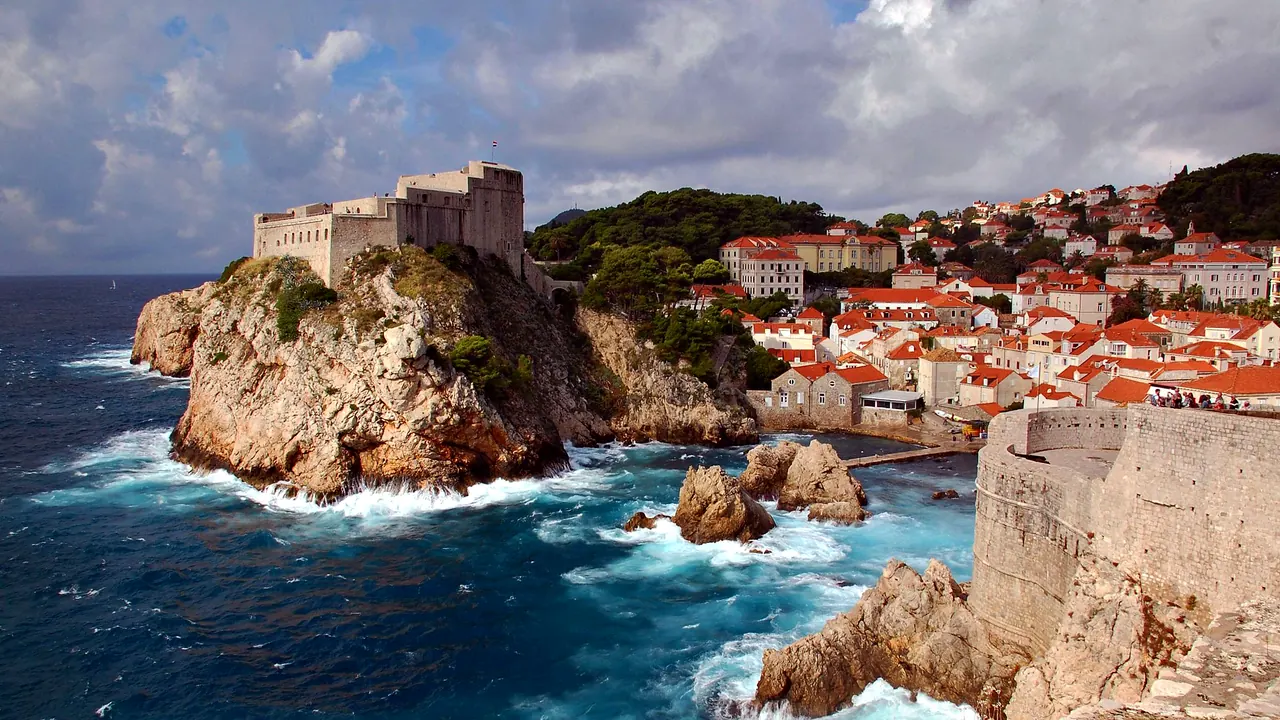
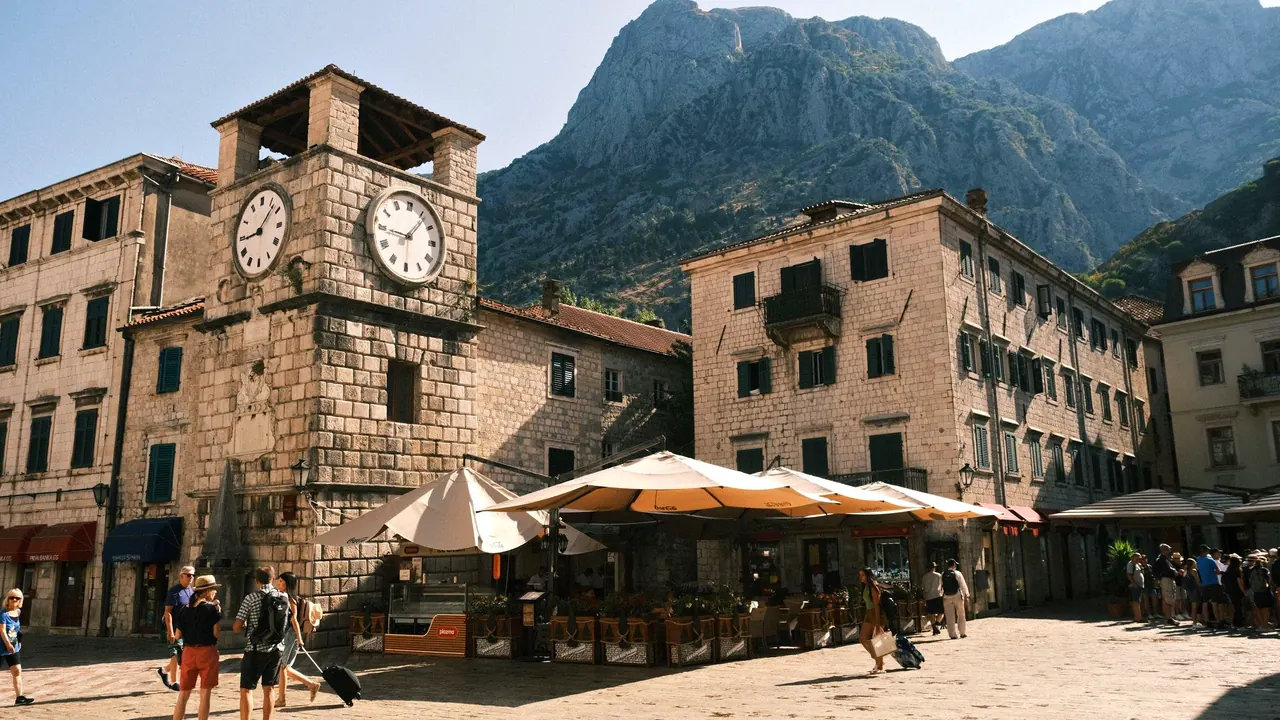
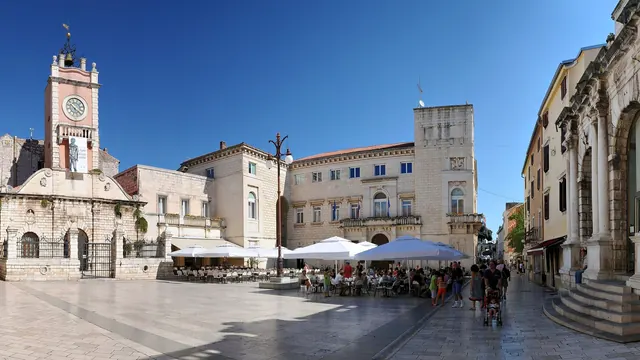
Photos: Dalmatia by Edwardwexler at English Wikipedia, CC BY-SA 3.0, cropped; Kotor by Muhammed Fatih Beki, Pexels License.
Dalmatia or Kotor?
Our verdict in twelve categories, each scored against the same fixed benchmark cities, and the climate month by month, so you can choose for your trip.
Choose Dalmatia for
- nightlife
- beaches
- food and drink
Dalmatia is the choice for a longer, more varied trip on the water. It strings together several first-rank walled towns, from Split's palace to Dubrovnik's walls, with island beaches, a real summer night scene and festival stages in Roman and Renaissance settings. It suits travellers who want to swim off Hvar or Brač one day and walk Trogir or Zadar the next, and who don't mind planning ferries and paying more in the famous spots.
Choose Kotor for
- prices
Travellers who would rather unpack once and let the scenery do the work will find Kotor suits them better. A single compact walled town sits beneath cliffs that climb straight out of the bay, with walks starting at the gates and Perast, Lovcen and Budva close by. Evenings are calm and costs are lower. In return you get no beach of its own, a narrower table and very little to do after dark.
Scoreboard
Twelve categories on one fixed scale from 0 to 100. The shaded stretch is the gap between the two.
Your match
Pick a travel style or drag the sliders, and both match scores follow your weighting.
Wins on nightlife and beaches with your weighting.
Wins on prices with your weighting.
What matters to you?
Category by category
What the scores mean for a trip.
Beaches & swimming
Dalmatia is one of the Adriatic's great swimming coasts. It has the long pine-backed pebble run of the Makarska Riviera, the shifting shingle spit of Zlatni Rat on Brač, boat-reached coves on Vis and the Pakleni islands, and sandy bays at Nin and on Lopud for anyone who dislikes pebbles.
Kotor has calm, warm water but no real beach. You swim from concrete platforms and jetties towards Dobrota and Muo, in an enclosed inner bay that is less clear than the open sea. For sand at Jaz or the coves near Sveti Stefan you drive half an hour to the Budva riviera, so swimming is an outing rather than the shape of the day.
Food & drink
The two share a coastal kitchen of grilled fish, octopus and black cuttlefish risotto, but Dalmatia has more depth. Peka cooked in the embers, pašticada, Ston's oysters and the morning markets of Split and Zadar are part of it, along with a real wine country: Plavac Mali on Pelješac and Hvar, and Pošip on Korčula.
Kotor adds mountain food, with smoked Njegusi ham, sharp cheese and dark Vranac, but its old town squares serve much the same menu to much the same crowds. The better meals are in the shore villages of Dobrota, Prcanj and Perast, and the range is narrower still than in Dalmatia.
Culture & sights
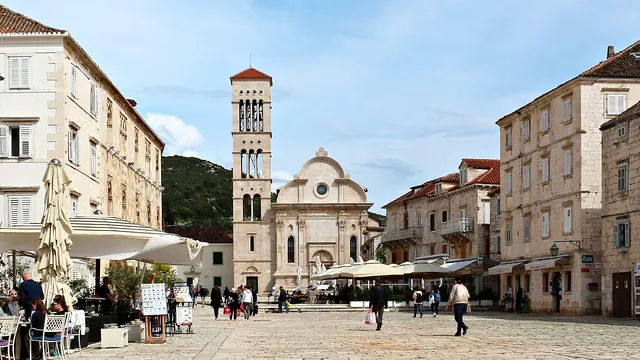
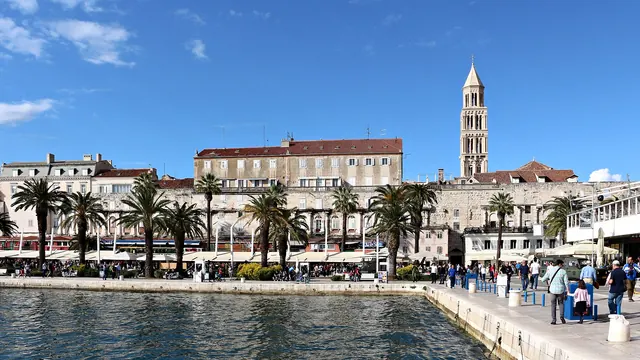
Dalmatia has more great places to see. Split lives inside Diocletian's Palace, Dubrovnik is enclosed by a complete ring of walls, and Trogir, Šibenik's stone cathedral, Zadar's forum and St Donatus, Salona and Korčula follow. The catch is that seeing them means moving from town to town.
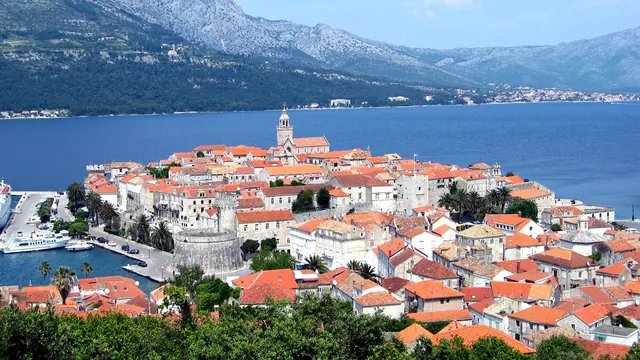
Kotor is one UNESCO-listed walled town under a cliff, with the twelfth-century Cathedral of St Tryphon, merchant palazzi, the Maritime Museum and the long climb to St John's fortress. It is a superb single townscape that takes a couple of days to know, not a coast-long collection. Neither place is strong on museums.
Nightlife
Dalmatia has a real summer party coast. There are Hvar town's harbour bars and its beach clubs on the islets, crowded little bars in Split's palace lanes, and resort strips at Makarska and Bol.
Kotor's evenings are a drink on a square under the floodlit walls, with a few late bars and a small club inside the gates. Those wanting to dance until dawn take the half-hour road to Budva. In both places the season ends in September and nights go quiet early.
Nature & outdoors
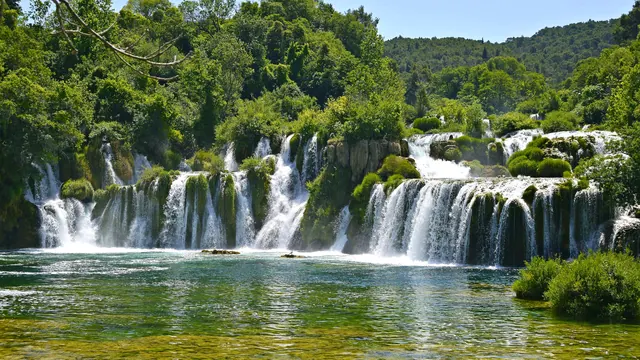
Both have outstanding scenery, but of different kinds. Dalmatia's is spread out and largely seen from the water. Its sailing archipelago runs from the bare Kornati to forested Mljet, with Krka's travertine falls, rafting in the Cetina gorge, Biokovo above Makarska and serious climbing at Paklenica.
Kotor's nature is concentrated in one fjord-like bay, with limestone walls rising more than 1,000m almost from the water. You can walk straight out of the town gates up the Ladder of Kotor, take the hairpins into Lovcen's beech woods, kayak along the shore, or go to the wetlands of Lake Skadar. In both places summer heat on bare limestone makes spring and autumn the hiking seasons.
Day trips
Dalmatia has the slightly wider choice, and much of it is reached by boat. From Split there are ferries and catamarans to Stari Grad, Bol or Komiža on Vis, and from Dubrovnik you can reach the Elaphiti islands, Ston and the Pelješac wineries. Mostar is a long day inland, and Kotor itself is about two hours from Dubrovnik.
Kotor's outings are closer and mostly by road or small boat. Perast and its island church are about twenty minutes away, with Herceg Novi and Budva's old town beyond, and Cetinje and Njegos's mausoleum over Lovcen. Dubrovnik is a day trip in the other direction too, though the border can slow it in summer.
Good for families
Dalmatia is the easier family choice. Shallow, tideless bays sit right by resort towns such as Makarska, Baška Voda and Bol, there is sand for toddlers around Nin, and a few resorts have waterparks or aquariums. Water shoes and Dubrovnik's steps are the main trials.
Kotor has a safe car-free old town and its famous street cats, but little else made for children. The fortress climb is steep and hot, sandy beaches mean a drive to Budva, and the boat to Perast's island church is the outing children like best. Both are relaxed about children at dinner late in the evening.
Getting around
Dalmatia is a little easier to travel, though its trouble is distance. A good inland motorway and reliable buses link the main towns, and Split, Zadar and Dubrovnik run ferries and catamarans to their islands. Even so, Zadar to Dubrovnik takes a full morning's drive and high-season car ferries need planning.
Kotor itself takes minutes to cross on foot, but leaving it depends on one road around the bay that jams in summer and on buses that are not always frequent. Water taxis help with the shore villages, and most visitors hire a car or driver to reach Lovcen and the Lustica coves.
Shopping & style
Neither is a shopping destination, though Dalmatia gives you a bit more. Split has proper shopping streets and a green market by the palace walls, and the region's crafts and produce include Hvar lavender, Pag lace, Brač stone carvings and good olive oil.
In Kotor the old town lanes sell souvenirs, cat trinkets, silver filigree and coral, and the best buys are Vranac, Njegusi ham and honey from the delicatessens. For brands, people go to the marina at Tivat.
Affordability
Kotor is easier on the budget. Konoba meals, local wine and buses are moderately priced, and resort rates apply mainly inside the walls in July and August. Apartments in Dobrota or Muo keep costs down.
Dalmatia in high summer is expensive, with Dubrovnik's old town and Hvar town at the top end and boat trips and park fees adding up. It gets cheaper in the north around Zadar and Šibenik, in mainland resorts and at inland konobas. In both places June and September bring lower room prices while the sea is still warm.
Live music & performing arts
Dalmatia has far more on stage. The Dubrovnik Summer Festival puts theatre and concerts in palace courtyards and on fortress terraces, the Split Summer Festival stages opera on the Peristyle, and Split's Croatian National Theatre runs all year. Klapa harmony singing can be heard in churches and squares.
Kotor has no year-round scene. Summer brings recitals, choirs and children's theatre to its squares and cathedral, and the carnival and Boka Night bring masked parades and decorated boats to the bay. Beyond that, live music is a musician on a restaurant terrace.
Wellness & relaxation
Neither has a bathing tradition, and spas in both mean resort hotels. Dalmatia offers more real rest: the car-free Elaphiti islands, Vis and Lastovo are made for fjaka, the Dalmatian art of summer idleness, best enjoyed in a stone village house in June or September.
In Kotor, calm comes in the early mornings on the bay, long lunches in the shore villages and evenings once the day visitors have gone. At midday in summer the old town is anything but restful, so it is better to stay outside the walls.
When should you go?
Pick your month. The climate figures are measured averages, not a forecast.
Dalmatia in July
Kotor in July
Daytime high, °C
Rainfall in the month, mm
Where the figures come from
Dalmatia's temperatures are measured 53 km from the centre, at Split / Marjan.
Dalmatia has no rain gauge within 25 km of the centre, so its rainfall comes from a gridded climate dataset read at the destination rather than from a gauge further away.
Dalmatia's sunshine is measured 53 km from the centre, at Split / Marjan.
Kotor has no rain gauge within 25 km of the centre, so its rainfall comes from a gridded climate dataset read at the destination rather than from a gauge further away.
Kotor's sunshine is measured 42 km from the centre, at Podgorica-Grad.
Temperature and rainfall are climate normals, averaged over the years shown. Dalmatia: 1991-2020 (sunshine 1971-2000) normals, Split / Marjan (53.2 km from centre). Kotor: 1991-2020 normals, Tivat (4.2 km from centre).
On the Dalmatian coast where most visitors stay, the sea is warm enough for swimming from June, at about 22°C, until late September. July and August are the sunniest months, with afternoons around 31°C that make sightseeing in the old towns heavy going at midday. Kotor follows much the same summer curve and is a touch hotter in August, and the water in its sheltered bay is a degree or so warmer.
The two part ways from autumn to spring. Both get wetter from September, but Kotor's mountain walls catch far more rain, reaching about 202mm in November against roughly 135mm in Dalmatia, and its winter days are noticeably darker. Late spring and early autumn are the best times for walking and town visits in either place. Dalmatia keeps drier and sunnier into those shoulder months, while Kotor's hiking season is best kept to May, June and late September.
Which traveller are you?
On a beach and sun trip, Dalmatia is the clear pick. The Makarska Riviera, Zlatni Rat at Bol and island coves on Vis and Hvar are on hand. In Kotor, a proper beach day means going over the hill to the Budva riviera.
For a trip on a tight budget, Kotor is the better base. Stay in one room on the bay, hike the Ladder of Kotor from the town gates, swim off the shore jetties and take the bus to Jaz for sand, instead of paying for Dalmatian ferries.
For a short city break, Kotor works better. Its whole walled town can be walked in a few hours, the fortress view and Perast fill a second day, and Tivat airport is close. Dalmatia's best sights are spread between several towns, which takes time.
Before you go
| Measure | Dalmatia | Kotor |
|---|---|---|
| Official language | Croatian | Montenegrin |
| Currency | Euro (EUR) | Euro (EUR) |
| Sockets | CF230 V, 50 Hz | CF230 V, 50 Hz |
| Driving side | Right | Right |
| Time zone | UTC+1, UTC+2 in summer | UTC+1, UTC+2 in summer |
| Emergency number | 112 | 112 |
| Elevation | - | 10 m |
| Main airport | Split Saint Jerome Airport (SPU)69 non-stop destinations | Tivat Airport (TIV)5 km from centre42 non-stop destinations |
| Public holidays this year | 14 days | - |
By the numbers
| Measure | Dalmatia | Kotor |
|---|---|---|
| Population | 852,068 | 562 |
| People per km² | 70 | - |
| Museums within 10 km | - | 3 |
| UNESCO World Heritage sites within 50 km | - | 3 |
| Swim season, months above 21 °C | 4 months | 5 months |
Where else could you go?
Every comparison below shares a destination with this one, so you can follow Dalmatia or Kotor somewhere new.