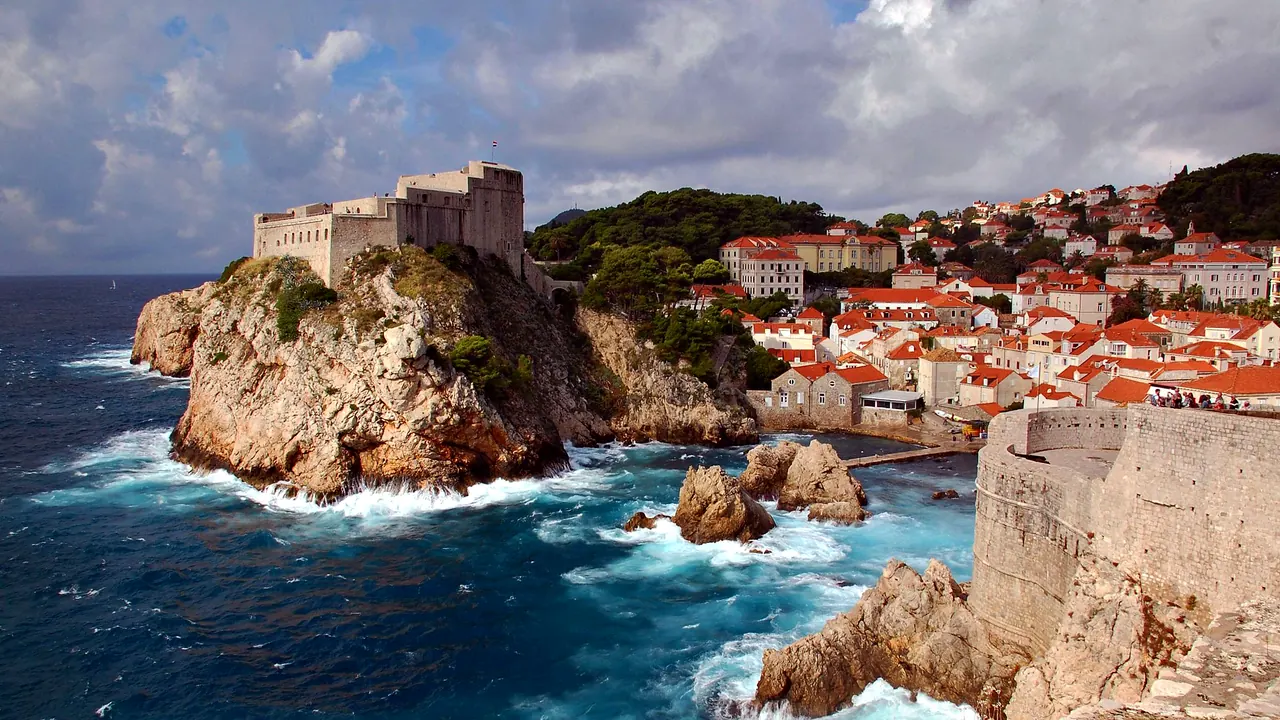
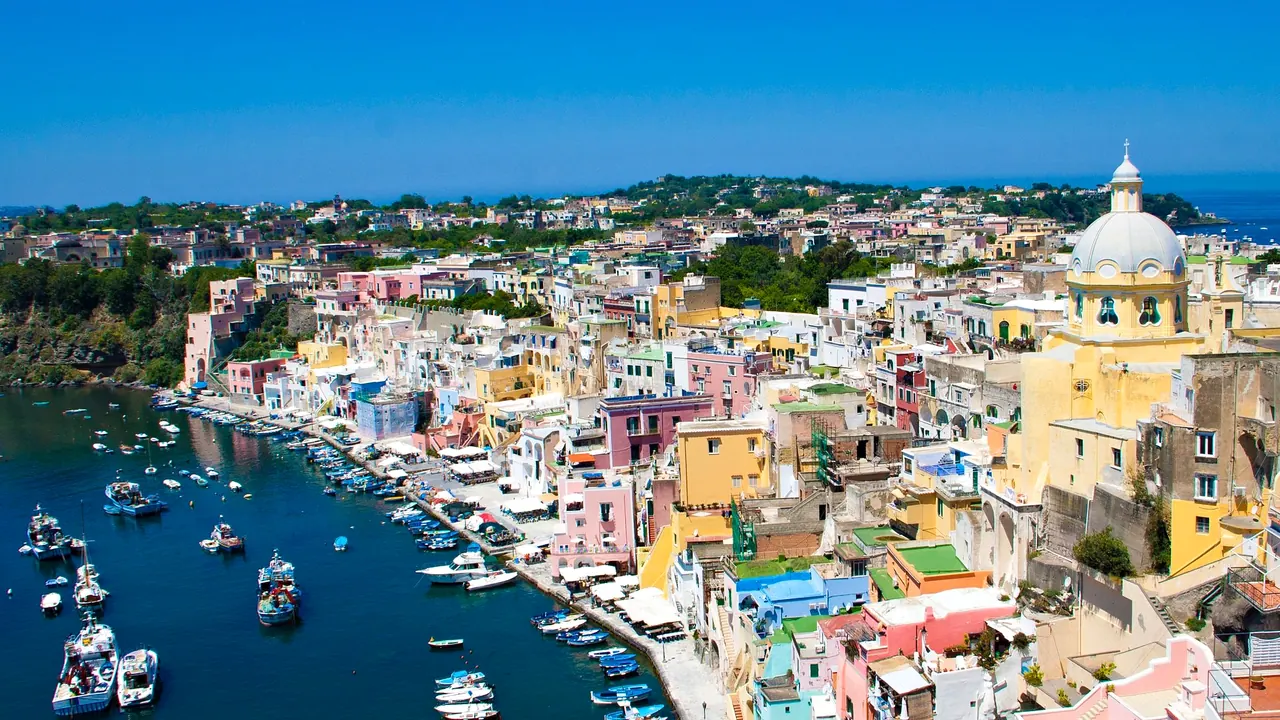
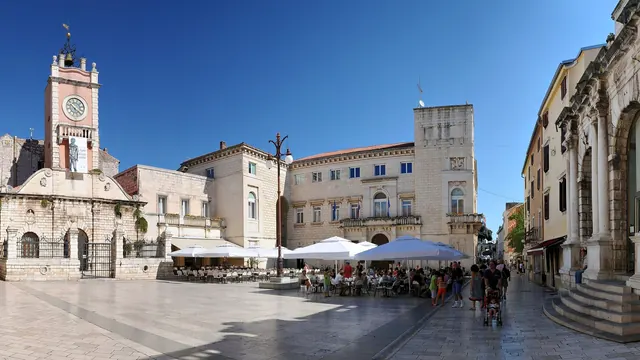
Photos: Dalmatia by Edwardwexler at English Wikipedia, CC BY-SA 3.0, cropped; Procida by DIANA.GRYGAROVA, CC BY-SA 4.0, cropped.
Dalmatia or Procida?
Our verdict in twelve categories, each scored against the same fixed benchmark cities, and the climate month by month, so you can choose for your trip.
Choose Dalmatia for
- nightlife
- culture and sights
- nature and the outdoors
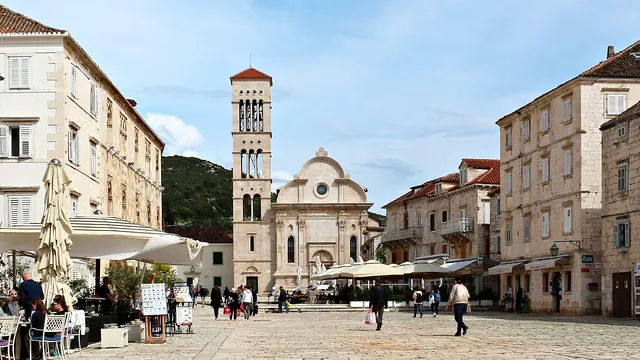
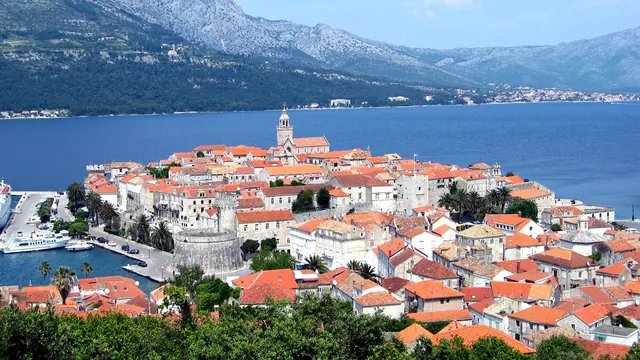
Dalmatia suits travellers who want a long coast to explore rather than one place to settle. Over a week or two you can combine Roman and Venetian walled towns, sailing between islands, rafting or hiking inland, and summer nights in Split or Hvar. You need to plan ferries and drives, and in high season you pay for the famous names, but there is far more to see and do here.
Choose Procida for
- wellness
- getting around
- day trips
Procida is the better pick for a slow, small-island stay. You walk to a cove, eat lemons and fish above a coloured harbour, and take the boat out for the big sights: Naples, Ischia's hot springs and the Roman shore around Pozzuoli. The island itself is quickly seen and goes to bed early, so it suits people who want quiet evenings and a single base, not variety on their doorstep.
Scoreboard
Twelve categories on one fixed scale from 0 to 100. The shaded stretch is the gap between the two.
Your match
Pick a travel style or drag the sliders, and both match scores follow your weighting.
Wins on nightlife and culture and sights with your weighting.
Wins on wellness and getting around with your weighting.
What matters to you?
Category by category
What the scores mean for a trip.
Beaches & swimming
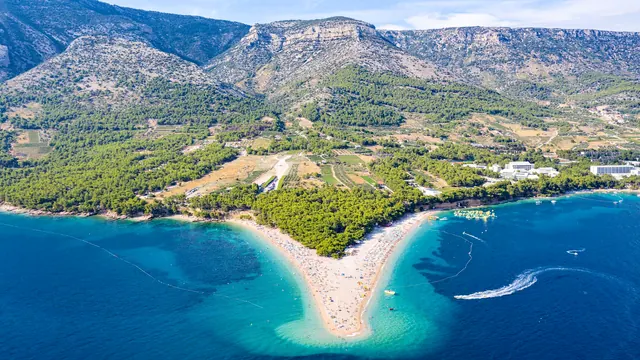
Dalmatia has far more coast and far more choice. The Makarska Riviera has a long run of pine-backed pebble beaches, and Bol has the shingle spit of Zlatni Rat. Around Vis, Hvar and the Pakleni islands there are coves you can reach by small boat, so you can still find an empty bay in August. Sand is rare, mostly around Nin and on Lopud.
Procida has a handful of small coves of dark volcanic sand. The open curve of Chiaiolella and Ciraccio is the main one, and Pozzo Vecchio is the sheltered favourite. The sand is softer underfoot than Dalmatian pebble, but with so few beaches they fill early in high summer.
Food & drink
Dalmatia eats better and drinks much better. There is lamb or octopus slow-cooked under the peka bell, pašticada and black risotto in family konobas, and oysters at Ston. Above all there is wine: Plavac Mali reds from Pelješac and Hvar, and Pošip whites on Korčula.
Procida's cooking is narrower but has its own character. Look for the lemon salad with mint and chilli, linguine with the morning's catch at Corricella, and lingua pastries on the Marina Grande waterfront. Expect a short menu everywhere, and many kitchens shut once the season ends.
Culture & sights
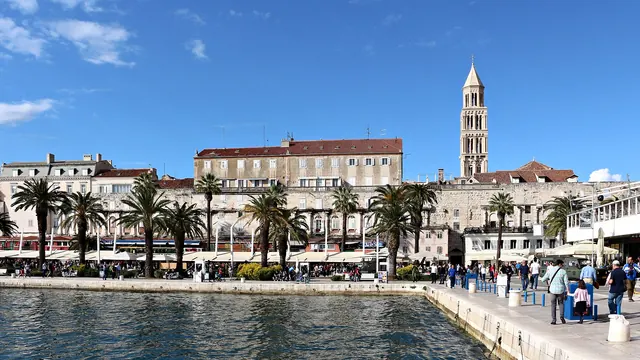
The gap here is wide. Dalmatia has a whole chain of historic towns: Split built inside a Roman emperor's palace, Dubrovnik inside its full ring of walls, Trogir's island core, Zadar's forum and St Donatus, and Salona's ruins nearby. It takes days and several journeys to see them properly.
On Procida, the walled hilltop village of Terra Murata, with the Abbey of San Michele and the former prison of Palazzo d'Avalos, makes up most of it, along with the pastel houses of Corricella. Allow a slow day or two.
Nightlife
Dalmatia has a real summer night scene. Hvar town has harbour cocktail bars and island beach clubs reached by water taxi, Split's palace lanes fill with tiny crowded bars, and Makarska and Bol have resort strips. All of it fades after mid September.
Procida has dinner, a harbour walk and a drink at Marina Grande or Chiaiolella until about midnight. For anything more you take the ferry to Naples or Ischia and keep an eye on the last boat back.
Nature & outdoors
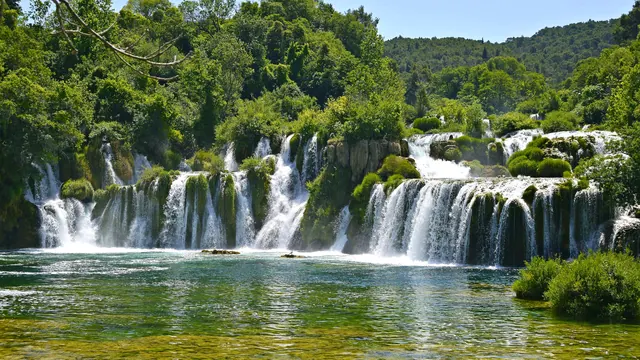
Dalmatia is one of the Mediterranean's great outdoor coasts. You can sail among the bare white Kornati islands, kayak Mljet's saltwater lakes, see the Krka falls, raft the Cetina gorge at Omiš, and climb in Paklenica or up Biokovo's 1,700m wall behind Makarska.
Procida is low and gentle, a place for viewpoints rather than trails. There are headland paths above Pozzo Vecchio and Solchiaro, snorkelling and diving off the south coast, and guided visits to the Vivara reserve. After a few days there is little new ground left.
Day trips
Both are excellent bases for days out, but the trips are very different. From Dalmatia's ports you hop to island harbours like Komiža, Stari Grad and Bol, or go from Dubrovnik to the Elaphiti islands, Ston and Pelješac wineries. You can cross borders to the Bay of Kotor or Mostar's Ottoman bridge, though the trips are spread along a long coast.
Procida puts some of the ancient world's most famous sites within easy reach of one small island. There is Ischia a quarter of an hour away, Pozzuoli's amphitheatre, sunken Baia, Greek Cuma, the historic centre of Naples and Herculaneum, with Pompeii as a longer outing. The catch is that every day ends with the last ferry.
Good for families
Dalmatia works better for families. Resort towns such as Makarska, Baška Voda and Bol keep everything a short walk from shallow, tideless water, and a few have waterparks or aquariums. You can choose sandy bays near Nin, and boat trips give the days some variety.
Procida's Chiaiolella and Ciraccio slope gently into warm sea, and nobody spends hours travelling. But the lanes have no pavements and carry steady traffic, and both Corricella and Chiaia mean a lot of steps. It suits small children happy with a simple beach routine.
Getting around
The two are about level, and the real difference is scale. In Dalmatia the old towns are car-free and easy on foot, but between them you deal with long distances, a slow coastal road, and car ferries that fill in summer. Zadar to Dubrovnik is a full morning's drive, so a car or careful planning helps.
Procida is only a few kilometres across. Small buses and three-wheeled taxis cover it, a car is pointless, and frequent boats leave from Marina Grande. The drawback is close to hand: narrow, walled lanes with traffic and no pavements make short walks less pleasant than they look on the map.
Shopping & style
Neither is a shopping destination, though Dalmatia gives you more to take home. Split has proper shopping streets and its green market by the palace walls, and you can buy olive oil, Hvar lavender, Pag lace and wine straight from cellars. Dubrovnik's old town is mostly souvenirs. Procida has only the ceramics, linen and limoncello shops on Via Roma, and serious shoppers head across to Naples.
Affordability
Costs are much the same, and neither is cheap in July and August. In Dalmatia, Dubrovnik and Hvar town are at the top end of the Mediterranean. You can save a fair amount by staying in the mainland resorts or the north around Zadar and Šibenik, and by eating lunch at an inland konoba.
Procida costs less to stay on than its gulf neighbours, but it has few rooms and little choice, so they fill in summer. The harbour trattorias charge island prices, while pastries, pizza, buses and a free beach day cost little. On both, June and September balance cost against a warm sea.
Live music & performing arts
Dalmatia has far more to offer. The Dubrovnik Summer Festival puts theatre and concerts in palace courtyards and on fortress terraces, the Split Summer Festival stages opera in the Roman Peristyle, and Split's Croatian National Theatre plays the rest of the year. Then there is klapa, the region's unaccompanied harmony singing.
Procida has no stage of its own. Its great event is the Good Friday procession of the Misteri down from Terra Murata. Opera in Naples is possible, but getting home afterwards is awkward.
Wellness & relaxation
Procida is the easier place to slow down. The whole island moves at a gentle pace, and when you want proper bathing, Ischia's hot springs and thermal gardens are a quarter of an hour away, so you can soak by day and sleep back on Procida.
Dalmatia has no bathing tradition, and its spas are in large resort hotels. You can still find calm in the spirit of fjaka on the car-free Elaphiti islands, Vis or Lastovo, but only if you avoid the party towns and the crowded old towns in August.
When should you go?
Pick your month. The climate figures are measured averages, not a forecast.
Dalmatia in July
Procida in July
Daytime high, °C
Rainfall in the month, mm
Where the figures come from
Dalmatia's temperatures are measured 53 km from the centre, at Split / Marjan.
Dalmatia has no rain gauge within 25 km of the centre, so its rainfall comes from a gridded climate dataset read at the destination rather than from a gauge further away.
Dalmatia's sunshine is measured 53 km from the centre, at Split / Marjan.
Procida's temperatures are measured 32 km from the centre, at Grazzanise.
Temperature and rainfall are climate normals, averaged over the years shown. Dalmatia: 1991-2020 (sunshine 1971-2000) normals, Split / Marjan (53.2 km from centre). Procida: 1991-2020 (rainfall 1971-2000) normals, Grazzanise (32.2 km from centre).
Both have a full Mediterranean summer, with daytime highs of 31°C in July and August. That is fine for the beach but tiring for walking old streets in the middle of the day. On the Dalmatian coast, where most visitors stay, the sea is good for swimming from June to September, and summer has a little more sunshine than on Procida. The rain comes back in September and October, and November is the wettest month.
Procida's sea runs about a degree warmer and peaks at 26°C in August. September is also warmer there, around 28°C against 25°C in Dalmatia, so Procida is the better choice for a late-season swim. Its June is very dry, but its autumn is wetter than Dalmatia's, with October and November the rainiest months. For walking, May and early October suit both, and late autumn is drier in Dalmatia.
Which traveller are you?
For a culture and arts trip, choose Dalmatia. Diocletian's Palace in Split, Dubrovnik's walls, Trogir and Šibenik's cathedral give you days of first-rank towns, with summer festivals in the courtyards. Procida's heritage fits into one walk around Terra Murata.
On a food and nightlife trip, Dalmatia wins clearly. Konoba cooking, Pelješac and Hvar wines and Ston oysters pair with bar-filled palace lanes in Split and Hvar's late beach clubs. Procida has good fish and lemon pastries, but evenings end with a drink around midnight.
On a relaxing and wellness trip, Procida has the edge. It is small and slow, with long harbour lunches and few cars on its back lanes, and Ischia's thermal pools are a short boat ride away. Dalmatia can be just as calm, but only if you avoid its busy towns.
Before you go
| Measure | Dalmatia | Procida |
|---|---|---|
| Official language | Croatian | Italian |
| Currency | Euro (EUR) | Euro (EUR) |
| Sockets | CF230 V, 50 Hz | CFL230 V, 50 Hz |
| Driving side | Right | Right |
| Time zone | UTC+1, UTC+2 in summer | UTC+1, UTC+2 in summer |
| Emergency number | 112 | 112 |
| Main airport | Split Saint Jerome Airport (SPU)69 non-stop destinations | Naples International Airport (NAP)131 non-stop destinations |
| Public holidays this year | 14 days | 13 days |
By the numbers
| Measure | Dalmatia | Procida |
|---|---|---|
| Population | 852,068 | 10,092 |
| People per km² | 70 | 2,347 |
| Swim season, months above 21 °C | 4 months | 5 months |
Where else could you go?
Every comparison below shares a destination with this one, so you can follow Dalmatia or Procida somewhere new.
- Ischiavs Procida
- Caprivs Procida
- Amalfi Coastvs Procida
- Kotorvs Dalmatia
- Plitvice Lakesvs Dalmatia
- Pugliavs Dalmatia