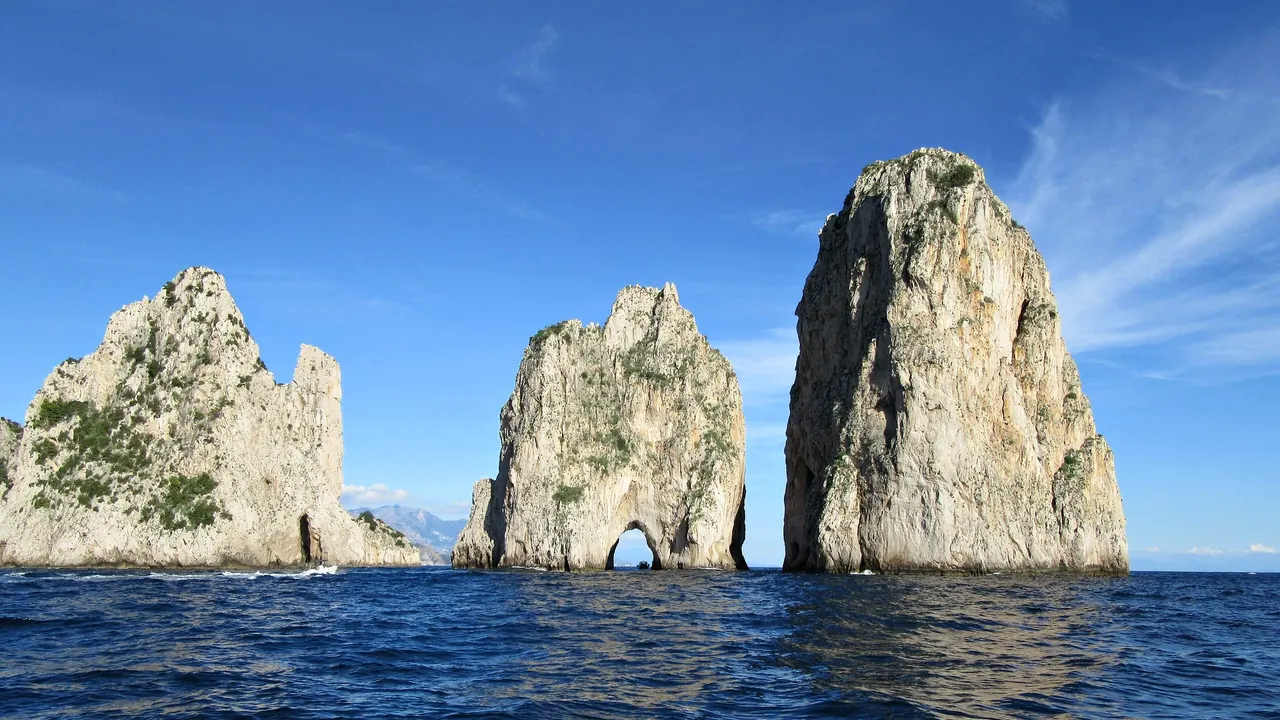
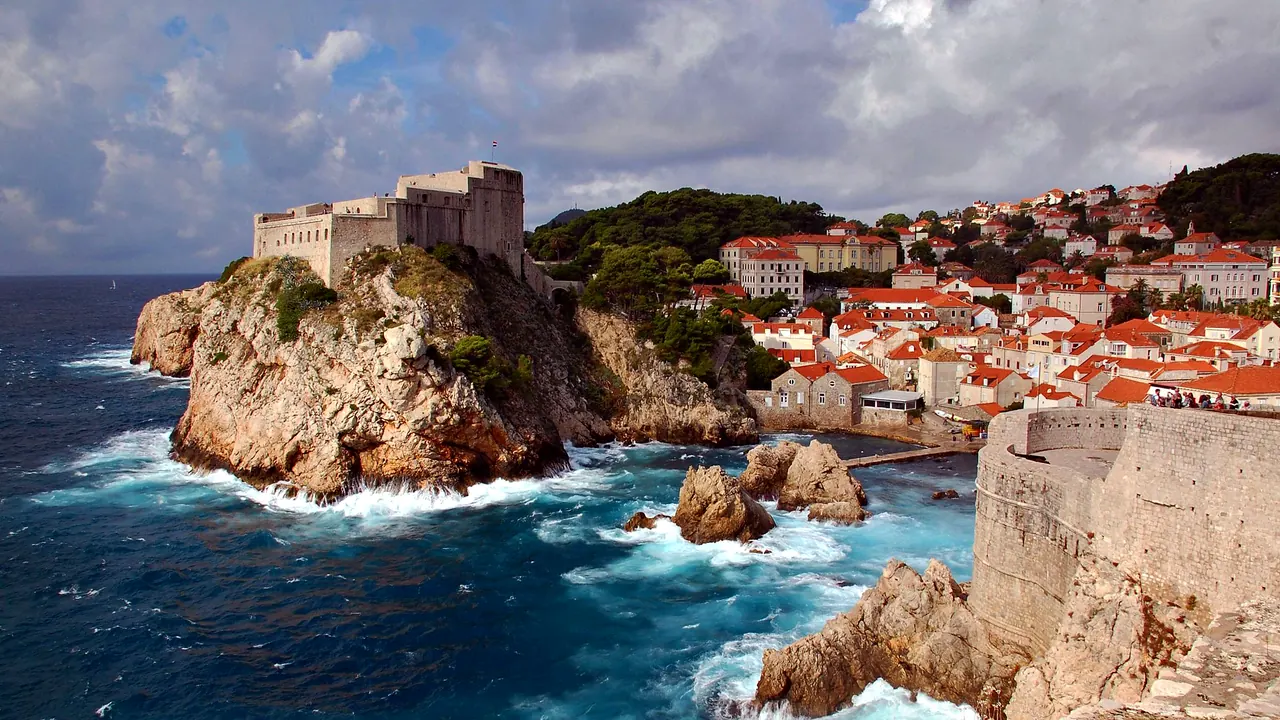
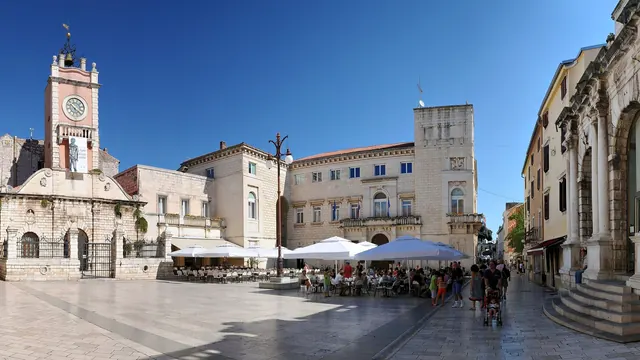
Photos: Capri by Sheeba Samuel, CC BY-SA 4.0, cropped; Dalmatia by Edwardwexler at English Wikipedia, CC BY-SA 3.0, cropped.
Capri or Dalmatia?
Our verdict in twelve categories, each scored against the same fixed benchmark cities, and the climate month by month, so you can choose for your trip.
Choose Capri for
- shopping
- getting around
Capri suits a short, polished stay on one small island, where the point is the scenery, the clear water and an evening on the Piazzetta. Everything lies within a bus ride. Its lanes hold more luxury boutiques and handmade sandals than the whole Croatian coast. It is a place to stay a few nights and spend freely, not one for a long trip.
Choose Dalmatia for
- culture and sights
- prices
- families
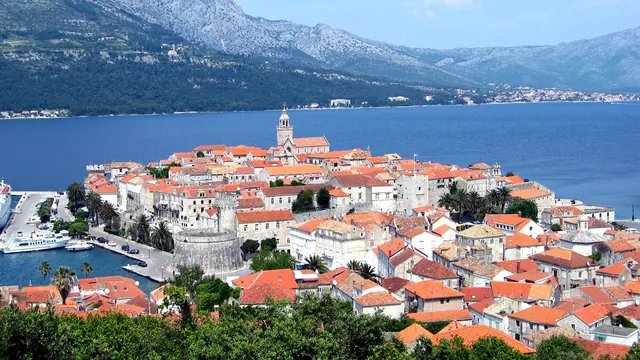
Dalmatia is the better choice for a longer vacation that moves around. It has walled Roman and Venetian towns, a thousand islands to sail between, longer beaches with shallow bays for children, and summer festivals and bars that keep evenings going. It costs a good deal less than Capri, though it is not cheap. In return you spend more time on ferries and roads, and need more planning.
Scoreboard
Twelve categories on one fixed scale from 0 to 100. The shaded stretch is the gap between the two.
Your match
Pick a travel style or drag the sliders, and both match scores follow your weighting.
Wins on shopping and getting around with your weighting.
Wins on culture and sights and prices with your weighting.
What matters to you?
Category by category
What the scores mean for a trip.
Beaches & swimming
Neither coast has much sand, and the water is equally clear and warm. Still, Dalmatia gives far more room to swim. Capri's bathing spots are small pebble coves at the two marinas and rock or concrete platforms run as clubs. The best swimming there is off the rocks at Punta Carena or from a boat under the Faraglioni.
Dalmatia has the long pine-backed pebble beaches of the Makarska Riviera and the shingle spit of Zlatni Rat on Brač. It also has sandy bays on Lopud and near Nin, plus countless island coves reached by small boat. In August there is far more choice for escaping the crowds.
Food & drink
Dalmatia eats better and with more variety. Capri gave the world insalata caprese and has its ravioli, almond torta and lemons. Beyond those few dishes there is little to explore, and the good meals are in Anacapri trattorias rather than around the Piazzetta.
Dalmatia has a whole regional cooking. You can try peka baked under an iron bell, pašticada and black risotto in stone-cellar konobas, and the morning markets of Split and Zadar. Its wine is a real draw too, with Plavac Mali reds on Pelješac and Hvar, Pošip on Korčula and oysters at Ston.
Culture & sights
Capri has a few memorable sites: Tiberius's Villa Jovis above its cliff, Villa San Michele in Anacapri and the Certosa monastery. The whitewashed lanes of its two small towns complete them.
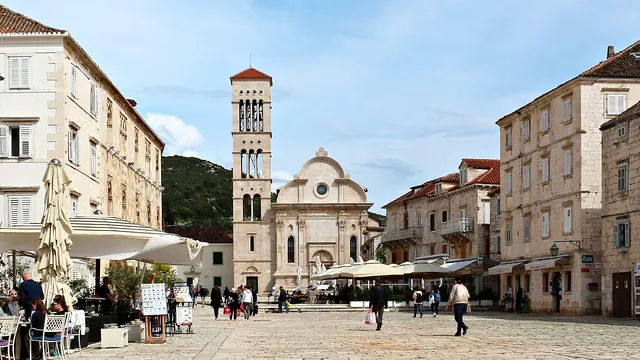
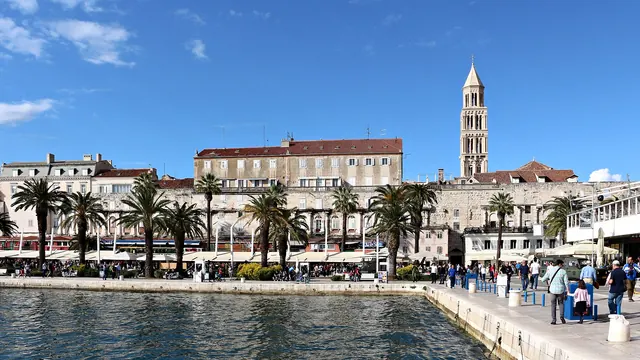
Dalmatia is in another league for heritage. Split's daily life still runs through a Roman emperor's palace, and Dubrovnik is a complete walled city. Trogir, Šibenik, Zadar and Korčula each add old towns of the first rank. The museums are modest, and seeing it all means travelling between towns.
Nightlife
Capri's night out is one dressed-up ritual: aperitivo at the Piazzetta tables, then a piano tavern with Neapolitan songs. It is glamorous, but without clubs it is soon exhausted.
Dalmatia offers more nights out, and in more styles. Hvar town has harbour cocktail bars and beach clubs on islets reached by water taxi. Split's palace lanes are packed with small bars, and Makarska and Bol have resort strips. Both coasts go quiet once the summer season ends.
Nature & outdoors
Capri packs dramatic scenery into a tiny space: the Faraglioni stacks, the Arco Naturale, the chairlift up Monte Solaro and the Sentiero dei Fortini along the wild west coast. It is spectacular, but a few days of walking covers it.
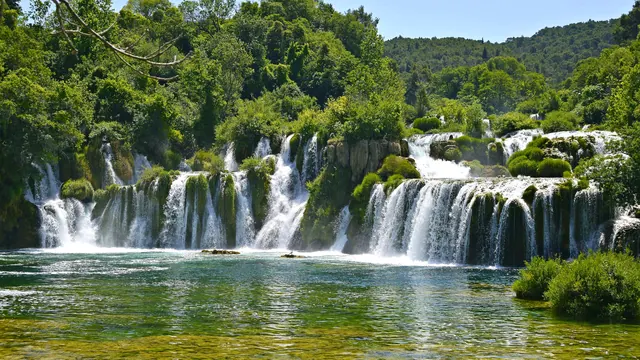
Dalmatia offers far more country to explore. You can sail among the white Kornati islands, kayak Mljet's saltwater lakes, see the Krka falls and raft the Cetina gorge. Biokovo rises to over 1,700m behind Makarska, and Paklenica draws serious climbers.
Day trips
Both are bases for trips by boat, and Dalmatia has slightly more choice. From Capri the Bay of Naples opens up: Sorrento, Naples, Positano and Ischia, with Pompeii as a long day. All of it depends on calm seas and the summer timetables.
From Split and Dubrovnik there are island harbours such as Komiža and Stari Grad, plus Ston and the Pelješac wineries. Roads also reach Kotor in Montenegro and Mostar in Bosnia, so a rough sea does not leave you stuck.
Good for families
This is one of the widest gaps between the two. Capri has nothing built for children and almost no shallow water, and its steps defeat a pushchair. Only older children who swim well get much from it.
Dalmatia's calm, tideless bays and compact resorts like Baška Voda let families spend easy days by the sea. Restaurants are relaxed about children late into the evening. Pack water shoes for the pebbles.
Getting around
The two are about equally easy, but in different ways. On Capri everything is close: a funicular, small orange buses and open taxis cover it, and no one needs a car. The difficulty is the steep walking and the summer queues.
Dalmatia's old towns are just as walkable, but the distances between them are long. Villages and beaches are easier with a car, and island hopping by ferry needs booking ahead in August.
Shopping & style
Capri is the clear winner here. A few lanes off the Piazzetta, Via Camerelle above all, hold a remarkable number of luxury and resort-fashion boutiques. Alongside them are made-to-measure leather sandals, linen and perfumes made on the island.
Dalmatia's best buys are things to eat and keep: olive oil, wine, Hvar lavender, Pag lace and Brač stone carvings. Dubrovnik's old town leans heavily towards souvenir and coral shops.
Affordability
Capri is among the most expensive places to stay in Italy. Its rooms, sunbeds and Piazzetta cocktails are priced for a wealthy crowd. Saving usually means sleeping in Sorrento or Naples and missing the island's evenings.
Dalmatia's dearest spots, Dubrovnik and Hvar town, are just as steep. Elsewhere it gives you plenty of ways to spend less: private rooms in smaller towns, the coast around Zadar and Šibenik, inland konobas and the quieter months of June and September.
Live music & performing arts
Capri has almost no performing arts beyond the odd summer concert in the Certosa cloisters and late-night songs in the piano taverns. For opera you take the boat to Naples.
Dalmatia has real festivals. The Dubrovnik Summer Festival puts theatre and concerts in palace courtyards, and Split stages opera on the Roman Peristyle. Split's National Theatre runs a season the rest of the year, and klapa singing is something you will not hear anywhere else.
Wellness & relaxation
Neither has thermal springs or a spa tradition, so rest on both means a hotel spa and a slow pace. On Capri the calm comes in hours: early mornings and evenings in Anacapri, after the day-trippers leave. Ischia's thermal pools are across the bay.
In Dalmatia the calm comes in whole islands. The car-free Elaphiti, Vis and Lastovo suit the afternoon idleness locals call fjaka, as long as you avoid the party towns.
When should you go?
Pick your month. The climate figures are measured averages, not a forecast.
Capri in July
Dalmatia in July
Daytime high, °C
Rainfall in the month, mm
Where the figures come from
Capri has no rain gauge within 25 km of the centre, so its rainfall comes from a gridded climate dataset read at the destination rather than from a gauge further away.
Capri's sunshine is measured 58 km from the centre, at Grazzanise.
Dalmatia's temperatures are measured 53 km from the centre, at Split / Marjan.
Dalmatia has no rain gauge within 25 km of the centre, so its rainfall comes from a gridded climate dataset read at the destination rather than from a gauge further away.
Dalmatia's sunshine is measured 53 km from the centre, at Split / Marjan.
Temperature and rainfall are climate normals, averaged over the years shown. Capri: 2005-2025 (sunshine 1991-2020, rainfall 1991-2020) normals, Capri (3.6 km from centre). Dalmatia: 1991-2020 (sunshine 1971-2000) normals, Split / Marjan (53.2 km from centre).
On Capri the sea is warm enough to swim from June to early October and reaches about 25°C in August. Summer there is almost dry, with highs near 30°C and very long sunny days. The Dalmatian coast, measured where most visitors stay, follows nearly the same calendar. It runs a degree hotter in July and August, around 31°C, which makes walking the stone streets of Split and Dubrovnik heavy going at midday. It also gets a few more summer showers than Capri, though slightly more sunshine.
For walking and sightseeing, May is the best month on both. It is warm and drier than any month on either side of summer, though the sea is still cool for most swimmers. September keeps the sea warm, but the rain comes back. October stays warm, and on Capri the sea still holds its summer heat, but it is a wet month: Capri gets 112mm, more than any month except November. October in Dalmatia is a little less wet but follows the same pattern. On both, the rain peaks in November, and winter is cool, wet and quiet, with highs in the low teens.
Which traveller are you?
For a culture and arts trip, Dalmatia is far richer. You can move from Diocletian's Palace in Split to the walls of Dubrovnik and the cathedral at Šibenik, and catch summer opera on the Peristyle. Capri's handful of villas and its monastery fill two days.
On a family trip with young children, Dalmatia is much easier. Resorts like Makarska and Bol have calm, shallow bays and some sandy beaches near Nin. Capri has rock platforms with ladders into deep water, endless steps and packed summer buses.
On a shopping trip, Capri comes out ahead. Via Camerelle and the lanes off the Piazzetta pack in Italian luxury labels, made-to-measure sandals and island perfumes. Dalmatia offers olive oil, lavender and lace, but little fashion or design.
Before you go
| Measure | Capri | Dalmatia |
|---|---|---|
| Official language | Italian | Croatian |
| Currency | Euro (EUR) | Euro (EUR) |
| Sockets | CFL230 V, 50 Hz | CF230 V, 50 Hz |
| Driving side | Right | Right |
| Time zone | UTC+1, UTC+2 in summer | UTC+1, UTC+2 in summer |
| Emergency number | 112 | 112 |
| Main airport | Naples International Airport (NAP)131 non-stop destinations | Split Saint Jerome Airport (SPU)69 non-stop destinations |
| Public holidays this year | 13 days | 14 days |
By the numbers
| Measure | Capri | Dalmatia |
|---|---|---|
| Population | 12,903 | 852,068 |
| People per km² | 1,241 | 70 |
| Swim season, months above 21 °C | 5 months | 4 months |
Where else could you go?
Every comparison below shares a destination with this one, so you can follow Capri or Dalmatia somewhere new.
- Positanovs Capri
- Procidavs Capri
- Amalfi Coastvs Capri
- Ischiavs Capri
- Kotorvs Dalmatia
- Plitvice Lakesvs Dalmatia