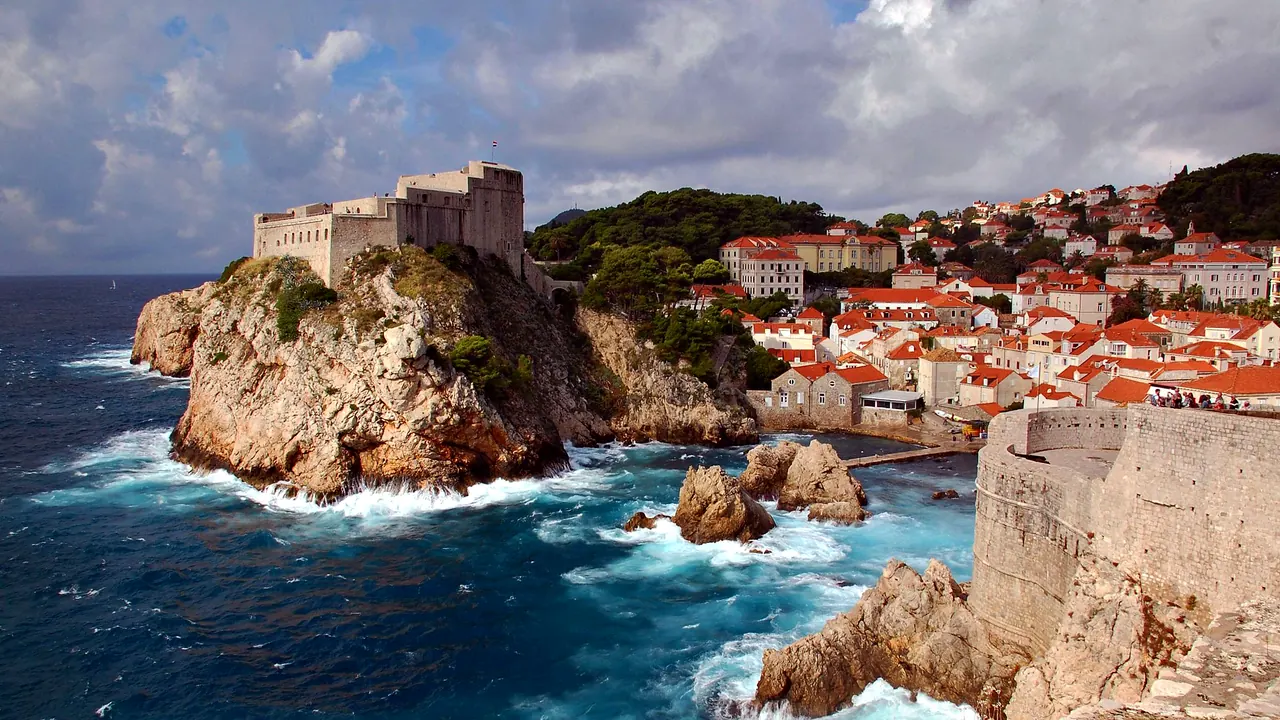
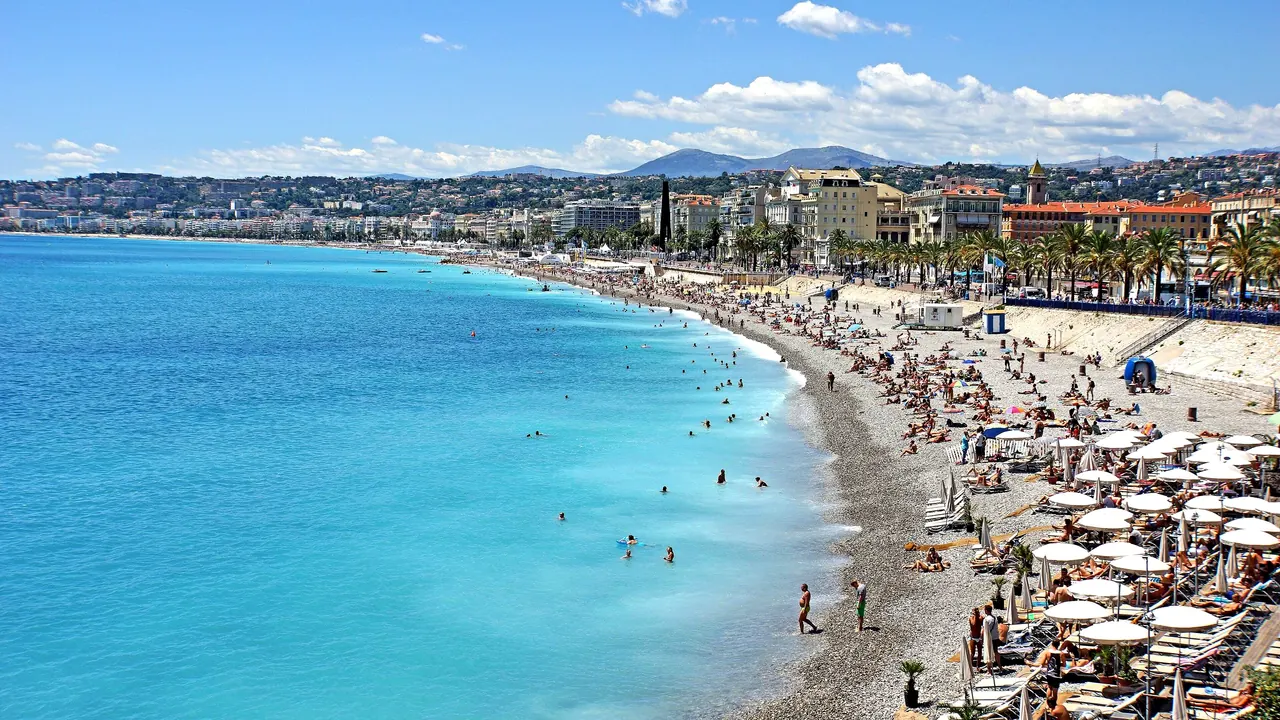
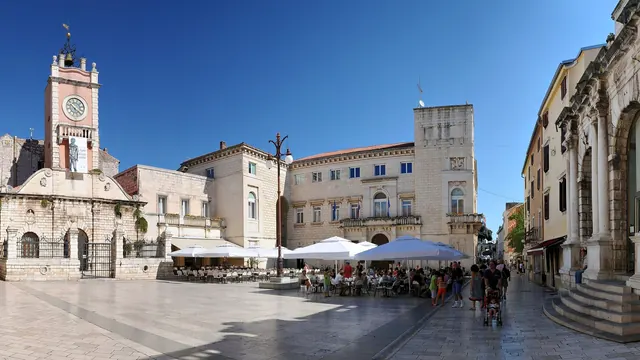
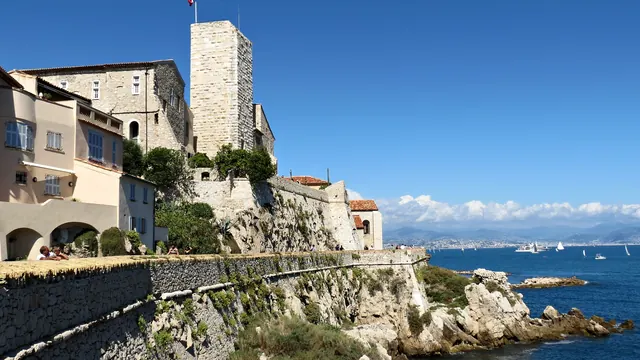
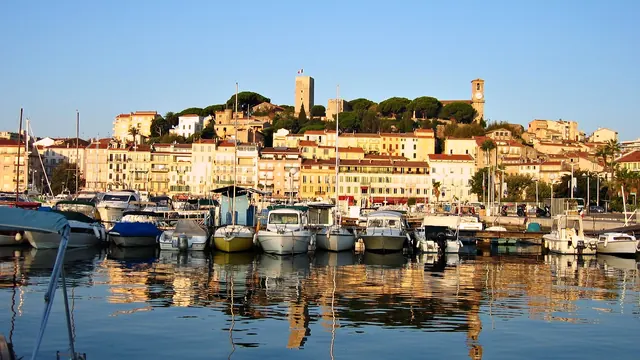
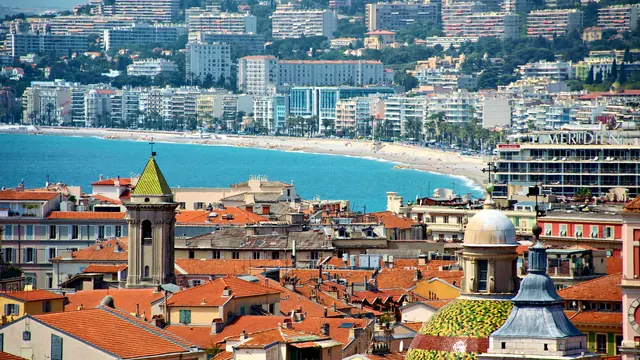
Photos: Dalmatia by Edwardwexler at English Wikipedia, CC BY-SA 3.0, cropped; French Riviera by Dennis G. Jarvis, CC BY-SA 2.0, cropped.
Dalmatia or French Riviera?
Our verdict in twelve categories, each scored against the same fixed benchmark cities, and the climate month by month, so you can choose for your trip.
Choose Dalmatia for
- prices
- day trips
- beaches
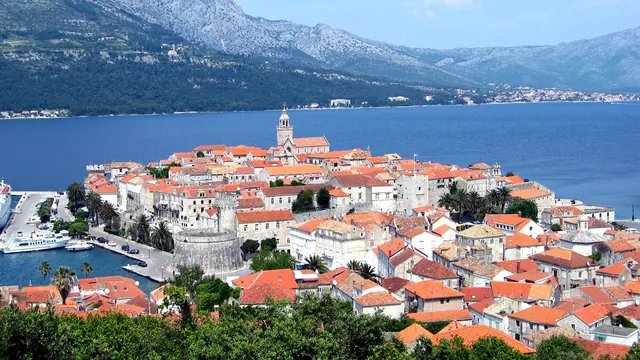
Dalmatia is the better pick if you want to move between islands and walled towns by boat, and if the money has to go further. It costs less to stay and eat away from Dubrovnik and Hvar town, it has more distinct outings within reach, and its stone towns, quiet coves and sailing waters make up a trip where the journey between places is half the pleasure. It suits travellers who will put up with ferry queues and long drives in exchange for that freedom.
Choose French Riviera for
- shopping
- live music and the arts
- food and drink
The French Riviera is for a more polished, settled stay: one base near a station, with a train along the shore to a new town each day. It has better food, far better shopping, a stronger concert and opera calendar and proper seawater spas, all set around Nice and its modern art museums. You pay a lot for that comfort, and the coast has fewer wild corners than the Croatian islands.
Scoreboard
Twelve categories on one fixed scale from 0 to 100. The shaded stretch is the gap between the two.
Your match
Pick a travel style or drag the sliders, and both match scores follow your weighting.
Wins on prices and day trips with your weighting.
Wins on shopping and live music and the arts with your weighting.
What matters to you?
Category by category
What the scores mean for a trip.
Beaches & swimming
The two are evenly matched for swimming, but the beaches feel different. Dalmatia is mostly pebble and rock shelf, with very clear water. Its best beach life is on the islands: coves on Vis and the Pakleni islands, and Zlatni Rat on Brač. On the mainland, the Makarska Riviera has a long run of pine-backed pebble beaches.
The French Riviera has more sand, at Cannes, Juan-les-Pins and Pampelonne near Saint-Tropez. Much of the best of it belongs to private beach concessions, though. If you want a quiet bay reached by small boat, go to Dalmatia. For easy sandy swimming beside a resort town, the Riviera is the better fit.
Food & drink
The Riviera eats better. Nice has a cuisine of its own, with socca, pissaladière and stuffed vegetables, and the Cours Saleya market. The coast from Menton through Monaco to Cannes also has a dense spread of serious restaurants for a special meal.
Dalmatia's cooking is simpler: grilled fish, black risotto and lamb or octopus slow-cooked under the peka bell in a family konoba. It has a narrower range of food. Its stronger suit is wine, with Plavac Mali from Pelješac and Hvar and Pošip from Korčula, plus the oysters at Ston.
Culture & sights
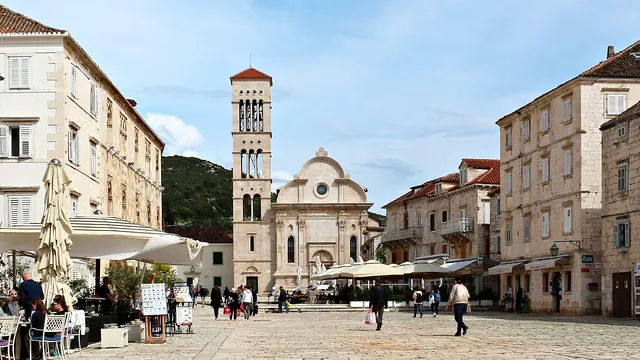
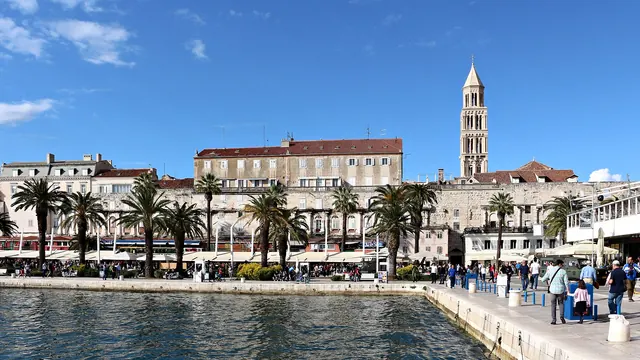
These two are about level, but on very different terms. Dalmatia's heritage is stone and townscape. Diocletian's Palace is still lived in, Dubrovnik is enclosed by its complete walls, and Trogir, Šibenik and Zadar each add a first-rank old town. Its museums are modest, though.
The Riviera's strength is twentieth-century art: the Matisse and Chagall museums in Nice, Picasso in Antibes, the Fondation Maeght and the Matisse chapel at Vence. These are mostly reached from a single base in Nice. Choose Dalmatia for walking through Roman and Venetian streets, and the Riviera for galleries.
Nightlife
Going out is equally good on both coasts and equally tied to summer, but the scenes differ. Dalmatia's nights are younger and rowdier: Hvar town's harbour bars, beach clubs on islets reached by water taxi, and crowded little bars in Split's palace lanes.
The Riviera's summer is about display, with table-service clubs in Saint-Tropez and Monaco and late bars along the Croisette. Nice is the exception. Its old town pubs and wine bars and its student crowd keep some evenings going out of season, when most of Dalmatia closes early.
Nature & outdoors
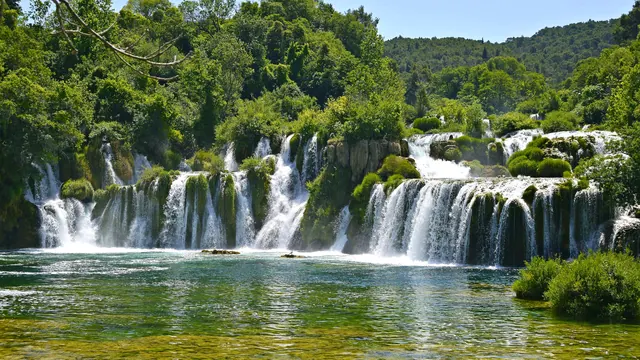
Both are first-rate outdoors, but Dalmatia's landscape is at sea level and the Riviera's goes up into the mountains. In Dalmatia that means sailing between islands, kayaking Mljet's saltwater lakes and seeing the Krka waterfalls. On land there is rafting in the Cetina gorge, climbing in Paklenica and the climb up Biokovo behind Makarska.
On the Riviera, mountains drop almost straight into the sea. There are coastal paths around the capes and red volcanic rock in the Esterel, and the high trails of the Mercantour, with skiing in winter, are about an hour and a half from Nice. In both places, spring and autumn are the seasons for walking.
Day trips
Dalmatia has the more varied outings, and many of them involve a boat. From Split, ferries reach Hvar, Brač and remote Komiža on Vis. From Dubrovnik you can go to the Elaphiti islands and Ston, or across borders to Kotor's bay and the Ottoman bridge at Mostar.
The Riviera's trips are quicker and easier, with a train to Villefranche, Monaco or Menton in under an hour, and a short hop into Italy. Many of its days, though, are variations on a pretty hill village, without the change of country or culture Dalmatia offers.
Good for families
Both coasts work equally well for families, and in both the sea is the whole point. The Riviera has more gently shelving sand, at Juan-les-Pins, Cannes and Fréjus. It also has more built for children, with the aquarium in Monaco's Oceanographic Museum and Parc Phoenix in Nice.
Dalmatia has calm, tideless bays and resort towns like Baška Voda where everything is a short walk from the shore. Children will need water shoes, as sandy beaches are mostly limited to Nin and a few islands. On both coasts, steep stepped old towns are hard work with a pushchair.
Getting around
The Riviera is easier to get around without a car. A coastal railway links Cannes, Antibes, Nice, Monaco and Menton, so one base near a station covers most of the trip. Only Saint-Tropez and the hill villages are harder to reach.
Dalmatia stretches over much longer distances, with Zadar to Dubrovnik a full morning's drive. Buses cover the main towns, but villages and beaches are easier with a car. Island hopping depends on ferries and catamarans that fill up and form queues in high season, so it needs planning.
Shopping & style
This is one of the widest gaps between the two. The Riviera has luxury boutiques on the Croisette and around the Monte-Carlo casino, department stores in Nice, and genuine crafts: perfume in Grasse, bubbled glass in Biot, pottery in Vallauris, plus the Monday antiques market on the Cours Saleya.
Dalmatia has little beyond local produce. Hvar lavender, Pag lace, olive oil and wine are worth bringing home. Dubrovnik's old town is mostly souvenirs and coral jewellery.
Affordability
Neither coast is cheap in summer, but Dalmatia leaves you more room to cut costs. Dubrovnik and Hvar town are expensive. Private rooms, mainland resorts and the quieter northern coast around Zadar and Šibenik bring prices down noticeably.
On the Riviera, Saint-Tropez, Monaco and Cannes are among the most expensive places to stay in Europe, and even Nice is only relatively reasonable. Its real savings are the cheap regional trains, free public beaches and coastal paths. On both coasts, June and September are easier on the budget than high summer.
Live music & performing arts
The Riviera has the fuller programme, and it runs all year. Monaco's gilded opera house, the Monte-Carlo Philharmonic and the Ballets de Monte-Carlo fill the winter, Nice has its own opera house and orchestra, and summer brings jazz in the pine grove at Juan-les-Pins.
Dalmatia's season is mostly summer: theatre and concerts in Dubrovnik's courtyards and opera on Split's Peristyle. Its most memorable sound is klapa, unaccompanied harmony singing heard in churches and old-town squares.
Wellness & relaxation
The Riviera has a real spa tradition, with thalassotherapy centres in Monaco and on the capes and large hotel spas set in gardens on Cap Ferrat and Cap d'Antibes. The quieter option there is a long lunch in a hill village in spring.
Dalmatia has no bathing culture to speak of. What it offers is fjaka, the slow summer idleness, best enjoyed in a stone house on car-free Lastovo, Vis or the Elaphiti islands in June or September.
When should you go?
Pick your month. The climate figures are measured averages, not a forecast.
Dalmatia in July
French Riviera in July
Daytime high, °C
Rainfall in the month, mm
Where the figures come from
Dalmatia's temperatures are measured 53 km from the centre, at Split / Marjan.
Dalmatia has no rain gauge within 25 km of the centre, so its rainfall comes from a gridded climate dataset read at the destination rather than from a gauge further away.
Dalmatia's sunshine is measured 53 km from the centre, at Split / Marjan.
Temperature and rainfall are climate normals, averaged over the years shown. Dalmatia: 1991-2020 (sunshine 1971-2000) normals, Split / Marjan (53.2 km from centre). French Riviera: 1991-2020 normals, Nice (9.8 km from centre).
Both coasts follow the same Mediterranean pattern. Summers are dry and sunny, the sea is warm enough to swim from June to early October, and it peaks at about 25°C in August on both sides. The difference is heat. Around Dalmatia's main coastal towns, July and August reach 31°C, which makes walking stone towns like Split or Dubrovnik at midday hard going. On the Riviera the same months stay nearer 28°C, so sightseeing in high summer is more comfortable.
Both coasts get their rain in autumn. It arrives from September, and November is the wettest month in both places, at around 135mm. Winter is milder and noticeably sunnier on the Riviera, which makes it the better choice for a walking trip between November and March. Dalmatia is at its best in June and September, when the sea is warm, the heat has eased and walking inland is pleasant again.
Which traveller are you?
On a trip on a tight budget, Dalmatia makes the money go further. If you stay in smaller towns and eat in family konobas, costs stay reasonable. On the Riviera, even Nice, the cheaper base, is expensive in summer.
For a shopping trip, the French Riviera wins easily. It covers both ends of the market, from luxury in the resort towns to old craft workshops worth a day out in themselves. In Dalmatia, what you bring home is mostly food, wine and souvenirs.
For a sailing vacation, Dalmatia has the edge. More than a thousand islands, sheltered anchorages and the bare white Kornati archipelago make it one of Europe's great cruising grounds. On the Riviera, sailing follows a much shorter line of capes and bays.
Before you go
| Measure | Dalmatia | French Riviera |
|---|---|---|
| Official language | Croatian | French |
| Currency | Euro (EUR) | Euro (EUR) |
| Sockets | CF230 V, 50 Hz | CE230 V, 50 Hz |
| Driving side | Right | Right |
| Time zone | UTC+1, UTC+2 in summer | UTC+1, UTC+2 in summer |
| Emergency number | 112 | 112 |
| Main airport | Split Saint Jerome Airport (SPU)69 non-stop destinations | Nice-Côte d'Azur Airport (NCE)130 non-stop destinations |
| Public holidays this year | 14 days | 11 days |
By the numbers
| Measure | Dalmatia | French Riviera |
|---|---|---|
| Population | 852,068 | - |
| People per km² | 70 | - |
| Swim season, months above 21 °C | 4 months | 4 months |
Where else could you go?
Every comparison below shares a destination with this one, so you can follow Dalmatia or French Riviera somewhere new.
- Piedmontvs French Riviera
- Provencevs French Riviera
- Kotorvs Dalmatia
- Plitvice Lakesvs Dalmatia
- Cinque Terrevs French Riviera
- Corsicavs French Riviera