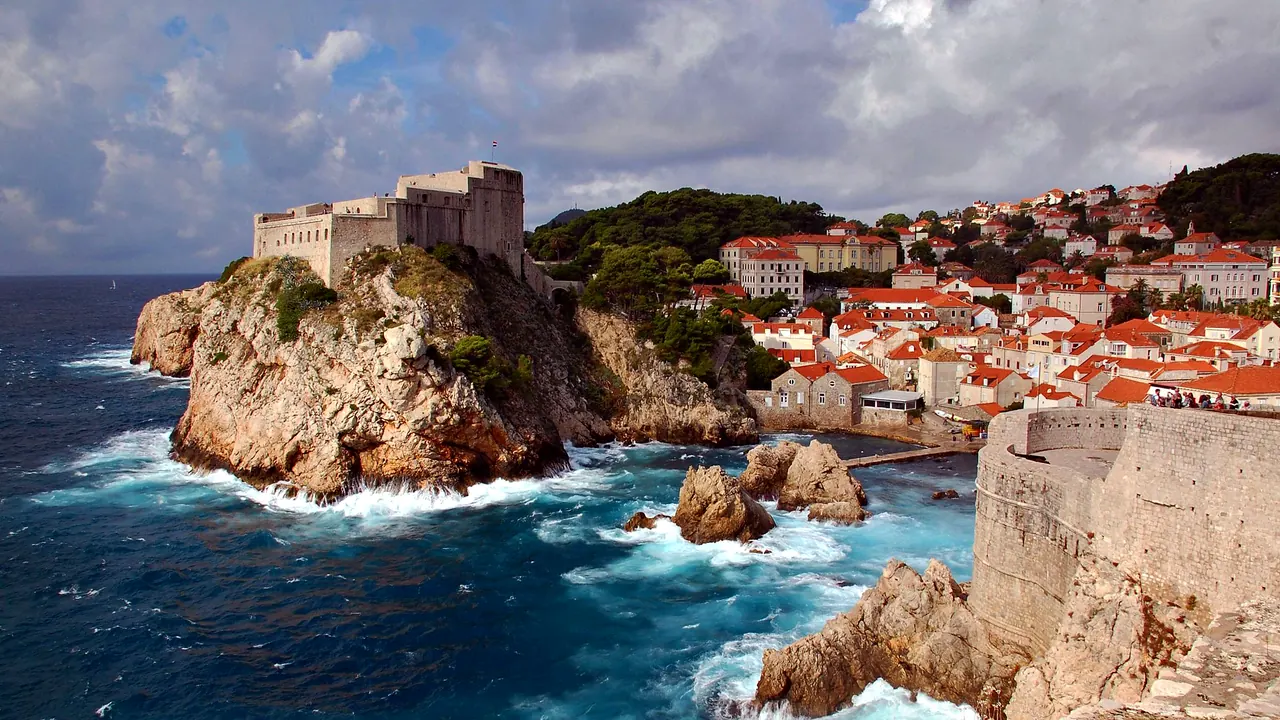
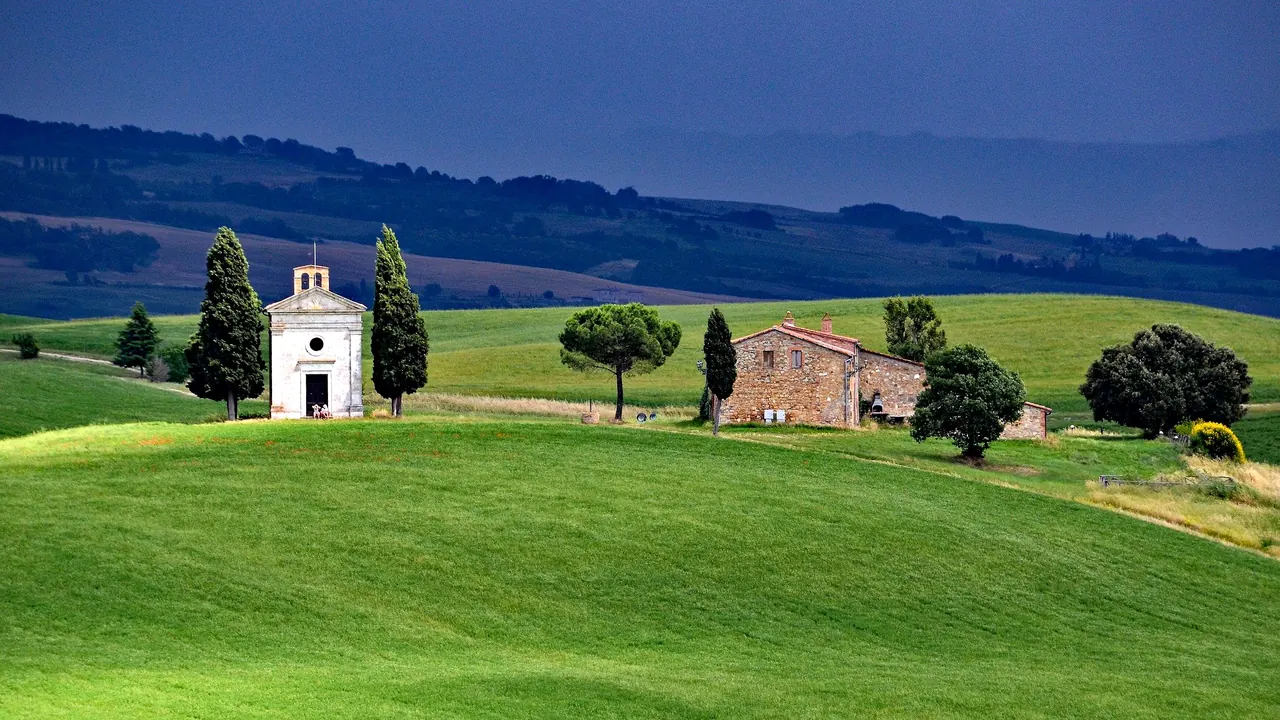
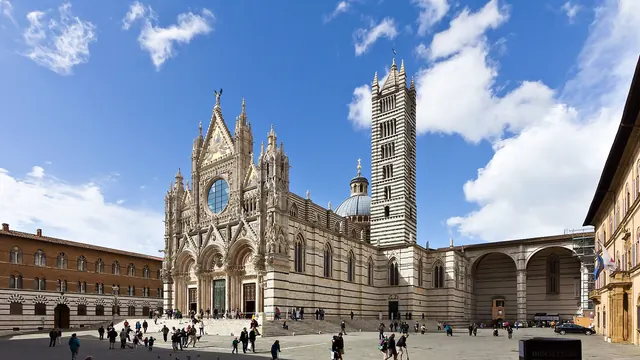
Photos: Dalmatia by Edwardwexler at English Wikipedia, CC BY-SA 3.0, cropped; Tuscany by Hervé Simon, CC BY-SA 2.0, cropped.
Dalmatia or Tuscany?
Our verdict in twelve categories, each scored against the same fixed benchmark cities, and the climate month by month, so you can choose for your trip.
Choose Dalmatia for
- nightlife
- beaches
- prices
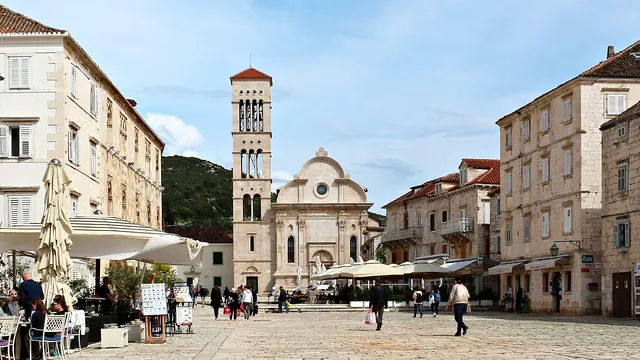
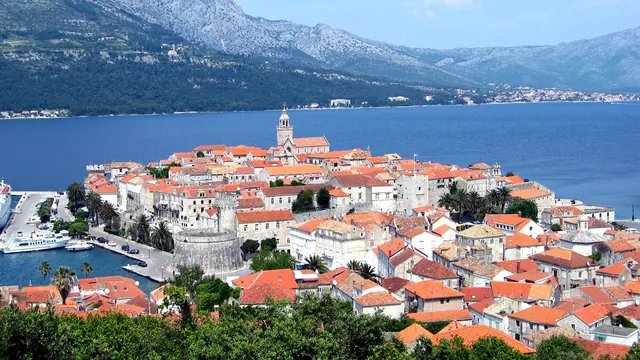
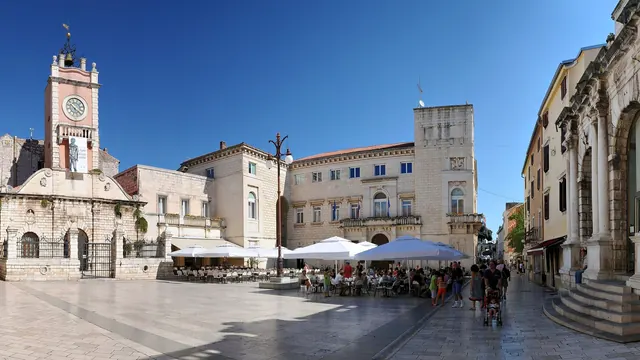
Dalmatia is the choice for a trip built around the sea. You get clear water off pebble coves, a chain of islands to hop between by ferry or catamaran, and summer evenings in Hvar town or Split's palace lanes. It is a coast for swimming, sailing and staying out late. Walled towns like Dubrovnik and Trogir are the setting rather than the main event.
Choose Tuscany for
- wellness
- shopping
- food and drink
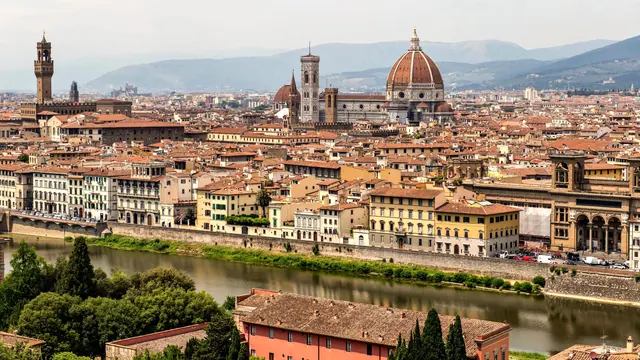
If art, food and craft come first, Tuscany wins clearly. Florence's galleries and churches, Siena and a long list of hill towns, Chianti and Brunello at the cellar door, and leather and gold to take home can fill a whole trip without a beach in it. Add the hot springs and a farmhouse in the Val d'Orcia, and Tuscany is also the slower and more restful of the two.
Scoreboard
Twelve categories on one fixed scale from 0 to 100. The shaded stretch is the gap between the two.
Your match
Pick a travel style or drag the sliders, and both match scores follow your weighting.
Wins on nightlife and beaches with your weighting.
Wins on wellness and shopping with your weighting.
What matters to you?
Category by category
What the scores mean for a trip.
Beaches & swimming
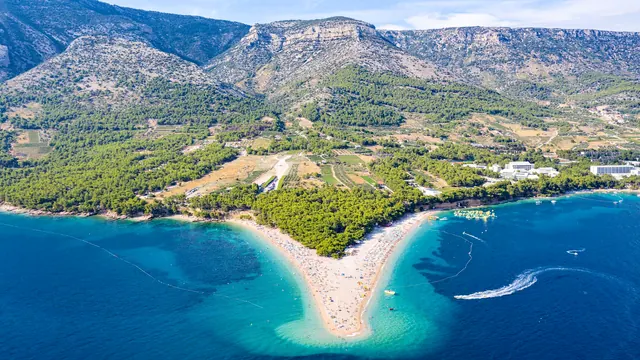
Dalmatia is the better place for the sea. The water is clearer and calmer along almost the whole coast, and the islands give it a near-endless supply of coves, from Vis to the shifting shingle spit of Zlatni Rat at Bol. The catch is what you lie on: most beaches are pebble and rock, with sand only around Nin and on a few islands such as Lopud.
Tuscany has more sand, but you have to choose your stretch of coast. Elba comes closest to Dalmatian clarity and the Maremma has pine-backed strands, while Versilia's long sandy beaches are mostly rows of club umbrellas. If you are based in Florence or the hill towns, the beach is a day out rather than the point of the trip.
Food & drink
Tuscany eats better. Its cooking runs from the Florentine T-bone and pappardelle with wild boar to lampredotto sold from street carts and the market halls of San Lorenzo and Sant'Ambrogio. Wine runs through the whole region, from Chianti Classico in the hills to Brunello in Montalcino.
Dalmatia eats more simply and mostly from the sea: grilled fish, black cuttlefish risotto, peka in a family konoba and oysters at Ston. Its Plavac Mali and Pošip wines are worth a cellar visit. Too many harbourfronts serve dull food, though, and the range does not match Tuscany's.
Culture & sights
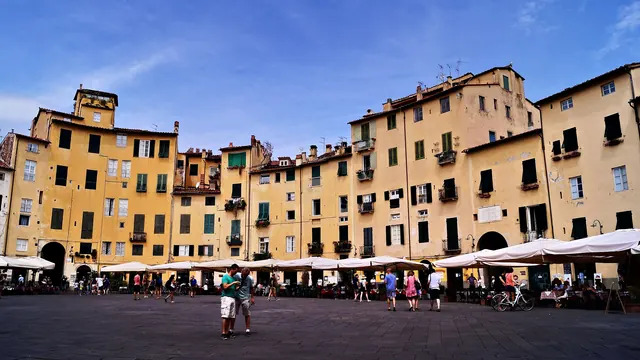
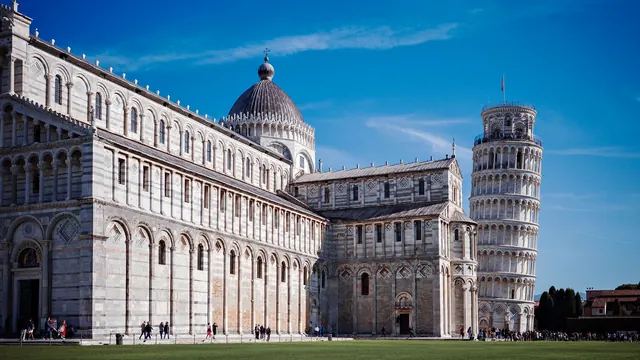
Both regions are full of fine old stone, but Tuscany holds art on another level. Florence alone has the Uffizi, the David, Brunelleschi's dome and the frescoed churches, all in one walkable centre. Siena, Pisa, San Gimignano and Lucca are not far behind.
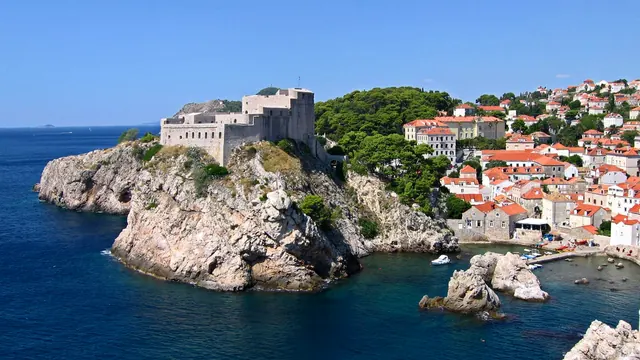
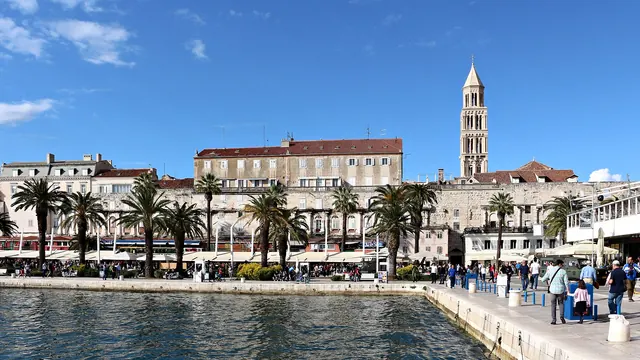
Dalmatia's heritage is townscape more than collections: Diocletian's Palace in Split, Dubrovnik's walls, Trogir, and Šibenik's all-stone cathedral. They are superb places to wander, but the museums are modest and the highlights are spread along a long coast.
Nightlife
Dalmatia parties harder in summer. Hvar town's harbour bars and its islet beach clubs, reached by water taxi, keep going well past midnight. So do Split's crowded palace lanes and the resort strips of Makarska and Bol, from June to mid September, though the coast goes quiet out of season.
Tuscan evenings are mostly long dinners and a glass in the piazza. Florence's Santo Spirito steps and the Oltrarno wine bars are lively, and Versilia's dance halls run until dawn in summer. The hill towns, though, are asleep soon after dinner.
Nature & outdoors
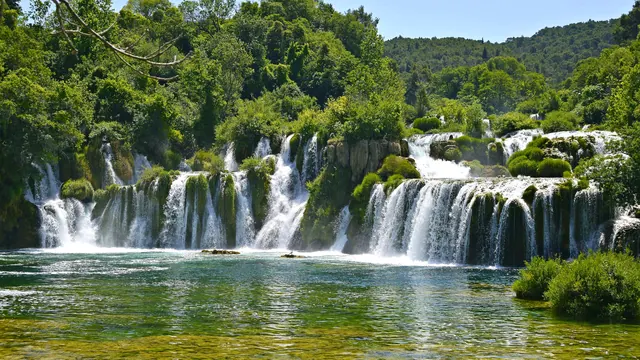
The two are well matched outdoors, but in very different ways. Dalmatia's landscape is the sea: more than a thousand islands to sail between, the bare white Kornati and the saltwater lakes of Mljet. Inland it has the Krka falls, rafting in the Cetina gorge and serious climbing at Paklenica.
Tuscany's countryside is mostly farmed and gentle. Cypress lanes and wheat hills in the Val d'Orcia and Chianti suit cycling and walking from town to town, and the Apuan Alps and the Casentino beech forests give it wilder ridges and woods. Choose Dalmatia for water and rock, Tuscany for slow rural country.
Day trips
Tuscany has more within easy reach. From Florence or a base in Chianti, Siena, Lucca, Pisa, San Gimignano and Volterra are all close. Bologna is under an hour by fast train, and Umbria and the Cinque Terre are just over the borders.
Dalmatia's day trips are mostly by water, which is half the pleasure. From Split you can reach Hvar, Brač and Vis, and from Dubrovnik the Elaphiti islands and Ston, with Kotor and Mostar across the borders. Ferry times and long distances make each outing a bigger undertaking.
Good for families
Both work about equally well for families, and in both places children are welcome at dinner however late it runs. The main difference is the beach. Tuscany's Versilia and Maremma lidos are sandy, shallow and have lifeguards, while Dalmatia's calm, tideless water usually means pebbles and water shoes. Tuscany also offers farmhouse stays with pools and animals, and the Pinocchio park at Collodi. Dalmatia offers boat trips and compact resorts like Baška Voda, where everything is near the shore.
Getting around
In both regions you need a car for the countryside and some planning for summer ferries. Tuscany's advantage is its railway: Florence, Pisa, Lucca, Arezzo and Viareggio are well linked by regional train, though Siena and the Val d'Orcia are not.
Dalmatia relies on buses, a fast inland motorway, and ferries and catamarans from Split, Zadar and Dubrovnik. Its distances are also longer: Zadar to Dubrovnik is a full morning's drive.
Shopping & style
Tuscany is the clear choice for shopping. Florence has leather workshops, goldsmiths on the Ponte Vecchio, bookbinders in Oltrarno and the fashion houses of Via de' Tornabuoni. Around the region, towns have crafts of their own, from alabaster in Volterra to marble in Pietrasanta.
Dalmatia's best buys are things to eat, drink or use: olive oil, wine, Hvar lavender and Pag lace from markets and cellars. Dubrovnik's old town is mostly souvenirs and coral, and there is little design or luxury.
Affordability
Neither is a bargain in summer, but Dalmatia is somewhat easier on the budget. Dubrovnik and Hvar town are expensive, but private rooms in smaller towns, the coast around Zadar and Šibenik, and lunch in an inland konoba bring costs down.
Tuscany costs more for hotels in central Florence, villas in Chianti and the Versilia beach clubs, and car hire adds a real cost. You can save on trattoria meals, wine bought at the cellar door and stays in cheaper towns such as Lucca, Arezzo and those of the Maremma.
Live music & performing arts
Tuscany has more to hear through the year, and most of it is opera. Florence has the Maggio Musicale Fiorentino and its own opera house, Lucca holds Puccini recitals all year, and his operas are staged by the lake at Torre del Lago each summer.
Dalmatia's season is the summer, when the Dubrovnik and Split festivals put theatre and opera in palace courtyards and on the Peristyle. Its own sound is klapa, unaccompanied harmony singing heard in churches and old-town squares.
Wellness & relaxation
Tuscany is far better for rest. The region sits on hot springs. There are free terraced pools at Saturnia, a steaming medieval bath at Bagno Vignoni and the grand spa town of Montecatini, and a farmhouse in the Val d'Orcia is restful by design.
Dalmatia has no bathing tradition, only spas in resort hotels. Its version of rest is fjaka, the slow idleness of a summer afternoon. The best place for it is a stone house on Vis, Lastovo or the car-free Elaphiti islands in June or September.
When should you go?
Pick your month. The climate figures are measured averages, not a forecast.
Dalmatia in July
Tuscany in July
Daytime high, °C
Rainfall in the month, mm
Where the figures come from
Dalmatia's temperatures are measured 53 km from the centre, at Split / Marjan.
Dalmatia has no rain gauge within 25 km of the centre, so its rainfall comes from a gridded climate dataset read at the destination rather than from a gauge further away.
Dalmatia's sunshine is measured 53 km from the centre, at Split / Marjan.
Tuscany has no rain gauge within 25 km of the centre, so its rainfall comes from a gridded climate dataset read at the destination rather than from a gauge further away.
Tuscany's sunshine is measured 71 km from the centre, at Pisa / S. Giusto.
Temperature and rainfall are climate normals, averaged over the years shown. Dalmatia: 1991-2020 (sunshine 1971-2000) normals, Split / Marjan (53.2 km from centre). Tuscany: 1995-2020 (sunshine 1991-2020, rainfall 1991-2020) normals, Firenze / Peretola (5.6 km from centre).
Both regions have hot, dry summers and wet late autumns, but in Dalmatia the sea decides when to go. On the central coast the water is warm enough to swim from June and reaches about 25°C in August. July is the sunniest month in either region. June is the best shoulder month: warm, dry and with the sea already pleasant. In September the sea is still warm, but the first autumn rain arrives. From October the rain sets in properly and peaks at around 135mm in November, so the island season is over by then.
Tuscany is a little hotter in high summer, with August afternoons near 33°C in the areas where most visitors stay. That makes midday walking in Florence or Siena hard going. The best months for sightseeing and walking the hill towns are April and May, before the heat builds, and September, when the days ease off but rain begins to return. By October Tuscany is as wet as the Croatian coast. Winter is mild and grey in both regions, and a little wetter in Dalmatia.
Which traveller are you?
On a beach and sun trip, Dalmatia is the stronger pick. You can swim from June into early October in very clear water. There are long pebble beaches on the Makarska Riviera, and quiet coves on Vis, Hvar and the Pakleni islands a short boat ride away.
For a relaxing and wellness trip, Tuscany has what Dalmatia lacks: a real tradition of bathing in hot springs. There are open-air springs in the south and a grand old spa town in the north, and you can come back each evening to a quiet farmhouse with a pool.
On a shopping trip, stay in Florence. Its craft quarters are in the same walkable centre as the galleries, so shopping fits between the sights, and towns with their own trades are a short train ride away. In Dalmatia, shopping means picking up a few things between swims.
Before you go
| Measure | Dalmatia | Tuscany |
|---|---|---|
| Official language | Croatian | Italian |
| Currency | Euro (EUR) | Euro (EUR) |
| Sockets | CF230 V, 50 Hz | CFL230 V, 50 Hz |
| Driving side | Right | Right |
| Time zone | UTC+1, UTC+2 in summer | UTC+1, UTC+2 in summer |
| Emergency number | 112 | 112 |
| Main airport | Split Saint Jerome Airport (SPU)69 non-stop destinations | Florence Airport, Peretola (FLR)46 non-stop destinations |
| Public holidays this year | 14 days | 13 days |
By the numbers
| Measure | Dalmatia | Tuscany |
|---|---|---|
| Population | 852,068 | 3,729,641 |
| People per km² | 70 | - |
| Swim season, months above 21 °C | 4 months | - |
Where else could you go?
Every comparison below shares a destination with this one, so you can follow Dalmatia or Tuscany somewhere new.
- Umbriavs Tuscany
- Elbavs Tuscany
- Cinque Terrevs Tuscany
- Kotorvs Dalmatia
- Lake Gardavs Tuscany
- Plitvice Lakesvs Dalmatia