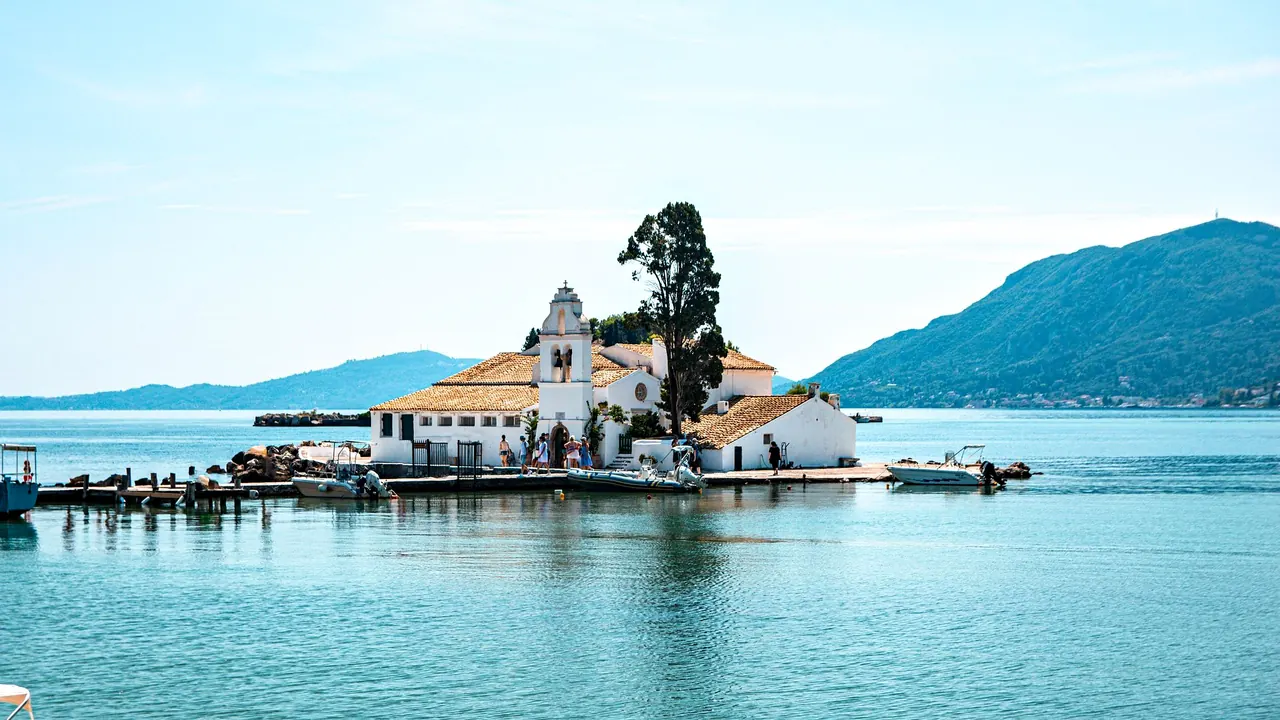
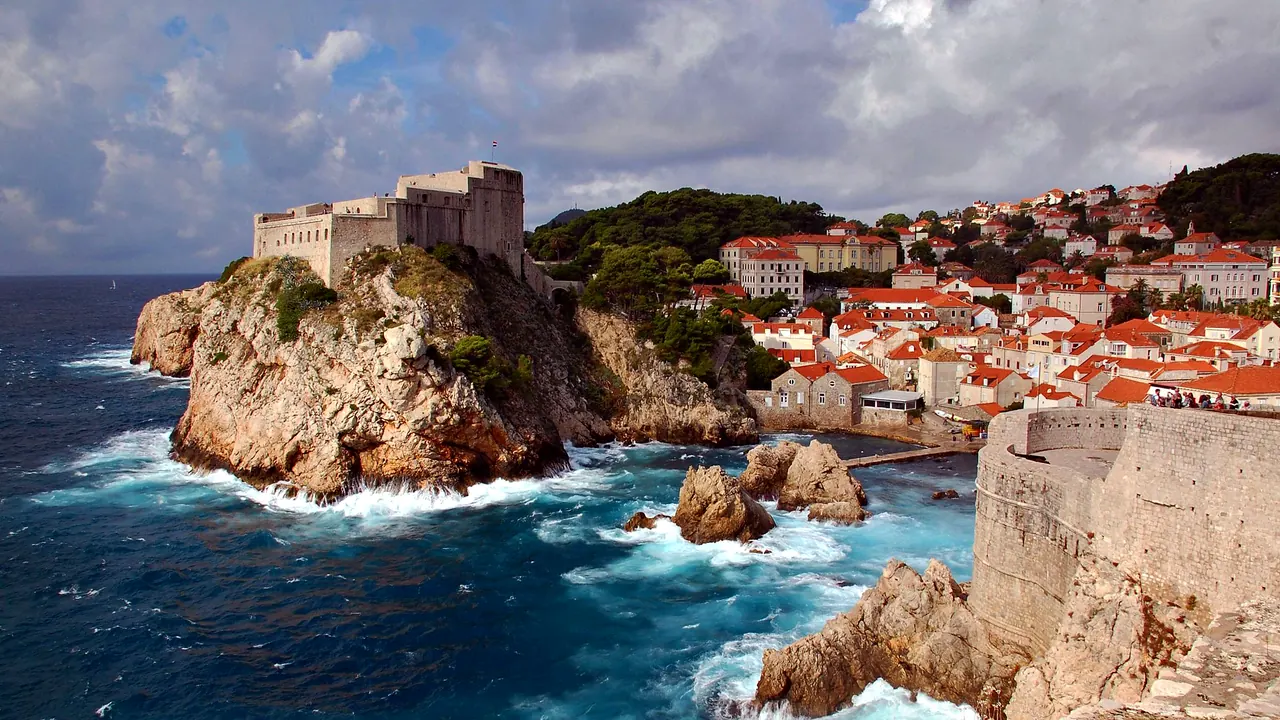
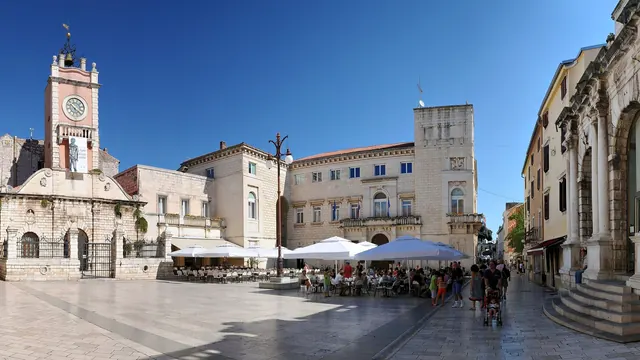
Photos: Corfu by Nico Hartnauer, Pexels License; Dalmatia by Edwardwexler at English Wikipedia, CC BY-SA 3.0, cropped.
Corfu or Dalmatia?
Our verdict in twelve categories, each scored against the same fixed benchmark cities, and the climate month by month, so you can choose for your trip.
Choose Corfu for
- families
- prices
- shopping
Corfu suits a vacation built around one base and the beach, especially with children. Its north and southwest coasts have soft sand shelving into shallow water, the costs are gentler than in Dalmatia's famous towns, and Corfu Town gives you a single Venetian old town to fill the days when you don't want to swim. It also asks less planning: pick a resort, add a boat trip or two, and the stay runs itself.
Choose Dalmatia for
- nature and the outdoors
- day trips
- culture and sights
Dalmatia rewards the traveller who wants to keep moving. A chain of walled Roman and Venetian towns, from Split's palace to Dubrovnik's walls, is linked by ferries to islands, sailing waters and national parks, and there is more serious walking, rafting and climbing here than on Corfu. You pay more for it in high season, you sit on pebbles rather than sand, and the logistics take more work.
Scoreboard
Twelve categories on one fixed scale from 0 to 100. The shaded stretch is the gap between the two.
Your match
Pick a travel style or drag the sliders, and both match scores follow your weighting.
Wins on families and prices with your weighting.
Wins on nature and the outdoors and day trips with your weighting.
What matters to you?
Category by category
What the scores mean for a trip.
Beaches & swimming
Both coasts give you excellent swimming, so the real choice is sand against pebble. Corfu has long sandy beaches on its west and north coasts, from Glyfada to the dunes at Issos and the shallows of Sidari, with surf on windy afternoons and coves of clear water around Paleokastritsa.
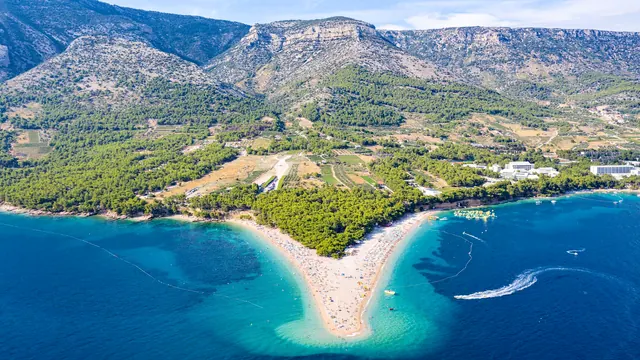
Dalmatia is mostly pebble and rock shelf, which keeps the Adriatic glassy. The best of it lies on the islands and in boat-reached coves on Vis, Hvar and the Pakleni group, plus Zlatni Rat's shifting shingle spit at Bol. Sand there is the exception, found at Nin and Lopud.
Food & drink
Dalmatia eats a little better overall, mainly because of its wine: Plavac Mali from Pelješac and Hvar, Pošip on Korčula, and Ston's oysters to go with them. Peka and black risotto in a stone-cellar konoba are the meals to seek out.
Corfu's strength is its oddity. Venetian-rooted pastitsada, sofrito and bourdeto, plus kumquat liqueur and ginger beer, are found nowhere else in Greece. On both coasts, though, the resort and harbourfront menus are weak, and the good cooking sits in back lanes and villages.
Culture & sights
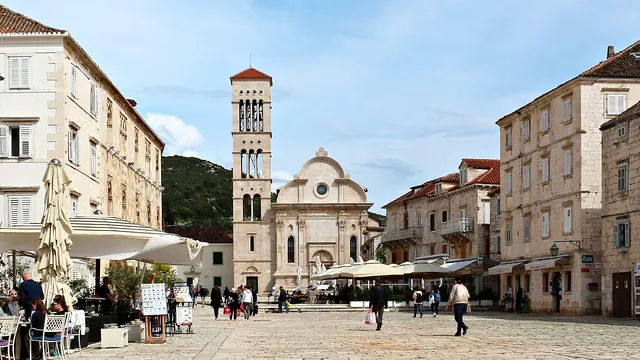
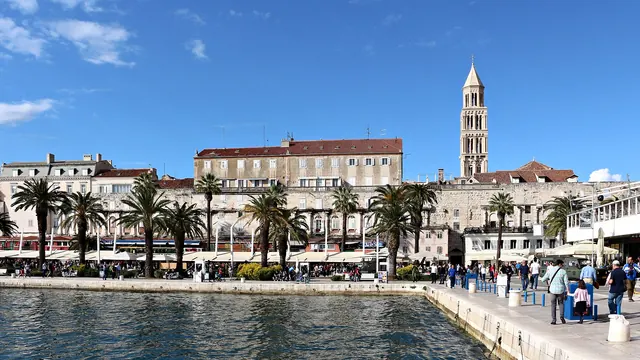
Dalmatia has more to see, spread across several towns. Split lives inside Diocletian's Palace, Dubrovnik is circled by complete walls, and Trogir, Šibenik's stone cathedral and Zadar's Roman forum add more, though you have to travel between them and the museums are modest.
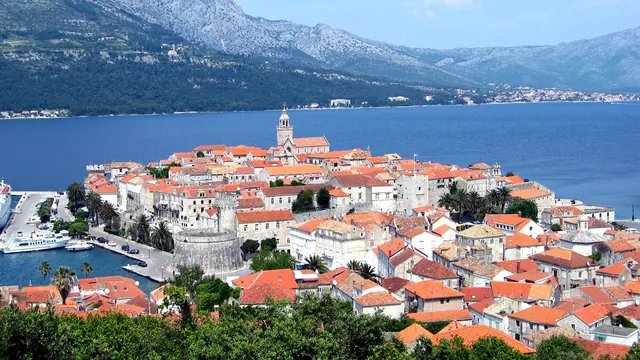
Corfu concentrates its heritage in one place: the UNESCO old town with its kantounia, the Liston, two fortresses and a museum of Asian art. Beyond it there are the Achilleion and Angelokastro, which make for a satisfying few days rather than a tour.
Nightlife
Dalmatia has the livelier going out, centred on Hvar town's harbour bars and islet beach clubs and on the crowded lanes of Split's old town. Both coasts largely shut down outside summer.
Corfu splits more sharply. Kavos at the southern tip is a dedicated young party strip that runs until dawn, while Corfu Town offers cocktails under the Liston and most villages end the night with dinner.
Nature & outdoors
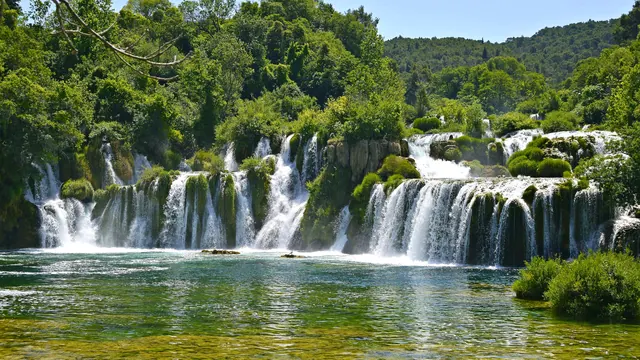
Dalmatia is far stronger outdoors. Its island-studded coast is one of Europe's great sailing grounds, and inland you have Krka's travertine falls, rafting in the Cetina gorge, Biokovo rising above 1,700m behind Makarska, and serious climbing at Paklenica.
Corfu's appeal is softer: the greenest landscape in the Greek islands, olive groves and spring flowers, walks on Mount Pantokrator and along the Corfu Trail, and birdwatching at the Korission lagoon. It makes a pleasant setting rather than a reason to go.
Day trips
On a Dalmatian trip, moving between places is half the point. Catamarans from Split reach Hvar, Brač and Vis, Dubrovnik puts the Elaphiti islands, Ston and Kotor within reach, and Mostar is possible from either end.
Corfu has fewer choices, all of them by sea and mostly seasonal: Paxos and Antipaxos, Butrint via Saranda in Albania, and Parga on the mainland. They are good outings, but after a handful you have done them.
Good for families
Corfu is the easier family base. Long sandy beaches on the north coast and at Issos shelve into calm shallows, and many resorts are built around pools and kids' clubs. There is a water park inland, and the island is relaxed about children everywhere.
Dalmatia's calm, tideless sea is just as good for swimming, but the beaches are mostly pebble and call for water shoes. Its steep stepped old towns are hard with a pushchair in summer heat.
Getting around
Dalmatia is easier to get around without a car. Reliable buses link the main towns, a fast motorway runs behind the coast, and ferries and catamarans fan out from Split, Dubrovnik and Zadar, though the distances are long and island hopping in August needs planning.
On Corfu, the buses run too rarely to rely on beyond the main resorts, so most visitors hire a car or scooter for twisting roads. Then again, the island is only about 60km long.
Shopping & style
Neither is a shopping destination, and both reward buying local produce over browsing. Corfu Town's lanes off the Liston sell olive-wood, kumquat liqueur and soaps. Dalmatia spreads its goods across a wider area, with Hvar lavender, Pag lace, Brač stone and wine from the cellars, plus Split's green market by the palace walls.
Affordability
Corfu is the cheaper of the two. Package resorts on its north and east coasts and its tavernas are fairly priced, although Kassiopi's villas and Corfu Town in high summer cost more, and car hire adds up.
Dalmatia's best-known places, Dubrovnik's old town and Hvar town, are among the dearest in the Mediterranean, and boat trips and park entries pile on. Smaller towns around Zadar and Šibenik and inland konobas bring costs down.
Live music & performing arts
Both coasts have a summer-led scene with a strong local tradition, but the traditions differ. Corfu's sound is brass and strings: historic philharmonic bands in the Spianada and at Easter processions, plus kantades sung with mandolin.
Dalmatia has more formal staging, with the Dubrovnik and Split summer festivals in courtyards and on the Peristyle, and a national theatre in Split all year. Its signature is unaccompanied klapa singing.
Wellness & relaxation
Neither has a bathing culture, and spas on both mean resort hotels, so rest depends on where you stay. On Corfu, look to hill villages, the quiet northeast coast and yoga retreats in the olive groves. In Dalmatia, the car-free Elaphiti islands, Vis and Lastovo are where you can live out the local idea of fjaka, ideally in June or September.
When should you go?
Pick your month. The climate figures are measured averages, not a forecast.
Corfu in July
Dalmatia in July
Daytime high, °C
Rainfall in the month, mm
Where the figures come from
Dalmatia's temperatures are measured 53 km from the centre, at Split / Marjan.
Dalmatia has no rain gauge within 25 km of the centre, so its rainfall comes from a gridded climate dataset read at the destination rather than from a gauge further away.
Dalmatia's sunshine is measured 53 km from the centre, at Split / Marjan.
Temperature and rainfall are climate normals, averaged over the years shown. Corfu: 1991-2020 normals, Kerkyra Airport (0.9 km from centre). Dalmatia: 1991-2020 (sunshine 1971-2000) normals, Split / Marjan (53.2 km from centre).
Both are summer places. The sea is warm enough for swimming from June to early October on both coasts, and July and August are hot enough, at around 31-32°C, to make midday sightseeing hard work. Corfu runs a little hotter and its sea a little warmer, reaching about 26°C in August. On both sides of the water, late May, June and September are the best months to combine swimming with walking around the old towns.
The difference shows in the cooler half of the year. Corfu's greenery comes from heavy autumn and winter rain, which sets in from September and peaks in November at 188mm, well above anything on the Dalmatian coast. Its winter days stay a few degrees milder, though. Around Dalmatia's main coast the rain is spread more evenly and winter keeps a little more sunshine, but daytime highs fall to about 11°C, too cool for the beach and fine for walking.
Which traveller are you?
On a family trip with young children, Corfu is the easier choice. You can settle into one sandy resort on the north coast or around Issos, well away from Kavos and Ipsos. In Dalmatia you would be dealing with water shoes, ferry timetables and steep old-town steps.
For an outdoors trip, choose Dalmatia. Corfu is good for a gentle week of spring walking from a village in the north. Dalmatia is worth splitting between a mainland base such as Makarska or Zadar and days on the water, ideally in May or October.
On a culture and arts trip, Dalmatia gives you more if you are willing to move around. Corfu's sights fit into a few days based in Corfu Town. Dalmatia is better seen from two or three bases, such as Split and Dubrovnik, timed for the summer festivals.
Before you go
| Measure | Corfu | Dalmatia |
|---|---|---|
| Official language | Greek | Croatian |
| Currency | Euro (EUR) | Euro (EUR) |
| Sockets | CF230 V, 50 Hz | CF230 V, 50 Hz |
| Driving side | Right | Right |
| Time zone | UTC+2, UTC+3 in summer | UTC+1, UTC+2 in summer |
| Emergency number | 112 | 112 |
| Main airport | Corfu Ioannis Kapodistrias International Airport (CFU)88 non-stop destinations | Split Saint Jerome Airport (SPU)69 non-stop destinations |
| Public holidays this year | 15 days | 14 days |
By the numbers
| Measure | Corfu | Dalmatia |
|---|---|---|
| Population | 100,854 | 852,068 |
| People per km² | 161 | 70 |
| Swim season, months above 21 °C | 5 months | 4 months |
Where else could you go?
Every comparison below shares a destination with this one, so you can follow Corfu or Dalmatia somewhere new.
- Paxosvs Corfu
- Lefkadavs Corfu
- Kefaloniavs Corfu
- Kotorvs Dalmatia
- Plitvice Lakesvs Dalmatia
- Zakynthosvs Corfu