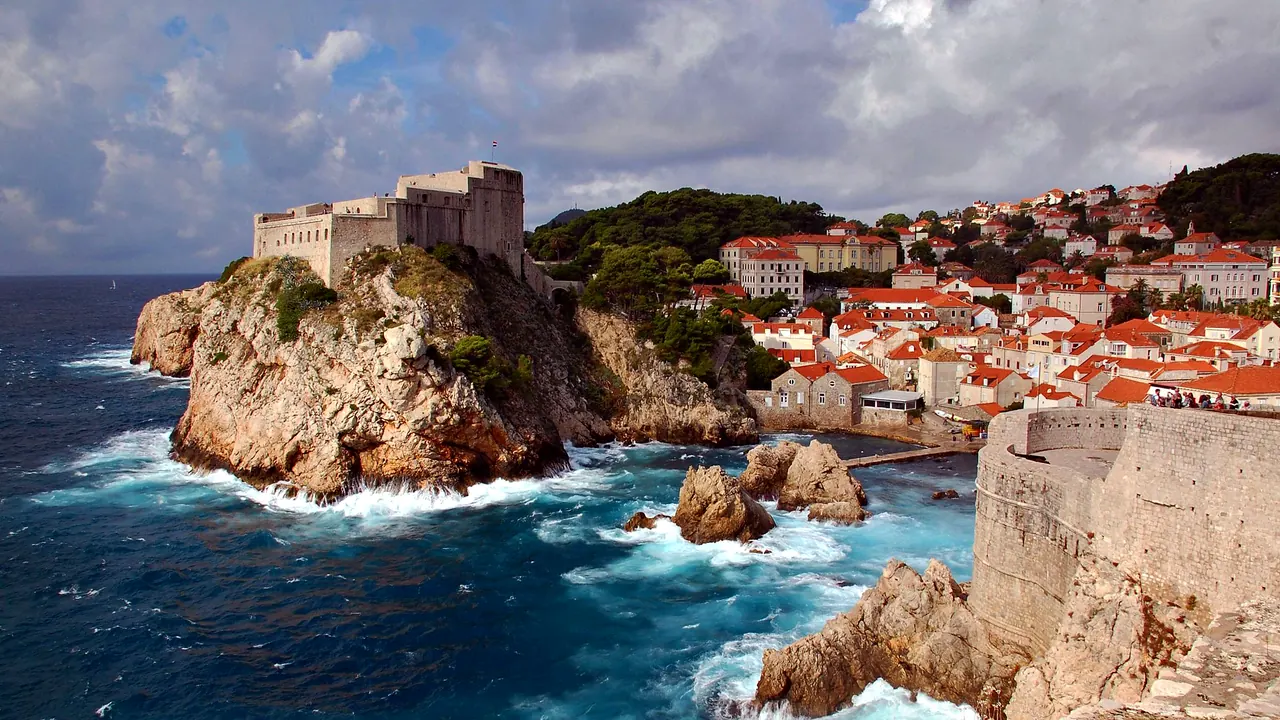
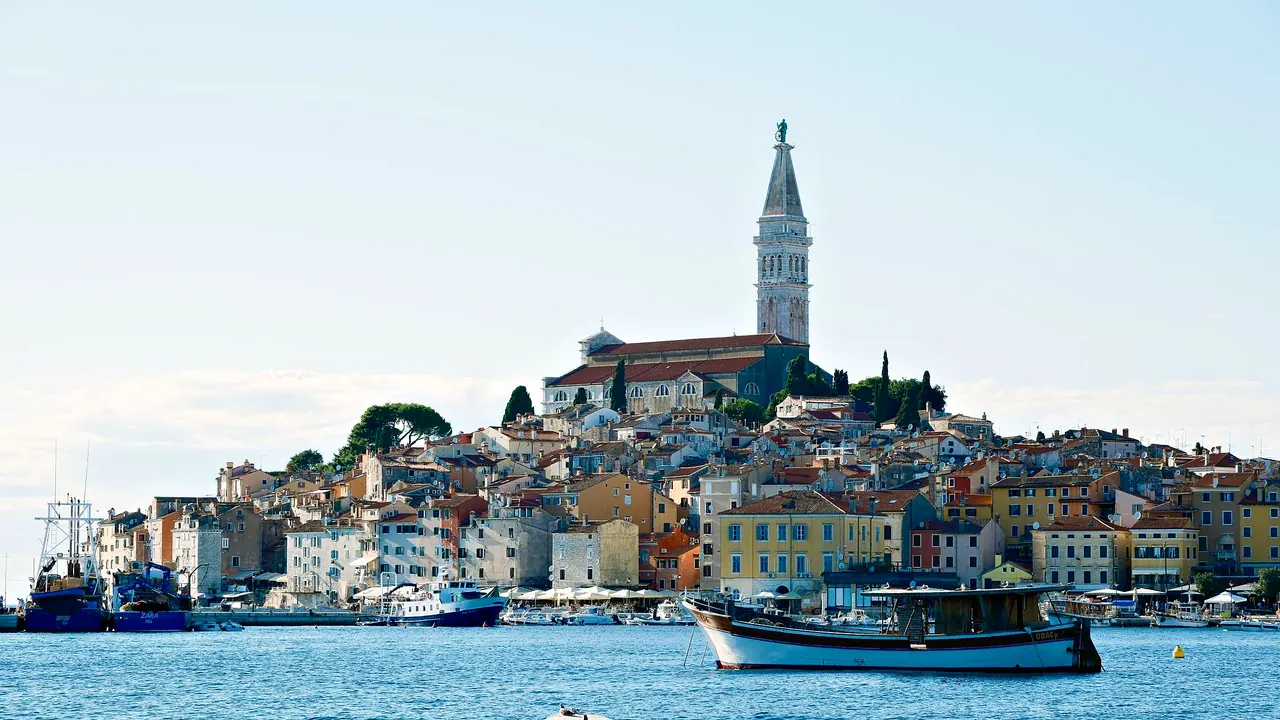
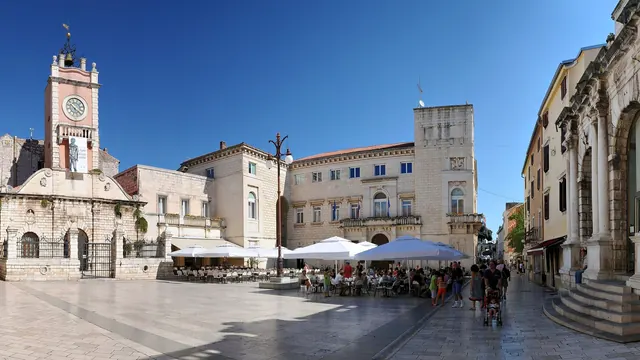
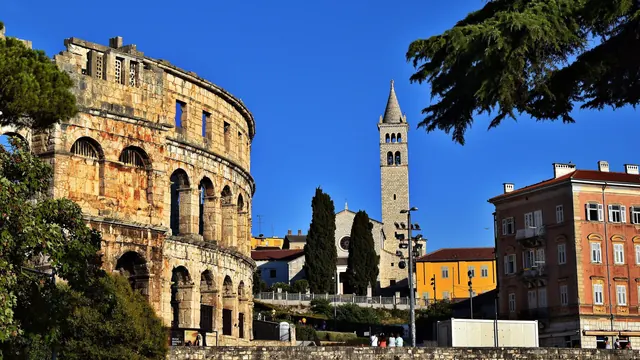
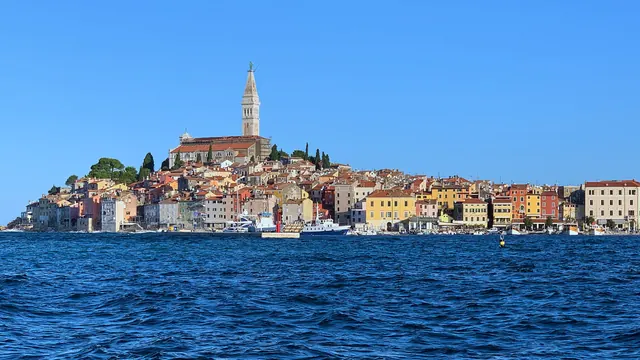
Photos: Dalmatia by Edwardwexler at English Wikipedia, CC BY-SA 3.0, cropped; Istria by Ramon Karolan, Pexels License.
Dalmatia or Istria?
Our verdict in twelve categories, each scored against the same fixed benchmark cities, and the climate month by month, so you can choose for your trip.
Choose Dalmatia for
- nightlife
- nature and the outdoors
- beaches
Dalmatia is the choice for a sea-and-islands trip with some energy to it. Ferries and catamarans link island harbours, the beaches and coves are the best on this side of the Adriatic, and Split and Dubrovnik give the coast first-rank walled towns. Summer evenings in Hvar and Split run late. It suits travellers who want to sail, swim, hop between islands and go out at night, and who don't mind long distances.
Choose Istria for
- food and drink
- families
- wellness
Istria rewards a slower, more rooted vacation. It is compact enough to see from one base, its cooking of truffles, olive oil and Malvazija is among the best in the Mediterranean, and its resort villages, water parks and shallow bays make family stays easy. Choose it for long lunches in hill towns, cycling between vineyards and quiet evenings, rather than for island beaches or a party.
Scoreboard
Twelve categories on one fixed scale from 0 to 100. The shaded stretch is the gap between the two.
Your match
Pick a travel style or drag the sliders, and both match scores follow your weighting.
Wins on nightlife and nature and the outdoors with your weighting.
Wins on food and drink and families with your weighting.
What matters to you?
Category by category
What the scores mean for a trip.
Beaches & swimming
Both coasts are mostly pebble and rock with very clear water, but Dalmatia has more beaches and better ones. The pine-backed Makarska Riviera, the shingle spit of Zlatni Rat at Bol and island coves on Vis, Hvar and the Pakleni islands make swimming the centre of a trip there, and there are even a few sandy bays around Nin and on Lopud.
In Istria, much of the swimming is from smooth rocks, limestone ledges and concrete platforms along the resorts. The Kamenjak cape at Premantura has the wildest coves and Medulin the gentlest bays, but neither matches the island beach life further south.
Food & drink
Istria is the stronger place to eat. Black and white truffles from the forests around Motovun and Buzet, boškarin beef, fuži pasta and some of the finest olive oil anywhere give it real depth, and Rovinj and Novigrad go up to fine dining.
Dalmatia's cooking is plainer: grilled fish, black cuttlefish risotto, and peka cooked under the iron bell in a konoba. Its best moments are Pelješac and Hvar reds and Ston's oysters. The busy harbourfronts often settle for pizza and grilled platters.
Culture & sights
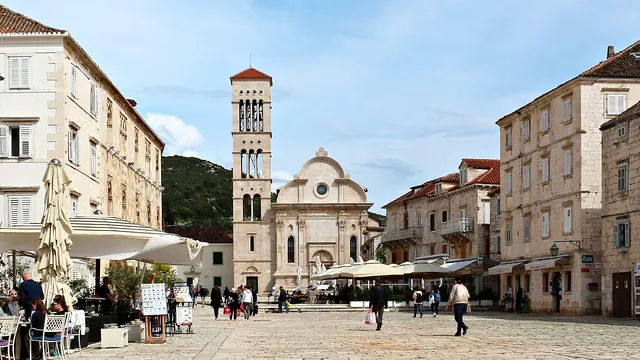
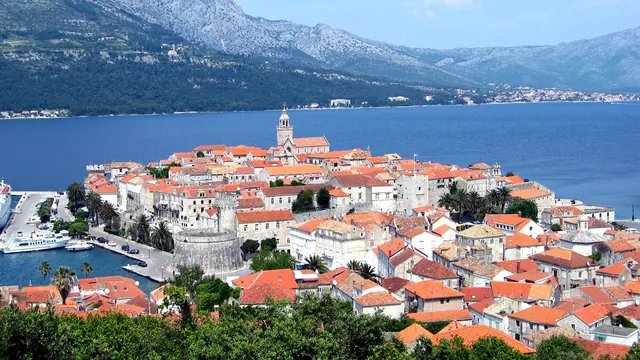
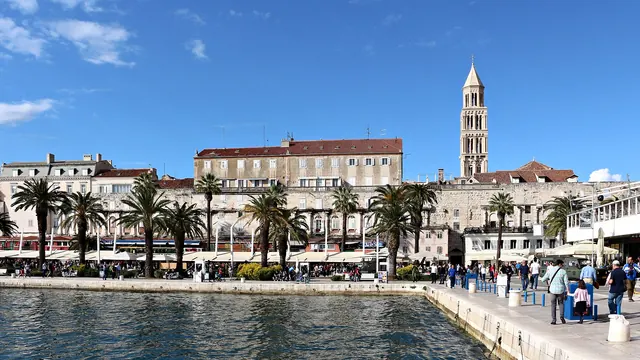
Dalmatia has more first-rank sights. Split's daily life still runs through Diocletian's Palace, and Dubrovnik's walls are complete. Add Trogir, Šibenik's all-stone cathedral and Zadar's Roman forum, and you have a chain of major towns, though seeing them means travelling the length of the coast.
Istria's heritage centres on Pula's Arena and the gold mosaics of Poreč's Euphrasian Basilica, with Rovinj, the frescoes at Beram and hill towns such as Motovun and Hum filling in around them. Neither region is about museums, and in both the pleasure lies in old stone streets.
Nightlife
Dalmatia goes out much harder. In high summer, Hvar town has harbourside cocktail bars and beach clubs on the islets reached by water taxi. Split's palace lanes fill with small, crowded bars, and Makarska and Bol have busy resort strips that stay up late.
Istria's evenings are mostly long dinners and a drink on the waterfront in Rovinj or Poreč, with only a few seasonal clubs. Its one advantage is Pula, a student port whose bars around the old centre and the Arena keep going through the year, while most of the Dalmatian coast goes quiet from mid September.
Nature & outdoors
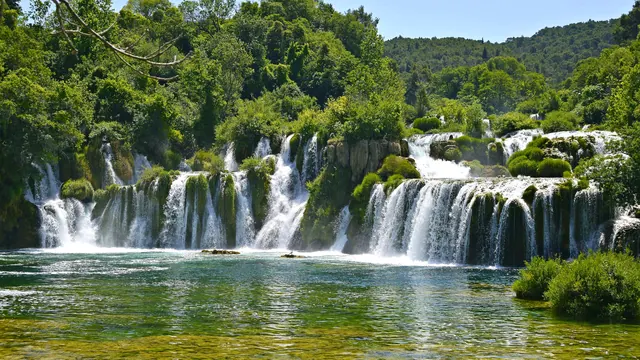
Dalmatia has the bigger, wilder outdoors. It is one of the great sailing coasts, with the bare Kornati islands and Mljet's saltwater lakes offshore. Inland there are the Krka waterfalls, rafting in the Cetina gorge, the 1,700m wall of Biokovo and serious climbing at Paklenica.
Istria's landscape is gentle red-earth vineyards, oak valleys and the ridge of Učka. Its real strength is cycling, above all on the old Parenzana railway line, which crosses viaducts into the interior. In both regions, spring and autumn are far better than midsummer for walking.
Day trips
Both regions are full of day trips, but you travel differently. Dalmatian days out mostly go by ferry and catamaran, to Hvar's Stari Grad, Vis's Komiža or the Elaphiti islands, with Kotor and Mostar as longer runs over the border.
Istria is small enough to drive across in a morning. The hill towns and wine roads are close to any base, and just beyond the region lie Piran, Trieste, the Slovenian Karst caves and Ljubljana.
Good for families
Istria is a little better set up for children. It has a long tradition of family campsites and resort villages with pools around Poreč, Umag and Medulin, plus water parks, a dinosaur park near Funtana, Pula's aquarium in an old fort and the Brijuni safari park.
Dalmatia's family days revolve around the sea, with calm shallow bays at Makarska, Baška Voda and Bol and sand around Nin. Beyond a few waterparks, little is built for children, and Dubrovnik's stepped streets are hard work with a pushchair.
Getting around
In both regions you walk the old towns and want a car for villages and beaches. The difference is scale. Dalmatia stretches a full morning's drive from Zadar to Dubrovnik, and island hopping depends on ferries that fill and queue in high season. In Istria, no two main towns are much more than an hour apart, and the main chore in summer is finding parking near the old towns.
Shopping & style
Neither region is for fashion, and both are best for food and local crafts. Dalmatia's souvenirs are Hvar lavender, Pag lace and Brač stone carvings, and Split has the region's main shopping streets and the green market by the palace walls. In Istria, people come home with truffle products from Motovun and Buzet and wine straight from the cellar, and Rovinj's Grisia street and Grožnjan have small galleries and craft studios.
Affordability
Both are expensive in July and August, and both get cheaper if you pick your base carefully. In Dalmatia, Dubrovnik's old town and Hvar town are the dearest, while the northern coast around Zadar and Šibenik costs less. Istria's high prices gather in Rovinj and the best coastal spots, and campsites, inland farm stays and buying wine from the producer are the easy savings.
Live music & performing arts
Dalmatia has more to plan around. The Dubrovnik Summer Festival puts theatre and classical concerts in palace courtyards and on fortress terraces, there is opera in Split's Roman Peristyle, and the Croatian National Theatre performs all year. Klapa singing gives the coast a sound of its own.
Istria's stage is mostly Pula's Arena, with summer concerts and the long-running film festival. Young musicians also perform in Grožnjan's squares and churches in summer, but outside the season there is little on.
Wellness & relaxation
Istria is the slightly more restful choice. It has a real thermal spa, Istarske Toplice, whose sulphur springs in the Mirna valley have been used since Roman times, and stone farmhouses among the olive groves suit a slow stay.
Dalmatia has no bathing tradition. What it offers is fjaka, the idle summer afternoon, best found on car-free islands such as the Elaphiti, Vis or Lastovo, away from Hvar's party town.
When should you go?
Pick your month. The climate figures are measured averages, not a forecast.
Dalmatia in July
Istria in July
Daytime high, °C
Rainfall in the month, mm
Where the figures come from
Dalmatia's temperatures are measured 53 km from the centre, at Split / Marjan.
Dalmatia has no rain gauge within 25 km of the centre, so its rainfall comes from a gridded climate dataset read at the destination rather than from a gauge further away.
Dalmatia's sunshine is measured 53 km from the centre, at Split / Marjan.
Istria's temperatures are measured 57 km from the centre, at Trieste.
Istria has no rain gauge within 25 km of the centre, so its rainfall comes from a gridded climate dataset read at the destination rather than from a gauge further away.
Temperature and rainfall are climate normals, averaged over the years shown. Dalmatia: 1991-2020 (sunshine 1971-2000) normals, Split / Marjan (53.2 km from centre). Istria: 1991-2020 normals, Trieste (56.5 km from centre).
Swimming on both coasts runs from June through September. The sea peaks in August at about 25°C off Dalmatia and a little warmer off Istria. Dalmatia is the hotter and sunnier of the two, with afternoons around 31°C in July and August. That heat makes sightseeing in the old towns and walking inland hard work in the middle of the day, so May, June and September are the better months if you want both sea and streets.
Istria stays a couple of degrees cooler through summer, peaking near 29°C, which makes the hill towns more comfortable in high season. It also gets less sunshine all year round. Both coasts turn wet from September. Dalmatia's late autumn is the stormier, with about 135mm of rain in November, while Istria's winter is cooler but noticeably drier.
Which traveller are you?
On a beach and sun trip, Dalmatia is the clear pick. Zlatni Rat, the Makarska Riviera and island coves on Vis and Hvar beat Istria's rocky ledges and resort platforms, and the summers are sunnier and hotter.
On a family trip with young children, Istria is the easier choice. Its resort villages and campsites have pools and playgrounds, and it adds water parks, a dinosaur park and Pula's aquarium. Dalmatia's days are mostly swimming and boat trips.
For a vacation built around food and wine, Istria wins. Truffles from the Motovun forests, boškarin beef, fine olive oils and cellar tastings of Malvazija and Teran give it more depth than Dalmatia's simpler konoba cooking, good as Pelješac's reds are.
Before you go
| Measure | Dalmatia | Istria |
|---|---|---|
| Official language | Croatian | Croatian |
| Currency | Euro (EUR) | Euro (EUR) |
| Sockets | CF230 V, 50 Hz | CF230 V, 50 Hz |
| Driving side | Right | Right |
| Time zone | UTC+1, UTC+2 in summer | UTC+1, UTC+2 in summer |
| Emergency number | 112 | 112 |
| Main airport | Split Saint Jerome Airport (SPU)69 non-stop destinations | Pula Airport (PUY)34 non-stop destinations |
| Public holidays this year | 14 days | 14 days |
By the numbers
| Measure | Dalmatia | Istria |
|---|---|---|
| Population | 852,068 | - |
| People per km² | 70 | - |
| Swim season, months above 21 °C | 4 months | 4 months |
Where else could you go?
Every comparison below shares a destination with this one, so you can follow Dalmatia or Istria somewhere new.
- Plitvice Lakesvs Istria
- Kotorvs Dalmatia
- Dolomitesvs Istria
- Plitvice Lakesvs Dalmatia
- Krkavs Istria
- Tuscanyvs Istria