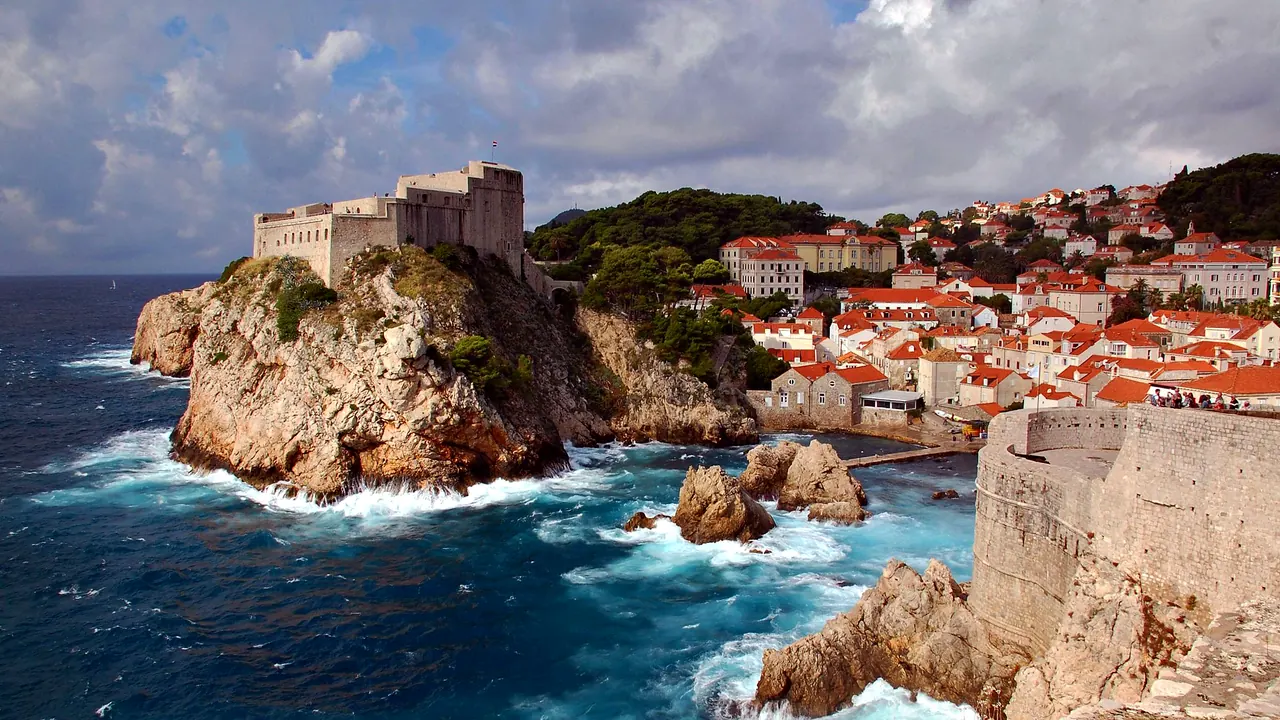
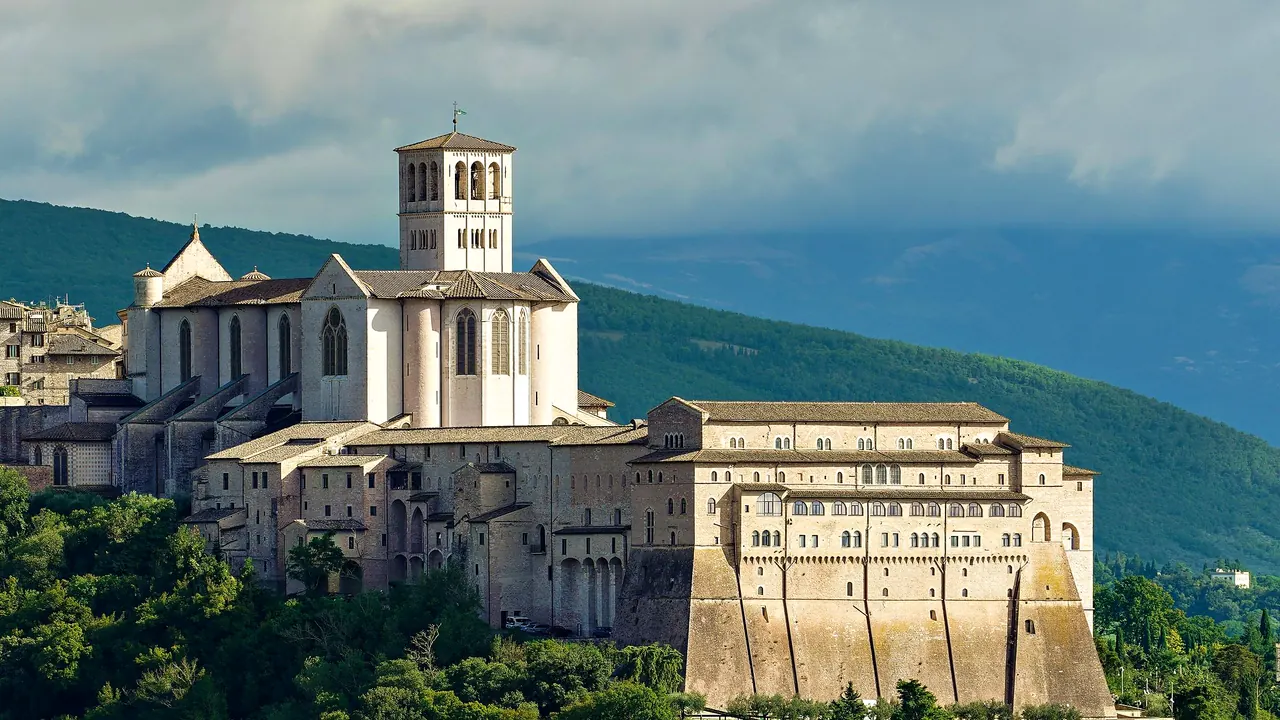
Photos: Dalmatia by Edwardwexler at English Wikipedia, CC BY-SA 3.0, cropped; Umbria by Tagooty, CC BY-SA 4.0, cropped.
Dalmatia or Umbria?
Our verdict in twelve categories, each scored against the same fixed benchmark cities, and the climate month by month, so you can choose for your trip.
Choose Dalmatia for
- beaches
- nightlife
- families
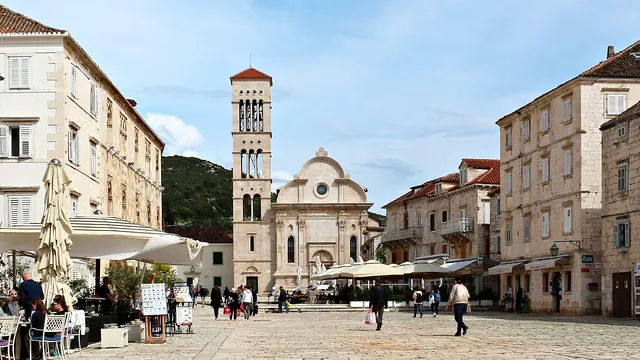
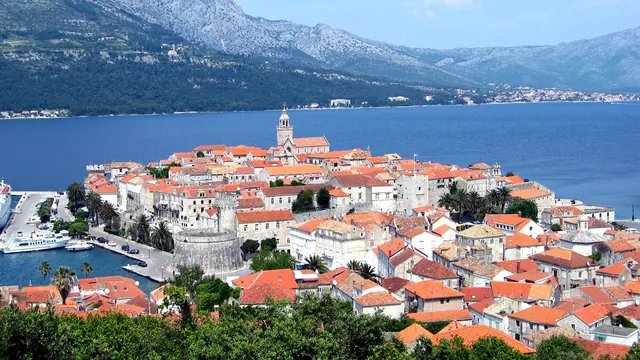
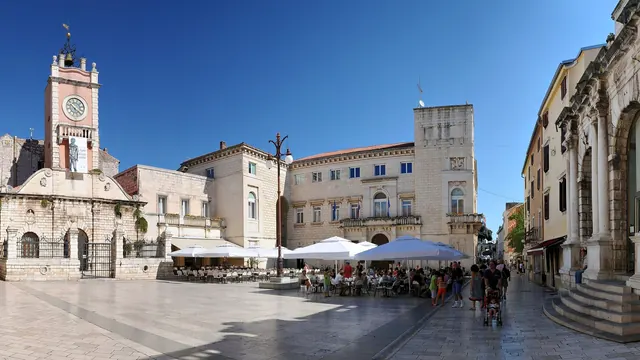
Dalmatia is the choice for a trip built around the sea. It has clear water off pebble coves, ferries between islands, sailing through sheltered channels and summer evenings in Split or Hvar town. It suits travellers who are happy to move between walled towns and to pay coastal summer prices for it, and families whose children want little more than calm water and a boat trip.
Choose Umbria for
- wellness
- prices
- day trips
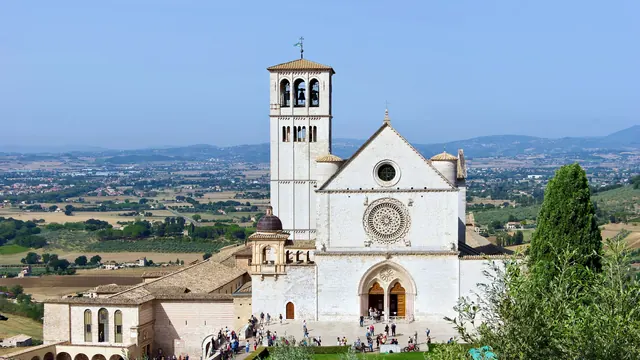
Travellers who would rather eat well, look at frescoes and drive a short way to a different hill town each morning will do better in Umbria. It is quieter, easier on the budget and slower, with truffles and Sagrantino instead of the sea and long dinners instead of nightlife. Anyone who needs a proper beach should look elsewhere.
Scoreboard
Twelve categories on one fixed scale from 0 to 100. The shaded stretch is the gap between the two.
Your match
Pick a travel style or drag the sliders, and both match scores follow your weighting.
Wins on beaches and nightlife with your weighting.
Wins on wellness and prices with your weighting.
What matters to you?
Category by category
What the scores mean for a trip.
Beaches & swimming
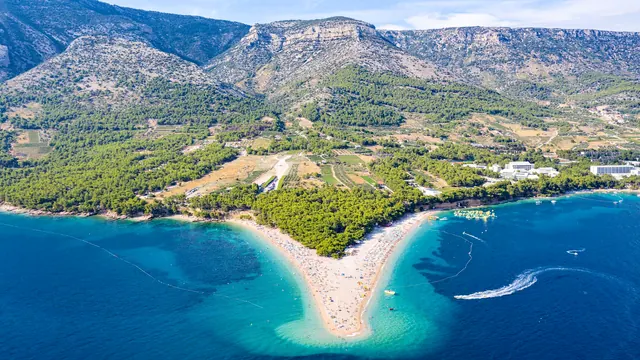
This is the widest gap between the two. Dalmatia has the clear, calm Adriatic, with pine-backed pebble beaches along the Makarska Riviera and the shifting shingle spit of Zlatni Rat at Bol. There are also island coves on Vis, Hvar and the Pakleni islands, and a little sand around Nin and on Lopud.
Umbria has no coast at all. Lake Trasimeno's lidos at Castiglione del Lago and Passignano are warm and shallow but often murky. For most visitors, swimming means the farmhouse pool, and the sea is a drive of two hours or more.
Food & drink
Both cook simple regional food from a few strong products, but Umbria's table is the richer one. It has black truffle over strangozzi, Norcia's pork, porchetta from market vans and Castelluccio lentils, with Sagrantino and Orvieto whites to taste at the estates.
Dalmatia answers with food from the sea: grilled fish, black cuttlefish risotto, peka from a konoba and Ston's oysters, with Plavac Mali reds from Pelješac and Hvar. Its weak spot is the busy harbourfronts, where indifferent pizza is common. Neither offers much beyond its own cuisine.
Culture & sights
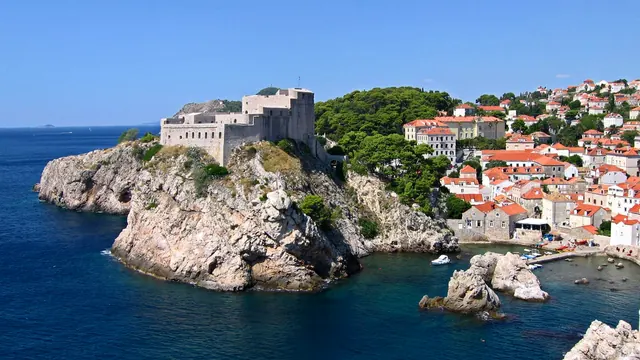
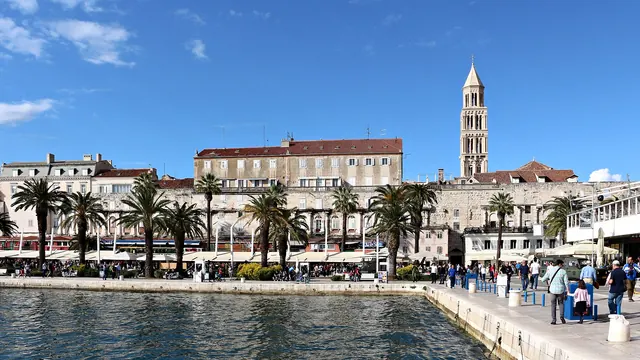
Both are first-rate for heritage, and in both the towns themselves matter more than the museums. Dalmatia's heritage is Roman and Venetian stone by the sea: daily life inside Diocletian's Palace in Split, Dubrovnik's complete ring of walls and Šibenik's cathedral built entirely of stone.
Umbria's is painting in medieval hill towns. Giotto's frescoes in Assisi, Signorelli's Last Judgement in Orvieto and the Perugino and Piero della Francesca works in Perugia give it the edge for art lovers. Dalmatia rewards those who come for architecture and townscape.
Nightlife
Dalmatia has real summer nightlife. There are harbour bars in Hvar town, beach clubs on islets reached by water taxi and crowded little bars in the lanes of Split's palace. It is seasonal, though, and most of the coast goes quiet outside June to mid September.
In Umbria, evenings mean a long dinner and a stroll. Perugia's students keep the cathedral steps and a few wine bars busy, but there are no clubs, and the countryside is silent soon after the last glass.
Nature & outdoors
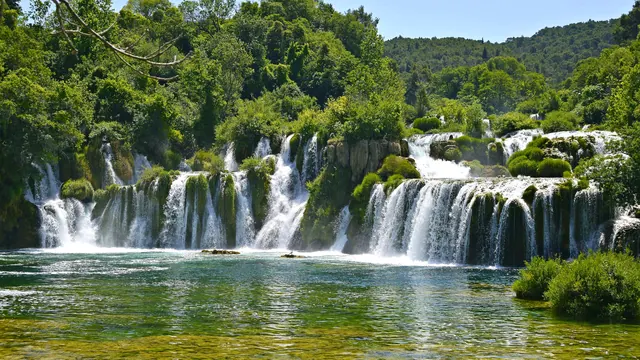
Dalmatia has the more remarkable outdoors, and much of it is on the water. You can sail among more than a thousand islands, see the bare Kornati from a boat and kayak on Mljet's saltwater lakes. On land there are the Krka falls, rafting in the Cetina gorge and serious climbing in Paklenica.
Umbria is gentler, with green hills, oak woods and olive groves rising in the east to the Monti Sibillini and the flowering plain of Castelluccio. The Valnerina has rafting and canyoning, the Marmore Falls drop about 165m, and cyclists can follow the old Spoleto to Norcia railway path.
Day trips
Umbria is made for day trips. From one base near Perugia or Spoleto, Gubbio, Todi, Spello, Bevagna and the Montefalco wine hills are all short drives away. Cortona and Montepulciano lie just over the Tuscan border, and Rome is a little over an hour by train from Orvieto.
Dalmatia has plenty of outings too, mostly by ferry and catamaran to island harbours such as Stari Grad, Bol and Komiža. From Dubrovnik you can reach the Elaphiti islands, Ston and Kotor. Distances are longer, though, and Mostar makes a long day.
Good for families
For children, Dalmatia has the advantage of the sea. The water is calm and tideless, the bays are shallow, and in resorts such as Makarska, Baška Voda and Bol the beach is a short walk away. Children will need water shoes on the pebbles, and the sandy beaches around Nin suit the smallest.
Umbria works for a quieter family stay at a farmhouse with a pool and animals, with Trasimeno's shallow water and the Marmore Falls for outings. Beyond that, its days revolve around churches and steep cobbled towns, which tire children faster than swimming and boat trips do.
Getting around
Neither is hard to get around and neither is effortless, so they are level here. What differs is the scale and the means. Dalmatia is a long coast with islands offshore, so a trip there means boats and real distances. The drive from Zadar down to Dubrovnik takes up a morning, the coast road slows to a crawl in August, and summer car ferries out of Split need booking ahead or a wait in the queue. The bus network serves the larger towns well, but a hire car pays off for out-of-the-way bays.
Umbria is compact and its roads are quiet, so the next town is never far. The awkward part is arriving: the hill towns keep visitors' cars outside their walls, and escalators, lifts and funiculars carry you up into Perugia, Orvieto and Spoleto. Without a car, the train covers the valley towns from Perugia to Spoleto, but a farmhouse stay is hard to manage without your own wheels.
Shopping & style
Neither is a shopping destination, and both are best for what is made locally. Umbria has the deeper crafts: Deruta's painted majolica, hand-loomed linen in Montefalco and Bevagna, and cashmere outlets near Perugia, along with Norcia's hams and truffles.
Dalmatia's finds are olive oil, wine, Hvar lavender, Pag lace and Brač stone carvings, bought from markets and cellars. Its old towns, Dubrovnik above all, are full of souvenir and coral shops.
Affordability
Umbria is the cheaper of the two. Farmhouse stays and small town hotels cost less than in the Tuscan hills, village set lunches and local wine are good value, and most churches cost little or nothing. The main extra cost is a hire car.
Dalmatia is expensive in summer. Dubrovnik and Hvar town are among the most expensive places to stay and eat in the Mediterranean, and boat trips and national park entries add up. Smaller mainland resorts, the coast around Zadar and Šibenik, and the months of June and September bring costs down.
Live music & performing arts
Dalmatia's summer stages are its old stone spaces. The Dubrovnik Summer Festival puts theatre and classical concerts in palace courtyards and on fortress terraces, and opera is sung on Split's Roman Peristyle. Split also hosts a large electronic festival each July. The local sound is klapa, unaccompanied close-harmony singing that you may hear in a church or a square.
Umbria's festivals lean towards jazz and the stage. Umbria Jazz fills Perugia's streets with free bands in July, and Spoleto's Festival dei Due Mondi brings opera, dance and theatre to its Roman theatre and piazzas. In both places, the rest of the year is much quieter.
Wellness & relaxation
On the Dalmatian coast you have to look for rest. It means fjaka, the drowsy summer afternoon, on car-free Vis, Lastovo or the Elaphiti islands, and keeping away from the party towns and crowded old towns in August.
In Umbria, rest comes with the countryside: slow days among olive groves, country houses with a pool, massage or yoga, and the silence of the hermitages on Monte Subasio. Neither has a real bathing culture, but Umbria does have a few small historic spas, such as San Gemini, known for their mineral waters.
When should you go?
Pick your month. The climate figures are measured averages, not a forecast.
Dalmatia in July
Umbria in July
Daytime high, °C
Rainfall in the month, mm
Where the figures come from
Dalmatia's temperatures are measured 53 km from the centre, at Split / Marjan.
Dalmatia has no rain gauge within 25 km of the centre, so its rainfall comes from a gridded climate dataset read at the destination rather than from a gauge further away.
Dalmatia's sunshine is measured 53 km from the centre, at Split / Marjan.
Umbria's temperatures are measured 53 km from the centre, at Frontone.
Umbria has no rain gauge within 25 km of the centre, so its rainfall comes from a gridded climate dataset read at the destination rather than from a gauge further away.
Temperature and rainfall are climate normals, averaged over the years shown. Dalmatia: 1991-2020 (sunshine 1971-2000) normals, Split / Marjan (53.2 km from centre). Umbria: 1991-2020 normals, Frontone (52.9 km from centre).
Along the Dalmatian coast, the sea decides when to go. The water is still cool in May but warm enough to swim from June. It reaches about 25°C in August and stays pleasant through September, so June and September are the best months for combining swimming with sightseeing. May is a month for walking rather than swimming. July and August are the sunniest and driest months, but highs of around 31°C make midday walks through the stone towns hard work. Rain sets in from October and is heaviest in November.
Umbria has a similar summer, with valley afternoons around 30°C in July, but its winters are noticeably colder than the coast's, with January highs near 7°C. Spring and early autumn are the best seasons for walking the hill towns and the countryside. Late autumn is the wettest time in both places, though Umbria gets less rain than the coast.
Which traveller are you?
On a beach and sun trip, Dalmatia wins outright. Days run from a swim off clear pebble coves to a boat out to an island bay and back. Landlocked Umbria offers a lake lido or a farmhouse pool, with the sea hours away.
For a culture and arts trip, Umbria fits better. From one base you reach a different frescoed hill town each day, Assisi one morning and Orvieto the next. Dalmatia's walled towns are just as fine, but they are strung along a long coast, so you keep packing and moving on.
On a trip on a tight budget, Umbria makes the money go further, with village set lunches, cheap local wine and churches that cost little to enter. Only Assisi and Orvieto cost more in summer. Dalmatia is kind to a budget only in smaller resorts outside high summer.
Before you go
| Measure | Dalmatia | Umbria |
|---|---|---|
| Official language | Croatian | Italian |
| Currency | Euro (EUR) | Euro (EUR) |
| Sockets | CF230 V, 50 Hz | CFL230 V, 50 Hz |
| Driving side | Right | Right |
| Time zone | UTC+1, UTC+2 in summer | UTC+1, UTC+2 in summer |
| Emergency number | 112 | 112 |
| Main airport | Split Saint Jerome Airport (SPU)69 non-stop destinations | Perugia San Francesco d'Assisi – Umbria International Airport (PEG)17 non-stop destinations |
| Public holidays this year | 14 days | 13 days |
By the numbers
| Measure | Dalmatia | Umbria |
|---|---|---|
| Population | 852,068 | 852,085 |
| People per km² | 70 | 101 |
| Swim season, months above 21 °C | 4 months | - |
Where else could you go?
Every comparison below shares a destination with this one, so you can follow Dalmatia or Umbria somewhere new.
- Tuscanyvs Umbria
- Elbavs Umbria
- Kotorvs Dalmatia
- Plitvice Lakesvs Dalmatia
- Istriavs Umbria
- Cinque Terrevs Umbria