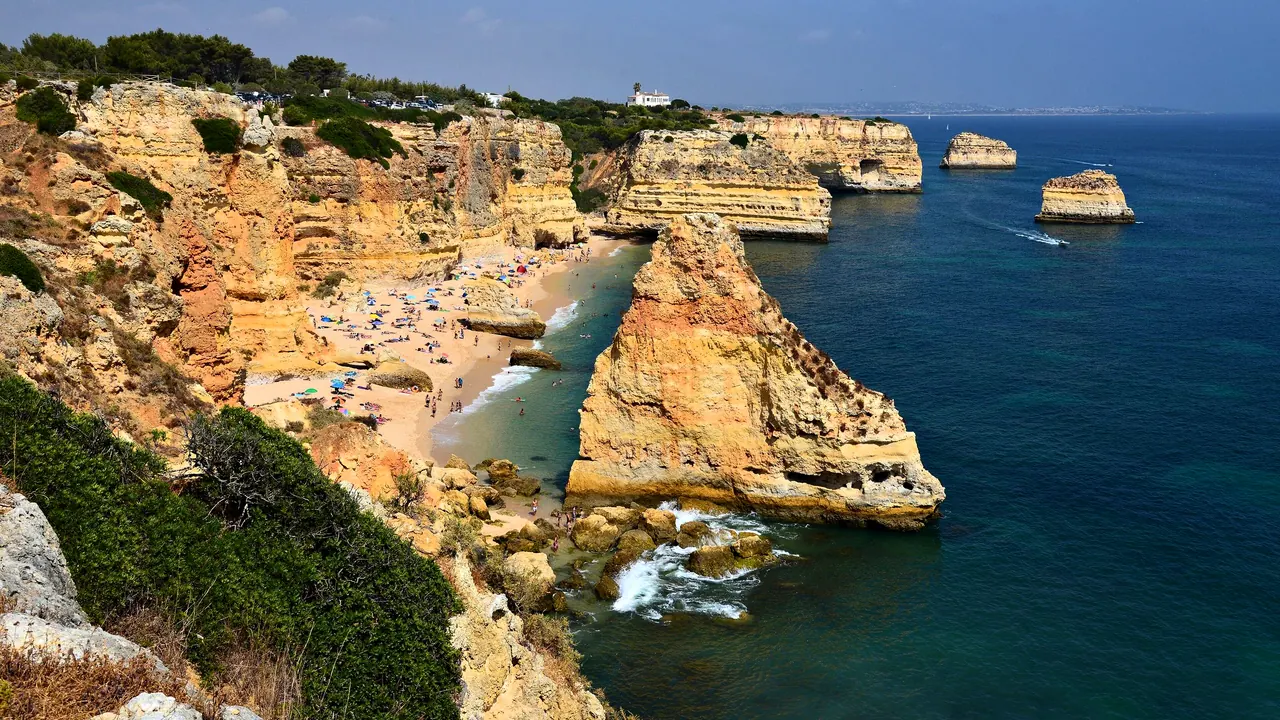
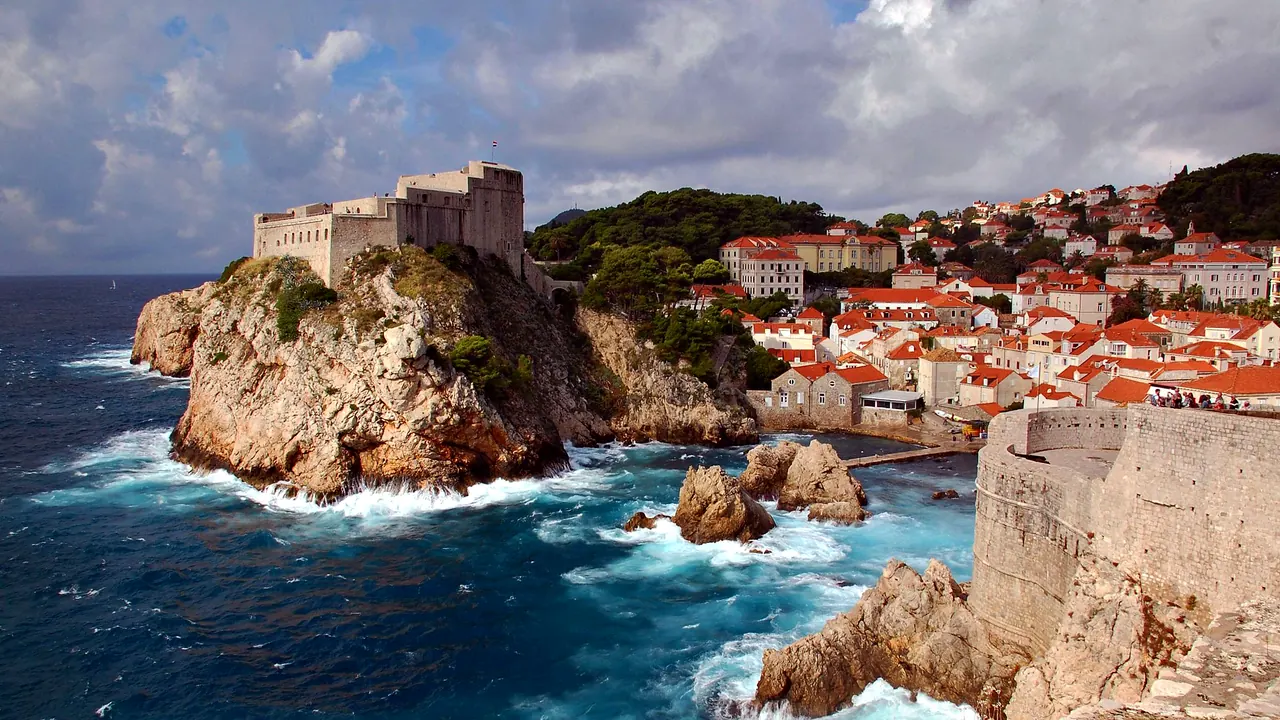
Photos: Algarve by Tobi 87, CC BY-SA 3.0, cropped; Dalmatia by Edwardwexler at English Wikipedia, CC BY-SA 3.0, cropped.
Algarve or Dalmatia?
Our verdict in twelve categories, each scored against the same fixed benchmark cities, and the climate month by month, so you can choose for your trip.
Choose Algarve for
- families
- wellness
- prices
The Algarve suits a straightforward beach vacation from a single base, above all with children. The sand is wide, the lagoon islands east of Faro have shallow water, and water parks, villas with pools and kids' clubs are close at hand. The whole coast is about an hour's drive end to end, eating out costs less, and Tavira or the west coast make a slow, restful stay. What you give up is history and variety: the old towns are pleasant rather than grand, and the day trips run thin after a week.
Choose Dalmatia for
- culture and sights
- day trips
- live music and the arts
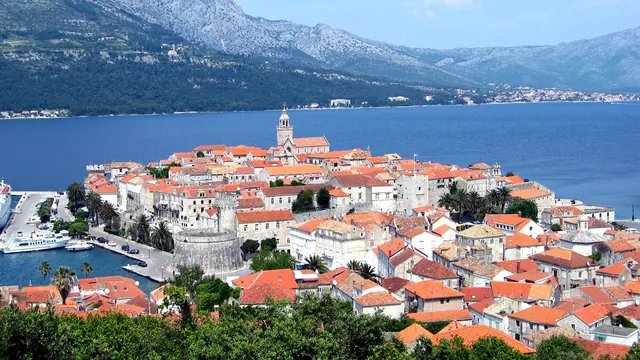
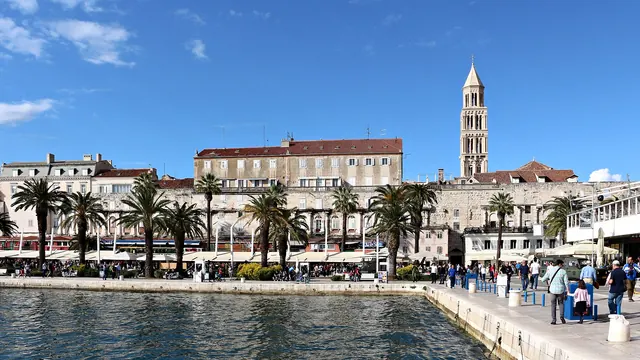
Dalmatia is the better choice for travellers who want the sea and the past in the same trip. Split's Roman palace, Dubrovnik's walls and Trogir, Šibenik and Korčula sit along a coast of a thousand islands, so the trip becomes a journey by ferry and catamaran rather than a week in one resort. The water is warmer and clearer, the summer nights are livelier, and the festivals fill palace courtyards with music. In return you get pebbles instead of sand, longer distances and higher prices in the famous towns.
Scoreboard
Twelve categories on one fixed scale from 0 to 100. The shaded stretch is the gap between the two.
Your match
Pick a travel style or drag the sliders, and both match scores follow your weighting.
Wins on families and wellness with your weighting.
Wins on culture and sights and day trips with your weighting.
What matters to you?
Category by category
What the scores mean for a trip.
Beaches & swimming
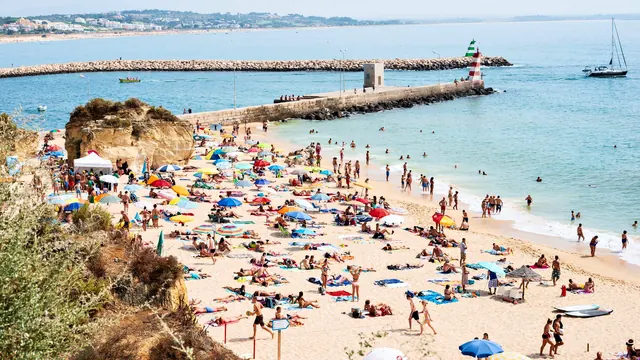
Both are excellent for the beach, but in different ways. The Algarve has sand: small coves under ochre cliffs between Lagos and Albufeira, often down long stairways, and long, empty barrier-island beaches in the Ria Formosa. It is the Atlantic, though, so the water is cooler, the tide matters and the west belongs to surfers.
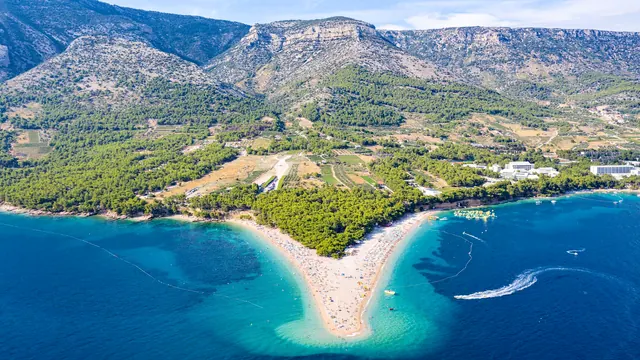
Dalmatia has pebble and rock shelves, which make the water strikingly clear, and a warmer sea with no tide to speak of. The best swimming is on the islands, from Zlatni Rat on Brač to the coves of Vis and the Pakleni islands, and quiet bays are often reached by boat. For sand you would go to Nin or Lopud.
Food & drink
The two are close, and both are at their best with grilled fish and olive oil. The Algarve's strength is shellfish and the copper cataplana, best eaten around Olhão's market halls and the fishing quarters of Tavira and Portimão. Dalmatia brings peka from the embers, black risotto and the stone-cellar konoba.
Where Dalmatia pulls slightly ahead is wine, with Plavac Mali from Pelješac and Hvar and Pošip on Korčula, along with Ston's oysters. Both share the same trap: the Albufeira strip and the busiest Dalmatian harbourfronts serve tired, generic menus.
Culture & sights
The Algarve has pleasant old towns rather than great monuments: Silves's red sandstone castle, Tavira's spires and old bridge, Faro's walled centre and the headland at Sagres. They fill a morning between beach days, but they would not carry a trip on their own.
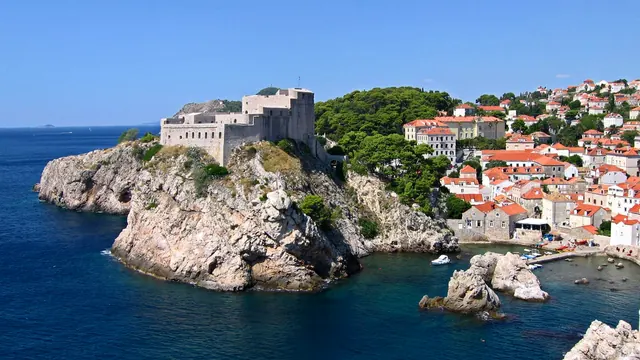
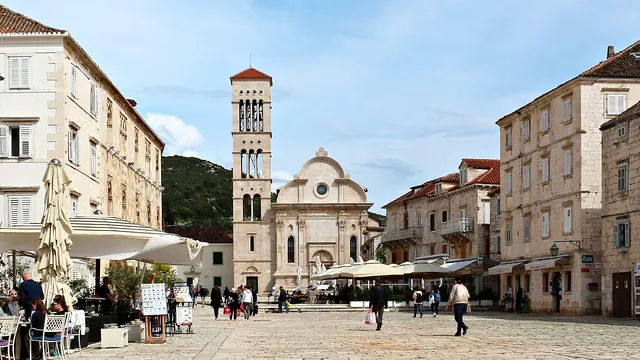
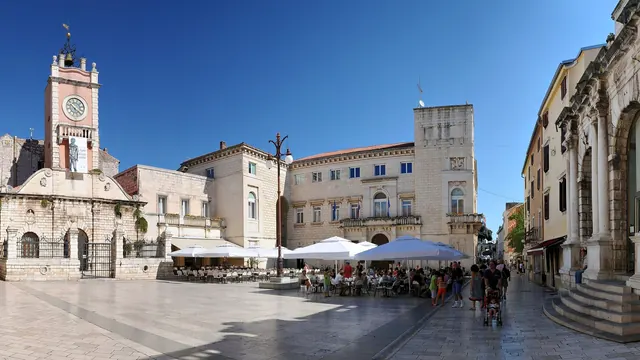
Dalmatia is where the two differ most, because its walled towns are worth the journey by themselves. Daily life still goes on inside Diocletian's Palace in Split, and Dubrovnik's complete walls ring the old town that was the capital of a long independent republic. Trogir, Šibenik, Zadar and Korčula are of the same calibre, though the museums are modest and seeing the best means moving from town to town.
Nightlife
Both are summer scenes that fade after September, but Dalmatia's is the livelier and more stylish. Hvar town has harbour cocktail bars and beach clubs on islets reached by water taxi, and Split's palace lanes fill with small, crowded bars.
The Algarve's late nights are louder and aimed more at package groups, centred on Albufeira's Strip, with a backpacker crowd in old Lagos and a dressier marina at Vilamoura. Tavira stays quiet, much as Dalmatia's small islands do.
Nature & outdoors
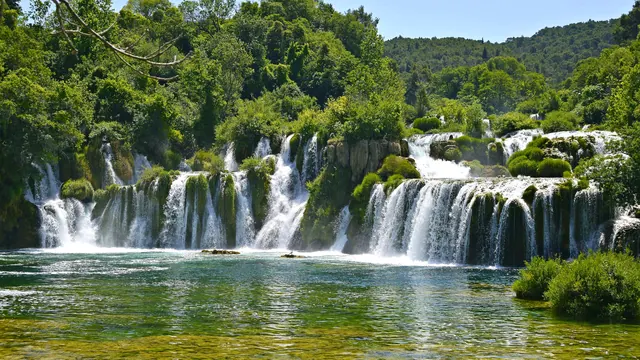
Dalmatia has the larger and more varied outdoors, built around the sea. It is one of the great sailing coasts, with the bare Kornati islands, Mljet's saltwater lakes, the Krka falls and rafting in the Cetina gorge. Biokovo rises to over 1,700m behind Makarska, and Paklenica draws climbers.
The Algarve's landscape is narrower but striking: the Seven Hanging Valleys cliff path, kayaking into the Benagil grottoes and birdlife in the Ria Formosa. It also has one thing the Adriatic lacks, which is reliable Atlantic surf along the Costa Vicentina.
Day trips
Dalmatia is far better for day trips because the islands themselves are the outings. Ferries and catamarans from Split reach Hvar, Brač and Vis, Dubrovnik is close to the Elaphiti islands and Ston, and Kotor and Mostar lie across the border.
The Algarve's best day out is Seville, about two hours away, along with Mértola and the car-free islands of Culatra and Armona. After Silves, Loulé and Sagres the options run out, which matters on a stay of more than a week.
Good for families
The Algarve is the easier family destination. The Ria Formosa islands, Alvor and Armação de Pêra have shallow water over wide sand, and water parks, Zoomarine and resort kids' clubs are all within a short drive. Only the stair-bound central coves are awkward.
Dalmatia's appeal for families is the calm, tideless sea and resort towns such as Makarska and Bol, where everything is close to the water. Beyond swimming and boat trips there is little aimed at children. The pebbles need water shoes, and the stepped streets are hard with a pushchair.
Getting around
Dalmatia is somewhat easier without a car. Its old towns are car-free, buses between the main towns are reliable, and ferries and catamarans from Split, Zadar and Dubrovnik connect the islands, although you need to plan for summer queues and the long drive from Zadar to Dubrovnik.
The Algarve is compact, since the A22 takes you from Lagos to Tavira in about an hour, but it really is car country. The railway is slow and its stations are often far from town, and buses rarely reach the beaches.
Shopping & style
Neither is a shopping destination. In both, local produce is a better buy than anything in the boutiques. In the Algarve that means Loulé's market hall for cork, copper and almonds, painted ceramics near Porches and sea salt from Castro Marim. For more ordinary shopping there are big malls outside Faro and Portimão, an outlet centre and the boutiques of Vilamoura's marina.
Dalmatia's equivalents are olive oil, Hvar lavender, Pag lace and wine bought straight from the cellars. Split has the main shopping streets, and Dubrovnik's old town is given over largely to souvenirs and coral jewellery.
Affordability
The Algarve is the gentler on a budget, mainly because eating out costs less: grilled fish with house wine near the market is a simple pleasure. The cost rises with summer villas and the golf enclaves around Almancil, and a base in Tavira or Olhão keeps it in check.
In Dalmatia, Dubrovnik and Hvar town are among the dearest stays on the Mediterranean, and boat trips and national park entries add up. Zadar, Šibenik and private rooms in smaller towns are the way round it.
Live music & performing arts
Dalmatia has much more to offer here, at least in summer. The Dubrovnik Summer Festival stages theatre and concerts in palace courtyards and on fortress terraces, opera fills Split's Peristyle, and the Croatian National Theatre in Split runs all year. Klapa singing gives the coast its own sound.
The Algarve has municipal stages in Faro and Loulé and a few summer festivals, but the fado is mostly put on for tourists over dinner.
Wellness & relaxation
The Algarve offers more for a restorative trip. Caldas de Monchique has warm springs used since Roman times, the resorts between Albufeira and Quinta do Lago have plenty of spas, and yoga and surf retreats gather near Aljezur.
Dalmatia has no bathing tradition. Its rest comes from fjaka, the afternoon idleness of summer, best found in a stone house on Vis, Lastovo or the car-free Elaphiti islands, away from Hvar town's parties.
When should you go?
Pick your month. The climate figures are measured averages, not a forecast.
Algarve in July
Dalmatia in July
Daytime high, °C
Rainfall in the month, mm
Where the figures come from
Algarve's temperatures are measured 26 km from the centre, at Faro / Aeroporto.
Algarve has no rain gauge within 25 km of the centre, so its rainfall comes from a gridded climate dataset read at the destination rather than from a gauge further away.
Dalmatia's temperatures are measured 53 km from the centre, at Split / Marjan.
Dalmatia has no rain gauge within 25 km of the centre, so its rainfall comes from a gridded climate dataset read at the destination rather than from a gauge further away.
Dalmatia's sunshine is measured 53 km from the centre, at Split / Marjan.
Temperature and rainfall are climate normals, averaged over the years shown. Algarve: 1991-2020 normals, Faro / Aeroporto (26.4 km from centre). Dalmatia: 1991-2020 (sunshine 1971-2000) normals, Split / Marjan (53.2 km from centre).
The two coasts have their peak in the same months but feel different. The Algarve is the milder and sunnier of the two all year: January days still reach about 16°C, summer is almost completely dry, and the rain only arrives from October and is heaviest in December. Its Atlantic water is cool, peaking around 20°C at the measuring point, a little warmer in the east, so swimming is pleasant from June to October without ever being balmy. July and August are hot but bearable, and spring is a fine time for walking.
Dalmatia has a stronger contrast. July and August are hotter and less comfortable for climbing stepped old-town streets in the middle of the day, but the Adriatic reaches about 25°C, so a long swim feels easy from June into early October. Winter is cooler, near 11°C in January, and grey, and autumn is wet, with November the rainiest month at around 135mm. For walking the walled towns, May, June and September are the best balance. For winter sun, the Algarve is the clear choice.
Which traveller are you?
For a culture and arts trip, choose Dalmatia. In the Algarve, history fills a spare morning between beach days. Dalmatia's walled towns can carry a whole itinerary: travel the coast from Split to Dubrovnik, and go in the summer festival season.
On a family trip with young children, the Algarve makes the simpler week. One villa or resort with a pool, sand close by and short drives to each day's outing suit small legs. Dalmatia works better with older children happy to swim off rocks.
For a relaxing and wellness trip, the Algarve is the safer choice. Book a spa resort or a retreat, ideally in spring or autumn, and let someone else plan the rest. In Dalmatia you have to make your own rest, in a quiet island village.
Before you go
| Measure | Algarve | Dalmatia |
|---|---|---|
| Official language | Portuguese | Croatian |
| Currency | Euro (EUR) | Euro (EUR) |
| Sockets | CF230 V, 50 Hz | CF230 V, 50 Hz |
| Driving side | Right | Right |
| Time zone | UTC, UTC+1 in summer | UTC+1, UTC+2 in summer |
| Emergency number | 112 | 112 |
| Main airport | Faro - Gago Coutinho International Airport (FAO)91 non-stop destinations | Split Saint Jerome Airport (SPU)69 non-stop destinations |
| Public holidays this year | 14 days | 14 days |
By the numbers
| Measure | Algarve | Dalmatia |
|---|---|---|
| Population | 438,864 | 852,068 |
| People per km² | 88 | 70 |
| Swim season, months above 21 °C | None | 4 months |
Where else could you go?
Every comparison below shares a destination with this one, so you can follow Algarve or Dalmatia somewhere new.
- Kotorvs Dalmatia
- Lisbonvs Algarve
- Andalusiavs Algarve
- Plitvice Lakesvs Dalmatia
- Pugliavs Dalmatia
- Costa del Solvs Algarve