Portugal
Lagos, Portugal
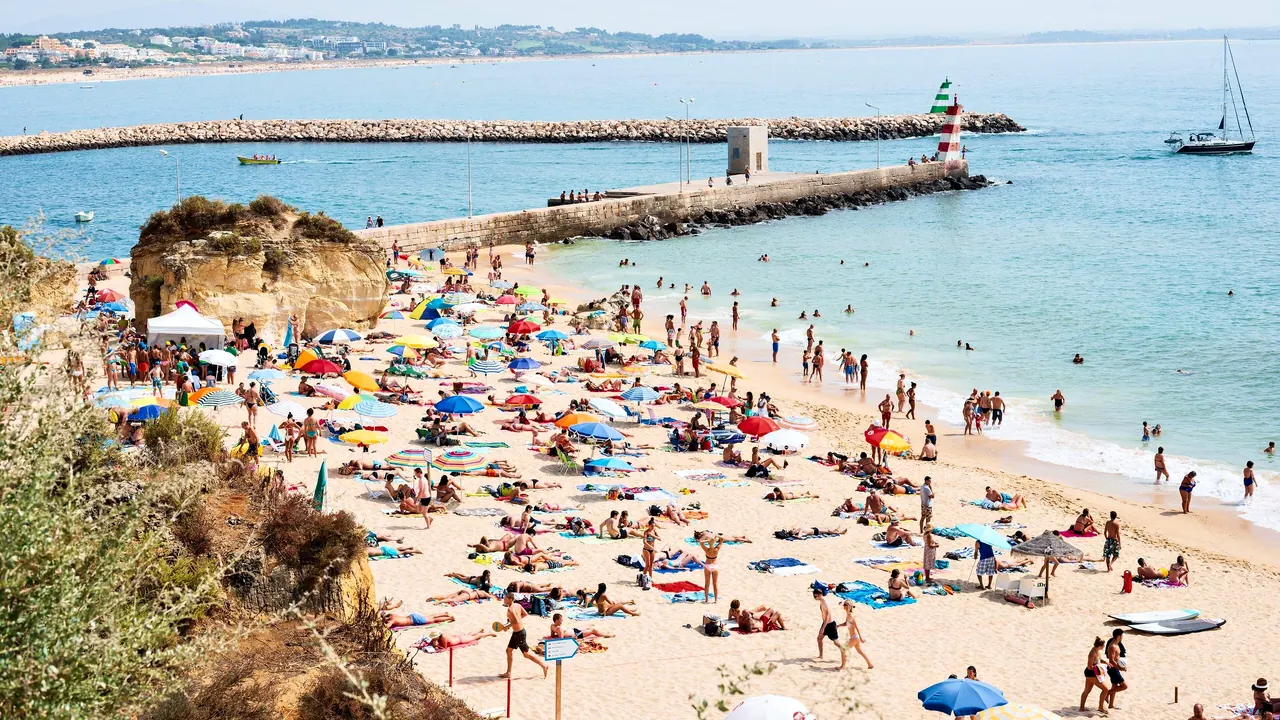
Praia da Batata and the harbour entrance with its lighthouse
- Beaches80
- Nature & outdoors78
- Families64
Photo: Norbert Nagel, CC BY-SA 4.0, cropped
Match
50
Every category weighted equally
- Beach & sun55
- Culture & arts43
- Food & nightlife45
- Family trip56
- Outdoors56
- Relax & unwind52
- Shopping & style44
- On a budget50
Lagos, Portugal in twelve categories
Our verdict on each, scored 0 to 100 against the same fixed benchmark cities, so a score means the same thing on every page.
Beaches & swimming. Scores 80 out of 100.
Food & drink. Scores 44 out of 100.
Culture & sights. Scores 35 out of 100.
Nightlife. Scores 52 out of 100.
Nature & outdoors. Scores 78 out of 100.
Day trips. Scores 54 out of 100.
Good for families. Scores 64 out of 100.
Getting around. Scores 54 out of 100.
Shopping & style. Scores 27 out of 100.
Affordability. Scores 52 out of 100.
Live music & performing arts. Scores 18 out of 100.
Wellness & relaxation. Scores 40 out of 100.
Lagos, Portugal category by category
Beaches & swimming
80Beaches are the reason most people come to Lagos, and they are within walking distance of the old town. South of the walls the coast breaks into a string of small coves, Praia do Camilo, Dona Ana, Pinhão and Estudantes, where golden sand sits beneath honey-coloured cliffs and sea stacks, reached by long wooden stairways. East of the river, Meia Praia runs for about 4km of open sand, with space even in August, and Porto de Mós lies just beyond Ponta da Piedade.
This is the Atlantic, so the water is fresher than the Mediterranean: about 19°C to 22°C at the height of summer, clear and usually calm in the sheltered coves. The season runs from June to September, and the small coves fill up quickly in August. For wilder surf beaches, the west coast is half an hour's drive away.
Food & drink
44Eating well in Lagos mostly means fish. Sardines, sea bream and octopus come off the charcoal grill, cataplana, a clam and pork stew cooked in a copper pan, is the regional dish, and the municipal market on the riverfront shows what the boats have brought in. The pastelarias and inexpensive Portuguese wine and vinho verde help too.
The old town's lanes are lined with restaurants written for visitors, with photo menus and international dishes that are rarely more than adequate. The better meals are in the plain family places a street or two back, and in the fish restaurants by the harbour and on the road towards Meia Praia. Fine dining and international range are limited, which is to be expected in a town this size.
Culture & sights
35Lagos was a base for Portugal's fifteenth-century voyages along the African coast, and its small historic centre keeps traces of that past. Stretches of the sixteenth-century walls still enclose the old town, the Ponta da Bandeira fort guards the harbour mouth, and the Church of Santo António, plain on the outside, holds one of the Algarve's finest gilded baroque interiors. The slave market museum, on the site where enslaved Africans were sold in 1444, deals plainly with a dark chapter of history.
All of it fits into a morning's walk through whitewashed streets and squares paved in black and white stone. Visitors who want more than that will find the heritage of the region in the towns around it.
Nightlife
52Lagos goes out later and louder than most towns on this coast. In summer the old town's narrow streets fill with young travellers, surfers and backpackers moving between small bars, cocktail places and Irish-style pubs, and organised pub crawls are part of the scene. Bars stay open well past midnight, and a few small clubs keep going until near dawn.
It is still a bar town, with little in the way of serious club culture, and it depends on the season: from November to March it is quiet, with locals and long-stay visitors in a handful of places. Couples and families who want a calm evening will find it at the harbour and on the squares away from the main drinking streets.
Nature & outdoors
78The coast is the great outdoor draw. At Ponta da Piedade, a short walk from town, the cliffs break into arches, pillars and grottoes, best seen from a kayak or small boat at water level. Clifftop paths run west towards Luz and Burgau, and boat trips go out to look for dolphins. Westward, the Costa Vicentina natural park is one of the wildest stretches of coast in southern Europe, with the Fishermen's Trail along high cliffs and surf breaks used by schools all year.
Inland, the cork-oak and eucalyptus hills of the Serra de Monchique rise to about 900m, about an hour away, with walking and cycling routes. The Alvor estuary is good for birdwatching. Spring and autumn are the best seasons for walking, as summer can be hot and dusty away from the sea.
Day trips
54The best day out is west to Sagres, about half an hour by car, where a clifftop fortress overlooks the Atlantic and the lighthouse at Cape St Vincent marks the south-western tip of Europe. Inland, Silves has a red sandstone Moorish castle and a Gothic cathedral, and the spa village of Caldas de Monchique sits in the wooded hills. Closer at hand, Alvor is a whitewashed fishing village on its estuary.
Further east, Faro's walled old town and the elegant river town of Tavira make longer days, the latter about an hour and a half away. A car makes all of this far easier. The list is pleasant rather than remarkable, and many visitors simply move between beaches.
Good for families
64Lagos works well for a beach-based family vacation. Meia Praia has a long, gently shelving shore and plenty of space, and the town is relaxed and safe, with ice cream, boat trips to the grottoes and easy evenings by the marina. Portuguese culture welcomes children in restaurants until late.
The made-for-children attractions sit outside town: a small zoo in the countryside inland, water parks along the coast, and a large marine park near Albufeira, about forty minutes' drive away. The cliff coves are beautiful but reached by long, steep stairs, and the cobbled old town is hard with a pushchair. August is hot and crowded, so early summer and September are easier with young children.
Getting around
54Within Lagos, walking is enough. The old town, the riverfront, the marina and the coves at Dona Ana and Camilo are all within about half an hour of each other on foot, though the lanes are cobbled and some are steep. A footbridge crosses the river to Meia Praia, and a seasonal little train and local buses help in summer.
Beyond town it is a different story. The railway station is the western end of the Algarve line, and trains east to Faro are slow. Regional buses reach Sagres and nearby towns, but they are infrequent. To explore the west coast beaches, the Monchique hills or the inland towns, most visitors hire a car.
Shopping & style
27Shopping in Lagos is a matter of browsing on the way to dinner. The old town streets carry hand-painted Algarve ceramics, cork goods, linens, sardine tins and plenty of souvenirs, alongside surf shops selling boards, wetsuits and beachwear. The municipal market is good for local honey, figs, almonds and medronho fruit brandy. There is no fashion or luxury shopping to speak of, and serious shoppers will not find much.
Affordability
52Lagos costs about the average for a Western European destination, and the season makes a large difference. In July and August beachside rooms and apartments are in heavy demand and priced to match, and restaurants on the main streets charge resort prices. Away from them, a grilled fish lunch, a glass of local wine or a coffee and pastry stays reasonable by European standards, and many sights and beaches are free.
From October to May, rooms become much cheaper and the town is calmer, which makes it a good-value base for walking, surfing and long stays.
Live music & performing arts
18Performing arts play a small part in Lagos. The municipal cultural centre runs a modest programme of concerts, theatre and dance, and in summer there are guitar and fado evenings for visitors and cover bands in the bars. There is no opera or orchestra, and anyone looking for serious concerts or theatre will need to look as far as Faro or, better, Lisbon.
Wellness & relaxation
40Lagos has no bathing tradition of its own, and spa treatments are mostly found in resort hotels and a few day spas. What it offers instead is pace. Outside the summer peak the town slows to long lunches and sunset walks along the cliffs, and the area draws many yoga teachers and surf and wellness retreats, especially on the quieter fringes towards Luz and the west coast.
The nearest real spa is at Caldas de Monchique, about an hour inland, a small village built around thermal springs that have been used since Roman times. In August the town is busy and noisy, so visitors who come for rest do better in spring or autumn.
When should you go?
Pick a month to see what it is like. The climate figures are measured averages, not a forecast.
Lagos, Portugal in July
Daytime high, °C
Rainfall in the month, mm
The whole year
Shaded against this city’s own year: the deepest cell is its best month for that figure and the palest its weakest.
Where the figures come from
Lagos, Portugal's temperatures are measured 63 km from the centre, at Faro / Aeroporto.
Lagos, Portugal has no rain gauge within 25 km of the centre, so its rainfall comes from a gridded climate dataset read at the city rather than from a gauge further away.
Temperature and rainfall are climate normals, averaged over the years shown. Lagos, Portugal: 1991-2020 normals, Faro / Aeroporto (63.4 km from centre).
Before you go
| Measure | Lagos, Portugal |
|---|---|
| Official language | Portuguese |
| Currency | Euro (EUR) |
| Sockets | CF230 V, 50 Hz |
| Driving side | Right |
| Time zone | UTC, UTC+1 in summer |
| Emergency number | 112 |
| Elevation | 3 m |
| Main airport | Faro - Gago Coutinho International Airport (FAO)63 km from centre91 non-stop destinations |
| Public holidays this year | 14 days |
By the numbers
| Measure | Lagos, Portugal |
|---|---|
| City population | 31,049 |
| People per km² | 146 |
| Museums within 10 km | 6 |
| UNESCO World Heritage sites within 50 km | 0 |
| Swim season, months above 21 °C | None |
Compare Lagos, Portugal with
Every comparison with a written verdict behind it.
- Albufeira
- Cadiz
- Casablanca
- Cascais
- Chefchaouen
- Coimbra
- Cordoba
- Faro
- Fes
- Granada
- Jerez de la Frontera
- Lisbon
- Malaga
- Marbella
- Porto
- Rabat
- Ronda
- Seville
- Sintra
- Tangier