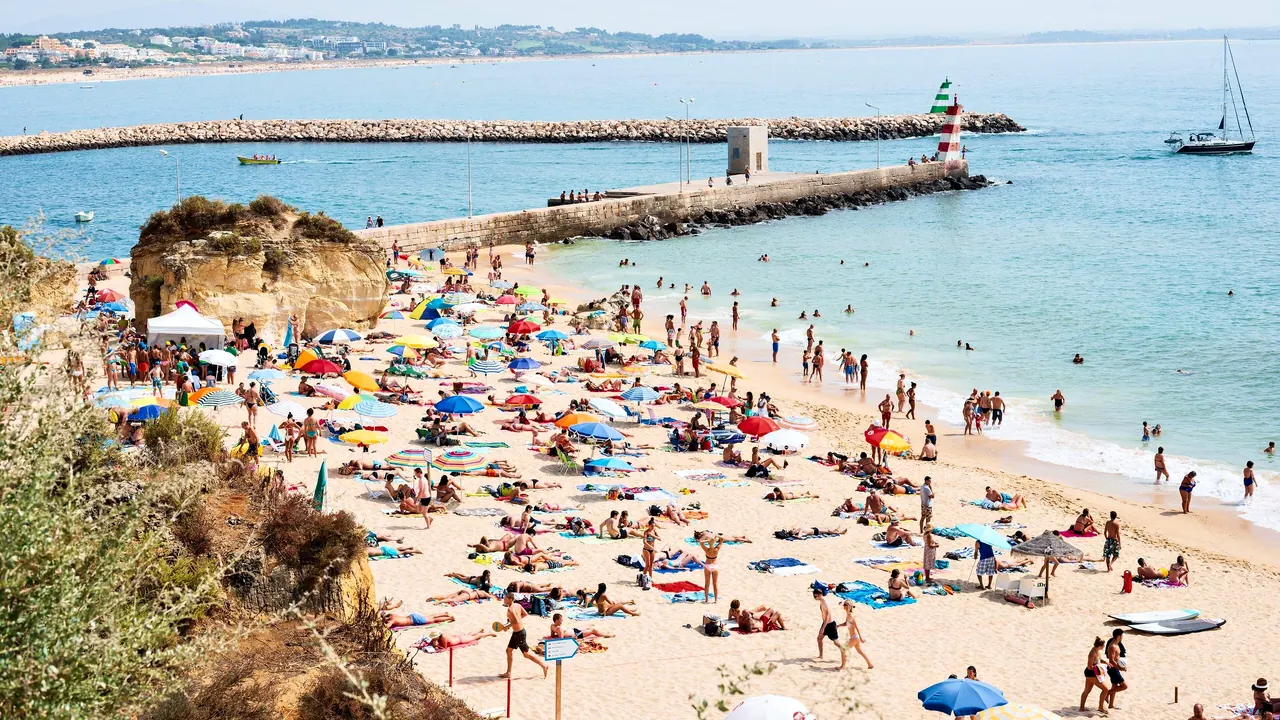
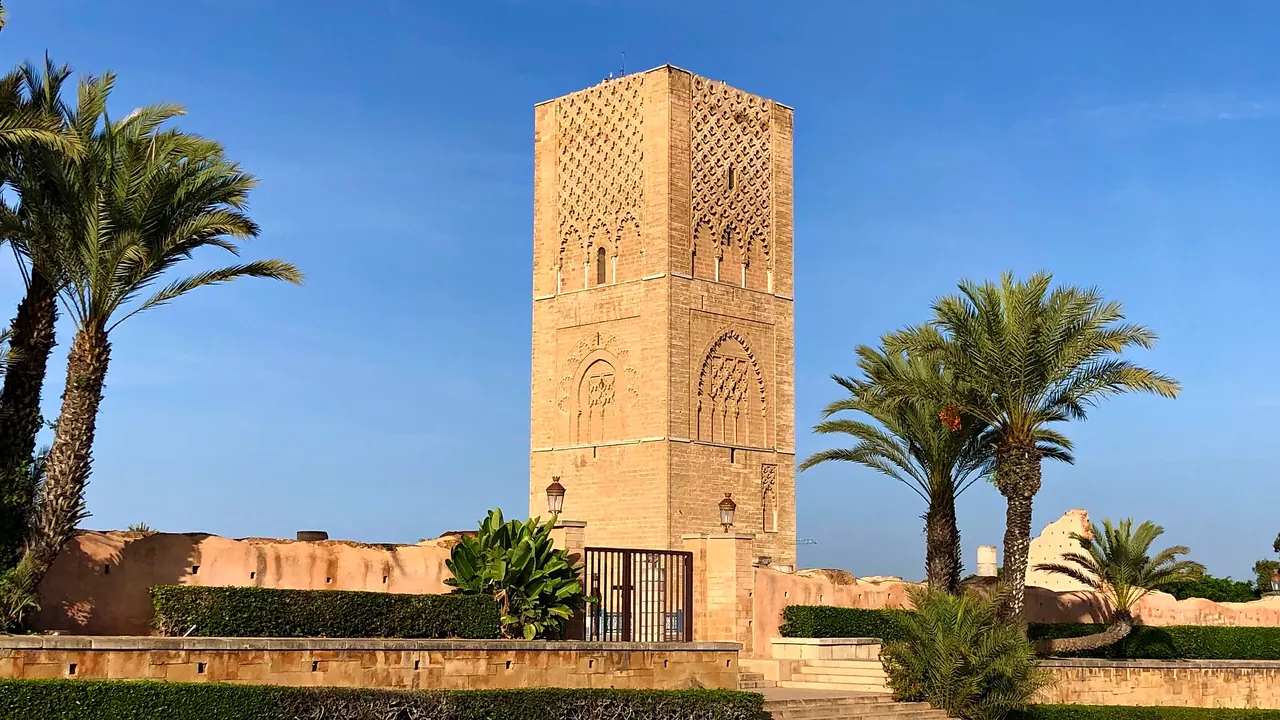
Photos: Lagos, Portugal by Norbert Nagel, CC BY-SA 4.0, cropped; Rabat by Aemazy, CC BY-SA 4.0, cropped.
Lagos, Portugal or Rabat?
Our verdict in twelve categories, each scored against the same fixed benchmark cities, and the climate month by month, so you can choose for your trip.
Choose Lagos, Portugal for
- nature and the outdoors
- beaches
- nightlife
Lagos is the pick for a summer vacation built around the sea. Its golden coves beneath honey-coloured cliffs are a walk from the old town, and Ponta da Piedade and the Costa Vicentina give the outdoors real substance. In summer the bars stay full long after midnight. Families who want sand and easy days will also find it the simpler choice.
Choose Rabat for
- culture and sights
- live music and the arts
- prices
Choose Rabat if you would rather spend your days looking at things than lying on a towel. The Kasbah of the Udayas, the Hassan Tower and the Chellah give it a depth of history that Lagos cannot match. Everyday costs are lower, and the rail line puts Casablanca, Tangier and Meknes within reach without a car. It suits a calm, curious traveller more than a party crowd.
Scoreboard
Twelve categories on one fixed scale from 0 to 100. The shaded stretch is the gap between the two.
Your match
Pick a travel style or drag the sliders, and both match scores follow your weighting.
Too close to call, 1 point apart
Wins on nature and the outdoors and beaches with your weighting.
Wins on culture and sights and live music and the arts with your weighting.
What matters to you?
Category by category
What the scores mean for a trip.
Beaches & swimming
Lagos is a beach destination in a way Rabat is not. Camilo, Dona Ana and the other coves south of the walls have golden sand beneath cliffs and sea stacks, with clear and usually calm water. Meia Praia adds 4km of open sand for anyone who wants room.
Rabat's beach below the kasbah is for football, surfing and local family outings, and the swell makes swimming limited. The calmer sand towards Temara and Skhirat is a short taxi ride away, and the sea there is slightly warmer in late summer, but it makes a pleasant afternoon rather than a reason to come.
Food & drink
Neither is a destination for serious eaters, but Rabat gives you more to explore. Its medina eateries serve tagines, harira and couscous on Fridays, evening stalls sell snail broth and msemen, and the embassy districts add French and Lebanese cooking.
Lagos has a narrower range. Grilled sardines, octopus and cataplana are very good when you find them, but much of the old town is given over to photo-menu restaurants, and the better meals are a street or two back. Its advantage is wine, which is easy to find, while in Rabat alcohol is discreet and mostly served in hotels.
Culture & sights
Here Rabat is the stronger city by some distance. Its UNESCO-listed sights run from Roman Sala inside the Chellah to the Almohad gate of the Kasbah of the Udayas, the Hassan Tower and an art deco Ville Nouvelle. That is enough for two or three days, with museums of modern art and archaeology on top.
Lagos makes a fine morning's walk: the old walls, the Ponta da Bandeira fort, the gilded interior of Santo António, and the slave market museum, which faces the darker side of the fifteenth-century voyages. After that, the region's history lies in the towns around it.
Nightlife
Lagos is the place for going out. In summer its old town fills with backpackers and surfers moving between bars and pubs until well past midnight, and a few small clubs stay open towards dawn. From November to March it is quiet.
In Rabat, evenings mean cafés, the river promenade and families strolling the medina. Drinking is limited to hotel bars and a few lounges in Agdal and the Hassan district. People who want a real night out take the train to Casablanca.
Nature & outdoors
Lagos has the more dramatic setting. The arches and grottoes of Ponta da Piedade are a short walk from town and best seen by kayak, and clifftop paths lead west to Luz. Within about an hour you also have the wild cliffs of the Costa Vicentina and the wooded hills of the Serra de Monchique.
Rabat's outdoors is gentler: the Bou Regreg estuary for paddling, surf schools at the river mouth, easy trails in the Maamora cork forest and birdwatching at Sidi Boughaba. The mountains are hours away, so hikers will notice the difference.
Day trips
Rabat has the edge because of its railway. Casablanca, Tangier, Asilah and Meknes can all be reached by train in two hours or less, and Salé's older medina is a short tram ride across the river, so you can fill a varied week of outings without a car.
From Lagos the best trips are close and pleasant: Sagres and Cape St Vincent, the Moorish castle at Silves and the Monchique hills. They are much easier with a hire car, though, and Faro and Tavira make for long days.
Good for families
Lagos suits families better, mainly because of Meia Praia, whose gently shelving shore and open space make beach days easy. Boat trips to the grottoes and relaxed evenings at the marina add to it, and water parks and a marine park are within driving distance. The steep stairways down to the coves and the cobbled lanes are hard going with a pushchair.
Rabat is calm and welcoming with children, and its large national zoo and its gardens make good outings. But the city beaches have strong waves, and there is less to fill a whole week.
Getting around
Both centres are walkable, but Rabat's is flatter and better connected. Its main sights lie along broad streets near the river, the tram and petit taxis reach the Chellah, Agdal and Salé, and the central station connects to the national rail network.
Lagos is easy on foot between the old town, the marina and the coves, though the cobbled lanes can be steep. Beyond town, slow trains and infrequent buses lead most visitors to hire a car.
Shopping & style
Rabat offers more for a shopper. It centres on Rue des Consuls in the medina, where the city's own deep-coloured pile carpets, leather and brass are sold with gentler haggling than in the bigger souks, and Salé across the river adds pottery.
In Lagos, shopping means browsing hand-painted ceramics, cork goods and sardine tins on the way to dinner, or buying surf gear. The market's honey, figs and medronho make good gifts. Neither town is a place for fashion.
Affordability
Rabat is the cheaper place to spend a week. Medina meals, café terraces and transport cost little and the sights charge little or nothing. Its hotels lean towards business travel, though, and alcohol is the one expensive item.
Lagos costs around the Western European average, and in July and August rooms and the restaurants on the main streets are expensive. From October to May it becomes good value, which narrows the gap if you go out of season.
Live music & performing arts
Rabat has much more to offer here. It is home to the Mohammed V National Theatre, the Grand Theatre on the Bou Regreg and the Mawazine festival, which fills open-air stages with international, Arab and Gnawa acts. Outside the festival, programmes are mostly in Arabic and French and you have to look for them.
In Lagos, live performance comes down to the cultural centre's modest programme, fado and guitar evenings in summer, and cover bands in the bars. For serious concerts you would have to go to Lisbon.
Wellness & relaxation
Rabat has a living bathing tradition in its neighbourhood hammams, with steam and black-soap scrubs, and hotel spas offer the same ritual with argan oil massages. Its tidy boulevards, the garden in the kasbah and the river walks keep a stay unhurried all year.
Lagos offers a different kind of rest: yoga and surf retreats on the quieter coast towards Luz, sunset walks along the cliffs and, an hour inland, the old thermal springs of Caldas de Monchique. In August the town is too busy for a quiet break.
When should you go?
Pick your month. The climate figures are measured averages, not a forecast.
Lagos, Portugal in July
Rabat in July
Daytime high, °C
Rainfall in the month, mm
Where the figures come from
Lagos, Portugal's temperatures are measured 63 km from the centre, at Faro / Aeroporto.
Lagos, Portugal has no rain gauge within 25 km of the centre, so its rainfall comes from a gridded climate dataset read at the city rather than from a gauge further away.
Temperature and rainfall are climate normals, averaged over the years shown. Lagos, Portugal: 1991-2020 normals, Faro / Aeroporto (63.4 km from centre). Rabat: 1991-2020 normals, Rabat-Sale (7.6 km from centre).
Lagos is a summer place. From June to September it is dry and very sunny, with highs reaching 29°C, but the Atlantic stays fresh at about 20°C even in August. May and late September are warm enough for the coves, and spring and autumn are better for walking the clifftops. The rain arrives in October and is heaviest in November and December, when the days are mild but often grey.
Rabat's year is more even. Summer highs stay a degree or two lower and the sea is warmer, reaching about 23°C in August, so late summer is its best time for swimming. Winter days are a little milder, with highs of 18°C or more, which keeps sightseeing comfortable all winter. November and December are wetter than in Lagos, though, with up to 97mm a month. For walking the medina and the ruins, spring and October suit it best.
Which traveller are you?
On a beach and sun trip, Lagos is the clear choice. Its sheltered coves and the long open sand of Meia Praia are within walking distance of town. Rabat's city beach is a local scene, and its swell and currents keep swimmers close to shore.
For a culture and arts trip, Rabat has far more to see. The Kasbah of the Udayas, the Hassan Tower and the Chellah span two thousand years, and its national theatres and the Mawazine festival add live performance. Lagos has only a morning's worth of sights.
On a trip on a tight budget, Rabat makes your money go further. Medina meals, mint tea on café terraces, the tram and petit taxis cost little, and most sights are cheap or free. Lagos is around the European average, and in summer its rooms are priced for heavy demand.
Before you go
| Measure | Lagos, Portugal | Rabat |
|---|---|---|
| Official language | Portuguese | Arabic, Standard Moroccan Tamazight |
| Currency | Euro (EUR) | Moroccan Dirham (MAD) |
| Sockets | CF230 V, 50 Hz | CE50 Hz |
| Driving side | Right | Right |
| Time zone | UTC, UTC+1 in summer | UTC+1 |
| Emergency number | 112 | Police 19/112, ambulance 15, fire 15 |
| Elevation | 3 m | 87 m |
| Main airport | Faro - Gago Coutinho International Airport (FAO)63 km from centre91 non-stop destinations | Rabat-Salé Airport (RBA)9 km from centre45 non-stop destinations |
| Public holidays this year | 14 days | 11 days |
By the numbers
| Measure | Lagos, Portugal | Rabat |
|---|---|---|
| City population | 31,049 | 515,619 |
| People per km² | 146 | 4,370 |
| Museums within 10 km | 6 | 7 |
| UNESCO World Heritage sites within 50 km | 0 | 1 |
| Swim season, months above 21 °C | None | 4 months |
Where else could you go?
Every comparison below shares a destination with this one, so you can follow Lagos, Portugal or Rabat somewhere new.
- Albufeiravs Lagos, Portugal
- Farovs Lagos, Portugal
- Casablancavs Rabat
- Fesvs Rabat
- Lisbonvs Lagos, Portugal
- Cascaisvs Lagos, Portugal