Portugal
- Nature & outdoors82
- Day trips82
- Culture & sights80
Match
68
Every category weighted equally
- Beach & sun70
- Culture & arts68
- Food & nightlife66
- Family trip71
- Outdoors73
- Relax & unwind69
- Shopping & style66
- On a budget68
Portugal in twelve categories
Our verdict on the country as a whole, scored 0 to 100 against the same fixed benchmark cities as every destination, so a score means the same thing on every page.
Beaches & swimming. Scores 78 out of 100.
Food & drink. Scores 75 out of 100.
Culture & sights. Scores 80 out of 100.
Nightlife. Scores 65 out of 100.
Nature & outdoors. Scores 82 out of 100.
Day trips. Scores 82 out of 100.
Good for families. Scores 70 out of 100.
Getting around. Scores 62 out of 100.
Shopping & style. Scores 55 out of 100.
Affordability. Scores 64 out of 100.
Live music & performing arts. Scores 52 out of 100.
Wellness & relaxation. Scores 55 out of 100.
Portugal category by category
Under each: where in Portugal it is best, and our destinations in Portugal that score highest on it.
Beaches & swimming
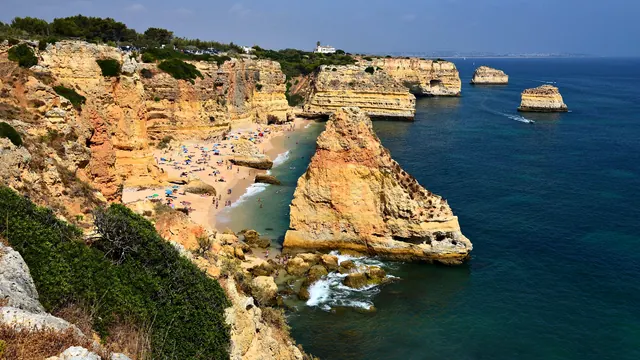
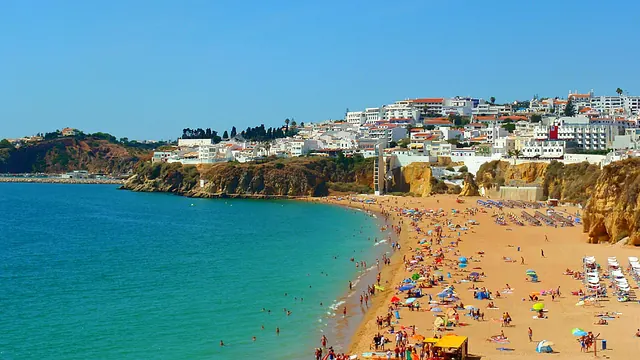
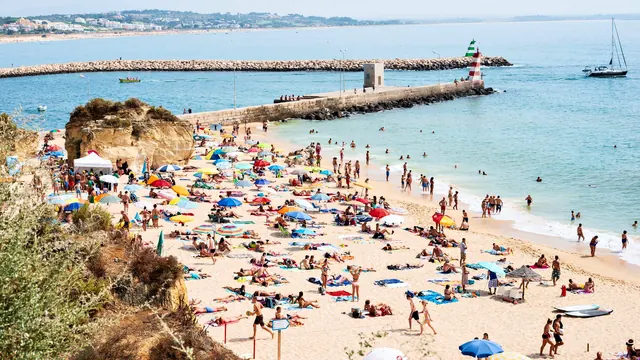
78Beach life in Portugal is the Algarve. The western half, from Lagos to Albufeira, is ochre cliffs, sea stacks and small sandy coves reached down steps and wooden walkways, with grottoes you can paddle into. East of Faro the shore turns flat and gentle: the Ria Formosa barrier islands off Tavira and Olhão have long, quiet sand reached by little ferries, and the water is the warmest on the coast, around 22-23°C in August. The season runs from June to September, and a week or two spent between the beach and the hotel pool is a perfectly normal Portuguese summer.
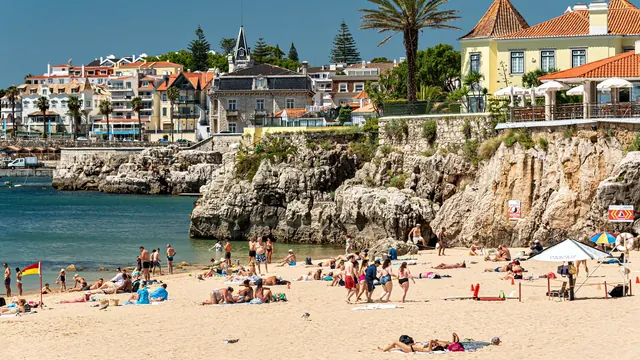
Beyond the Algarve the Atlantic is cooler and rougher. The Alentejo coast around Comporta and Vila Nova de Milfontes has vast empty beaches backed by dunes and pines, the Lisbon coast has Cascais and Costa da Caparica, and north of Lisbon the water rarely tops 18°C, so the beaches are for walking and surfing more than swimming. Porto Santo, a short hop from Madeira, has a long golden beach in mild water, a separate trip.
Where: Algarve, Ria Formosa islands, Alentejo coast, Porto Santo
Our top destinations in Portugal
Food & drink
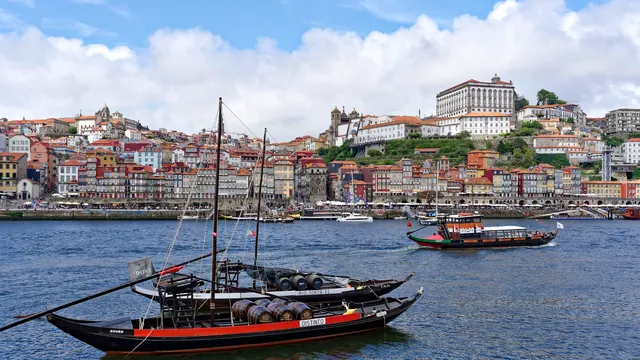
75Portuguese food is honest, generous and built on the sea: grilled sardines and sea bream, salt cod in endless forms, clams in garlic and coriander, octopus, and seafood rice. Lisbon has the widest range, from neighbourhood tascas and market halls to serious modern kitchens, and the custard tart in every pastelaria. Porto is heartier, with tripe, slow-cooked pork, the meat-laden francesinha sandwich and the port lodges across the river in Vila Nova de Gaia.
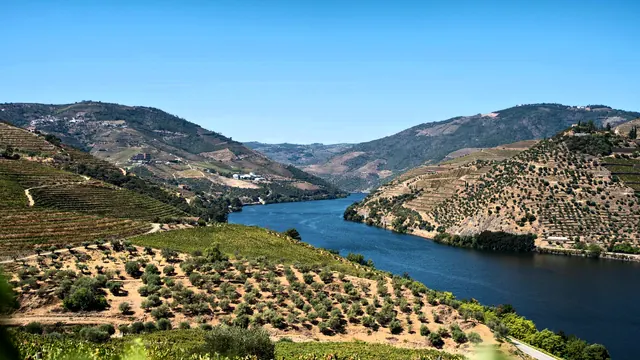
The wine is the other half of the story. The terraced Douro valley makes port and fine reds, the Alentejo around Évora produces rich reds alongside pork, bread soups and sheep's cheese, and the Minho in the north pours light, fizzy vinho verde. On the Algarve, fishing towns such as Olhão and Portimão do cataplana stews and grilled fish by the harbour. Coffee is short, strong and cheap everywhere. What Portugal lacks is breadth beyond its own cooking: international food is modest outside the two big cities.
Where: Lisbon, Porto, Douro Valley, Alentejo
Our top destinations in Portugal
Culture & sights
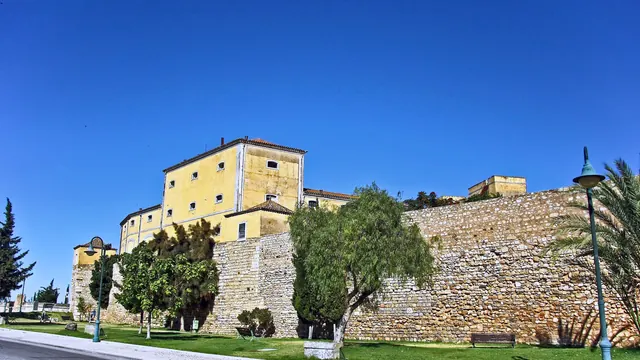
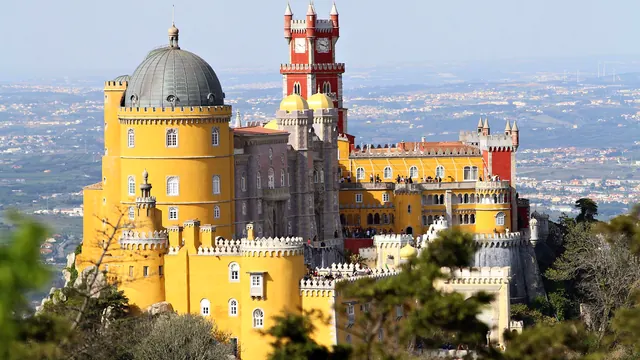
80Portugal's heritage is spread generously across a small country. Lisbon has the Manueline Jerónimos Monastery and Belém Tower from the age of the discoveries, the Gulbenkian collection, the National Tile Museum and the old Moorish quarter of Alfama below its castle. Sintra's palaces and Moorish castle sit in wooded hills just outside, and Porto's riverside centre is a UNESCO site of granite churches, gilded baroque interiors and blue-tiled facades.
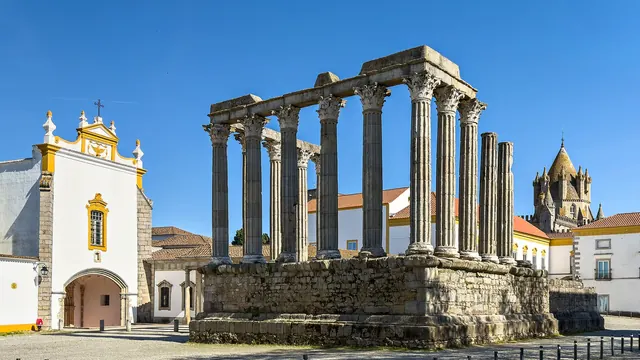
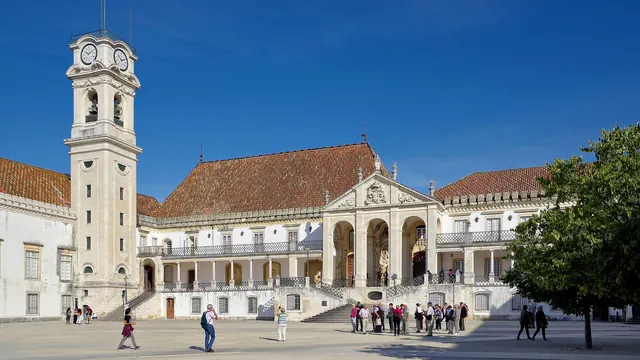
Between and beyond them lie the monasteries of Alcobaça and Batalha, the Templar Convent of Christ at Tomar, the ancient university of Coimbra with its baroque library, walled Évora with its Roman temple, and Guimarães and Braga in the north, birthplace of the country and its religious centre. Few sights are of the very first world rank, but a visitor can fill two weeks with them without repeating.
Where: Lisbon, Porto, Sintra, Évora
Our top destinations in Portugal
Nightlife
65Lisbon is the centre of going out: crowds drinking in the street in Bairro Alto until late, bars spilling down the steps of Cais do Sodré, and clubs by the river that run until morning. Porto is smaller but genuinely lively, with a dense block of bars around the streets behind the Clérigos tower that fill on weekend nights.
In summer the Algarve has its own scene: Albufeira's strip of loud bars and clubs, and Lagos with a younger, backpacking crowd. Elsewhere the country goes to bed after a long dinner and a glass at a café terrace, and university towns such as Coimbra liven up only in term.
Where: Lisbon, Porto, Albufeira, Lagos
Our top destinations in Portugal
Nature & outdoors
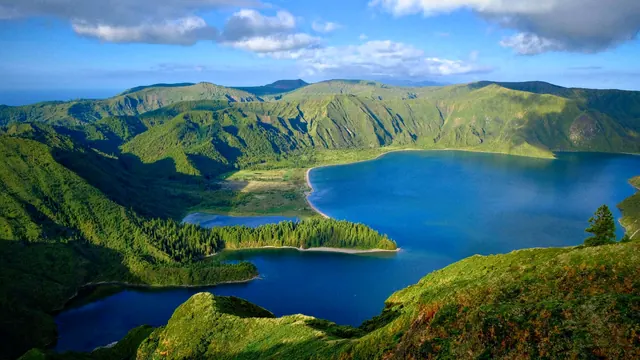
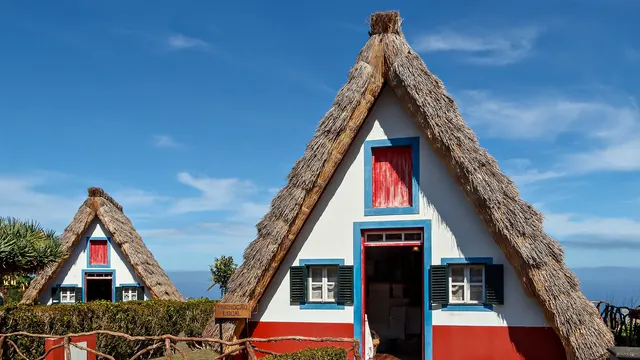
82The most dramatic landscapes are on the islands. Madeira is a steep volcanic island of laurel forest and ridges, crossed by hundreds of kilometres of levada irrigation channels with walking paths beside them, and a classic ridge hike between Pico do Arieiro and Pico Ruivo. The Azores, mid-Atlantic, are green crater lakes, hot springs and some of Europe's best whale and dolphin watching. Both are separate trips by plane, and both suit a week of walking.
On the mainland, Peneda-Gerês in the far north is granite mountains, oak forest and old stone villages, and Serra da Estrela is the country's highest range. The Douro valley's terraced slopes are best seen by river boat or road. In the southwest, the Rota Vicentina follows wild cliffs for days, and Ericeira, Peniche and Nazaré, with its giant winter waves, make the Atlantic coast a serious surfing destination.
Where: Madeira, Azores, Peneda-Gerês National Park, Rota Vicentina
Our top destinations in Portugal
Day trips
82Two bases cover most of what is worth a day out. From Lisbon, Sintra's palaces are under an hour by train, and the seaside town of Cascais is as close; walled Évora is about an hour and a half east, and a long day by car links Óbidos, Alcobaça, Batalha and Tomar. From Porto, Guimarães and Braga are each about an hour by train, the canal town of Aveiro is quicker still, Coimbra is an hour south, and the train up the Douro valley runs to wine estates and riverside villages.
The Algarve is thinner, but Tavira, Silves with its red castle, and the old walled centre of Lagos make easy outings between beach days, and the Alentejo's hilltop towns such as Monsaraz and Marvão reward a car.
Good for families
70Families mostly head for the Algarve, and with reason: the eastern beaches around Tavira and Monte Gordo shelve gently into warm, calm water, resorts are built around pools and apartments, and inland there are water parks and a marine park. Lisbon's Oceanário is one of Europe's great aquariums, and the riverside Parque das Nações around it is flat and easy with a pushchair, unlike the steep hills of the old town. In Coimbra, Portugal dos Pequenitos is a long-loved park of child-sized buildings.
Portuguese culture is relaxed about children, who eat late with their parents in restaurants, and the country is calm and safe. The catches are cobbles and steep streets in the old cities, and an Atlantic that is cold and rough north of the Algarve.
Where: Algarve, Lisbon, Coimbra
Our top destinations in Portugal
Getting around
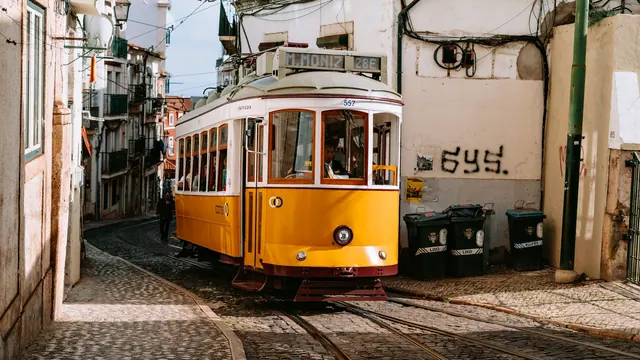
62The main line is easy: fast trains link Lisbon, Coimbra and Porto in about three hours end to end, and both big cities have a metro, with Lisbon's old trams and funiculars climbing its hills. Express coaches reach most towns. Walking is the way to see the old centres, but they are steep and paved with slippery stone.
Beyond that, a car helps a great deal. The Algarve has a slow coastal railway and buses, but most coves and villages are easier to reach by road; the Alentejo, the Douro wine estates and Peneda-Gerês are hard to travel without one. Madeira and the Azores are a flight away and best explored with a hire car, on steep, winding island roads. Distances on the mainland are short and the motorways are good.
Shopping & style
55Shopping in Portugal is at its best for things made in Portugal. Lisbon has the elegant old streets of Chiado and Baixa, the luxury boulevard of Avenida da Liberdade, and shops selling hand-painted tiles, tinned fish in beautiful packaging, soaps and linen. Porto's Rua de Santa Catarina is the main street, and the port lodges sell bottles you cannot find elsewhere.
The regions add their own crafts: ceramics from Caldas da Rainha, the painted Barcelos cockerel at the town's weekly market in the north, Arraiolos wool rugs in the Alentejo, embroidery and wicker on Madeira, cork goods everywhere. It makes for good gift shopping rather than a fashion trip.
Where: Lisbon, Porto, Caldas da Rainha, Barcelos
Our top destinations in Portugal
Affordability
64Portugal is one of the cheaper countries in Western Europe, though not everywhere. Lisbon hotels and the Algarve in July and August cost about what a visitor would expect in a popular Southern European destination. Move away from them, to Porto, Coimbra, the Alentejo towns or the Minho in the north, and rooms become noticeably cheaper.
Eating and drinking keep costs down throughout: a set lunch in a neighbourhood restaurant, a coffee and pastry at the counter, and a bottle of good local wine are inexpensive by European standards. Trains and city transport are cheap. Out of season, even the Algarve is good value.
Where: Porto, Alentejo, Coimbra, Minho
Our top destinations in Portugal
Live music & performing arts
52Fado is the performance most visitors come away with, sung most nights in small houses in Lisbon's Alfama and Mouraria, where the lights dim and the room goes silent for the singer. Coimbra has its own fado, sung by men in student cloaks. Lisbon also has the São Carlos opera house and the Gulbenkian's orchestra and concert season, and Porto has Casa da Música, a striking modern concert hall with its own orchestra.
Outside those three cities the formal offer is thin, and summer music festivals carry much of the year's live music.
Our top destinations in Portugal
Wellness & relaxation
55Portugal has an old tradition of termas, thermal spa towns that grew up around springs, mostly in the hilly north and centre: São Pedro do Sul, with Roman roots, Luso beside the Buçaco forest, Gerês in its national park, and Caldas de Monchique in the hills above the Algarve. Many are still more therapeutic than glamorous, with a quiet, old-fashioned air.
The most memorable bathing is in the Azores, where at Furnas on São Miguel you sit in warm, iron-red water in a historic garden or in small hot pools by a stream, a separate trip by plane. On the mainland, slowing down means the Alentejo: whitewashed villages, long lunches and quiet countryside stays, and resort spas on the Algarve.
Where: Azores, São Pedro do Sul, Alentejo, Monchique
Our top destinations in Portugal
When should you go?
Portugal has no single climate. Its months are measured at Lisbon, Porto, Algarve, Madeira and Azores; pick one to see it. The figures are measured averages, not a forecast.
Where in Portugal
Lisbon in July
Daytime high, °C
Rainfall in the month, mm
Temperature and rainfall are climate normals, averaged over the years shown. Lisbon: 1991-2020 normals, Lisboa / Geof (1.1 km from centre).
Compare Portugal with
Every comparison with a written verdict behind it.
Our destinations in Portugal
Every place in Portugal with its own page: its twelve scores, its texts and its months.