Portugal
Lisbon
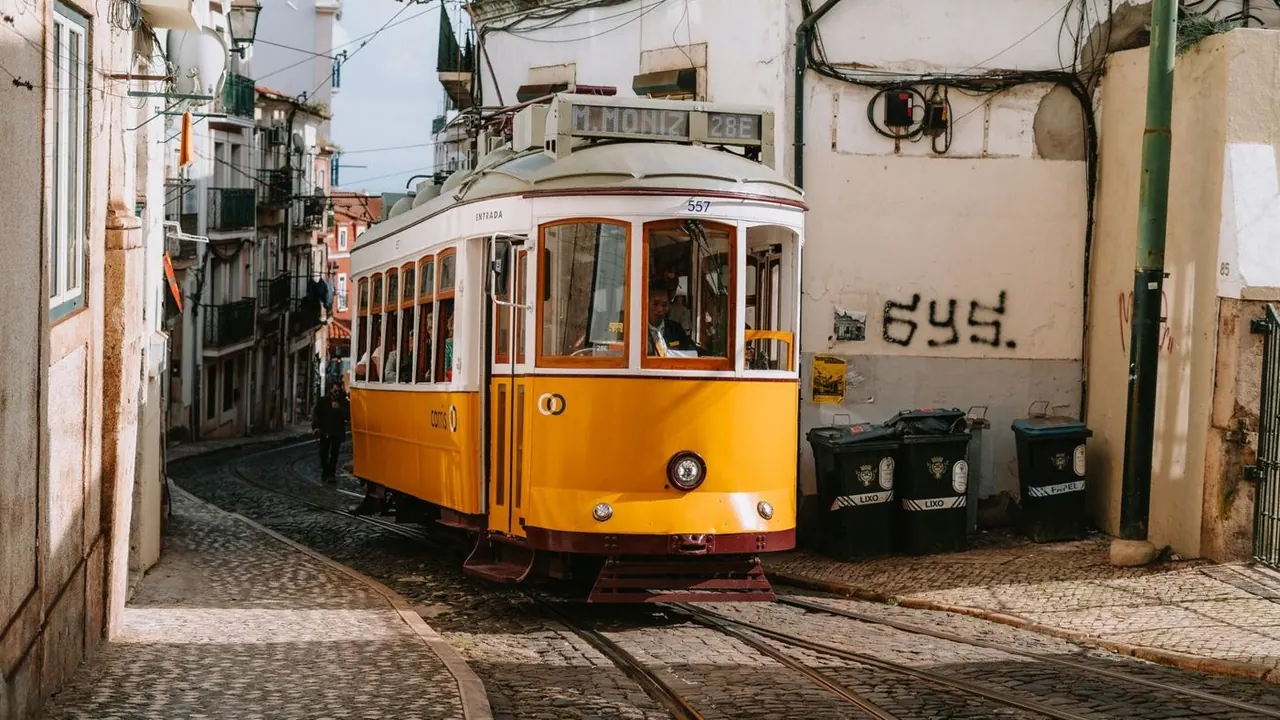
A yellow tram in a narrow street
- Day trips82
- Culture & sights78
- Food & drink75
Photo: Riccardo Toso, Pexels License
Match
65
Every category weighted equally
- Beach & sun61
- Culture & arts68
- Food & nightlife66
- Family trip64
- Outdoors66
- Relax & unwind61
- Shopping & style65
- On a budget63
Lisbon in twelve categories
Our verdict on each, scored 0 to 100 against the same fixed benchmark cities, so a score means the same thing on every page.
Beaches & swimming. Scores 50 out of 100.
Food & drink. Scores 75 out of 100.
Culture & sights. Scores 78 out of 100.
Nightlife. Scores 75 out of 100.
Nature & outdoors. Scores 75 out of 100.
Day trips. Scores 82 out of 100.
Good for families. Scores 62 out of 100.
Getting around. Scores 66 out of 100.
Shopping & style. Scores 60 out of 100.
Affordability. Scores 55 out of 100.
Live music & performing arts. Scores 60 out of 100.
Wellness & relaxation. Scores 36 out of 100.
Lisbon category by category
Beaches & swimming
50Lisbon sits on the Tagus estuary rather than the open sea, so there is no beach in the city itself. The commuter train along the river to Cascais stops at a string of sandy beaches, from Carcavelos, a broad surf beach, to the smaller and calmer bays at Estoril and Cascais. Across the river, Costa da Caparica is a long stretch of Atlantic sand backed by beach bars, and further south the Arrabida coves have the clearest, most sheltered water, though you need about an hour by car to reach them.
The Atlantic is the limit. Even in August the sea is usually around 18-20°C, and swell and currents make some beaches better for surfing than swimming. The season runs from June to September. A beach day works well as a break from the city, but few visitors plan a stay around it.
Food & drink
75Eating in Lisbon is built on the sea and on simple neighbourhood cooking. Small family tascas serve grilled fish, bacalhau in endless versions and daily stews. Seafood beer halls bring out steamed clams, prawns and crab, and a pork bifana sandwich makes a common standing lunch. Pastelarias are everywhere, and the custard tart, eaten warm with a bica espresso, is a daily habit rather than a tourist treat. In June the smell of grilling sardines fills Alfama and Mouraria for the Santo Antonio festivities.
Wine is a real strength. Glasses from the Alentejo, the Douro and vinho verde from the north are poured cheaply in ordinary places, and cherry ginjinha is sold by the shot from tiny counters around Rossio. The Mercado da Ribeira and the Campo de Ourique market combine produce stalls with places to eat. The international range is narrower than in larger capitals, and the menus around Baixa can be tired, so the best meals tend to be in residential neighbourhoods.
Culture & sights
78Lisbon's heritage is spread across a few distinct areas. Belem, by the river, holds the Manueline Jeronimos Monastery and the Belem Tower, both linked to the age of maritime discovery, as well as the Monument to the Discoveries and the National Coach Museum. The Baixa is a planned grid of neoclassical streets rebuilt after the earthquake of 1755, opening onto the arcaded Praca do Comercio. Above it, Alfama and Mouraria kept their medieval tangle of lanes below the Sao Jorge Castle, with the Se Cathedral and the white dome of the National Pantheon nearby.
The museums are fewer but well chosen. The Gulbenkian pairs an excellent collection running from Egyptian antiquities to Lalique with a modern art wing set in gardens. The National Tile Museum, in a convent with a gilded church, explains the azulejos that cover facades all over the city, and the Ancient Art Museum holds the major Portuguese paintings. Viewpoints over the river are part of the sightseeing. Most visitors cover the main sights in three or four days.
Nightlife
75Going out in Lisbon starts late and much of it happens on the street. In Bairro Alto, dozens of small bars sell drinks through their doors, and on warm weekend nights the narrow lanes turn into one large standing crowd until the early hours. Below it, Cais do Sodre has the pink-painted street and a run of bars in former sailors' haunts, and these move later into the night. Principe Real has quieter cocktail bars and the core of the gay scene.
The clubs lie along the river, in converted warehouses towards Santa Apolonia and around Santos and Alcantara. They fill after 2am and some keep going until morning. Sunset drinks at the miradouros and rooftop terraces are a ritual of their own. The scene is relaxed and affordable rather than glamorous, and much smaller than in the biggest party capitals.
Nature & outdoors
75The landscape around Lisbon is coastal rather than alpine. Within the city, the large Monsanto forest park gives shaded trails and cycling routes, and a riverside path runs for kilometres from the Parque das Nacoes towards Belem. To the west, the forested Sintra hills, which are often misty, lead down to Cabo da Roca, the westernmost point of mainland Europe, and to a wild Atlantic shore of cliffs and dunes around Guincho. Guincho is a serious spot for kitesurfing and windsurfing. Carcavelos and Ericeira, a recognised surf reserve, attract surfers all year.
South of the river, the limestone ridges of the Arrabida natural park drop steeply into a green sea, with good hiking and kayaking. From nearby Setubal, boats go out to see the resident dolphins of the Sado estuary, and flamingos winter on the Tagus mudflats. The mild climate makes spring and autumn the best walking seasons. There are no real mountains within reach.
Day trips
82Sintra is the classic outing, about forty minutes by train. It has the painted Pena Palace, the Moorish Castle on its ridge, the Quinta da Regaleira with its initiation well, and the old National Palace in the town centre, and the town fills a full day without difficulty. Cascais, at the end of the coastal line, is a gentler half day of old town and seafront, and the vast palace-convent at Mafra is close by.
Further out there is a long list of heritage towns. Evora, about an hour and a half away, is a walled Alentejo town with a Roman temple and a chapel of bones, and it is surrounded by wine estates. To the north, the Gothic monasteries of Alcobaca and Batalha and the Templar convent at Tomar are three separate UNESCO sites. Walled Obidos and the fishing town of Nazare are often combined with them. South of the river, Setubal and the Arrabida wineries make an easy day.
Good for families
62Lisbon has a few strong attractions made for children. The Oceanario at the Parque das Nacoes is one of the large aquariums of Europe, built around a huge central tank, and the Pavilhao do Conhecimento science centre and the riverside gardens and cable car are right beside it. The zoo is in the north of the city, and the yellow trams, funiculars and the Santa Justa lift are fun rides for children. The train out to the Cascais beaches turns a hot day into an easy outing.
Portuguese culture is warm towards children, who are welcome in restaurants late into the evening. What makes the city hard work is its terrain. Steep hills, stairways and polished limestone pavements that turn slippery are tough going with pushchairs, and the old quarters suit carriers better. Summer crowds on the trams add to the effort.
Getting around
66Central Lisbon is compact, and most sights are within walking distance of each other, but this is a city of seven hills. Walks between Baixa, Alfama, Chiado and Bairro Alto involve steep climbs, long stairways and polished stone pavements that turn slippery in rain. Comfortable shoes matter more here than in most capitals.
The metro is clean and easy to understand, with four lines reaching the airport and the Parque das Nacoes, though it does not reach Belem or the steepest old quarters. Historic trams, including the famous line 28 through Alfama, three funiculars and a street lift help with the hills, but the trams are crowded and slow, and pickpockets work them. Suburban trains run to Sintra and Cascais, and ferries cross the river, all on the same rechargeable card. A car is a burden in the centre and only useful for trips further out.
Shopping & style
60Lisbon's shopping is at its best in Portuguese crafts and products. Avenida da Liberdade is the luxury boulevard, lined with the international fashion houses, and Chiado has the old established shopping streets, bookshops and glove makers. Principe Real has concept stores, local designers and antiques, and Rua Augusta in the Baixa is the main high street, with chains and souvenir shops.
The things worth carrying home are distinctive: hand-painted azulejo tiles and ceramics, cork goods, Burel wool, embroidered linens, decorated tins of sardines and port or Alentejo wine. The Feira da Ladra flea market near the National Pantheon sells everything from old tiles to vinyl twice a week, and the LX Factory in Alcantara gathers independent shops in a former factory. The range of international fashion is limited, and nobody comes for department stores.
Affordability
55Lisbon is a moderately priced capital for Western Europe, though its prices are not even across the board. Day-to-day costs are low: coffee and a pastry at the counter, a set lunch at a neighbourhood tasca, a glass of house wine and the metro and train fares all come cheap for a European capital. Many museums charge modest entry fees.
Rooms are the expensive part. Hotels and apartments in the central quarters cost about what they would in other southern European capitals, and more in summer and around big events. Restaurants aimed at visitors in Baixa and Chiado and the popular rooftop bars charge noticeably more than places a few streets away. Staying slightly outside the centre and eating where residents eat keeps a trip reasonable.
Live music & performing arts
60Fado is Lisbon's own music, and it is what a visitor can hear every night. In Alfama, Mouraria and Bairro Alto, the casas de fado serve dinner while singers perform mournful songs with Portuguese guitar, and the atmosphere ranges from polished restaurants to tiny rooms where neighbours take turns singing. Hearing it in the neighbourhoods where it grew up is the high point of the city's performing life.
The formal scene is smaller. The Gulbenkian Foundation has its own orchestra and choir and a fine concert season. The Teatro Nacional de Sao Carlos is the national opera house, and the Centro Cultural de Belem programmes concerts, dance and contemporary work. The historic Coliseu dos Recreios hosts touring acts. Most theatre is in Portuguese, so it is of limited use to visitors, and the jazz scene is small.
Wellness & relaxation
36Lisbon has no bathing culture of its own. There are no historic baths or hammams to seek out, and spa treatments mostly mean the wellness floors of the larger hotels in the centre and along the Estoril coast. Visitors who come mainly to rest will find little made for that purpose.
The restful side of the city lies in its pace rather than its facilities. Long lunches and late afternoons spent at a viewpoint looking over the river are normal habits, and the Gulbenkian gardens, the Estrela garden and the botanical gardens offer quiet shade. The old quarters themselves are crowded, noisy and hilly, so a restorative stay usually means spending the nights out along the Cascais coast or in the Sintra hills.
When should you go?
Pick a month to see what it is like. The climate figures are measured averages, not a forecast.
Lisbon in July
Daytime high, °C
Rainfall in the month, mm
The whole year
Shaded against this city’s own year: the deepest cell is its best month for that figure and the palest its weakest.
Temperature and rainfall are climate normals, averaged over the years shown. Lisbon: 1991-2020 normals, Lisboa / Geof (1.1 km from centre).
Before you go
| Measure | Lisbon |
|---|---|
| Official language | Portuguese |
| Currency | Euro (EUR) |
| Sockets | CF230 V, 50 Hz |
| Driving side | Right |
| Time zone | UTC, UTC+1 in summer |
| Emergency number | 112 |
| Elevation | 100 m |
| Main airport | Lisbon Humberto Delgado Airport (LIS)7 km from centre156 non-stop destinations |
| Public holidays this year | 14 days |
By the numbers
| Measure | Lisbon |
|---|---|
| City population | 545,796 |
| People per km² | 5,453 |
| Museums within 10 km | 80 |
| UNESCO World Heritage sites within 50 km | 3 |
| Swim season, months above 21 °C | None |
Compare Lisbon with
Every comparison with a written verdict behind it.
- Barcelona
- Cadiz
- Cordoba
- Faro
- Madrid
- Malaga
- Marbella
- Montevideo
- Paris
- Porto
- Salvador
- Santiago de Compostela
- Seville
- Tangier
- Tbilisi
- Toledo
- Valparaiso