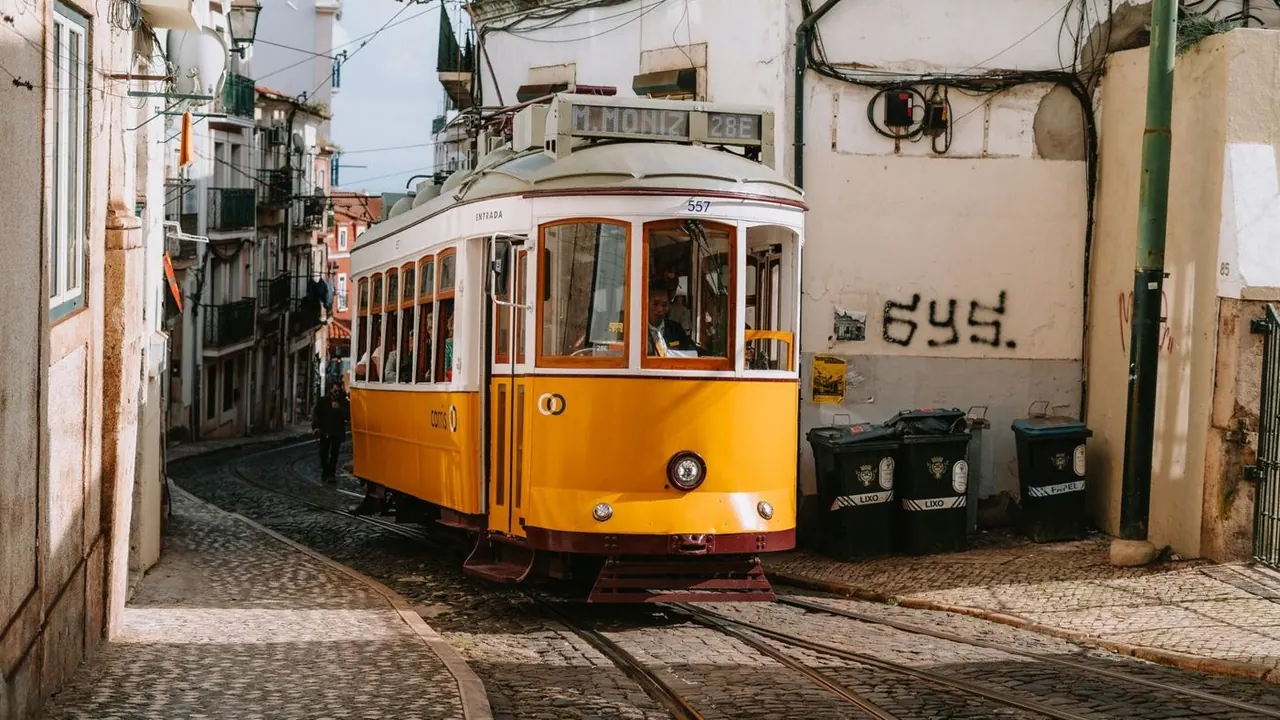
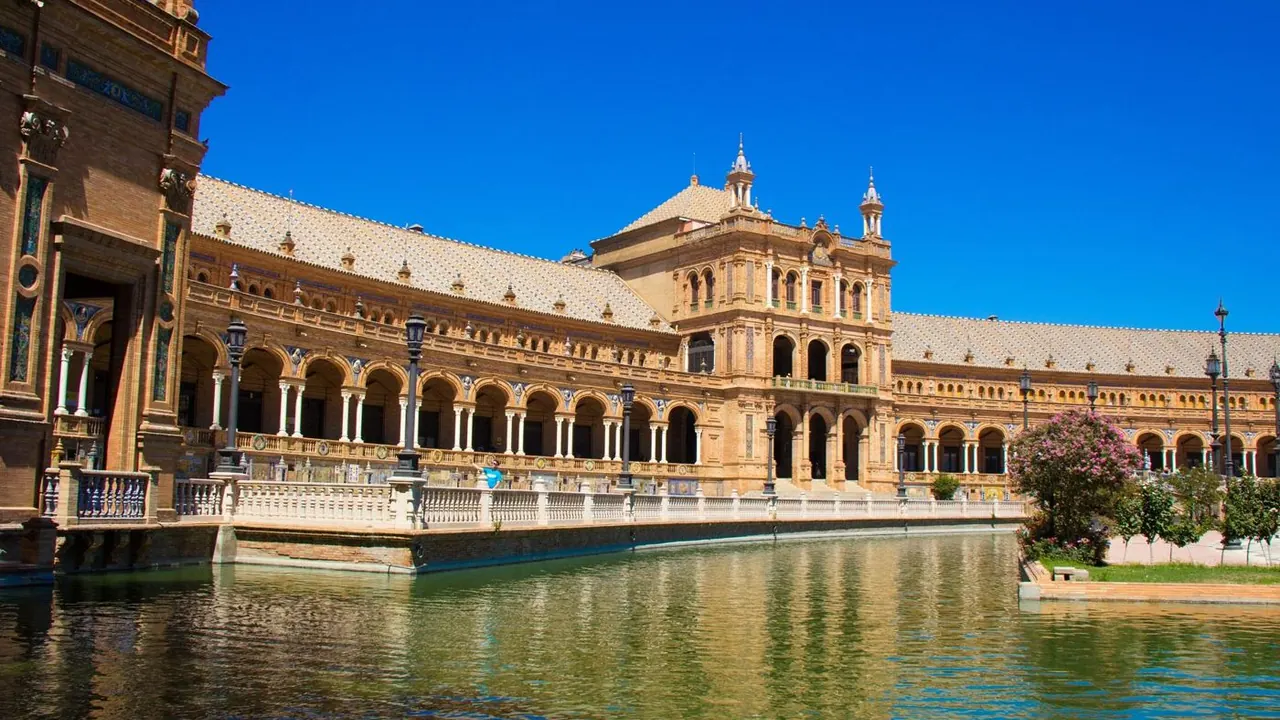
Photos: Lisbon by Riccardo Toso, Pexels License; Seville by Tibor Kovacs, CC BY 2.0, cropped.
Lisbon or Seville?
Our verdict in twelve categories, each scored against the same fixed benchmark cities, and the climate month by month, so you can choose for your trip.
Choose Lisbon for
- beaches
- nature and the outdoors
- nightlife
Lisbon is the better pick if you want the city and the coast in one trip. A suburban train takes you to the surf at Carcavelos, and the Sintra hills, Guincho and Arrabida give you cliffs, waves and hiking within easy reach. The nights are livelier too, with crowds drinking in the lanes of Bairro Alto and warehouse clubs by the river that stay open until morning. In return you get a hilly city with slippery stone streets.
Choose Seville for
- live music and the arts
- getting around
- culture and sights
Seville rewards travellers who come for monuments and flamenco. The Alcázar, the cathedral and the lanes of Santa Cruz sit together in one flat old centre that is easy to walk, and live flamenco in tablaos and peñas is a bigger draw than anything on Lisbon's stage. You give up the sea and most of the outdoors, and you need to avoid the high summer.
Scoreboard
Twelve categories on one fixed scale from 0 to 100. The shaded stretch is the gap between the two.
Your match
Pick a travel style or drag the sliders, and both match scores follow your weighting.
Wins on beaches and nature and the outdoors with your weighting.
Wins on live music and the arts and getting around with your weighting.
What matters to you?
Category by category
What the scores mean for a trip.
Beaches & swimming
Lisbon has no beach in the city, but the coastal train reaches broad Carcavelos and the calmer bays of Estoril and Cascais without any planning. Costa da Caparica and the clear, sheltered Arrabida coves lie south of the river. The catch is the cold Atlantic, and on some beaches the swell suits surfers better than swimmers.
Seville has no sea at all. The Huelva sands at Matalascañas and Mazagón have warmer water, but they are well over an hour away by car or coach. In the city, cooling off means a pool, so if the sea matters, Lisbon makes it far easier.
Food & drink
The food is equally good in both cities, but you eat in different ways. Lisbon's cooking revolves around the sea and the family tasca: grilled fish, endless versions of bacalhau, clams in seafood beer halls, and a warm custard tart with a bica. Cheap glasses of Alentejo and Douro wine are a real bonus.
In Seville you graze rather than sit down. People order a few tapas at a time at a counter or a barrel and then move on: salmorejo, spinach with chickpeas, pork cheek, jamón. The drinks are chilled manzanilla and fino. Both cities have a narrow international range, and in both the best meals are away from the main sights.
Culture & sights
The two cities are close here, but their heritage is laid out differently. Seville's great sights are packed into one place: the Mudéjar Alcázar, the huge Gothic cathedral built onto a mosque, and the Archivo de Indias, with the orange-tree squares of Santa Cruz around them. The tiled arcade of Plaza de España is a short walk away.
Lisbon's sights are split between Manueline Belem, the rebuilt grid of the Baixa and medieval Alfama below the castle. Its museums are stronger: the Gulbenkian and the National Tile Museum have no real equal in Seville apart from the Murillos at the Bellas Artes.
Nightlife
Lisbon has more going on after dark. On weekends the lanes of Bairro Alto fill with people drinking outside small bars, Cais do Sodre carries on later, and the riverside clubs in Santos and Alcantara fill after 2am and can run until daylight. Principe Real adds cocktail bars and the heart of the gay scene.
Seville's evenings are long and sociable but end earlier. People go from a late dinner on to terraces around the Alameda de Hércules, Alfalfa and Triana. Apart from the week of the April Fair, there is little serious clubbing.
Nature & outdoors
This is one of the clearest gaps between them. From Lisbon you can walk the forested Sintra hills, follow the cliffs and dunes past Cabo da Roca to Guincho, surf at Ericeira or hike and kayak along the limestone ridges of Arrabida. Monsanto forest park offers shaded trails without leaving the city.
Seville lies in the flat Guadalquivir valley, among olive groves and orchards. The Doñana wetlands are a great outing for birdwatchers, but they mean a long guided trip, the sierras offer only gentle walks, and the summer heat rules out most outdoor plans.
Day trips
Both cities make excellent bases, and the difference lies in where you end up. Lisbon's classic trip is Sintra, with its palaces just a short train ride away. Beyond that come walled Evora and the monasteries of Alcobaca, Batalha and Tomar, which are easiest to combine with Obidos and Nazare by car.
Seville's best trip is a whole other great city: Córdoba and its Great Mosque, under an hour by high-speed train. Jerez's sherry bodegas, the old port of Cádiz and the white villages beyond Arcos make the south of Andalusia easy to explore.
Good for families
Lisbon gives children more to do. The Oceanario and the science centre next to it can fill a day at the Parque das Nacoes, the trams, funiculars and Santa Justa lift count as rides, and a train ride takes you to the beach. The downside is the steep, slippery streets, where a carrier is easier than a pushchair.
Seville's flat centre is far easier with a buggy. María Luisa Park, with its rowing boats, and the maze in the Alcázar gardens are the highlights. But the attractions are fewer, and summer days above 40°C make July and August a struggle with small children.
Getting around
Seville is the easier city to get around on foot. The old centre is flat, many streets are pedestrianised, and almost everything from the cathedral to Triana is within half an hour's walk. Bike lanes and the public bike scheme cover the rest. The real obstacle is heat, not distance.
Lisbon's centre is just as compact, but every route between Baixa, Alfama and Bairro Alto climbs steep hills and stairways. On the other hand, it has the fuller network: a metro to the airport, ferries across the Tagus and trains to Sintra and Cascais, all on one card.
Shopping & style
Both cities are best for local crafts, and both sell hand-painted tiles. Lisbon covers more ground: luxury labels on Avenida da Liberdade, local designers and antiques in Principe Real, independent shops at the LX Factory, and cork, Burel wool and tinned sardines to take home.
In Seville the shopping is more traditional. Triana's pottery workshops and the shops around Calle Sierpes sell flamenco dresses, mantillas, fans and guitars, mostly to locals getting ready for the Fair. There are few luxury or independent designer shops.
Affordability
Day-to-day costs are similarly low in both. Coffee, house wine and simple meals are cheap, and the costs mostly come from where you stay. Lisbon's central rooms cost about as much as in other southern capitals and more in summer, so staying a little outside the centre makes a real difference.
Seville's rooms follow its calendar. They are moderate for most of the year and good value in the summer heat, but expensive and booked up early around Holy Week and the April Fair. A tapas evening is one of the best-value nights out in either city.
Live music & performing arts
Seville has the stronger stage scene, and flamenco is the main reason. You can see it every night in small tablaos in Santa Cruz and Triana and in peñas where local enthusiasts gather, and the Bienal brings the leading artists in autumn of even-numbered years. The Maestranza adds opera in the city where Carmen is set.
Lisbon's equivalent is fado, sung over dinner in Alfama and Mouraria, sometimes by the neighbours themselves. It is quieter and more intimate. Beyond the Gulbenkian's concerts and the São Carlos opera house, there is less to see in the formal scene.
Wellness & relaxation
Neither city is a place to come to rest, but Seville has one thing Lisbon lacks: Arab-style bath houses in old mansions, with warm and cold pools under arched ceilings. Its shady tiled courtyards and slow afternoons also help.
In Lisbon, spas mean hotel floors, and the old quarters are noisy and steep. For real quiet you have to sleep out on the Cascais coast or in the Sintra hills.
When should you go?
Pick your month. The climate figures are measured averages, not a forecast.
Lisbon in July
Seville in July
Daytime high, °C
Rainfall in the month, mm
Temperature and rainfall are climate normals, averaged over the years shown. Lisbon: 1991-2020 normals, Lisboa / Geof (1.1 km from centre). Seville: 1991-2020 normals, Sevilla / San Pablo (8.1 km from centre).
Lisbon's beach season runs from June to September, when daytime highs reach about 28°C and the streets are still comfortable to walk. The Atlantic stays cool even then, at around 19°C at its warmest. Summer is almost completely dry and very sunny. Rain sets in during October and stays through the winter, with more than 100mm a month from October to January, so winters are mild but often grey and wet. Spring brings the best walking weather.
Seville gets far hotter. In July and August daytime highs average about 36°C, and June and September are not far behind, so walking the streets in the middle of the day is hard work. March and April are the best months, with highs in the low twenties and the gardens and courtyards in flower. May is already in the high twenties, which is still fine if you sightsee in the morning and evening, and October brings the mid twenties back. Winter days are a little warmer and drier than Lisbon's, so a sightseeing trip in December or February works better here than on the Tagus.
Which traveller are you?
On a beach and sun trip, choose Lisbon. Trains run straight from the centre to the sands of Carcavelos, Estoril and Cascais, and Costa da Caparica is just across the river. Seville is inland, and its nearest beaches need a car and most of a day.
For an outdoors trip, Lisbon also comes out ahead. You can hike in the misty Sintra hills, stand on the cliffs at Cabo da Roca, kitesurf at Guincho, surf at Ericeira and see dolphins off Setubal. Around Seville the land is mostly flat farmland, with Doñana the main exception.
On a culture and arts trip, Seville is the better choice. The Alcázar, the Gothic cathedral and the Giralda stand side by side, and every night you can see flamenco in tablaos and peñas. Lisbon's fado is moving, but its stage scene is smaller overall.
Before you go
| Measure | Lisbon | Seville |
|---|---|---|
| Official language | Portuguese | Spanish |
| Currency | Euro (EUR) | Euro (EUR) |
| Sockets | CF230 V, 50 Hz | CF230 V, 50 Hz |
| Driving side | Right | Right |
| Time zone | UTC, UTC+1 in summer | UTC+1, UTC+2 in summer |
| Emergency number | 112 | 112 |
| Elevation | 100 m | 18 m |
| Main airport | Lisbon Humberto Delgado Airport (LIS)7 km from centre156 non-stop destinations | Seville Airport (SVQ)9 km from centre96 non-stop destinations |
| Public holidays this year | 14 days | 12 days |
By the numbers
| Measure | Lisbon | Seville |
|---|---|---|
| City population | 545,796 | 689,423 |
| People per km² | 5,453 | 4,896 |
| Museums within 10 km | 80 | 24 |
| UNESCO World Heritage sites within 50 km | 3 | 1 |
| Swim season, months above 21 °C | None | - |
Where else could you go?
Every comparison below shares a destination with this one, so you can follow Lisbon or Seville somewhere new.