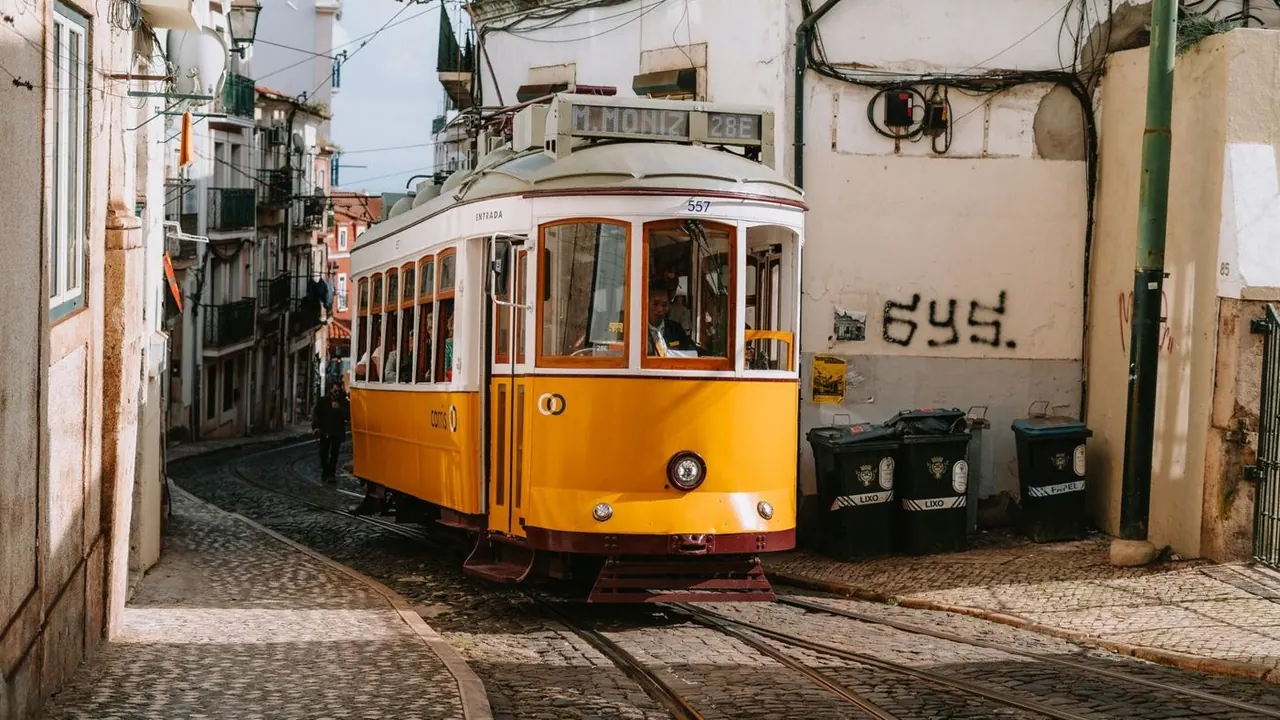
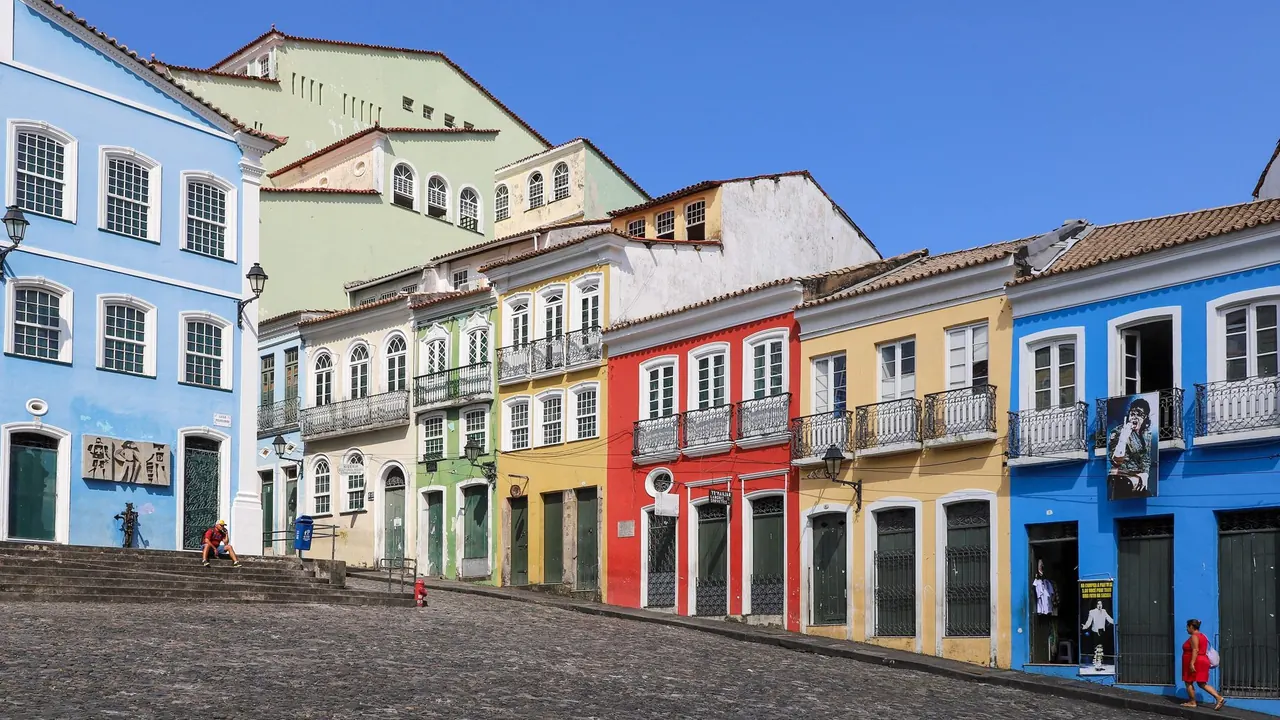
Photos: Lisbon by Riccardo Toso, Pexels License; Salvador by Paul R. Burley, CC BY-SA 4.0, cropped.
Lisbon or Salvador?
Our verdict in twelve categories, each scored against the same fixed benchmark cities, and the climate month by month, so you can choose for your trip.
Choose Lisbon for
- day trips
- getting around
- nature and the outdoors
Lisbon is the better pick for a sightseeing trip with plenty to do around it. You get the monuments of Belem and the old lanes of Alfama, a centre you can walk if you don't mind the hills, and an exceptional choice of excursions, from the palaces of Sintra to the monasteries of Alcobaca and Batalha. It also suits families, because of the Oceanario and the easy train to the beaches, and anyone who wants good wine and seafood in neighbourhood tascas.
Choose Salvador for
- beaches
- prices
- live music and the arts
Choose Salvador if warm sea and a slower tropical pace matter most. Swimming is part of daily life here, from the calm cove at Porto da Barra to the reef pools of Praia do Forte. The Pelourinho, the drum groups and Bahian cooking give the city an Afro-Brazilian character that Lisbon cannot match. Everyday costs are lower too, though you will rely on taxis rather than walking to get between districts.
Scoreboard
Twelve categories on one fixed scale from 0 to 100. The shaded stretch is the gap between the two.
Your match
Pick a travel style or drag the sliders, and both match scores follow your weighting.
Wins on day trips and getting around with your weighting.
Wins on beaches and prices with your weighting.
What matters to you?
Category by category
What the scores mean for a trip.
Beaches & swimming
Lisbon has no beach of its own. You take the Cascais train to Carcavelos and the bays at Estoril, or cross the river to Costa da Caparica, and the Atlantic stays cool even in August. A beach day there is a good break from sightseeing rather than the point of the trip.
In Salvador the beach is part of daily life. Porto da Barra is a sheltered cove in the middle of the city, the ocean shore runs north towards Itapuã and Flamengo, and the water is warm in every month. Near the busier stretches the sea can turn murky after rain, so the northern beaches and the coves on the bay are better for swimming.
Food & drink
Both cities eat well from the sea, but Lisbon offers more depth. There is grilled fish and bacalhau in family tascas, shellfish in the seafood beer halls, custard tarts in every pastelaria and cheap glasses of Alentejo and Douro wine. The best meals are in residential neighbourhoods rather than in Baixa.
Salvador's cooking is more distinctive: a cuisine shaped by West African cooks and built on dendê oil, coconut milk and dried shrimp. Acarajé from the baianas' stalls and a moqueca in its clay pot are reasons to come in themselves. Beyond the Bahian classics and the beach shacks, though, the choice narrows quickly.
Culture & sights
The two are closely matched, and their histories are linked: Salvador was Brazil's first capital under Portuguese rule, so you find baroque churches and tiled facades in both. Lisbon spreads its heritage across distinct quarters, from the Manueline monuments of Belem to the rebuilt grid of the Baixa and medieval Alfama. It also has museums of real quality, such as the Gulbenkian and the National Tile Museum.
Salvador concentrates its heritage in the Pelourinho, where the gilded interior of São Francisco is the high point, and it has fewer museums. What it offers instead is Afro-Brazilian heritage that is still part of daily life, from the Rosário dos Pretos church to the ribbons tied at Bonfim.
Nightlife
Both cities go out in the open air rather than behind a velvet rope. In Lisbon that means the standing crowd in the lanes of Bairro Alto, the later bars of Cais do Sodre and the riverside warehouse clubs that run until morning, and you can walk between most of them.
Salvador's nights centre on the pavement tables of Rio Vermelho and on the Pelourinho squares at weekends and on Tuesdays, with taxis between districts after dark. Its club scene is small for most of the year, but Carnival week, with street parties along the Barra seafront and through the centre, has no equivalent in Lisbon.
Nature & outdoors
Lisbon has the more varied outdoors. Within a day you can reach the Sintra hills, the cliffs at Cabo da Roca, the kitesurfing beach at Guincho and the surf reserve at Ericeira, or go hiking and kayaking in the Arrabida park. There are also dolphin trips from Setubal.
Salvador's setting is flatter: the bay and its islands, the Abaeté dunes and lagoon, and a coast of reefs and palms. Whale-watching from July to October is a real draw, but serious hiking means a trip of several days to the Chapada Diamantina.
Day trips
Few cities have as many good excursions as Lisbon. Sintra's palaces are a short train ride away. Further out are walled Evora, the UNESCO monasteries of Alcobaca, Batalha and Tomar, and the towns of Obidos and Nazare, enough for a week of outings.
From Salvador the list is shorter. The colonial river town of Cachoeira is the most rewarding trip, Praia do Forte and Itaparica make easy days, and Morro de São Paulo works better as an overnight stay than as a day out.
Good for families
Lisbon has more for children: the Oceanario, the science centre and the cable car at the Parque das Nacoes, plus trams and funiculars that double as rides. The main hardship for parents is the hills and slippery pavements, which are hard going with a pushchair.
Salvador welcomes children just as warmly, and the shallow water at Porto da Barra suits small swimmers. But there is no large aquarium or theme park, the sun is strong and parents need to watch their belongings. Most families end up based at a beach hotel or a resort to the north.
Getting around
Lisbon is far easier to get around without a car. The centre is compact enough to walk, if steep, and the metro, trams, funiculars, suburban trains and river ferries all use one card, though the line 28 tram is slow and crowded.
Salvador spreads a long way along the coast. You can walk the Pelourinho and the Barra seafront, but the metro mainly serves the airport and the bus station, and the bus network is hard for a visitor to read. Most visitors use cheap taxis and ride-hailing, especially at night.
Shopping & style
What sets the two apart is range. Lisbon combines crafts with proper shopping streets: the fashion houses on Avenida da Liberdade, the old shops of Chiado and the local designers of Principe Real. What you take home is also distinctly Portuguese, from azulejo tiles and cork to Burel wool and port, and the Feira da Ladra and the LX Factory add a flea market and independent shops.
In Salvador the interest is in Bahian crafts at the Mercado Modelo and in the Pelourinho: lace, carved wood, berimbaus and drums. Beyond those it is malls full of Brazilian chains, and much of what the old town sells is aimed at visitors.
Affordability
Salvador is the cheaper place to spend a week. Stall and beach-shack meals, beer, transport and simple guesthouses in Barra or the Pelourinho cost little, and many sights are free. The one exception is Carnival, when prices rise steeply.
Lisbon is cheap for a coffee at the counter or a metro ride, but central rooms cost what they do elsewhere in southern Europe, and the restaurants in Baixa and Chiado that cater to visitors soon add up. Staying a little outside the centre helps.
Live music & performing arts
Each city has its own sound, and that is the real choice between them. In Lisbon it is fado, heard over dinner in Alfama, Mouraria and Bairro Alto. Behind it is a larger formal scene, with the Gulbenkian orchestra, the Sao Carlos opera house and the Centro Cultural de Belem.
Salvador is about drums and dance. The bloco drum groups rehearse in the Pelourinho and in Liberdade, the Balé Folclórico da Bahia performs Afro-Brazilian dance, and capoeira turns up in the squares. Its concert halls and theatres offer less, and opera is rare.
Wellness & relaxation
Neither city is made for a restful stay. Neither has a bathing tradition, and a spa means a hotel wellness floor. What differs is where you go to unwind: in Lisbon, the gardens and river viewpoints by day and the Cascais coast or Sintra hills at night. In Salvador, a quiet guesthouse in Santo Antônio or a resort to the north, where the warm sea helps you rest.
When should you go?
Pick your month. The climate figures are measured averages, not a forecast.
Lisbon in July
Salvador in July
Daytime high, °C
Rainfall in the month, mm
Temperature and rainfall are climate normals, averaged over the years shown. Lisbon: 1991-2020 normals, Lisboa / Geof (1.1 km from centre). Salvador: 1991-2020 normals, Salvador (4.5 km from centre).
Lisbon is at its best in summer and the months either side. From June to September afternoons reach about 28°C, it hardly rains and the long sunny days make it easy to combine the city with the beaches, although the Atlantic rarely gets above 19°C. Spring and early autumn are the most comfortable seasons for walking the hills. From October to March the rain returns in earnest and the days are cool, which is fine for museums but not for the beach.
Salvador is hot all year, with highs from the high twenties to the low thirties and a sea of around 28°C for much of the year, so the swimming season never ends. Rain is what changes. April to July is the wet stretch, with close to 290mm in the wettest months, while September to March is drier and sunnier. The two cities are close to opposites: Salvador's best months fall mostly in Lisbon's cool, wet season.
Which traveller are you?
On a beach and sun trip, Salvador is the clear choice. Lisbon's beaches are a train ride out on a cool Atlantic, while Salvador's sea is warm all year and Porto da Barra is a sheltered cove in town.
On a family trip with children, Lisbon is the easier choice. The Oceanario, the science centre and rides on trams and funiculars keep children busy. Salvador has calm shallow water and the turtle centre, but little else made for families.
For a trip on a tight budget, Salvador makes the money go further. In Lisbon coffee, tasca lunches, wine and metro fares are cheap, but central rooms are not. In Salvador street food, beach-shack meals, taxis and simple guesthouses all cost little.
Before you go
| Measure | Lisbon | Salvador |
|---|---|---|
| Official language | Portuguese | Portuguese |
| Currency | Euro (EUR) | Brazilian Real (BRL) |
| Sockets | CF230 V, 50 Hz | CN60 Hz |
| Driving side | Right | Right |
| Time zone | UTC, UTC+1 in summer | UTC-3 |
| Emergency number | 112 | Police 190, ambulance 192, fire 193 |
| Elevation | 100 m | 8 m |
| Main airport | Lisbon Humberto Delgado Airport (LIS)7 km from centre156 non-stop destinations | Deputado Luiz Eduardo Magalhães International Airport (SSA)20 km from centre31 non-stop destinations |
| Public holidays this year | 14 days | 14 days |
By the numbers
| Measure | Lisbon | Salvador |
|---|---|---|
| City population | 545,796 | 2,417,678 |
| People per km² | 5,453 | 3,489 |
| Museums within 10 km | 80 | 49 |
| UNESCO World Heritage sites within 50 km | 3 | 1 |
| Swim season, months above 21 °C | None | 12 months |
Where else could you go?
Every comparison below shares a destination with this one, so you can follow Lisbon or Salvador somewhere new.