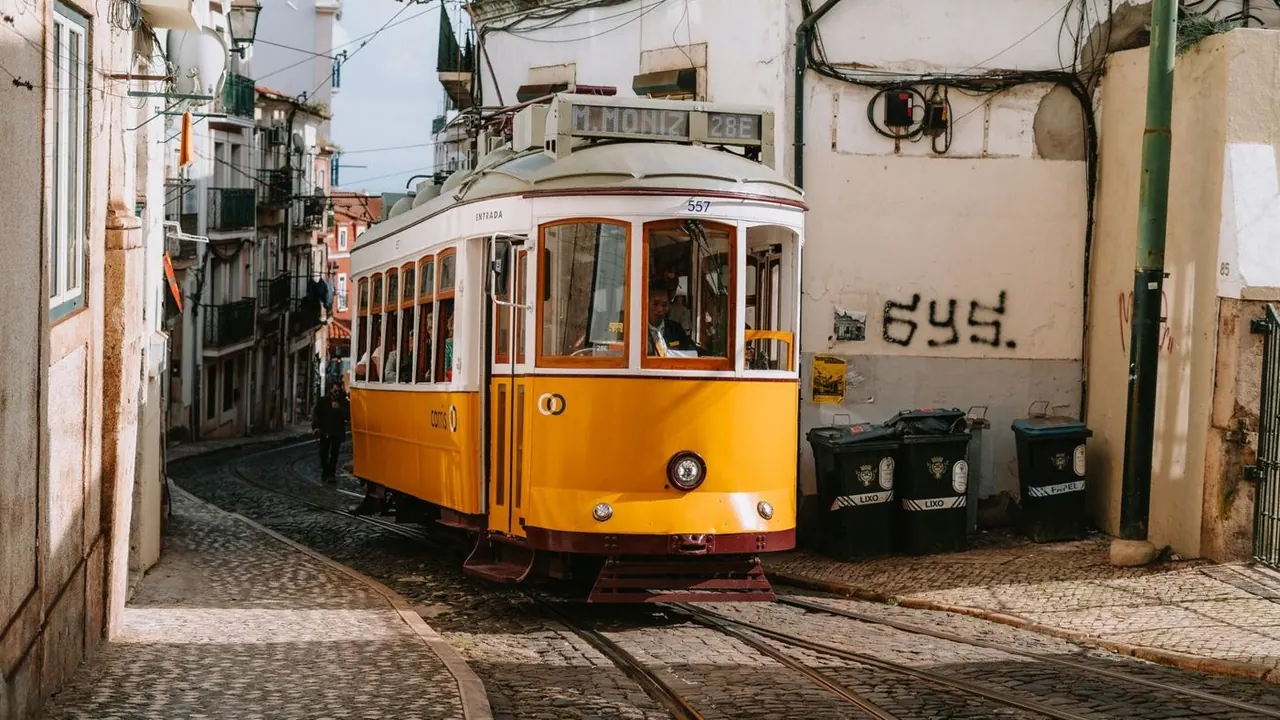
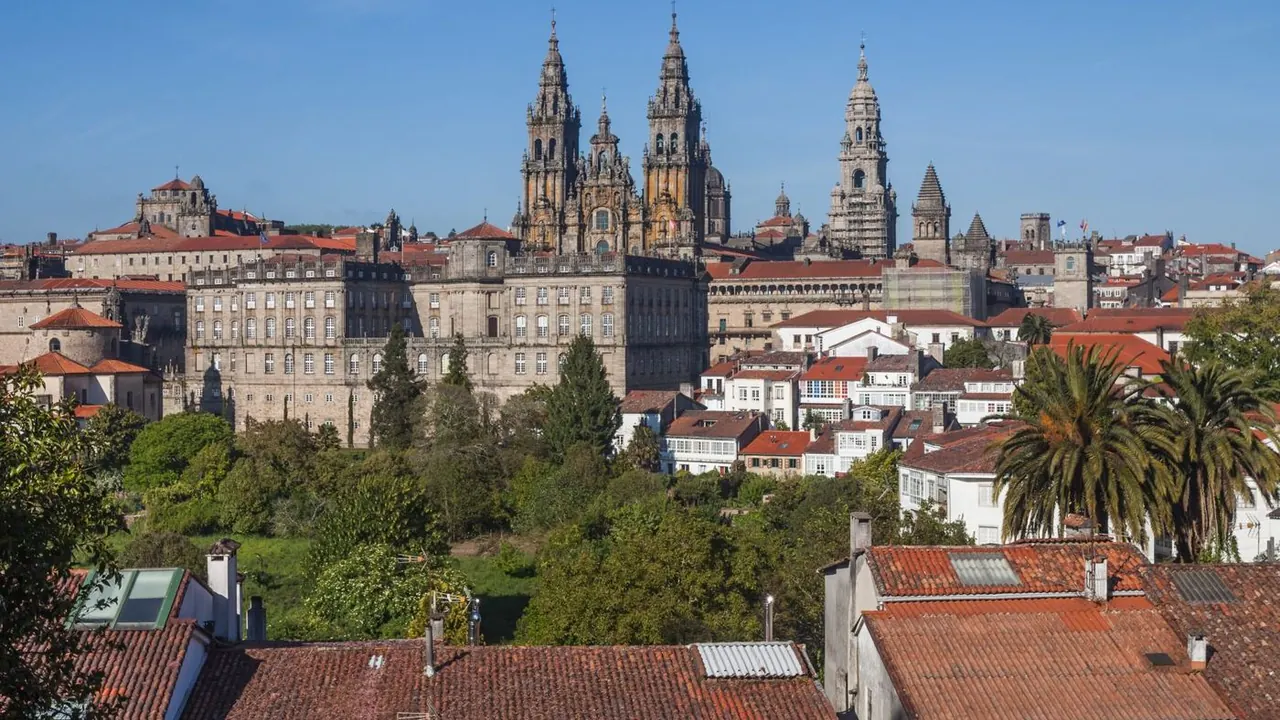
Photos: Lisbon by Riccardo Toso, Pexels License; Santiago de Compostela by Luis Miguel Bugallo Sánchez (Lmbuga), CC BY-SA 3.0, cropped.
Lisbon or Santiago de Compostela?
Our verdict in twelve categories, each scored against the same fixed benchmark cities, and the climate month by month, so you can choose for your trip.
Choose Lisbon for
- nightlife
- shopping
- families
Lisbon is the better choice for a longer, busier trip. It has several historic quarters rather than one, much stronger nightlife, fado every evening, a train line to sandy beaches and a full week of day trips from Sintra to Evora. Families, people who want to go out late and anyone combining city sightseeing with time by the sea will get more from it, as long as they can manage the steep hills.
Choose Santiago de Compostela for
- prices
- wellness
- getting around
Santiago de Compostela is smaller, cheaper and quieter, and it is built around a single great sight: the cathedral and its granite old town. It suits travellers who want to walk everywhere, eat Galician seafood without spending much and use the city as a base for the green Galician coast and its thermal springs. Come prepared for rain and for nights that end early once the students leave.
Scoreboard
Twelve categories on one fixed scale from 0 to 100. The shaded stretch is the gap between the two.
Your match
Pick a travel style or drag the sliders, and both match scores follow your weighting.
Wins on nightlife and shopping with your weighting.
Wins on prices and wellness with your weighting.
What matters to you?
Category by category
What the scores mean for a trip.
Beaches & swimming
Neither city is a beach destination, but Lisbon makes a beach day much easier. The riverside train runs straight out to the surf at Carcavelos and the calmer bays of Estoril and Cascais, Costa da Caparica offers long stretches of sand across the river, and the season lasts from June to September.
Santiago is inland, so you need a bus or a car to reach the sea. The white sand in the sheltered inlets of the Ría de Muros e Noia and the Ría de Arousa is lovely, and the water is calmer than Lisbon's open Atlantic, but the warm weather is short and in practice limited to July and August.
Food & drink
Lisbon offers more variety to eat. Neighbourhood tascas serve grilled fish and bacalhau, and there are seafood halls, bifana sandwiches, custard tarts in every pastelaria, and wines from the Alentejo, the Douro and the Minho poured cheaply in ordinary places.
Santiago does one thing extremely well. Its Galician seafood, from octopus to razor clams and percebes, is some of the best on the Atlantic coast, and the Mercado de Abastos will cook what you buy. Beyond that cuisine, though, you will find little else.
Culture & sights
Lisbon's sightseeing is spread across several separate areas: the Manueline monuments of Belem, the rebuilt grid of the Baixa and the medieval lanes of Alfama below the castle. It also has stronger museums, with the Gulbenkian and the National Tile Museum, and it needs three or four days.
Santiago's culture centres on one great monument. The cathedral, with its Pórtico da Gloria and the shrine of Saint James, stands on the Praza do Obradoiro, surrounded by a compact granite old town of monasteries and arcades. It is deeply atmospheric but quicker to see, and two or three days covers it.
Nightlife
Lisbon's night out is far bigger. Crowds spill into the lanes of Bairro Alto, Cais do Sodre runs later still, Principe Real has cocktail bars and the gay scene, and the warehouse clubs by the river keep going until dawn.
Santiago offers a friendly round of wine bars along Rúa do Franco, pub-like bars around the Praza de Cervantes and the odd folk session, with a few clubs for later. It depends on the university, though, and in summer it quietens as the pilgrims go to bed early.
Nature & outdoors
Lisbon has the more varied outdoors on its doorstep. The misty Sintra hills lead down to Cabo da Roca and the windswept dunes at Guincho, Ericeira and Carcavelos draw surfers all year, and the Arrabida ridges offer hiking, kayaking and dolphin trips from Setubal.
Santiago's landscape is greener and gentler: oak woods, stone-walled fields and Camino paths that lead straight out of town. The Costa da Morte cliffs and the ancient Fragas do Eume woodland are rewarding, but they are further away, and rain shapes most days outdoors.
Day trips
Both cities make good bases, and Lisbon has the more impressive list. Sintra's palaces fill a day by train, and further out are walled Evora and three UNESCO monasteries at Alcobaca, Batalha and Tomar, plus Obidos and Nazare.
Santiago's outings are easier to reach by rail. A Coruña and the Tower of Hercules are about half an hour away, and Lugo's Roman walls and Ourense's thermal springs are also within reach by train. The Albariño country and the fishing villages at the end of the Camino, however, really need a car or a tour.
Good for families
Lisbon gives children much more to do. The Oceanario and the Pavilhao do Conhecimento sit together by the river with the cable car, and the trams, funiculars and Santa Justa lift are attractions in themselves. The trade-off is steep, slippery streets that are hard work with a pushchair.
Santiago is safe and relaxed, but its sights are churches and museums, and wet spells can last for days. Most families see it quickly and then head to A Coruña's aquarium or the coast.
Getting around
Both cities are easy to manage, but in different ways. Lisbon spreads over seven hills, and getting around means steep climbs on foot, a clean four-line metro, slow and crowded historic trams, funiculars, ferries and suburban trains to Sintra and Cascais.
Santiago is simply a walking city. You can cross the pedestrian old town in about twenty minutes, buses cover the station and the airport, and you only need a car for the beaches and the Costa da Morte.
Shopping & style
Lisbon has far more choice. There are the luxury labels of Avenida da Liberdade, the old shops of Chiado, the designers and antiques of Principe Real, the independent shops of the LX Factory and the Feira da Ladra flea market. Azulejo tiles, cork and Burel wool are the things to take home.
Santiago's shopping is limited to crafts and food: jet carvings near the cathedral, Sargadelos ceramics, tetilla cheese and tinned seafood. Beyond those, it is mostly pilgrim souvenirs and ordinary high-street shops.
Affordability
Santiago is the cheaper city overall. Free tapas, generous set lunches, a free cathedral and a supply of pensiones and pilgrim hostels keep costs low, although rooms become scarce and expensive around the feast of Saint James in July.
In Lisbon, food, coffee and transport are cheap, but rooms in the central quarters cost as much as in other southern European capitals. Visitor-oriented restaurants in Baixa and Chiado also charge more than places a few streets away.
Live music & performing arts
Lisbon has the richer stage. Fado is sung every night in Alfama, Mouraria and Bairro Alto, from polished dining rooms to tiny neighbourhood rooms. It also has the Gulbenkian orchestra, the São Carlos opera house and the Centro Cultural de Belem.
Santiago's performances are mostly folk and informal: bagpipe sessions in bars, student tunas in black capes in the streets and the Real Filharmonía de Galicia at the Auditorio. There is no real opera.
Wellness & relaxation
Neither city is built for rest, but Santiago has the edge. It is calm once the day's pilgrims have arrived, and the hot springs of Caldas de Reis, Cuntis and Ourense's riverside pools make easy outings.
Lisbon offers little beyond hotel spas. Its quieter moments come from shady gardens such as the Gulbenkian and Estrela and long afternoons at a viewpoint, and for restful nights you would need to stay out on the Cascais coast or in Sintra.
When should you go?
Pick your month. The climate figures are measured averages, not a forecast.
Lisbon in July
Santiago de Compostela in July
Daytime high, °C
Rainfall in the month, mm
Temperature and rainfall are climate normals, averaged over the years shown. Lisbon: 1991-2020 normals, Lisboa / Geof (1.1 km from centre). Santiago de Compostela: 1991-2020 normals, Santiago / Labacolla (8.4 km from centre).
Lisbon has the longer and more reliable summer. From June to September it is warm and almost dry, with highs around 28°C in July and August and long, sunny days. That is good beach weather, though the Atlantic stays cool even then. Spring and autumn are the most comfortable times for walking the hills, and from October to January the rain comes in steadily, although winter afternoons stay mild enough for sightseeing.
Santiago is cooler and much wetter all year. Summer highs reach about 25°C, so walking the old town is comfortable even in August, but showers are possible in any month. From October to January rainfall goes above 200mm a month, and there is noticeably less sunshine than in Lisbon in every season, roughly a third less in high summer. The sea in the rías reaches only about 17°C, so July and August are the only realistic months for a beach outing, and a waterproof is worth packing whenever you go.
Which traveller are you?
For a food and nightlife trip, Lisbon wins. Dinner leads easily into a late night, with enough variety for a week of evenings. Santiago offers one superb regional cuisine and a smaller, student-led bar scene that quietens in summer.
On a family trip with young children, Lisbon has more to fill the days, from sights children enjoy to afternoons by the sea, though the old quarters suit a carrier better than a pushchair. Santiago suits a day or two.
On a tight budget, Santiago makes staying cheap easier. The savings come from ordinary daily life, and almost everything is within walking distance. Lisbon also works cheaply if you sleep outside the centre and avoid the streets aimed at visitors.
Before you go
| Measure | Lisbon | Santiago de Compostela |
|---|---|---|
| Official language | Portuguese | Spanish |
| Currency | Euro (EUR) | Euro (EUR) |
| Sockets | CF230 V, 50 Hz | CF230 V, 50 Hz |
| Driving side | Right | Right |
| Time zone | UTC, UTC+1 in summer | UTC+1, UTC+2 in summer |
| Emergency number | 112 | 112 |
| Elevation | 100 m | 260 m |
| Main airport | Lisbon Humberto Delgado Airport (LIS)7 km from centre156 non-stop destinations | Santiago-Rosalía de Castro Airport (SCQ)10 km from centre29 non-stop destinations |
| Public holidays this year | 14 days | 13 days |
By the numbers
| Measure | Lisbon | Santiago de Compostela |
|---|---|---|
| City population | 545,796 | 100,965 |
| People per km² | 5,453 | 459 |
| Museums within 10 km | 80 | 6 |
| UNESCO World Heritage sites within 50 km | 3 | 2 |
| Swim season, months above 21 °C | None | None |
Where else could you go?
Every comparison below shares a destination with this one, so you can follow Lisbon or Santiago de Compostela somewhere new.