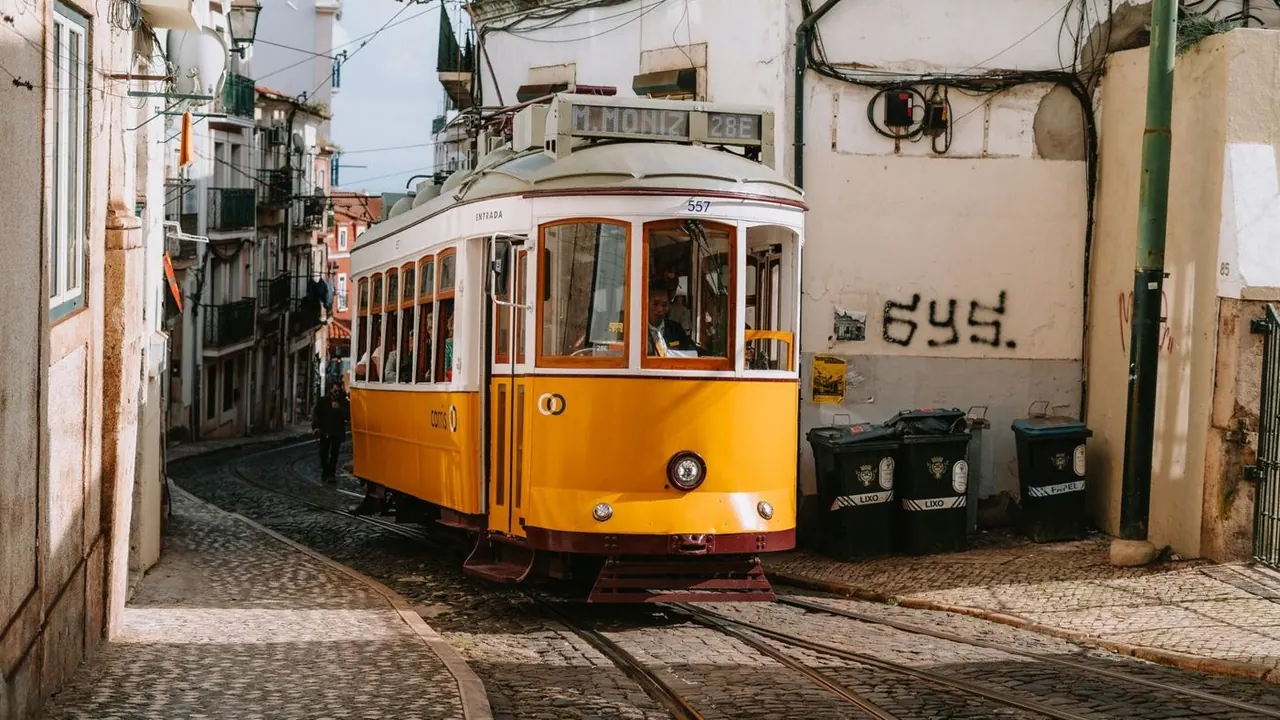
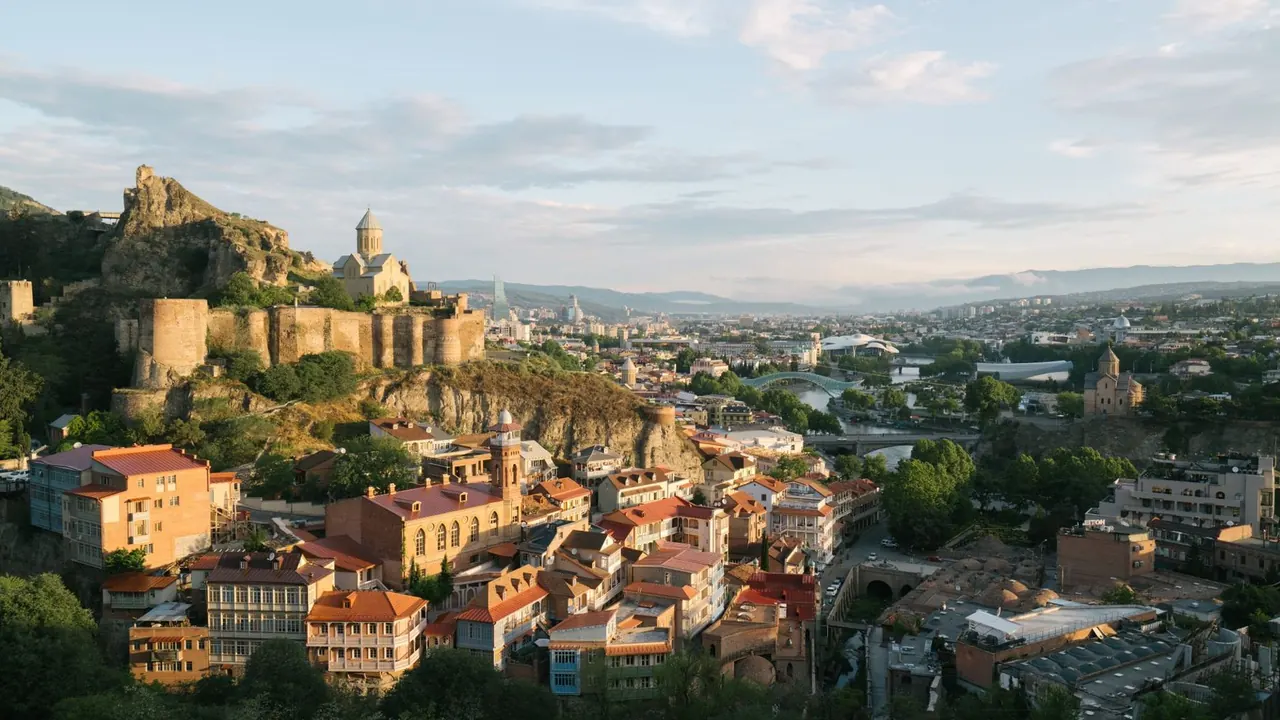
Photos: Lisbon by Riccardo Toso, Pexels License; Tbilisi by ArtHouse Studio, Pexels License.
Lisbon or Tbilisi?
Our verdict in twelve categories, each scored against the same fixed benchmark cities, and the climate month by month, so you can choose for your trip.
Choose Lisbon for
- beaches
- shopping
- nature and the outdoors
Lisbon suits travellers who want plenty to see and the sea close at hand. Its sights run from Belem's monuments of the maritime age to the medieval lanes of Alfama, the Gulbenkian and the Tile Museum are serious collections, and a suburban train reaches Atlantic sand and surf in well under an hour. Families do better here too, thanks to the Oceanario and the science centre, and the metro, trams and coastal line make a first visit easy.
Choose Tbilisi for
- wellness
- prices
Tbilisi is the better pick for a curious traveller on a smaller budget who is drawn to wine, food and a culture that still feels unfamiliar. A Georgian meal with qvevri wine costs little, and the sulphur baths of Abanotubani give the city a way to unwind that Lisbon has nothing like. With the Caucasus a two-hour drive away and Kakheti's wineries close by, it works best for people happy with uneven pavements and a rougher city around them.
Scoreboard
Twelve categories on one fixed scale from 0 to 100. The shaded stretch is the gap between the two.
Your match
Pick a travel style or drag the sliders, and both match scores follow your weighting.
Wins on beaches and shopping with your weighting.
Wins on wellness and prices with your weighting.
What matters to you?
Category by category
What the scores mean for a trip.
Beaches & swimming
Lisbon has no beach in the city, but the riverside train runs out to the surf at Carcavelos and the calmer bays of Estoril and Cascais, and Costa da Caparica's long sands lie just across the Tagus. The water is cool Atlantic and some beaches suit surfers better than swimmers. Even so, a summer beach day is easy to arrange.
Tbilisi offers only the Tbilisi Sea reservoir, Turtle Lake, Lisi Lake and pools for cooling off in the heat. The nearest real coast, on the Black Sea, is about five hours away.
Food & drink
Both cities eat very well, and the difference lies in the cooking itself. Lisbon is a seafood city: grilled fish and bacalhau in tascas, clams and prawns in beer halls, and warm custard tarts at the pastelaria counter, with cheap glasses of Douro and Alentejo wine.
Tbilisi will feel less familiar and more of a discovery, with khinkali, molten Adjarian khachapuri, walnut and pomegranate sauces, and amber qvevri wines from Kakheti in the Sololaki wine bars. Neither city has much food from elsewhere in the world, and in both the best meals are the local ones.
Culture & sights
Lisbon has more to see. Belem's Jeronimos Monastery and tower, the rebuilt Baixa after the 1755 earthquake and Alfama under the castle make up distinct historic areas, and the Gulbenkian, the Tile Museum and the Ancient Art Museum give it museums worth planning a day around.
Tbilisi is more a city to walk than a list of famous sights. Its carved balconies, sixth-century Anchiskhati, Metekhi on its cliff and the Art Nouveau entrance halls of Sololaki are atmospheric. The Colchian gold in the National Museum is the one collection that stands out.
Nightlife
Both cities give you a good night out, of quite different kinds. Lisbon's happens largely outdoors: crowds drinking in the lanes of Bairro Alto, later bars in Cais do Sodre, sunset drinks at the miradouros, and riverside warehouse clubs that fill after 2am.
Tbilisi is better known for serious techno, with strict doors and parties in industrial buildings that run past dawn. Its everyday evenings are quieter, in Sololaki wine bars and courtyard bars near Marjanishvili. Lisbon is livelier on an ordinary night, while Tbilisi is the trip for people who want a big club weekend.
Nature & outdoors
Lisbon has more varied outdoors close to town. The misty Sintra hills, the cliffs at Cabo da Roca, kitesurfing at Guincho, year-round surf at Ericeira and the Arrabida ridges with their kayaking and dolphin trips from Setubal are all within easy reach. The coast is the attraction here, because there are no mountains nearby.
Tbilisi offers the opposite: forested hills right above the city and, about two hours north, the Greater Caucasus, with skiing at Gudauri and hiking near Kazbegi. The high mountains reward a night away more than a quick day trip.
Day trips
Both are excellent bases for excursions, though they lead to different places. From Lisbon the outings are royal and monastic: Pena Palace and Regaleira in Sintra, the palace-convent at Mafra, Roman Evora, and the UNESCO monasteries of Alcobaca, Batalha and Tomar. Trains cover the nearer ones.
Tbilisi's excursions mix ancient churches with wine and wild country. You can see Svetitskhoveli at Mtskheta, the rock-cut town of Uplistsikhe, the qvevri cellars of Kakheti and the cave monastery of David Gareja in the semi-desert, though most of them are easier with a driver or a tour.
Good for families
Lisbon gives children more to do. The Oceanario, the science centre and the cable car are grouped together at the Parque das Nacoes, the trams and the Santa Justa lift make good rides, and the Cascais beaches are an easy escape on a hot day. The hills and slippery pavements are the main drawback.
Tbilisi welcomes children just as warmly, but it has less for them: the Mtatsminda amusement park, the zoo and a few parks. Stepped underpasses, aggressive traffic and summer heat make it harder going with a pushchair.
Getting around
Lisbon is easier to manage. Its metro is clear and reaches the airport, and trams, funiculars, suburban trains and river ferries all use one rechargeable card. The seven hills make walking hard work, but the system around them is simple.
In Tbilisi, the two-line Soviet metro covers the main axis well and little more. Minibus routes are hard for a visitor to work out, so most travellers rely on cheap ride-hailing, and crossing busy roads often means an underpass.
Shopping & style
Lisbon is the better city for shopping, above all for Portuguese crafts. Hand-painted azulejos and ceramics, cork, Burel wool and embroidered linen are easy to find, Chiado keeps its old bookshops and glove makers, and Principe Real, the LX Factory and the Feira da Ladra make for a good morning of browsing. Avenida da Liberdade adds the luxury houses, but away from that boulevard the choice of international fashion is narrow.
Tbilisi has less to offer and suits collectors of curios more than shoppers for clothes. The Dry Bridge market, with its Soviet badges, old cameras and carpets, is the highlight, along with cloisonné enamel workshops and bottles of qvevri wine and chacha. A few local designers have boutiques in Vera and Sololaki, and the rest is malls and souvenir streets.
Affordability
Tbilisi costs clearly less. Generous meals with wine, ride-hailing trips and guesthouse rooms all cost little, and most churches are free. Only boutique hotels and cocktail bars approach European prices.
Lisbon's everyday costs, such as coffee, tasca lunches and transport, are low for a Western capital, but central rooms are its weak point, along with the restaurants for visitors around Baixa and Chiado.
Live music & performing arts
The two are about level, and each has its own tradition. In Lisbon it is fado, sung over dinner in the casas of Alfama and Mouraria, with the Gulbenkian orchestra and the Sao Carlos opera house behind it.
Tbilisi answers with Georgian polyphonic singing, which is most moving in church services, along with athletic national dance troupes, the Moorish-style opera house on Rustaveli and the Gabriadze marionette theatre, whose puppet plays need no translation. In both cities most plays are not in English.
Wellness & relaxation
Tbilisi has the clearer reason to come for this. It is named after its warm springs, and under the brick domes of Abanotubani you can still take a private sulphur pool and a kisi scrub in a bathhouse tradition centuries old. The streets outside are loud and steep, though.
Lisbon has no bathing culture at all. Rest there means long lunches, river viewpoints and the Gulbenkian and Estrela gardens, or staying out on the Cascais coast or in the Sintra hills.
When should you go?
Pick your month. The climate figures are measured averages, not a forecast.
Lisbon in July
Tbilisi in July
Daytime high, °C
Rainfall in the month, mm
Temperature and rainfall are climate normals, averaged over the years shown. Lisbon: 1991-2020 normals, Lisboa / Geof (1.1 km from centre). Tbilisi: 1991-2020 normals, Tbilisi (13.8 km from centre).
Lisbon is mild all year and is most comfortable in May, June and September, when it is warm enough for the beach without the peak heat. July and August reach about 28°C and are almost rainless. The Atlantic stays cool, though, never much above 19°C, and from October to January the rain returns and some months bring over 100mm. Winters are soft enough for sightseeing, just damp.
Tbilisi swings much further. July and August climb to about 32°C in the valley, too hot for long walks on the steep streets, and January highs of around 7°C make winter a chilly time to visit. Rain is lighter than Lisbon's for most of the year, but June is its wettest month, the opposite of Lisbon's dry summer. Late April to May and September to October are the best times for walking the city and heading into the hills.
Which traveller are you?
On a beach and sun trip, Lisbon is the clear choice. A morning in Alfama and an afternoon on the sand fit easily into one day, and the summers are long and dry, though the Atlantic stays cool. Inland Tbilisi cannot offer that.
For a trip on a tight budget, Tbilisi lets the money go further: a longer stay, a Georgian feast most evenings and even a driver out to Kakheti for the day. Lisbon can be done cheaply too, but only by sleeping outside the centre and eating away from Baixa.
On a relaxing and wellness trip, Tbilisi gives you a ritual to plan the days around, with an hour in the old bathhouses followed by a slow lunch in a shaded courtyard. In Lisbon you rest between sights rather than for its own sake, and the steep, crowded old quarters work against you.
Before you go
| Measure | Lisbon | Tbilisi |
|---|---|---|
| Official language | Portuguese | Georgian |
| Currency | Euro (EUR) | Lari (GEL) |
| Sockets | CF230 V, 50 Hz | CF220 V, 50 Hz |
| Driving side | Right | Right |
| Time zone | UTC, UTC+1 in summer | UTC+4 |
| Emergency number | 112 | 112 |
| Elevation | 100 m | 575 m |
| Main airport | Lisbon Humberto Delgado Airport (LIS)7 km from centre156 non-stop destinations | Tbilisi International Airport (TBS)15 km from centre64 non-stop destinations |
| Public holidays this year | 14 days | 17 days |
By the numbers
| Measure | Lisbon | Tbilisi |
|---|---|---|
| City population | 545,796 | 1,331,485 |
| People per km² | 5,453 | 1,849 |
| Museums within 10 km | 80 | 29 |
| UNESCO World Heritage sites within 50 km | 3 | 1 |
| Swim season, months above 21 °C | None | - |
Where else could you go?
Every comparison below shares a destination with this one, so you can follow Lisbon or Tbilisi somewhere new.