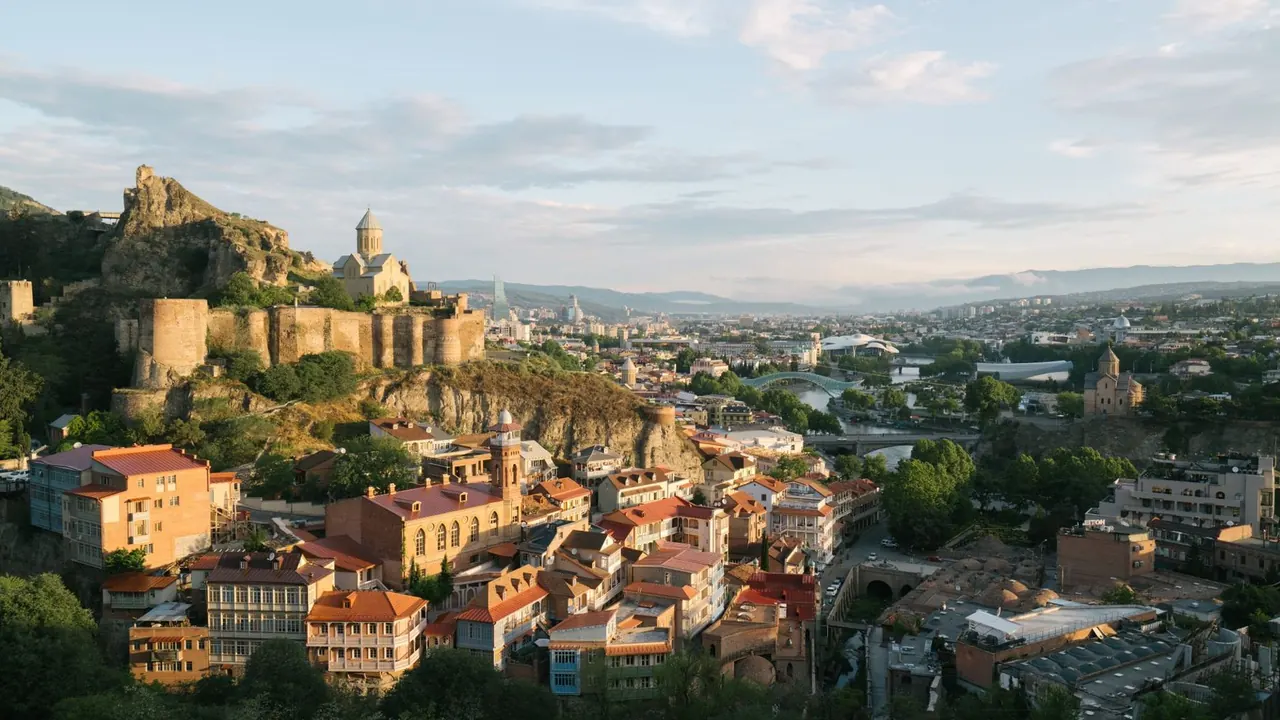
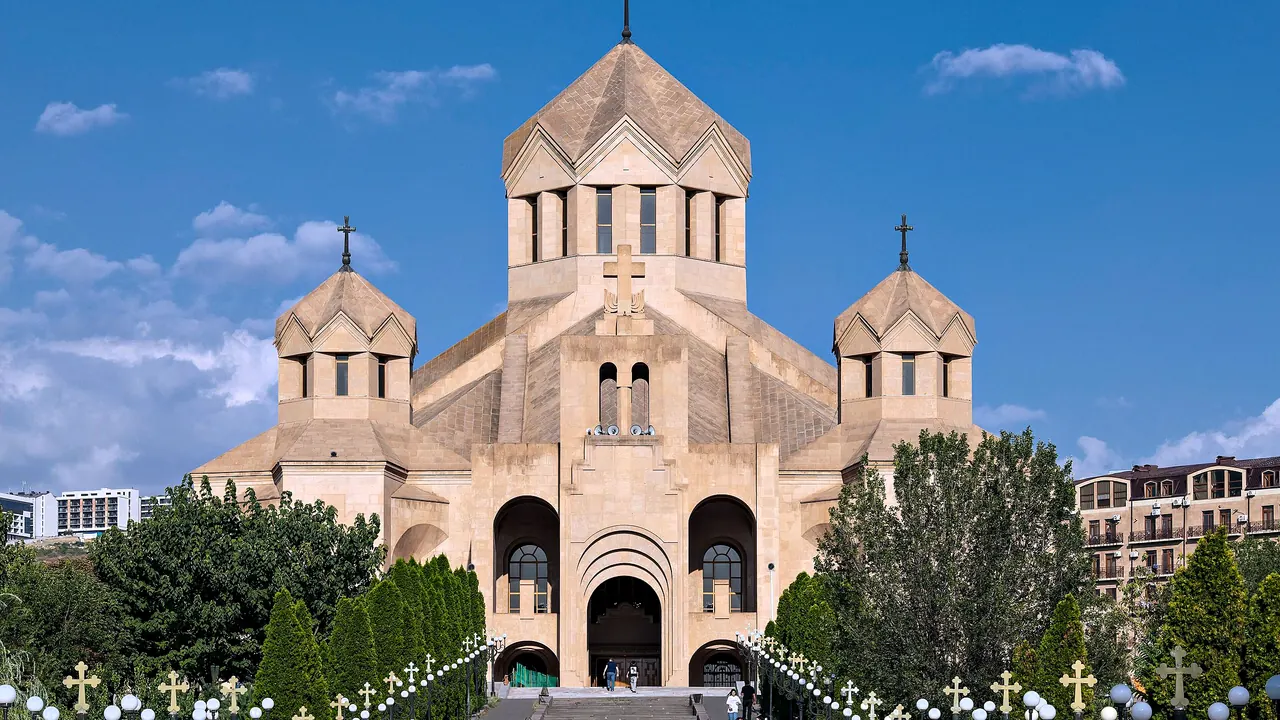
Photos: Tbilisi by ArtHouse Studio, Pexels License; Yerevan by Petar Milošević, CC BY-SA 4.0, cropped.
Tbilisi or Yerevan?
Our verdict in twelve categories, each scored against the same fixed benchmark cities, and the climate month by month, so you can choose for your trip.
Choose Tbilisi for
- wellness
- nightlife
- food and drink
Tbilisi suits travellers who want the trip to revolve around the table and the night. Georgian cooking and qvevri wine are reason enough to go, the techno clubs draw dancers from across Europe, the sulphur baths of Abanotubani offer something restful after the walking, and a budget goes further. Pick it for a sociable break built on eating, drinking and a long soak.
Choose Yerevan for
- beaches
- nature and the outdoors
- getting around
Yerevan is the better base for someone who wants to get out onto the land. Aragats, the Garni gorge and the woods around Dilijan are all within reach, and Lake Sevan offers a cool swim in high summer. Evenings are gentler, spent on terraces and in jazz clubs rather than on dance floors. In town, the Matenadaran and the Genocide Memorial make for two or three thoughtful days.
Scoreboard
Twelve categories on one fixed scale from 0 to 100. The shaded stretch is the gap between the two.
Your match
Pick a travel style or drag the sliders, and both match scores follow your weighting.
Wins on wellness and nightlife with your weighting.
Wins on beaches and nature and the outdoors with your weighting.
What matters to you?
Category by category
What the scores mean for a trip.
Beaches & swimming
Neither city is a beach destination, but Yerevan has the better swim within reach. Lake Sevan, about an hour away, has sandy and pebbly stretches below Sevanavank, with clear, cool water in late summer and beach huts and fish restaurants along the shore.
Tbilisi's options are for cooling off rather than for a day by the water: the Tbilisi Sea reservoir, Lisi and Turtle lakes, and pools. The Black Sea is a separate journey of about five hours.
Food & drink
Both cities cook over the grill and bake bread in clay ovens, but Tbilisi has the richer table. Khinkali, Adjarian khachapuri, walnut and pomegranate sauces and the toastmaster-led supra make up a cuisine people travel for. Qvevri wine from Kakheti makes the wine bars of Sololaki worth a visit for their own sake.
Yerevan's cooking has a narrower range: khorovats over vine cuttings, lavash, dolma and the stalls of the GUM market, with brandy tastings by the Hrazdan gorge as its signature drink. It is satisfying, but there is less to explore. Neither city offers much beyond its own region's cooking.
Culture & sights
The two are evenly matched, but they show very different cities. Tbilisi is an old town to wander: crooked lanes below Narikala, carved wooden balconies, sixth-century Anchiskhati and the domed baths. Art Nouveau Sololaki lies beyond, and the Colchian gold of the National Museum is the main collection.
Yerevan is a planned twentieth-century city of pink and orange tuff around Republic Square, and its strength lies in a few weighty institutions. The Matenadaran holds its medieval manuscripts, the Genocide Memorial stands at Tsitsernakaberd, and the Cascade looks out to Ararat. Apart from Erebuni, its oldest monuments lie outside the city.
Nightlife
Tbilisi is the place to go out. Its techno clubs in industrial and Soviet-era buildings draw DJs and dancers from across Europe and run until well after dawn. Courtyard bars near Marjanishvili and wine bars in Sololaki fill the hours before.
In Yerevan, evenings happen on terraces rather than dance floors. On summer nights, families and friends stay out around Northern Avenue, Saryan Street and the singing fountains of Republic Square until past midnight. It makes a pleasant, easy night out, but the club scene is small.
Nature & outdoors
Yerevan has more varied outdoor country close at hand. Aragats, at over 4,000m, can be hiked from the lake at Kari, and the Garni gorge has its basalt columns. The wooded hills of Dilijan and the Khosrov reserve feel very different from the dry Ararat plain, although trails are basic.
Tbilisi's green hills, the funicular to Mtatsminda and the trails of Tbilisi National Park are good for a half day. The Greater Caucasus beyond Gudauri is spectacular, but Kazbegi and the high valleys really need a night away.
Day trips
Both cities are excellent bases for excursions, and in both the country outside matters as much as the city. Tbilisi's outings cover more ground: Mtskheta half an hour away, the rock-cut town of Uplistsikhe, the Kakheti wine villages around Sighnaghi and the semi-desert cave monastery of David Gareja.
Yerevan's day trips mostly lead to churches and monasteries, from Echmiadzin and Geghard to Khor Virap below Ararat and red-cliffed Noravank. Gyumri, with its old town of black stone, can be reached by train. For most other trips from either city you will want a driver or a tour.
Good for families
Children get a warm welcome in both cities, and neither has the aquariums or theme parks that fill a family itinerary. Tbilisi's treat is the funicular to the Mtatsminda amusement park and its Ferris wheel, but the steep, cobbled Old Town and the underpasses with stairs are hard going with a pushchair.
Yerevan's compact centre is easier for an evening out with children, with the singing fountains and the Cascade's steps and sculptures. Beyond that, little is made for children, and the long drives to the monasteries suit older ones best.
Getting around
Getting around is much the same in both: walkable centres, a Soviet-built metro that covers only part of what you need, buses that are hard to work out, and cheap ride-hailing to fill the gaps. The difference is the ground underfoot. Tbilisi's centre climbs and dips over broken pavements, with deep metro stations and underpasses at busy roads, while in Yerevan, Republic Square, the Opera and the Cascade are a short stroll apart along tree-lined avenues.
Shopping & style
Shopping is a small part of a trip to either city, and in both the best things to buy are local. Tbilisi's Dry Bridge market spreads Soviet relics, old silver and paintings along the river. There is also cloisonné enamel and a handful of local designers in Vera and Sololaki.
Yerevan's Vernissage near Republic Square is the equivalent, with more carved wood, backgammon boards and obsidian. The drink to take home is brandy rather than qvevri wine or chacha. In both cities the chains and malls add little.
Affordability
Both are inexpensive by European standards, but Tbilisi stretches a budget further. Guesthouses and simple apartments are plentiful, a Georgian meal with wine costs little and many churches and sights are free.
In Yerevan, food, taxis and museums are just as cheap. Central hotels and apartments, though, cost more than everything else would suggest, especially in summer, so accommodation is where the gap opens up.
Live music & performing arts
Each capital has an opera and ballet house at its heart, and in both most drama is staged in the local language, which limits it for visitors. What sets Tbilisi apart is its folk tradition: the athletic national dance ensembles, polyphonic singing in church services and the Gabriadze marionette plays, which need no translation.
Yerevan has more music on an ordinary night. There is the Philharmonic, chamber recitals at the Komitas hall, Khachaturian's ballets in the opera season, duduk ensembles and small jazz clubs playing live most evenings.
Wellness & relaxation
Here the gap is wide. Tbilisi grew up around its warm springs, and a private room under the brick domes of Abanotubani, with a hot sulphur pool and a scrub, is one of the city's defining experiences.
Yerevan has no comparable bathing tradition for a visitor, only hotel spas and saunas, and the spa town of Jermuk is three hours away. Its restful side is simpler: long coffees on shaded terraces and evening walks through the ring of parks.
When should you go?
Pick your month. The climate figures are measured averages, not a forecast.
Tbilisi in July
Yerevan in July
Daytime high, °C
Rainfall in the month, mm
Temperature and rainfall are climate normals, averaged over the years shown. Tbilisi: 1991-2020 (sunshine 1961-1990) normals, Tbilisi (13.8 km from centre). Yerevan: 1991-2020 normals, Yerevan (6.7 km from centre).
Both cities bake in July and August, with highs of around 32°C to 33°C, so in midsummer you walk in the early morning and spend the afternoon on shaded terraces. The rest of the year is where they differ. Tbilisi has milder winters, with January highs near 7°C against a freezing 1°C in Yerevan, but its wet season falls in late spring, and May is the rainiest month at close to 97mm. Its best walking weather is in September and October, with April a good second if you don't mind some showers.
Yerevan is drier and sunnier for most of the year, and its summers are almost rainless, which suits a swim at Lake Sevan in late July and August. April and May bring some rain. Autumn then gives clear skies and comfortable warmth through September and October, the best time for both the city and the hills. Winter there is properly cold.
Which traveller are you?
For a food and nightlife trip, Tbilisi is the clear choice. Khinkali, khachapuri and amber Kakheti wine make every meal an event, and after dinner the wine bars of Sololaki give way to techno clubs that run past dawn at weekends.
On a relaxing and wellness trip, pick Tbilisi. Its baths lie at the foot of the Old Town, so each day can end in hot water, and long meals in shaded courtyards keep the pace slow. Yerevan is calm enough, but has no such ritual.
For an outdoors trip, Yerevan is the better base. Its walking country starts within an hour of the city and changes character fast, from high volcanic slopes to forest and lakeshore, so you can fill several different days without changing hotel.
Before you go
| Measure | Tbilisi | Yerevan |
|---|---|---|
| Official language | Georgian | Armenian |
| Currency | Lari (GEL) | Armenian Dram (AMD) |
| Sockets | CF220 V, 50 Hz | CF220 V, 50 Hz |
| Driving side | Right | Right |
| Time zone | UTC+4 | UTC+4 |
| Emergency number | 112 | 112 |
| Elevation | 575 m | 987 m |
| Main airport | Tbilisi International Airport (TBS)15 km from centre64 non-stop destinations | Zvartnots International Airport (EVN)11 km from centre82 non-stop destinations |
| Public holidays this year | 17 days | 14 days |
By the numbers
| Measure | Tbilisi | Yerevan |
|---|---|---|
| City population | 1,331,485 | 1,106,300 |
| People per km² | 1,849 | 4,874 |
| Museums within 10 km | 29 | 69 |
| UNESCO World Heritage sites within 50 km | 1 | 2 |
Where else could you go?
Every comparison below shares a destination with this one, so you can follow Tbilisi or Yerevan somewhere new.
- Bakuvs Tbilisi
- Bakuvs Yerevan
- Istanbulvs Yerevan
- Istanbulvs Tbilisi
- Budapestvs Tbilisi
- Sarajevovs Tbilisi