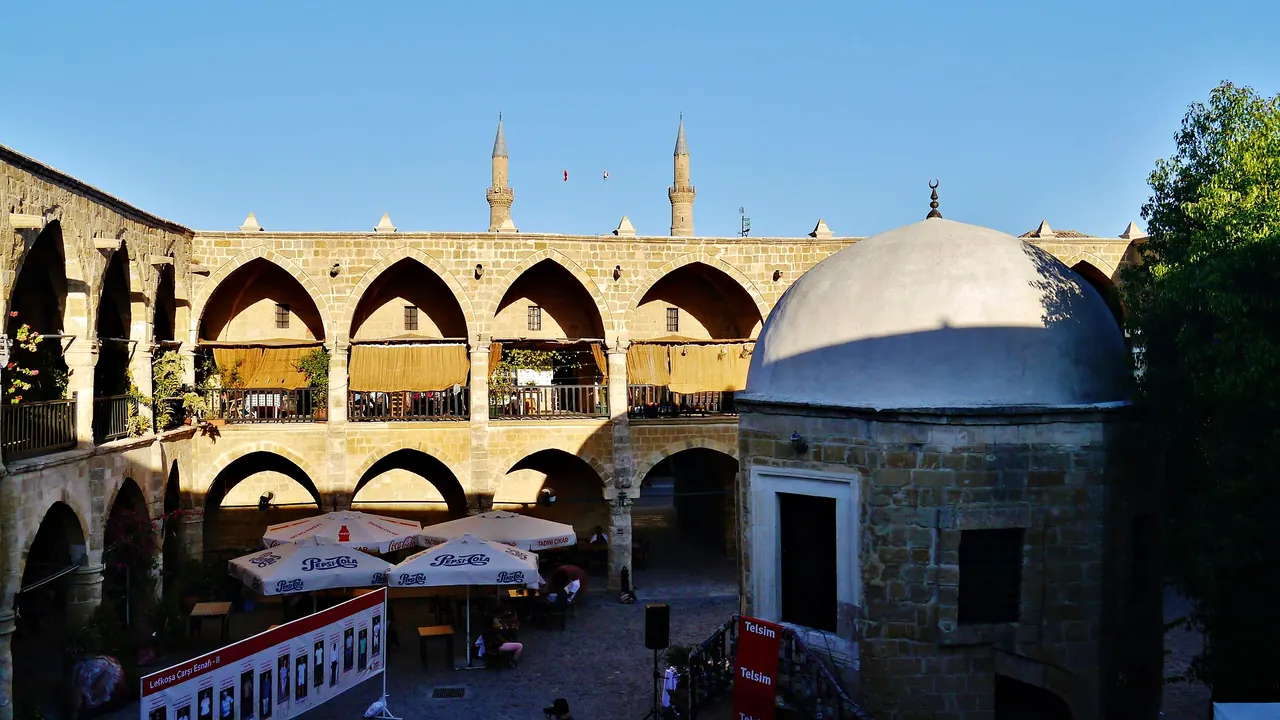
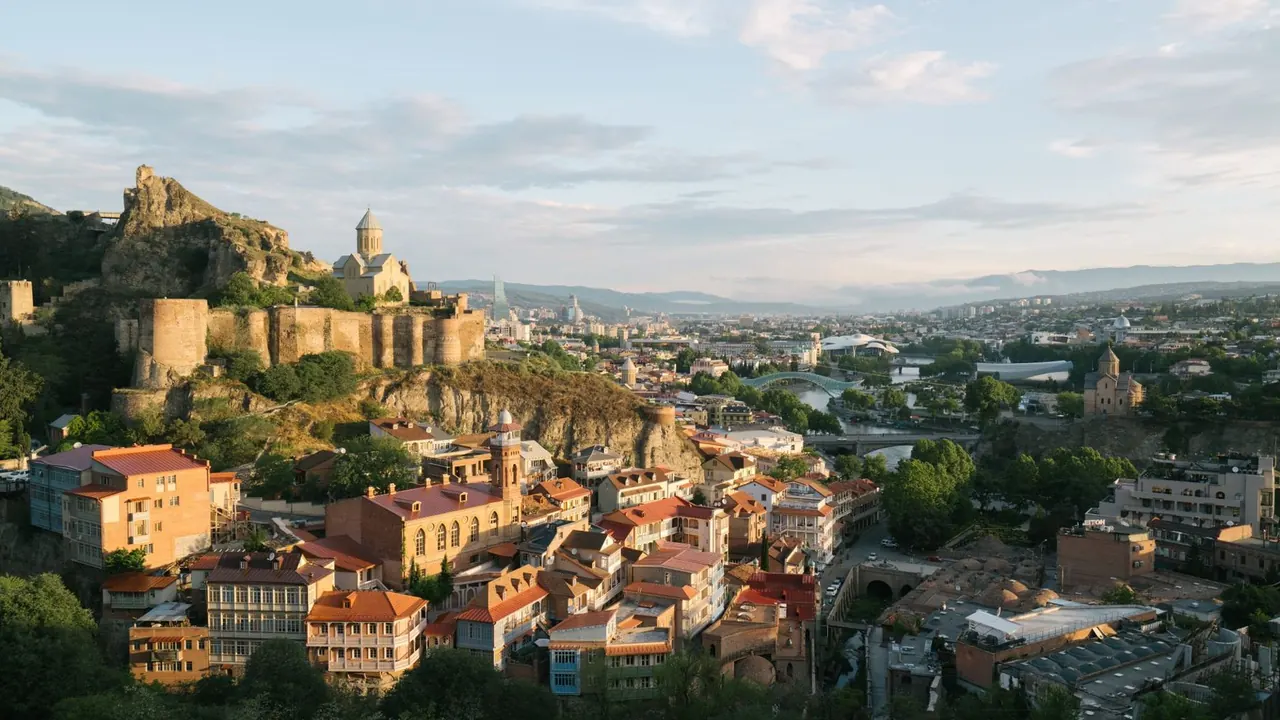
Photos: Nicosia by Zairon, CC BY-SA 4.0, cropped; Tbilisi by ArtHouse Studio, Pexels License.
Nicosia or Tbilisi?
Our verdict in twelve categories, each scored against the same fixed benchmark cities, and the climate month by month, so you can choose for your trip.
Choose Nicosia for
- beaches
- culture and sights
Nicosia suits a traveller who wants a sunny, compact old town and the rest of an island within easy reach. Inside its Venetian walls you can walk from Greek Cypriot lanes across the Green Line into the Ottoman north, and with a hire car the beaches at Larnaca or Kyrenia are a short drive away. It works best as a calm base for sightseeing, or as a few days added to a stay on the coast.
Choose Tbilisi for
- nightlife
- prices
- wellness
Tbilisi is the stronger pick for anyone who travels to eat, drink and stay out late. Georgian cooking and qvevri wine, a techno scene known across Europe, sulphur baths at the foot of the Old Town and polyphonic singing all come at a much lower cost. You get the mountains and wine country too, but no sea to swim in.
Scoreboard
Twelve categories on one fixed scale from 0 to 100. The shaded stretch is the gap between the two.
Your match
Pick a travel style or drag the sliders, and both match scores follow your weighting.
Wins on beaches and culture and sights with your weighting.
Wins on nightlife and prices with your weighting.
What matters to you?
Category by category
What the scores mean for a trip.
Beaches & swimming
Neither city is on the sea, but Nicosia is much closer to it. Larnaca's town beach and the coast around Kyrenia are each about 45 minutes away, so a swim makes an easy day out, as long as you have a car.
From Tbilisi the Black Sea is about five hours away, which makes it a separate trip. In the summer heat, locals cool off at the Tbilisi Sea reservoir, Lisi Lake, Turtle Lake or a pool, none of which is worth planning a trip around.
Food & drink
Tbilisi is the better place to eat. Nicosia's long meze, charcoal souvla and halloumi are good, and crossing to Bandabulya adds Turkish Cypriot grills and pastries, but the cooking is familiar Eastern Mediterranean fare.
Georgian food is more of a discovery, with walnut sauces, pomegranate, soup dumplings and shoti bread hot from clay ovens. The wine stands out even more: amber qvevri wines from Kakheti beat what Nicosia offers, which is Commandaria and the Troodos labels. Both cities have little choice beyond their own cuisine.
Culture & sights
The two are well matched, each worth two or three days of walking. Neither has a single sight of world fame. Nicosia's draw is history in layers: Venetian bastions, the Lusignan cathedral that became the Selimiye Mosque, Ottoman caravanserais, and a Green Line that turns one stroll into a visit to two halves of a capital. The Cyprus Museum's antiquities are the main collection.
Tbilisi is more about texture than layers. It has carved wooden balconies under Narikala, sixth-century churches, the Art Nouveau entrance halls of Sololaki, and Colchian gold and Pirosmani's paintings in its museums.
Nightlife
Tbilisi is the clear choice for going out. Its techno clubs in old Soviet and industrial buildings draw dancers from across Europe and run until well after dawn at weekends. Before that, there are wine bars in Sololaki and courtyard bars near Marjanishvili.
In Nicosia an evening means drinks on the pavements around Faneromeni and Ledra Street, which only get busy towards midnight, and then a few lounge bars outside the walls. It is friendly and local, but the island's bigger clubs are on the coast.
Nature & outdoors
The two are close, but the scenery differs in reach. In Nicosia the plain is flat and green space is mostly the moat gardens. The walking starts on the Kyrenia ridge or among the pine forests of the Troodos, about an hour away, which offer cool air in summer.
Tbilisi has hills right in the city: a funicular to Mtatsminda and trails from Turtle Lake into a forested national park. Beyond that is the Greater Caucasus, with Gudauri about two hours north and Kazbegi best done with a night away.
Day trips
Both are excellent bases, and the outings differ in kind. From Nicosia you can cover most of an island. There are crusader castles and Bellapais abbey above Kyrenia, Roman Salamis beside walled Famagusta, the painted Troodos churches, and seaside towns to the south. A hire car, insured to cross the Green Line, makes it all easy.
Tbilisi's trips lean towards monasteries and wine. Mtskheta is half an hour away, Kakheti's wineries and walled Sighnaghi about two hours, and there is the cave monastery of David Gareja and the rock town of Uplistsikhe. Most visitors go with a driver or a tour.
Good for families
Tbilisi gives children a little more to do. The funicular ride up to the Ferris wheel on Mtatsminda, the cable car, the zoo and Turtle Lake make easy treats. The catch is steep cobbles, underpasses with stairs and fast traffic, all hard work with a pushchair.
Nicosia has the flatter old town and an equally warm welcome for children at dinner. However, it has no zoo or theme park, the beaches need a car, and midsummer heat makes July and August tiring. Families usually stay on the coast and visit for a day.
Getting around
Tbilisi is easier to get around without a car. A two-line Soviet metro runs along the main axis, and ride-hailing is cheap enough to cover the hillsides, though crossing big roads often means using an underpass.
Nicosia works well on foot only inside the walls, where the Ledra Street crossing takes you north in minutes. Beyond them the city spreads into car-built suburbs with no rail and few useful buses, so most visitors end up hiring a car and driving on the left.
Shopping & style
Neither city is worth a trip for shopping, but you would bring different things home. Nicosia covers the mainstream: high-street chains on Ledra Street, designer brands on Makarios Avenue, and Lefkara lace and pottery at the Handicraft Centre. Across the line, Bandabulya sells spices and copperware.
Tbilisi is better for curios. The Dry Bridge market spreads Soviet badges, cameras and old silver along the river, and there is cloisonné enamel, qvevri wine and chacha to take home, plus a few local designers in Vera.
Affordability
Tbilisi costs a good deal less. A generous Georgian meal with wine, bakery khachapuri, metro rides and cross-town taxis are all cheap, guesthouses are plentiful, and most churches are free to enter. Prices only approach European levels in boutique hotels and cocktail bars.
In Nicosia, meze and coffee are good value, and meals are cheaper still in the north. Hotel rooms are mid-range, though, and the hire car most visitors need adds a real cost to the trip.
Live music & performing arts
Tbilisi has more to see on stage. You can hear Georgian polyphonic singing in church services, the national ensembles perform athletic folk dance, and the Moorish-style Opera and Ballet Theatre runs a full season. The Gabriadze puppet plays need no translation.
Nicosia's scene is smaller and mostly local. The Cyprus Symphony Orchestra, rebetiko and jazz in the old town bars, and summer concerts in the moat are the best choices for visitors, since most theatre is in Greek.
Wellness & relaxation
Tbilisi has the stronger bathing culture. Natural sulphur springs feed the domed bathhouses of Abanotubani, where you rent a private hot pool and get a vigorous kisi scrub in a ritual that is centuries old. Outside the baths, though, the city is loud and steep.
Nicosia's Omeriye Hammam offers steam and massage in a restored 16th-century building, but without hot springs. Its quieter appeal is the slow pace of the old town, with afternoon siestas and shaded squares, and the cool Troodos villages are close by for a proper rest.
When should you go?
Pick your month. The climate figures are measured averages, not a forecast.
Nicosia in July
Tbilisi in July
Daytime high, °C
Rainfall in the month, mm
Where the figures come from
Nicosia's temperatures are measured 40 km from the centre, at Larnaca Airport.
Nicosia's station stands 218 m below the city centre, so the centre is likely a little cooler than the figures say.
Nicosia has no rain gauge within 25 km of the centre, so its rainfall comes from a gridded climate dataset read at the city rather than from a gauge further away.
Temperature and rainfall are climate normals, averaged over the years shown. Nicosia: 1991-2020 normals, Larnaca Airport (40.4 km from centre). Tbilisi: 1991-2020 (sunshine 1961-1990) normals, Tbilisi (13.8 km from centre).
Nicosia has a long, dry and very sunny season. April, May, October and early November are the best months for walking the old town. July and August reach about 33°C on the plain, which is too hot for sightseeing at midday, though the sea within reach is at its warmest, around 28°C, and stays good for swimming into October. Winters are mild and green but bring the rain, with the most falling in December at about 67mm.
Tbilisi has sharper seasons. Winter daytime highs sit around 7°C, so the cold makes long days outdoors hard work, though Gudauri is skiable then. Late spring is the wettest part of the year, with May the rainiest month at about 97mm. High summer in the valley is nearly as hot as Nicosia's. The most comfortable months are September and October, when it is mild, fairly dry and the wine harvest is under way in Kakheti. Nicosia also has far more sunshine through the year, especially in winter.
Which traveller are you?
On a beach and sun trip, Nicosia is the only sensible choice of the two. The coast is close enough for a day at the sea whenever you like, and the summers are long, dry and reliable. Tbilisi has no sea within a day's reach.
For a food and nightlife trip, Tbilisi is the stronger choice. Nicosia offers long, sociable meals and late drinks outdoors, but little beyond that. In Tbilisi, eating and drinking feel like a discovery, and the club nights are something people travel for.
On a tight budget, Tbilisi makes the money go much further. Nicosia is moderately priced, but rooms are mid-range and seeing more of the island adds transport costs. In Tbilisi you can eat well, sleep simply and see most sights for very little.
Before you go
| Measure | Nicosia | Tbilisi |
|---|---|---|
| Official language | Turkish, Greek, Modern Greek | Georgian |
| Currency | Euro (EUR) | Lari (GEL) |
| Sockets | G240 V, 50 Hz | CF220 V, 50 Hz |
| Driving side | Left | Right |
| Time zone | UTC+2, UTC+3 in summer | UTC+4 |
| Emergency number | 112 | 112 |
| Elevation | 220 m | 575 m |
| Main airport | Larnaca International Airport (LCA)41 km from centre112 non-stop destinations | Tbilisi International Airport (TBS)15 km from centre64 non-stop destinations |
| Public holidays this year | 17 days | 17 days |
By the numbers
| Measure | Nicosia | Tbilisi |
|---|---|---|
| City population | 56,848 | 1,331,485 |
| People per km² | 1,112 | 1,849 |
| Museums within 10 km | 19 | 29 |
| UNESCO World Heritage sites within 50 km | 2 | 1 |
| Swim season, months above 21 °C | 6 months | - |
Where else could you go?
Every comparison below shares a destination with this one, so you can follow Nicosia or Tbilisi somewhere new.
- Larnacavs Nicosia
- Limassolvs Nicosia
- Paphosvs Nicosia
- Yerevanvs Tbilisi
- Alanyavs Nicosia
- Batumivs Tbilisi