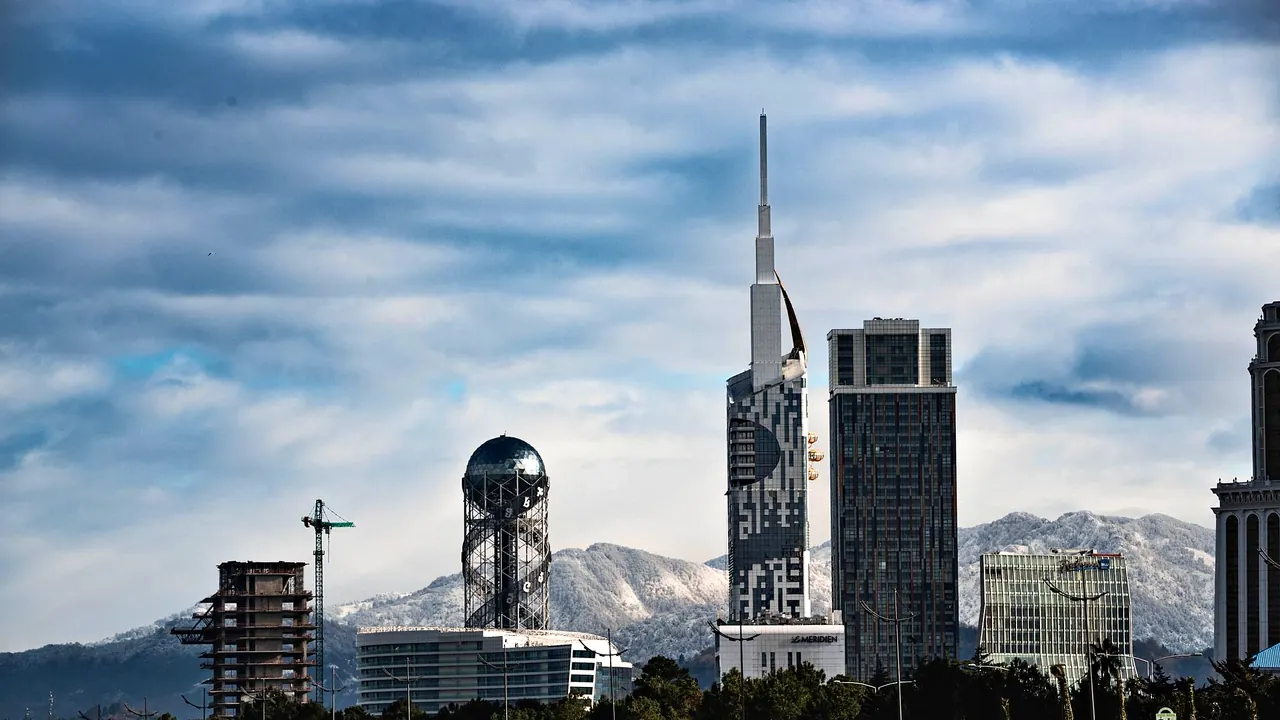
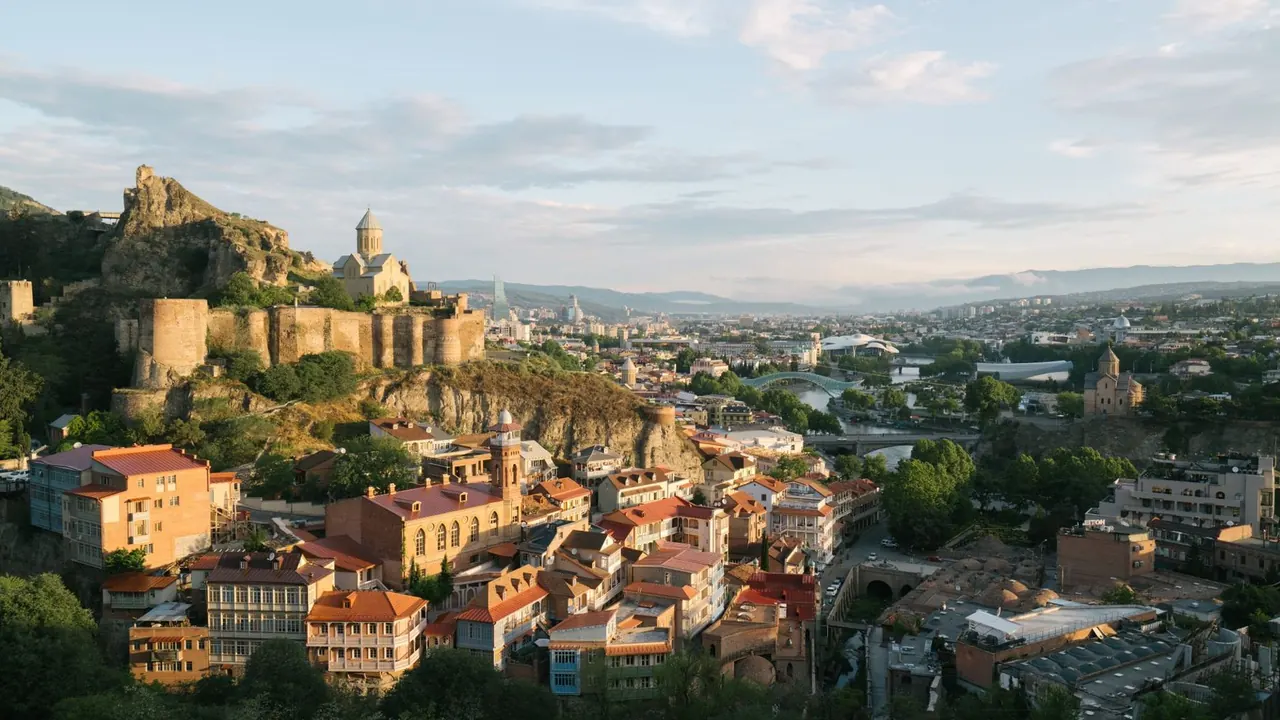
Photos: Batumi by Павел Хлыстунов, Pexels License; Tbilisi by ArtHouse Studio, Pexels License.
Batumi or Tbilisi?
Our verdict in twelve categories, each scored against the same fixed benchmark cities, and the climate month by month, so you can choose for your trip.
Choose Batumi for
- beaches
- nature and the outdoors
- families
Batumi is the pick for a summer trip built around the sea. Its pebble beach runs right alongside the boulevard, clearer water lies a short ride south, and the wet, green Adjaran mountains rise straight behind the town. Families do well on the long car-free promenade, and the flat centre is easy to get around. Go between June and September, though, because outside those months the beach, the clubs and much of the reason to visit fall away.
Choose Tbilisi for
- day trips
- wellness
- culture and sights
Travellers who want a city rather than a resort will be happier in Tbilisi. It has the older and richer streetscape, the better Georgian table and wine bars, a serious club scene, the sulphur baths and the national stages for opera and folk dance. It is also the base for Mtskheta, Kakheti, David Gareja and the road into the Caucasus. It works in most seasons, but there is no sea, and the steep cobbled streets are harder going with small children.
Scoreboard
Twelve categories on one fixed scale from 0 to 100. The shaded stretch is the gap between the two.
Your match
Pick a travel style or drag the sliders, and both match scores follow your weighting.
Wins on beaches and nature and the outdoors with your weighting.
Wins on day trips and wellness with your weighting.
What matters to you?
Category by category
What the scores mean for a trip.
Beaches & swimming
Batumi has a proper beach and Tbilisi has none. In Batumi the coarse pebble shore runs the full length of the seafront boulevard, so a swim is only ever a short walk away, though the water in front of the centre can turn murky after rain. Swimming shoes make the stones far more comfortable.
For clearer water, with green hills coming right down to the shore, Gonio, Kvariati and Sarpi are all within half an hour to the south. Tbilisi lies in an inland valley about five hours from the coast. On hot days locals go to the Tbilisi Sea reservoir, Turtle Lake or a pool, which is fine for an afternoon dip but not something to plan a trip around.
Food & drink
Both cities serve the same Georgian staples of khinkali, khachapuri, walnut sauces and grilled meat. In Batumi the boat-shaped Adjarian khachapuri is a local dish, and the fish market by the port, where your pick from the stalls is fried next door, gives the coast its own flavour. Once you have worked through the classics, though, the choice narrows, and the promenade menus are forgettable.
Tbilisi is where Georgian eating is at its best and most varied. It has hot shoti bread from the clay-oven bakeries, the full ritual of the supra feast, the stalls of the Dezerter Bazaar and wine bars in Sololaki pouring amber qvevri wines from Kakheti. Neither city has much fine dining or foreign cooking.
Culture & sights
Batumi's sights are modern showpieces: the Alphabet Tower, the moving Ali and Nino sculpture and an eccentric skyline that looks best lit up at night. Add the oil-boom houses of the old town and the Roman fortress at Gonio and most people have seen it all in a day.
Tbilisi takes several days of walking. It has the crooked lanes and carved balconies below Narikala, ancient churches such as Anchiskhati and Sioni, Metekhi on its cliff and the faded Art Nouveau mansions of Sololaki. The Georgian National Museum and its Colchian gold give the city a real collection, something Batumi's small museums cannot match.
Nightlife
Batumi's nights are a summer resort affair. In July and August the open-air beach clubs play until dawn, the casinos are busy and the boulevard stays crowded late. Out of season, most of that closes and only a few old-town bars remain.
Tbilisi offers more, and all year. Its techno clubs in industrial and Soviet-era buildings draw dancers from across Europe, with strict doors and sets that run well past sunrise. On quieter nights there are wine bars in Sololaki, courtyard bars near Marjanishvili and the more touristy run along Shardeni Street.
Nature & outdoors
Batumi has wild green country right on its doorstep. Subtropical forest climbs from the sea, the Botanical Garden on the Green Cape makes a half-day walk on terraces above the water, and Mtirala's rainforest trails and waterfalls are about an hour away. Add rafting in the Adjaristskali valley and paragliding above the coast, and it is easy to spend days outdoors, though the heavy rain means some of those days will be wet.
From Tbilisi, the scenery takes more effort to reach. The hills around the city and the forested national park beyond Turtle Lake are pleasant, but the real prize is the Greater Caucasus, two hours up the Military Road to Gudauri and the Jvari Pass, with Kazbegi best done overnight.
Day trips
Tbilisi is one of the best bases in the region for day trips. Mtskheta's cathedral and Jvari Monastery are half an hour away, and Uplistsikhe's rock-cut town pairs with Gori. Kakheti's walled Sighnaghi, monasteries and qvevri wineries fill a full day, as do the desert cave monastery of David Gareja and Ananuri on the mountain road.
From Batumi the outings are shorter and quieter. Choose from the Gonio and Petra ruins, a change of beach at Kobuleti or Ureki, wine and stone bridges in the villages around Keda, or a quick hop across the border at Sarpi. Kutaisi and the high country are better saved for overnight trips.
Good for families
Batumi is the easier city with children, at least in summer. The flat, car-free boulevard has playgrounds, fountains and bike hire, and the dolphinarium, the Argo cable car and the Ferris wheel fill several days. The coarse pebbles, August crowds and careless traffic away from the promenade are the drawbacks.
Children are just as welcome in Tbilisi, and the funicular to the Mtatsminda amusement park is a real treat. Steep cobbles, underpasses with stairs and hot valley summers make the days more tiring, especially with a pushchair.
Getting around
Batumi is simpler for visitors. The old town, port and boulevard sit close together on flat ground, a cycle path runs along the sea and taxis are cheap. There is no metro, and you only need a car for the winding valley roads inland.
Tbilisi has a Soviet-built metro with deep stations that serves the main axis well. Even so, the centre is hilly, the pavements are broken and big roads are crossed by underpasses, so most visitors rely on ride-hailing apps.
Shopping & style
Neither city is a shopping destination, but Tbilisi has more to browse. The Dry Bridge market spreads Soviet badges, old silver and carpets along the river, workshops sell cloisonné enamel and felt, and a few local designers have boutiques in Vera and Sololaki.
In Batumi the best finds are wine, chacha, honey and churchkhela from the central market. Most of the seafront retail is beachwear and trinkets.
Affordability
Both are cheap places to eat and drink well, and Georgian meals with wine cost little in either city. The difference lies in timing. Batumi's seafront hotels and beach clubs charge more in July and August, so June and September offer the better deal.
Tbilisi's costs stay steadier through the year. Many churches are free and guesthouses are plentiful, though boutique hotels in the Old Town and cocktail bars come closer to European prices.
Live music & performing arts
Tbilisi is where Georgia's stage traditions are at their strongest. The Moorish-style Opera and Ballet Theatre runs a full season, national ensembles dance on its stages, and the Gabriadze marionette theatre puts on puppet plays that need no translation. Polyphonic singing in a church service is the most moving way to hear it.
Batumi has its drama theatre and music centre, the odd folk performance and open-air concerts in summer. For most of the year it offers little to plan an evening around.
Wellness & relaxation
The sulphur baths that gave Tbilisi its name are a reason to go in their own right. At Abanotubani you can book a private room with its own hot pool and a vigorous kisi scrub under the brick domes, a ritual that has barely changed in centuries.
Batumi has no bathing tradition, only hotel spas and massage parlours, and its summers are noisy. Its quiet moments come in shoulder season, on the empty promenade or in the botanical garden above the sea.
When should you go?
Pick your month. The climate figures are measured averages, not a forecast.
Batumi in July
Tbilisi in July
Daytime high, °C
Rainfall in the month, mm
Where the figures come from
Batumi's sunshine is measured 55 km from the centre, at Artvin.
Temperature and rainfall are climate normals, averaged over the years shown. Batumi: 1991-2020 (rainfall 1981-2010) normals, Batumi (0.8 km from centre). Tbilisi: 1991-2020 (sunshine 1961-1990) normals, Tbilisi (13.8 km from centre).
Batumi's swimming season runs from June to September, when the Black Sea sits at about 22 to 26°C and the days are warm without being harsh. The catch is rain. It falls all year and is heaviest from September to January, with September alone often bringing over 320mm, so late summer can mix warm sea with wet days. April and May are the driest months but too cool for swimming, and winter is mild, grey and very wet.
Tbilisi has a drier, more continental climate. Highs reach about 32°C in July and August, which makes walking the hilly streets hard work at midday. The best months for exploring are May and June and then September and October, when the weather is warm and the sun reliable. Winters are cold, with highs around 7°C, but dry, so a crisp off-season city break is quite workable in a way it isn't on the rainy coast.
Which traveller are you?
On a beach and sun trip, Batumi is the only real choice. It has a long pebble shore, sea warm enough to swim from June to September and clearer water at Gonio and Sarpi. Tbilisi's reservoir and lakes are for cooling off, not for a beach trip.
For a culture and arts trip, Tbilisi is well ahead. It has the old city below Narikala, sixth-century churches, the Colchian gold in the National Museum, opera and ballet on Rustaveli Avenue and polyphonic singing in church. Batumi's showy seafront sights take a single day.
On a relaxing and wellness trip, Tbilisi has what Batumi lacks: a centuries-old bathing ritual in the sulphur bathhouses of Abanotubani, with private hot pools and a kisi scrub. Batumi offers hotel spas and a summer that is loud with clubs and casinos.
Before you go
| Measure | Batumi | Tbilisi |
|---|---|---|
| Official language | Georgian | Georgian |
| Currency | Lari (GEL) | Lari (GEL) |
| Sockets | CF220 V, 50 Hz | CF220 V, 50 Hz |
| Driving side | Right | Right |
| Time zone | UTC+4 | UTC+4 |
| Emergency number | 112 | 112 |
| Elevation | 3 m | 575 m |
| Main airport | Alexander Kartveli Batumi International Airport (BUS)5 km from centre39 non-stop destinations | Tbilisi International Airport (TBS)15 km from centre64 non-stop destinations |
| Public holidays this year | 17 days | 17 days |
By the numbers
| Measure | Batumi | Tbilisi |
|---|---|---|
| City population | 235,668 | 1,331,485 |
| People per km² | 3,631 | 1,849 |
| Museums within 10 km | 6 | 29 |
| UNESCO World Heritage sites within 50 km | 1 | 1 |
| Swim season, months above 21 °C | 4 months | - |
Where else could you go?
Every comparison below shares a destination with this one, so you can follow Batumi or Tbilisi somewhere new.