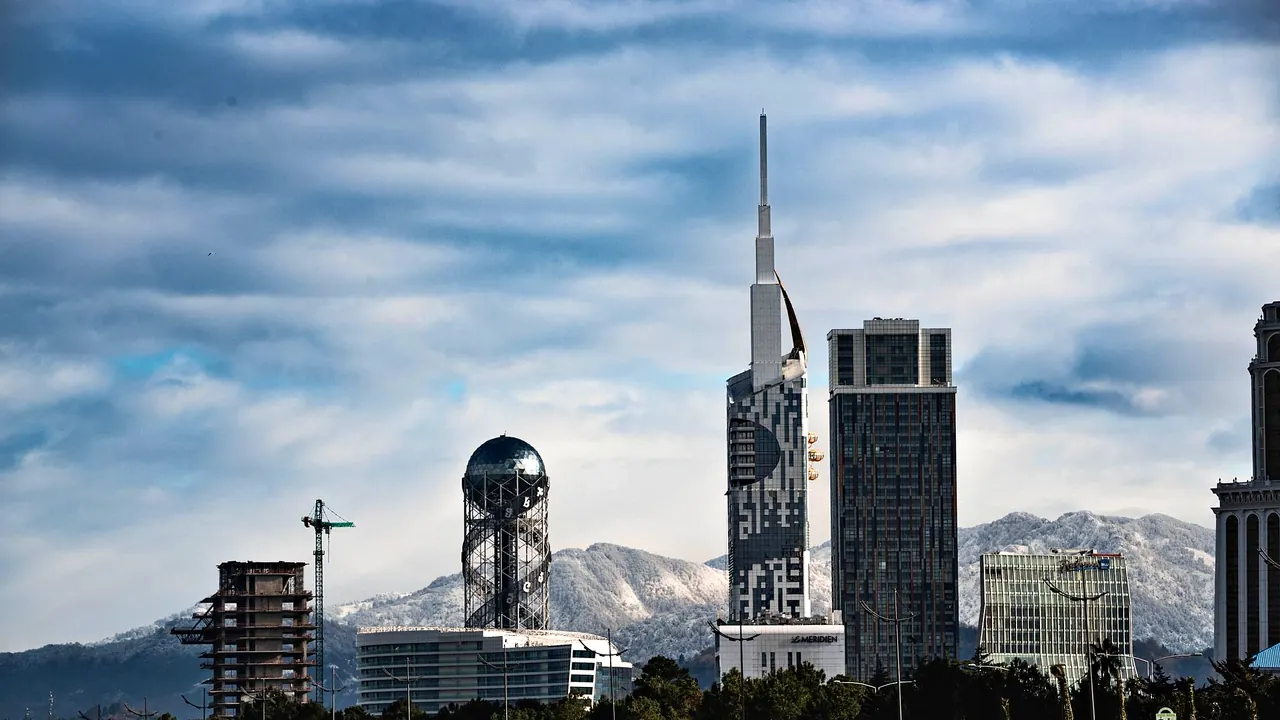
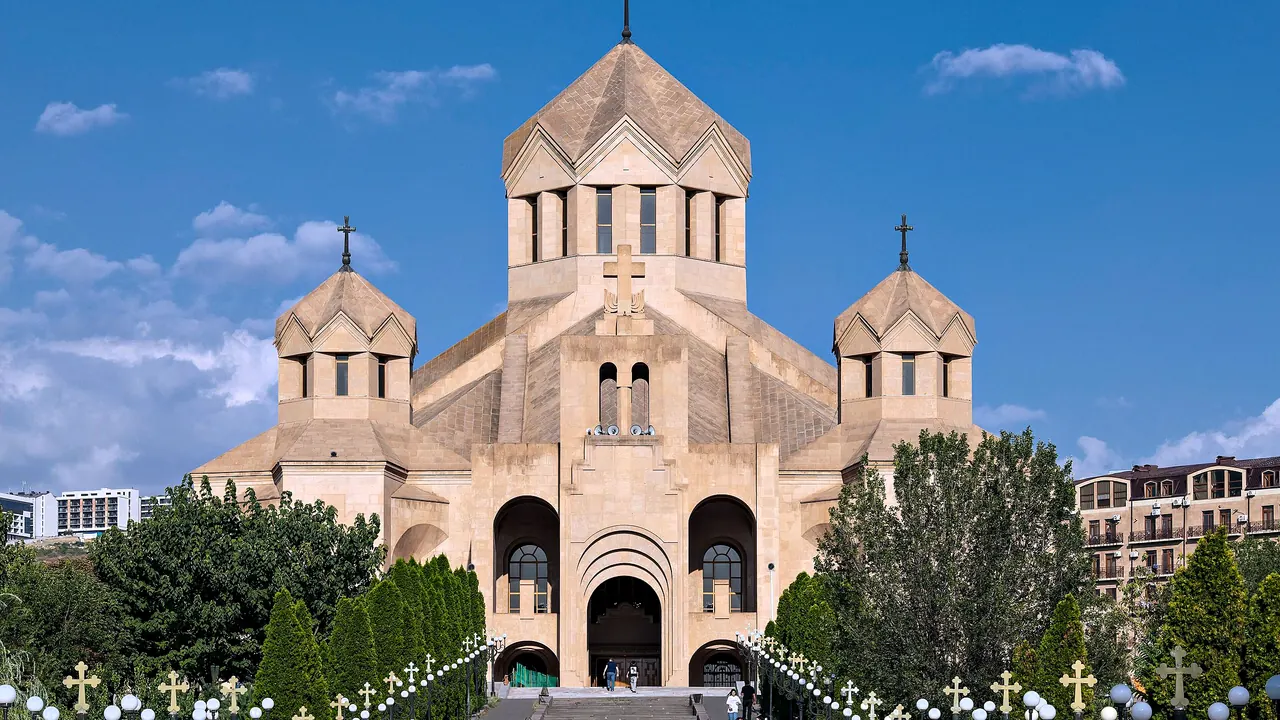
Photos: Batumi by Павел Хлыстунов, Pexels License; Yerevan by Petar Milošević, CC BY-SA 4.0, cropped.
Batumi or Yerevan?
Our verdict in twelve categories, each scored against the same fixed benchmark cities, and the climate month by month, so you can choose for your trip.
Choose Batumi for
- beaches
- families
- prices
Batumi is the choice for a summer trip by the sea. From June to September the long pebble beach and the car-free boulevard set the pace of every day. The green Adjara mountains rise right behind the town, and it is the easier and slightly cheaper place to bring children. It suits travellers who want to swim, eat khachapuri and stay out late by the water, and who are happy to see the sights in a single day.
Choose Yerevan for
- day trips
- culture and sights
- live music and the arts
For history, music and excursions, Yerevan pulls well ahead. The Matenadaran, the Genocide Memorial and the tuff-built avenues around Republic Square give the city far more depth. The Opera and the jazz clubs fill evenings through the year, and Garni, Geghard, Echmiadzin and Khor Virap are all close enough to visit in a day. It rewards curious travellers far more than sunbathers.
Scoreboard
Twelve categories on one fixed scale from 0 to 100. The shaded stretch is the gap between the two.
Your match
Pick a travel style or drag the sliders, and both match scores follow your weighting.
Too close to call, 2 points apart
Wins on beaches and families with your weighting.
Wins on day trips and culture and sights with your weighting.
What matters to you?
Category by category
What the scores mean for a trip.
Beaches & swimming
Batumi is a real seaside resort and Yerevan is not. In summer the Black Sea is warm and a long pebble beach lies a short walk from almost any hotel. The stones are coarse and the water off the centre can turn murky after rain, but Gonio, Kvariati and Sarpi to the south are clearer.
Yerevan is landlocked, so swimming in town means hotel pools and park pools. The nearest beaches are on Lake Sevan, about an hour away and high in the mountains. The water is clear but cool even in August, which makes it a good day out rather than a beach vacation.
Food & drink
Both cities eat well within their own traditions, and in both the choice runs thin once you step outside them. The difference is on the plate. Batumi means Adjarian khachapuri, khinkali, walnut sauces and Black Sea fish fried at the market by the port, washed down with jugs of Georgian wine and chacha. The best of it is in the family-run places of the old town.
Yerevan is built around khorovats grilled over vine cuttings, served with lavash, herbs and dolma, and the GUM market sells dried fruit and sujukh. Drinking gets more attention here: brandy tastings by the Hrazdan gorge, wine bars pouring Areni reds and amber wines, and thick coffee on summer terraces.
Culture & sights
Yerevan has much more to see. The Matenadaran's illuminated manuscripts, the National History Museum and National Gallery on Republic Square and the Genocide Memorial at Tsitsernakaberd deserve two or three days. Tamanian's avenues of pink and grey tuff make the walk between them worthwhile in itself.
Batumi's sights are mostly modern spectacle: the Alphabet Tower, the Ali and Nino sculpture and an eccentric skyline lit up at night. The old town adds oil-boom houses and the Orta Jame mosque. Small museums and the Roman fortress at Gonio complete the list, and most visitors have seen it all in a day.
Nightlife
The two are evenly matched, but nights out look very different. In July and August Batumi is a seaside party town, with open-air beach clubs playing until dawn, a busy boulevard and casinos among the lit-up towers. Most of it shuts once the summer ends.
Yerevan's nights are slower and steadier. People spend them in the wine and cocktail bars around Saryan Street and Northern Avenue, on terraces that stay full past midnight and by the singing fountains on Republic Square. There is little clubbing, but the scene carries on beyond the summer, if more quietly in winter.
Nature & outdoors
Both have fine landscapes close at hand, but they are opposites. Batumi sits beneath the wet, subtropical mountains of Adjara. There is the Botanical Garden on its terraces above the sea, rainforest trails and waterfalls in Mtirala, rafting in the Adjaristskali valley and paragliding above the coast. The price of all that green is heavy rain.
Yerevan looks across a dry plain to Ararat, which can only be admired from the far side of a closed border. The country you can actually walk in is high and open: Aragats climbed from the lake at Kari, the basalt columns of the Garni gorge and the greener forests around Dilijan. Trails are basic, and the summer heat pushes walking into spring and autumn.
Day trips
This is where Yerevan is far stronger. Echmiadzin, Zvartnots, the temple at Garni, the rock-cut monastery of Geghard and Khor Virap under Ararat are all about an hour away or less. Noravank, Sevanavank, Dilijan and Gyumri are further out. Churches and monasteries are the common thread, and most trips need a driver or a tour.
From Batumi the outings are shorter and fewer. You can see the ruins at Gonio and Petra, try a different beach at Kobuleti or Ureki, taste wine among the stone bridges of the Keda villages, or cross the Turkish border at Sarpi.
Good for families
Batumi is the easier city with children, at least in summer. The flat, car-free boulevard has playgrounds, fountains and bikes and electric cars for hire, and Georgians are openly warm with children. The coarse pebbles and the August crowds are the main drawbacks.
Yerevan welcomes children just as readily, and families fill its squares on summer evenings. Apart from a modest zoo and the children's railway in the Hrazdan gorge, though, little is made for them. The hot summers and long drives make it a better fit for older children who enjoy ruins and castles.
Getting around
In both cities the area a visitor uses is small enough to walk, and app taxis cheaply fill the gaps. Batumi's old town, port and boulevard are flat and close together, with a cycle path along the promenade and buses out to Gonio and the botanical garden, but there is no metro.
Yerevan's centre is just as walkable along its tree-lined avenues and has a single metro line. That line covers little of what visitors want, and the buses are hard to read without Armenian or Russian. Drivers in both cities pay little heed to crossings, and the mountains inland are best reached by car or with a driver.
Shopping & style
Neither city is a shopping destination, but Yerevan gives you more reason to browse. The Vernissage near Republic Square makes a proper weekend outing, with carved wood, backgammon boards, obsidian jewellery, Soviet badges and carpets. Northern Avenue adds chains and a few local designers.
Batumi has malls, a central market selling spices, cheese and churchkhela, and some enamel and felt crafts, but much of the seafront sells beachwear and trinkets. In both cities the best things to take home come in bottles: Georgian wine and chacha from one, Armenian brandy from the other.
Affordability
Both are inexpensive, and Batumi is a little cheaper overall, mainly because rooms in its many residential towers stay cheap for most of the year. Its one expensive stretch is July and August on the seafront, so June or September gives you warm water for less.
In Yerevan food, wine, brandy, taxis and museum tickets cost little. Central hotels and apartments are dearer than the rest of the trip would suggest, though, especially in summer, and international-style restaurants charge close to European prices.
Live music & performing arts
Yerevan is the clear choice for a night at a performance. The round Opera and Ballet Theatre often includes Khachaturian's Gayane and Spartacus in its season, the Philharmonic plays in the same building, and small jazz clubs and duduk ensembles fill other evenings. Only the drama is limited, because it is almost all in Armenian.
Batumi's drama theatre and music centre mainly serve local audiences. Summer concerts on the seafront and the occasional performance of Georgian polyphonic singing are worth catching, but there is little to plan a trip around.
Wellness & relaxation
Neither city is a place to come for spa treatments, and both countries' famous waters are elsewhere: Georgia's sulphur baths are in Tbilisi, and Armenia's spa town of Jermuk is hours from Yerevan. In both cities that leaves hotel spas and massage of uneven quality.
The difference lies in how you slow down. In Batumi it means shoulder-season walks along an empty promenade and through the botanical garden above the sea, because summer is loud. In Yerevan it means long coffees on shaded terraces and evening strolls through the ring of parks, though the heat and traffic make real rest harder.
When should you go?
Pick your month. The climate figures are measured averages, not a forecast.
Batumi in July
Yerevan in July
Daytime high, °C
Rainfall in the month, mm
Where the figures come from
Batumi's sunshine is measured 55 km from the centre, at Artvin.
Temperature and rainfall are climate normals, averaged over the years shown. Batumi: 1991-2020 (rainfall 1981-2010) normals, Batumi (0.8 km from centre). Yerevan: 1991-2020 normals, Yerevan (6.7 km from centre).
Batumi is a summer town. The sea is warm enough for swimming from June to September, at about 25°C in July, and daytime highs stay in the mid to high twenties without becoming oppressive. Rain is the catch. It falls in every month and is heaviest in autumn, with around 328mm in September, so June offers the best balance of warm water and lighter rain. April and May are the driest months but too cool for the sea, and winter is mild, grey and very wet.
Yerevan follows a different calendar. It is far sunnier than Batumi all year, but July and August reach about 33°C, too hot for long walks between museums, and January highs hover around 1°C. Late September and October are the best months for exploring the city and driving out to the monasteries, warm, bright and almost dry. May is just as mild for walking but more showery, because spring is Yerevan's wettest season. In high summer the two are opposites: Batumi is milder and wetter, while Yerevan is hotter and almost rainless.
Which traveller are you?
For a beach and sun trip, Batumi is the only real answer. A pebble beach runs the length of the town, the sea is warm all summer and clearer coves lie at Gonio and Sarpi. Yerevan's nearest swimming is cool Lake Sevan, high in the mountains.
On a culture and arts trip, Yerevan gives far more. The Matenadaran manuscripts, the Genocide Memorial, opera and ballet at the round theatre and the monasteries of Geghard and Noravank can fill a week. Batumi's sights take only a day.
On a family trip with young children, Batumi is easier going. The dolphinarium, the Argo cable car, the Ferris wheel and the playgrounds along the seafront keep children busy for days. Yerevan offers pleasant evenings at its fountains but little else made for children.
Before you go
| Measure | Batumi | Yerevan |
|---|---|---|
| Official language | Georgian | Armenian |
| Currency | Lari (GEL) | Armenian Dram (AMD) |
| Sockets | CF220 V, 50 Hz | CF220 V, 50 Hz |
| Driving side | Right | Right |
| Time zone | UTC+4 | UTC+4 |
| Emergency number | 112 | 112 |
| Elevation | 3 m | 987 m |
| Main airport | Alexander Kartveli Batumi International Airport (BUS)5 km from centre39 non-stop destinations | Zvartnots International Airport (EVN)11 km from centre82 non-stop destinations |
| Public holidays this year | 17 days | 14 days |
By the numbers
| Measure | Batumi | Yerevan |
|---|---|---|
| City population | 235,668 | 1,106,300 |
| People per km² | 3,631 | 4,874 |
| Museums within 10 km | 6 | 69 |
| UNESCO World Heritage sites within 50 km | 1 | 2 |
| Swim season, months above 21 °C | 4 months | - |
Where else could you go?
Every comparison below shares a destination with this one, so you can follow Batumi or Yerevan somewhere new.