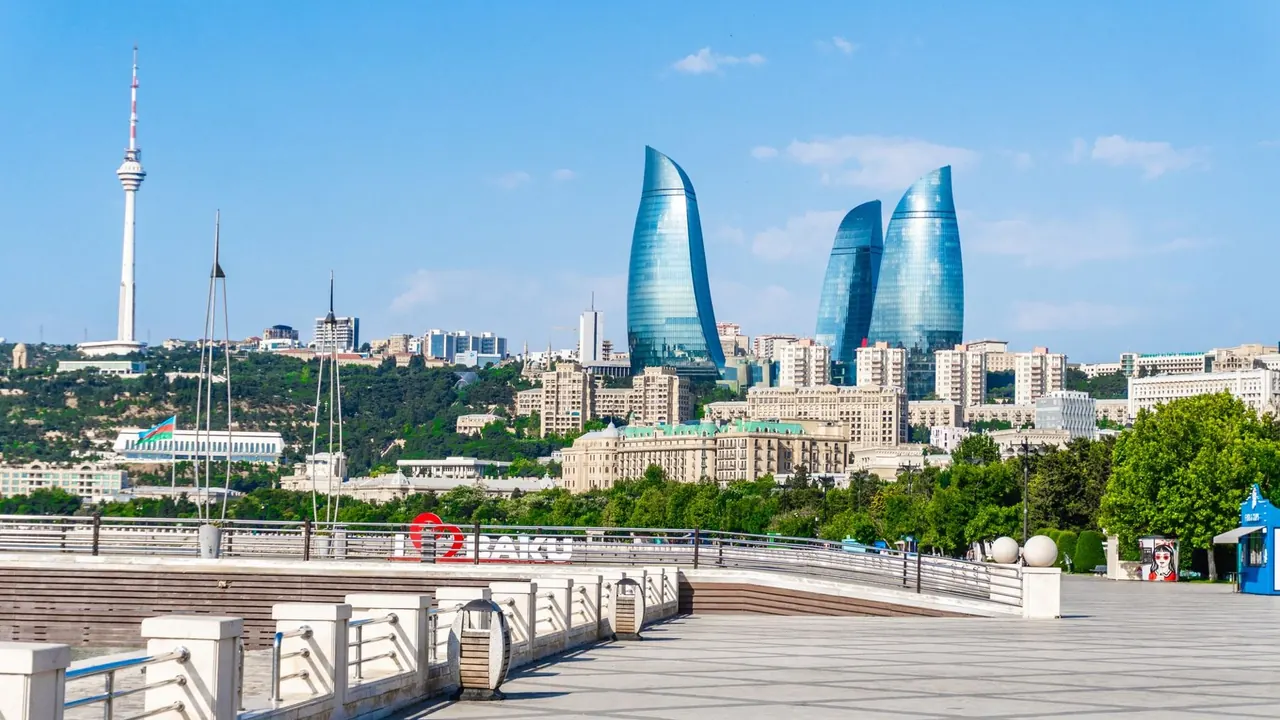
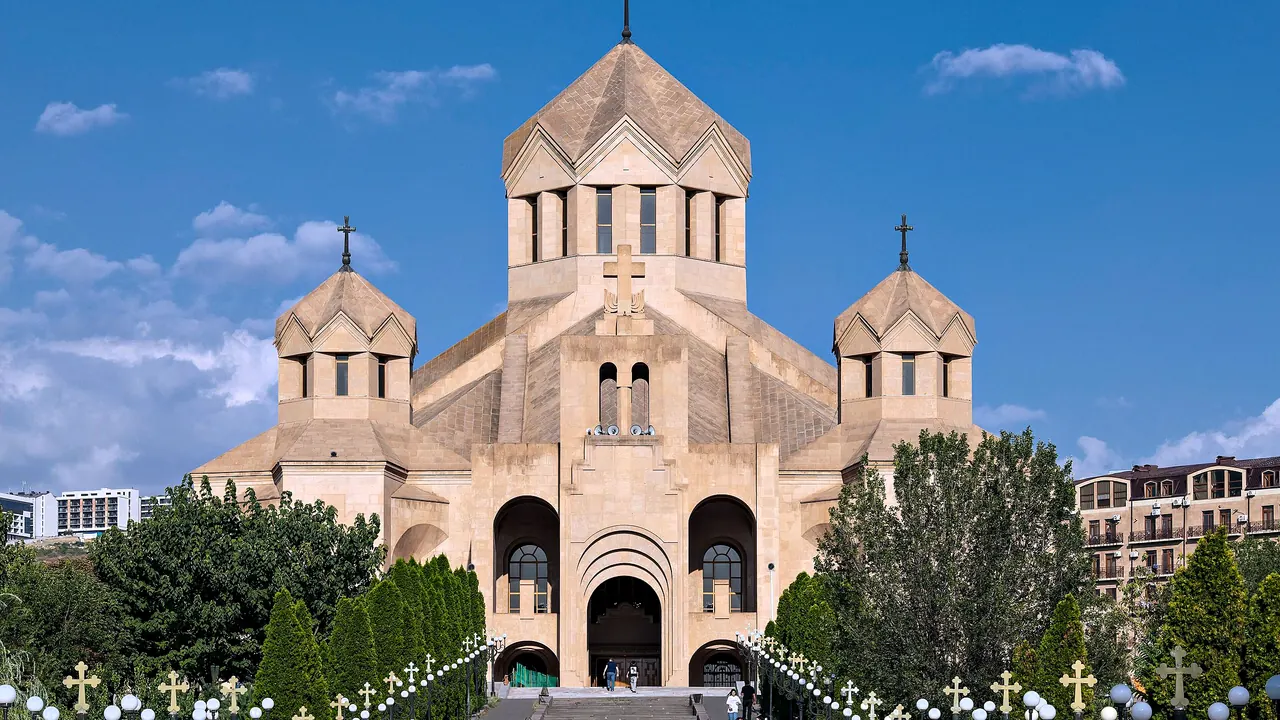
Photos: Baku by Zulfugar Karimov, Pexels License; Yerevan by Petar Milošević, CC BY-SA 4.0, cropped.
Baku or Yerevan?
Our verdict in twelve categories, each scored against the same fixed benchmark cities, and the climate month by month, so you can choose for your trip.
Choose Baku for
- beaches
- shopping
- culture and sights
Baku suits a traveller who wants the city itself to be the trip. The walled Old City with its palace and Maiden Tower, the oil-boom sandstone streets and the startling modern buildings fill two or three days on foot, and evenings on the seafront Boulevard come with a sea breeze. In high summer you can add a swim in the Caspian, and the carpet dealers and mugham give the stay a character all its own.
Choose Yerevan for
- nature and the outdoors
- day trips
- prices
Pick Yerevan if you'd rather use the city as a base. Within an hour or two are the great monasteries, the gorge at Garni, the slopes of Aragats and the forests around Dilijan, and that countryside is what Baku's bare peninsula can't match. It is also the easier city on the wallet, with cheap local wine and brandy and long, relaxed nights on café terraces.
Scoreboard
Twelve categories on one fixed scale from 0 to 100. The shaded stretch is the gap between the two.
Your match
Pick a travel style or drag the sliders, and both match scores follow your weighting.
Wins on beaches and shopping with your weighting.
Wins on nature and the outdoors and day trips with your weighting.
What matters to you?
Category by category
What the scores mean for a trip.
Beaches & swimming
Baku at least has a warm sea. The long sandy beaches at Bilgah, Novkhani and Mardakan are a taxi ride across the Absheron peninsula, and in high summer the Caspian is genuinely good for swimming, even if the water is shallow and cloudy and parts of the shore still carry the marks of the oil industry.
Yerevan is landlocked. Summer swimming means park and hotel pools, or a drive of about an hour to Lake Sevan, where the water is clear but stays cool and the season is short. Neither city is a beach destination, but only Baku gives you an afternoon in warm sea.
Food & drink
The food is equally good in both, but the two tables taste different. Baku's cooking leans Persian: saffron plov, sturgeon kebabs, herb-filled qutab and dushbara dumplings, with caviar and pomegranates at the Taza Bazaar and the ritual of black tea with jam after every meal.
Yerevan is built around the grill and the glass. Khorovats over vine cuttings comes with lavash fresh from the tonir, and drinking matters as much as eating: brandy tastings by the Hrazdan gorge, Areni reds and amber wines from clay karas, and thick coffee on terraces. In both cities the choice thins fast once you leave the local cuisine.
Culture & sights
The two are roughly equal for sightseeing, but in different ways. Baku's appeal is its streets and buildings. The walled Icherisheher, with the Palace of the Shirvanshahs and the Maiden Tower, gives you a genuine medieval quarter to wander, and outside the walls the oil barons' mansions and the curves of the Heydar Aliyev Center make the whole centre worth looking at.
Yerevan's oldest roots go back to Erebuni, but the city you walk through is a twentieth-century plan in pink tuff, and its strength lies indoors. The Matenadaran's illuminated manuscripts and the Genocide Memorial at Tsitsernakaberd are the visits that stay with people, and the Cascade adds views to Ararat.
Nightlife
Neither city is a party destination, and the real difference between them is where the evening happens. Baku's night begins outside, with the crowds strolling the seafront and the pedestrian streets off Fountain Square, but the drinking moves indoors to pubs, wine bars and hotel rooftops. Its weekend lounges and clubs are places to dress up for, which makes Baku the more formal night of the two.
Yerevan does the opposite and keeps its drinking outdoors. The bars around Saryan Street and Northern Avenue open onto pavement terraces, Republic Square's singing fountains work as the meeting point, and in summer the centre stays out until the small hours. Its nights run as long dinners followed by a late glass more than as dancing, and a handful of late electronic nights are the nearest either city gets to an alternative scene. In winter the terraces empty and Yerevan's evenings go much quieter.
Nature & outdoors
Here Yerevan is far ahead. Within an hour you can be hiking up from the high lake at Kari on Aragats or standing under the basalt columns of the Garni gorge, and Khosrov Forest, the Sevan shore and Dilijan's green hills give real walking country, with Ararat on the skyline.
Baku's surroundings are flat semi-desert with oil derricks and salt lakes. The mud volcanoes and the burning hillside of Yanar Dag are memorable oddities, but forests and proper hiking start in the Caucasus around Quba, which needs an overnight stay.
Day trips
Yerevan is one of the best day-trip bases in the region. Echmiadzin and Zvartnots, the temple at Garni and the rock-cut monastery of Geghard, and Khor Virap under Ararat all lie within about an hour, and Noravank, Sevanavank, Dilijan and the old town of Gyumri fill further days. Churches and monasteries run through almost all of them.
Baku has one standout in the Gobustan rock carvings, usually paired with the mud volcanoes, and pleasant half-days at the Ateshgah fire temple and the Mardakan towers. Shamakhi's mosque and vineyards make one more outing, and then the list runs out.
Good for families
Both cities welcome children warmly and offer about the same, with evening fun outdoors and little purpose-built beyond it. Baku's draw is the seafront Boulevard, with its playgrounds, boat rides and fountains, and the funicular up to Highland Park. Stairs in the underpasses make pushchairs a chore.
In Yerevan the singing fountains, the Cascade's steps and sculptures, a modest zoo and the children's railway play the same role. Uneven pavements and long drives to the monasteries are the strain, though older children who love ruins get more from the day trips.
Getting around
Baku makes public transport simpler. One rechargeable card covers both the buses and the metro, with its deep, ornate Soviet stations, though the few lines mostly serve residential districts. Its walkable core runs from the Old City along Nizami Street to the Boulevard, but heavy traffic and underpasses slow you down wherever you cross a main road.
Yerevan's centre is tighter, with Republic Square, the Opera, the Cascade and the market a short stroll apart along tree-lined avenues. Its single metro line covers little and the minibuses are hard to work out without Armenian or Russian, so app taxis fill the gaps, much as they do in Baku. Trains run to Gyumri, but the monasteries need a driver or a tour.
Shopping & style
Baku has slightly the better shopping, thanks to its carpets. The Old City dealers sell handwoven pieces from Quba and Karabakh along with silk kelaghayi scarves and Lahij copperware, though older carpets need an export certificate.
Yerevan is more for browsing. The weekend Vernissage spreads out carved backgammon boards, obsidian jewellery and Soviet curios, and brandy from the covered market is the most useful thing to take home. Both cities' high streets offer little you can't find at home.
Affordability
Yerevan is the cheaper city overall. Food, local wine and brandy, taxis and museum tickets cost little, and shared tours to the monasteries are reasonable when split. Your main expense is a central bed in summer.
Baku is very cheap for tea houses, plov and the metro. It turns expensive quickly once you move into international hotels, smart seafront restaurants and imported drinks, so a budget there depends on sticking to Old City guesthouses and local canteens.
Live music & performing arts
Baku's signature is mugham, the improvised classical song of the tar and kamancha, heard at the International Mugham Centre on the seafront and in some Old City restaurants, and woven into the city's jazz. The State Opera and Ballet Theatre mixes Azerbaijani operas with the European repertoire, and the Philharmonic plays in an ornate oil-boom hall, though summer seasons can be thin.
Yerevan's musical life revolves around the round Opera and Ballet Theatre, where Khachaturian's Gayane and Spartacus return often and the Philharmonic plays in the hall named after him. Recitals at the Komitas hall, duduk ensembles and small jazz clubs playing most evenings fill out the week, and tickets are easy to get. In both cities the theatre is of little use unless you speak the language.
Wellness & relaxation
Neither city is a place to unwind, and both send you hours away for their famous spa towns: Naftalan from Baku, Jermuk from Yerevan. Baku's large hotels have the better spas and pools, while its medieval baths are mostly visited as monuments and the wind rarely lets up.
Yerevan's version of rest is its pace: long coffees on shaded terraces and slow walks through the ring of parks. Its traffic and summer heat work against that.
When should you go?
Pick your month. The climate figures are measured averages, not a forecast.
Baku in July
Yerevan in July
Daytime high, °C
Rainfall in the month, mm
Temperature and rainfall are climate normals, averaged over the years shown. Baku: 1991-2020 (rainfall 1981-2010) normals, Mashtaga (23.2 km from centre). Yerevan: 1991-2020 normals, Yerevan (6.7 km from centre).
Baku is at its best from late spring to early autumn. June to September is hot and almost rainless, and the Caspian is warm enough to swim from late June, reaching about 26°C in August and staying pleasant through September. May and early October are the most comfortable months for walking the Old City. The rain arrives in October and November, and winters are cool and grey rather than harsh.
Yerevan swings further both ways. July and August reach about 33°C under almost constant sunshine, which makes midday sightseeing hard work, while January highs sit around 1°C. April and May are the wettest months, with about 58mm in April, though the hills are green then. Late May to mid-June and September to October are the best windows: warm, sunny and dry enough for the monasteries and the mountains.
Which traveller are you?
For an outdoors trip, Yerevan is the clear choice. Aragats, the Garni gorge, Khosrov Forest and the wooded hills around Dilijan are all within reach for a day's hiking, while Baku has semi-desert, mud volcanoes and mountains three hours away.
On a beach and sun trip, Baku is the better of the two. The Absheron beaches are sandy and the Caspian warms properly in July and August. Yerevan only has pools and the cool, short-season waters of Lake Sevan, an hour away.
On a tight budget, Yerevan stretches your money further. Grills, local wine, brandy, taxis and shared monastery tours all cost little. Baku has cheap tea houses and metro rides too, but its smarter hotels, restaurants and imported drinks quickly push prices up.
Before you go
| Measure | Baku | Yerevan |
|---|---|---|
| Official language | Azerbaijani, Azerbaijani Sign Language | Armenian |
| Currency | Azerbaijan Manat (AZN) | Armenian Dram (AMD) |
| Sockets | CF220 V, 50 Hz | CF220 V, 50 Hz |
| Driving side | Right | Right |
| Time zone | UTC+4 | UTC+4 |
| Emergency number | 102 or 112 | 112 |
| Elevation | -28 m | 987 m |
| Main airport | Heydar Aliyev International Airport (GYD)22 km from centre79 non-stop destinations | Zvartnots International Airport (EVN)11 km from centre82 non-stop destinations |
| Public holidays this year | - | 14 days |
By the numbers
| Measure | Baku | Yerevan |
|---|---|---|
| City population | 2,300,500 | 1,106,300 |
| People per km² | 1,075 | 4,874 |
| Museums within 10 km | 50 | 69 |
| UNESCO World Heritage sites within 50 km | 2 | 2 |
| Swim season, months above 21 °C | 4 months | - |
Where else could you go?
Every comparison below shares a destination with this one, so you can follow Baku or Yerevan somewhere new.