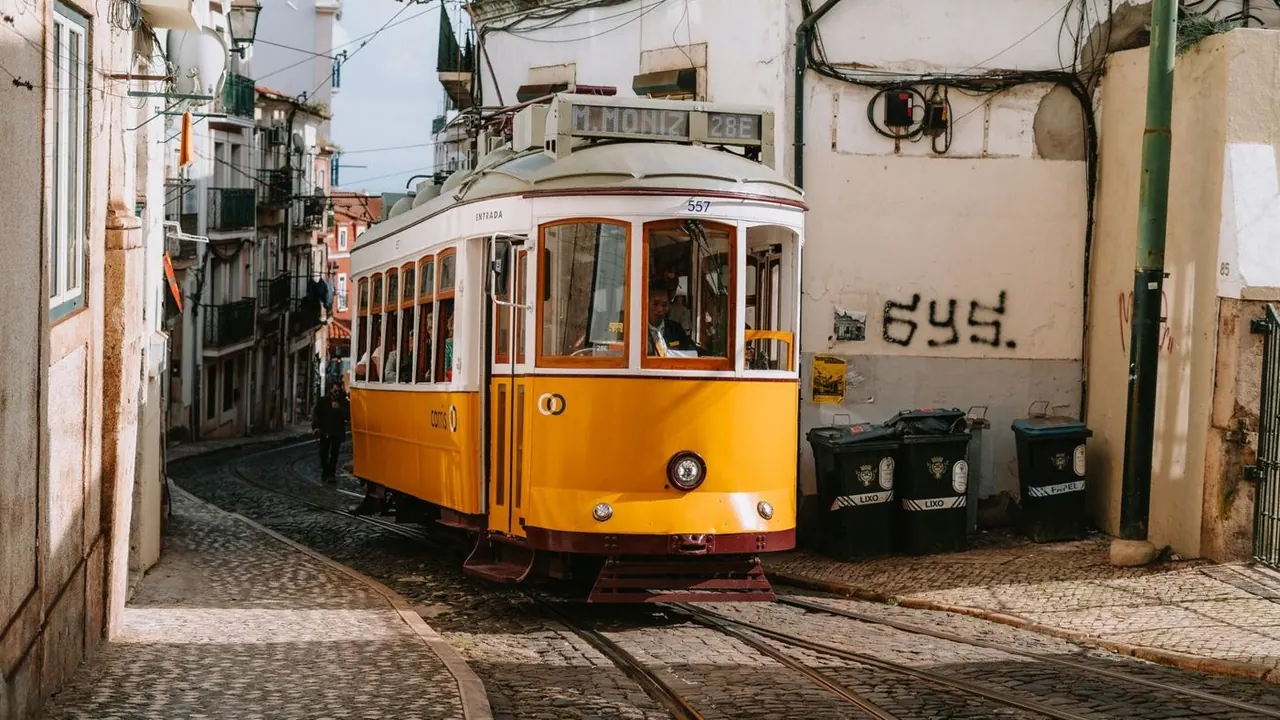
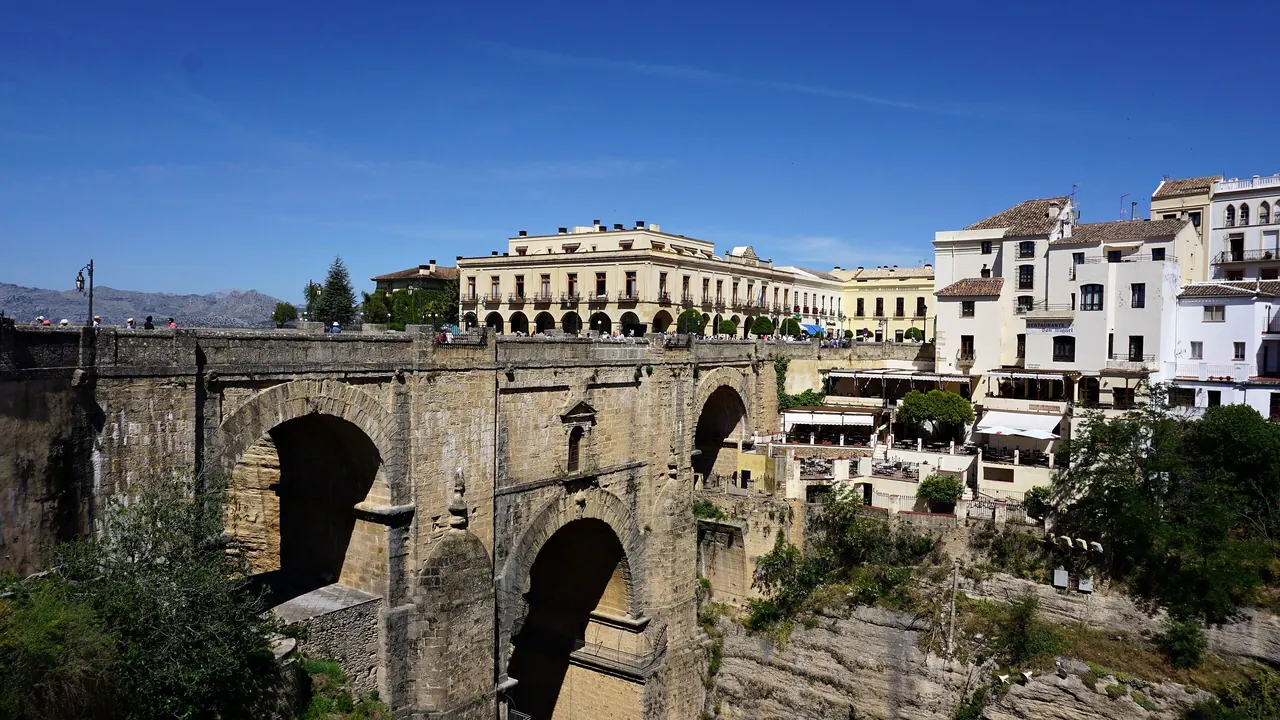
Photos: Lisbon by Riccardo Toso, Pexels License; Ronda by Julia Kostecka, CC BY 2.0, cropped.
Lisbon or Ronda?
Our verdict in twelve categories, each scored against the same fixed benchmark cities, and the climate month by month, so you can choose for your trip.
Choose Lisbon for
- nightlife
- live music and the arts
- shopping
Lisbon suits travellers who want a full city trip with plenty in it: several historic quarters, strong museums, seafood and cheap wine in neighbourhood tascas, fado in Alfama and late nights in Bairro Alto. Trains to Sintra and the Cascais coast give it easy outings without a car, and there is enough for children to make a family trip work, steep streets aside.
Choose Ronda for
- prices
- nature and the outdoors
Ronda is for a slower, smaller vacation built around landscape. The town on its gorge fills a day or two, and the real reason to stay longer is the mountain country around it: the Sierra de Grazalema, the white villages and walks into the Tajo. It costs a little less, the evenings end with dinner rather than a night out, and it rewards travellers who hire a car and like quiet.
Scoreboard
Twelve categories on one fixed scale from 0 to 100. The shaded stretch is the gap between the two.
Your match
Pick a travel style or drag the sliders, and both match scores follow your weighting.
Wins on nightlife and live music and the arts with your weighting.
Wins on prices and nature and the outdoors with your weighting.
What matters to you?
Category by category
What the scores mean for a trip.
Beaches & swimming
Neither place is built for a beach vacation, but Lisbon at least has sand within reach by train. The coastal line passes the surf beach at Carcavelos and calmer bays at Estoril and Cascais, and Costa da Caparica lies across the river. The water is cool Atlantic, often with too much swell for easy swimming.
From Ronda the nearest sea is the Costa del Sol, about 50km of hairpin road away. The Mediterranean there is warmer, but the trip takes a whole day and is impractical without a car, so most visitors swim in a pool.
Food & drink
Lisbon gives you far more to eat. Family tascas grill fish and cook bacalhau, seafood halls serve clams and crab, every corner has a pastelaria, and Alentejo and Douro wines come cheap by the glass. The markets at Ribeira and Campo de Ourique add plenty of variety.
Ronda's cooking is honest mountain food: oxtail stew, lamb, game, cured ham and autumn chestnuts, best in the Mercadillo's tapas bars. The range is narrow and fine dining is scarce, so a food lover will have covered it within a few days.
Culture & sights
Lisbon's heritage spreads across several distinct districts: Belem's monastery and tower, the rebuilt Baixa grid, and the medieval lanes of Alfama below the castle. Add the Gulbenkian and the Tile Museum, and you need three or four days to see it properly.
Ronda's main sight is its setting. The Puente Nuevo crosses a gorge over 100m deep between the Moorish old town and the Mercadillo, and the old bullring, the Arab baths and the rock-cut stairway are close by. The sights are memorable but compact, and one or two days is enough.
Nightlife
The nightlife gap is wide. Lisbon goes out late, with crowds drinking in the lanes of Bairro Alto, bars in Cais do Sodre's old sailors' haunts, cocktails in Principe Real and warehouse clubs by the river that run until dawn.
In Ronda the evening is dinner. The Plaza del Socorro stays busy on summer nights and a few bars serve a drink afterwards, but there are almost no clubs, and outside the September fair the town is asleep by the early hours.
Nature & outdoors
Both are equally strong for the outdoors, but the landscapes are different. Lisbon's is coast and forest: the misty Sintra hills, the cliffs at Cabo da Roca, kitesurfing at Guincho, surf at Ericeira and the Arrabida ridges, with dolphins in the Sado estuary. There are no real mountains.
Ronda is mountain country. It has the green limestone crags of Grazalema with griffon vultures, Spanish fir forests in the Sierra de las Nieves, climbing on the Tajo cliffs and the Caminito del Rey within an hour. It suits hikers rather than surfers.
Day trips
Lisbon has the stronger and easier list. Sintra's palaces are about forty minutes away by train, and Cascais and Mafra are close. Further out are Evora, three UNESCO monasteries at Alcobaca, Batalha and Tomar, and walled Obidos.
Ronda's outings are charming but need a car: the white villages such as Setenil de las Bodegas and Zahara de la Sierra, Roman Acinipo and the painted Pileta cave. Seville and Málaga can be done in a day, but they are long ones.
Good for families
Lisbon has proper attractions for children. The Oceanario, the science centre and the cable car are side by side at the Parque das Nacoes, and the trams and funiculars count as rides. Its hills and slippery pavements are hard with a pushchair.
Ronda is also steep and cobbled, and it offers little beyond the bridge, the gorge walk and nearby caves, which suit older children best. With no zoo or aquarium, families tend to base themselves at a country house with a pool.
Getting around
Lisbon is easier to get around without a car. The metro, historic trams, funiculars, suburban trains and river ferries all run on one card, though the hills are tiring and the trams are slow and crowded.
Ronda is small enough to walk across in minutes, steep lanes into La Ciudad aside. The trouble starts beyond the town: buses and trains are slow and infrequent, so the villages and natural parks really need a hire car.
Shopping & style
Lisbon is a real shopping destination. Chiado has old shops and glove makers, Principe Real has designers and antiques, and the LX Factory and Feira da Ladra are good for browsing. Azulejo tiles, cork and Burel wool are distinctive things to take home.
Ronda offers Carrera Espinel's ordinary high-street shops and souvenir ceramics and leather near the bridge. The best things to take home are edible: local wine, cured meats and convent sweets.
Affordability
Ronda is the slightly cheaper of the two. Tapas and set lunches are good value, the town costs nothing to get around and rural houses are fairly priced. A hire car is the main extra cost, and gorge-view hotels charge more.
Lisbon's coffee, house wine and transport are cheap, but central rooms cost about as much as in other southern capitals. Restaurants and rooftop bars aimed at visitors in Baixa and Chiado also push the bill up.
Live music & performing arts
Lisbon has its own music to hear every night. Fado is sung over dinner in Alfama and Mouraria, from polished rooms to tiny places where neighbours take turns singing. The Gulbenkian orchestra, the São Carlos opera house and the Centro Cultural de Belem add a formal programme.
Ronda has little beyond flamenco staged for visitors and a small municipal theatre. The exception is the September fair, when the Corrida Goyesca is held in eighteenth-century costume in the old bullring.
Wellness & relaxation
Neither has a bathing culture: Ronda's Arab baths are a monument rather than a place to bathe, and both rely on hotel spas. The difference is where you find calm. Lisbon's old quarters are noisy, so a restful stay means gardens by day and sleeping out on the Cascais coast or in the Sintra hills.
Ronda grows quiet once the day-trippers leave in the late afternoon. Farmhouses in the olive-covered hills, with pools and wide views, make doing nothing easy.
When should you go?
Pick your month. The climate figures are measured averages, not a forecast.
Lisbon in July
Ronda in July
Daytime high, °C
Rainfall in the month, mm
Where the figures come from
Ronda has no weather station within reach, so its figures come from a gridded climate model rather than a measured record, and read a broad area rather than the city itself.
Temperature and rainfall are climate normals, averaged over the years shown. Lisbon: 1991-2020 normals, Lisboa / Geof (1.1 km from centre). Ronda: 1991-2020 normals, TerraClimate 4 km grid at the town, no weather station within 90 km.
Both cities share a dry summer and a wet winter, but they handle the heat differently. Lisbon stays pleasant for walking from May to October, peaking around 28°C in July and August under long, sunny days, with an Atlantic sea that rarely gets warmer than 19°C. Ronda gets hotter inland, reaching about 32°C in midsummer, which makes afternoon sightseeing and hiking hard work. Its nearest coast has a warmer Mediterranean sea, but that is a day's drive away.
Spring and autumn suit Ronda best, roughly April to June and late September to October, when the hills are good for walking. Rain arrives in both from October. Lisbon is wettest in November, while Ronda's wettest months run from November to March, peaking at about 120mm in December, and with winter highs near 13°C it feels colder than Lisbon.
Which traveller are you?
For a food and nightlife trip, Lisbon is the clear pick. Grilled fish, clams and custard tarts fill the day, and the evening runs from street drinking in Bairro Alto to riverside clubs until morning. Ronda's evenings end after tapas.
On an outdoors trip, it depends on the kind. Choose Ronda for mountain walking, climbing and vultures over the Grazalema crags, with the Caminito del Rey nearby. Lisbon's outdoors is coastal, with surfing at Ericeira, kitesurfing at Guincho and cliff paths towards Cabo da Roca.
On a tight budget, Ronda goes a bit further. Rural houses are fairly priced, tapas and set lunches in the Mercadillo are cheap, and the town is free to walk. Lisbon's daily costs are low too, but central rooms push the total up.
Before you go
| Measure | Lisbon | Ronda |
|---|---|---|
| Official language | Portuguese | Spanish |
| Currency | Euro (EUR) | Euro (EUR) |
| Sockets | CF230 V, 50 Hz | CF230 V, 50 Hz |
| Driving side | Right | Right |
| Time zone | UTC, UTC+1 in summer | UTC+1, UTC+2 in summer |
| Emergency number | 112 | 112 |
| Elevation | 100 m | 724 m |
| Main airport | Lisbon Humberto Delgado Airport (LIS)7 km from centre156 non-stop destinations | Málaga-Costa del Sol Airport (AGP)60 km from centre166 non-stop destinations |
| Public holidays this year | 14 days | 12 days |
By the numbers
| Measure | Lisbon | Ronda |
|---|---|---|
| City population | 545,796 | 33,671 |
| People per km² | 5,453 | 87 |
| Museums within 10 km | 80 | 5 |
| UNESCO World Heritage sites within 50 km | 3 | 0 |
| Swim season, months above 21 °C | None | 1 month |
Where else could you go?
Every comparison below shares a destination with this one, so you can follow Lisbon or Ronda somewhere new.