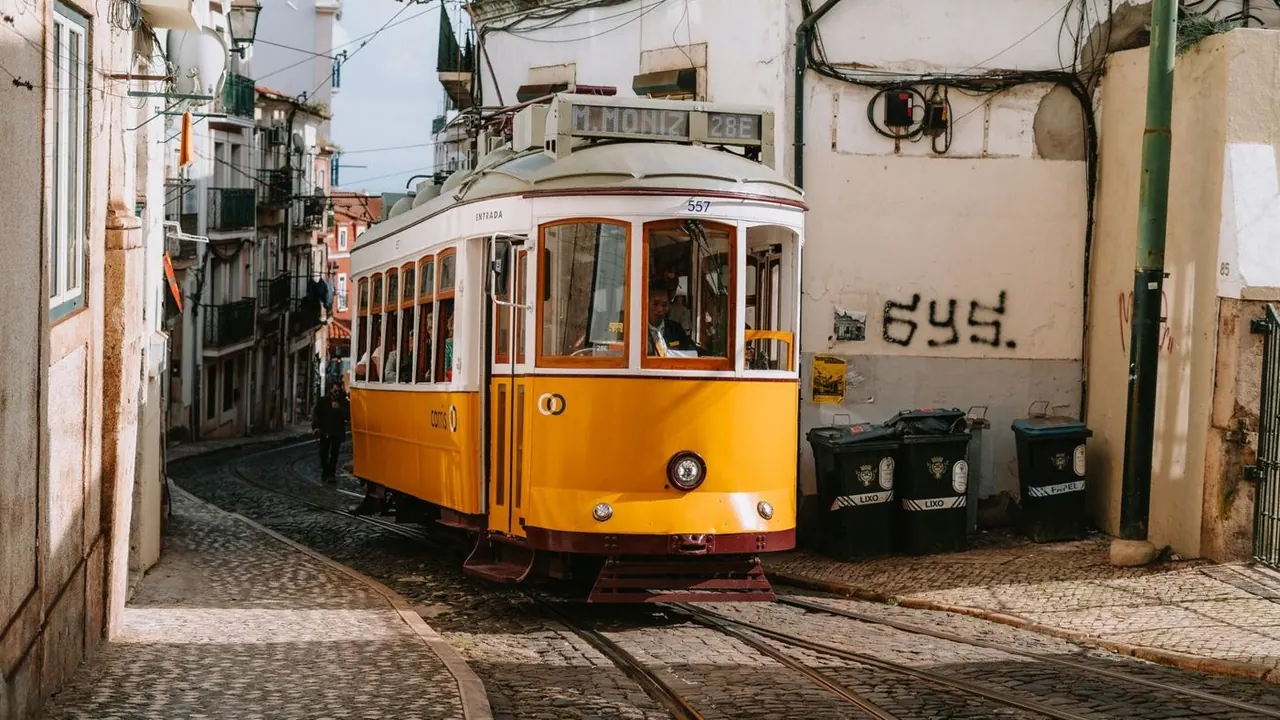
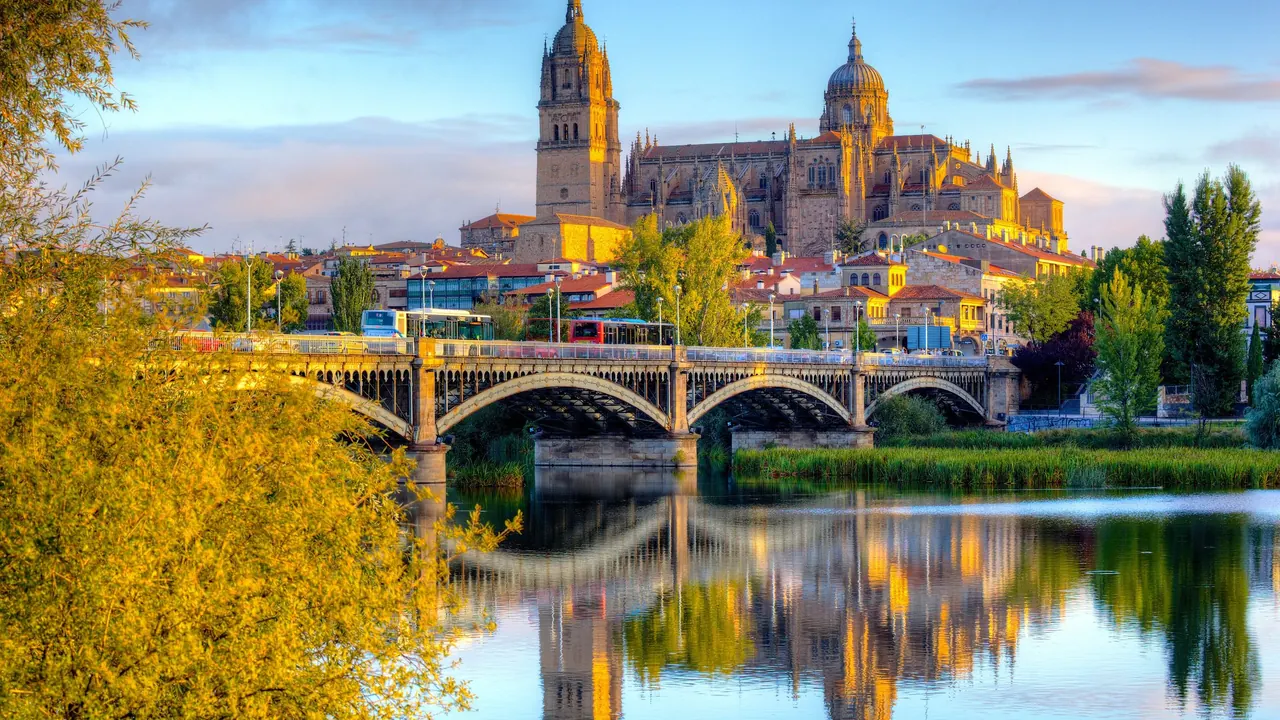
Photos: Lisbon by Riccardo Toso, Pexels License; Salamanca by Jiuguang Wang, CC BY-SA 3.0 ES, cropped.
Lisbon or Salamanca?
Our verdict in twelve categories, each scored against the same fixed benchmark cities, and the climate month by month, so you can choose for your trip.
Choose Lisbon for
- beaches
- shopping
- nature and the outdoors
Lisbon suits the traveller who wants a capital with the Atlantic on its doorstep. It brings beaches a short train ride away, a coast for surfing and cliff walks, Sintra's palaces for a day out, fado in the old quarters and cooking built on fish, seafood and good cheap wine. It takes more effort, with steep hills and crowded trams, but there is enough here to fill a week.
Choose Salamanca for
- prices
- getting around
- wellness
Salamanca is the better pick for a compact, slower and cheaper stay inland. Its golden sandstone centre can be walked end to end in minutes, and two or three days cover it well. Evenings mean ham and tapas at the bar counter, and the students keep the streets lively until late. Choose it for architecture and atmosphere at a gentle cost, with the medieval towns of Old Castile nearby. Don't choose it for the sea or a long list of things to do.
Scoreboard
Twelve categories on one fixed scale from 0 to 100. The shaded stretch is the gap between the two.
Your match
Pick a travel style or drag the sliders, and both match scores follow your weighting.
Wins on beaches and shopping with your weighting.
Wins on prices and getting around with your weighting.
What matters to you?
Category by category
What the scores mean for a trip.
Beaches & swimming
There is no real contest here. Lisbon has no beach in the city, but the coastal train reaches the surf beach at Carcavelos and the calmer bays at Estoril and Cascais. Costa da Caparica offers long Atlantic sand across the river, and in summer a beach afternoon fits easily around sightseeing. The water stays cool and some beaches are better for surfing than swimming.
Salamanca is far from any coast. In the summer heat, the best it can offer is a municipal open-air pool or a river beach along the Tormes or at a reservoir in the province.
Food & drink
Lisbon offers more variety and more from the sea. Family tascas serve grilled fish and bacalhau, beer halls bring out clams and crab, and warm custard tarts are eaten every day. Wines from the Alentejo, the Douro and the vinho verde region are poured cheaply almost everywhere. The best meals are in the residential neighbourhoods rather than around Baixa.
Salamanca's strengths are narrower: the bar counter and the pig. Ibérico ham from nearby Guijuelo, hornazo pastry, roast suckling pig and morucha beef make up a hearty inland diet, and a tapas crawl off the Plaza Mayor is the way to eat. There is little seafood worth ordering and not much international cooking.
Culture & sights
The two are close in depth but very different in layout. Lisbon's heritage is spread across distinct districts. There is the Manueline monastery and tower at Belem, the rebuilt grid of the Baixa after the earthquake of 1755, and the medieval lanes of Alfama below the castle. Its museums are stronger too, with the Gulbenkian collection and the National Tile Museum worth real time.
Salamanca is a single golden ensemble. The baroque Plaza Mayor, the carved university façade, the two cathedrals and the Casa de las Conchas stand within a short walk of each other, and the stone glows under floodlights at night. Apart from Casa Lis, its museums are modest. It is the place to enjoy buildings and streets rather than collections.
Nightlife
Lisbon's night out is larger and more varied. It starts with crowds drinking in the lanes of Bairro Alto and moves down to the bars of Cais do Sodre. It ends in riverside warehouse clubs that keep going until morning. Principe Real adds quieter cocktail bars and the heart of the gay scene, and sunset drinks at the viewpoints are a habit of their own.
Salamanca's nightlife is driven by its students. From Thursday to Saturday the bars around the Plaza Mayor and Calle Bordadores fill, and dance bars stay open past 3am. It is cheap and friendly, but it is aimed at a young crowd, with little club culture, and the city goes quiet in high summer.
Nature & outdoors
Lisbon has more of the outdoors within easy reach. The forested Sintra hills lead down to Cabo da Roca and the wild dunes at Guincho, with serious kitesurfing and surf at Ericeira. Across the river, the Arrabida ridges drop into the sea, and boats from Setubal go out to see dolphins in the Sado estuary. Within the city, Monsanto park offers shaded trails.
Salamanca stands on the open plain, and close to town there are only the paths along the Tormes. About an hour away by car, it has real high country, which Lisbon lacks: the chestnut forests of the Sierra de Francia, peaks above 2,000m in the Sierra de Béjar and the granite canyon of the Arribes del Duero.
Day trips
Lisbon has the stronger and more accessible list. Sintra's palaces fill a full day and are about forty minutes away by train, and Cascais and Mafra are close. Further out are walled Evora and three UNESCO monasteries at Alcobaca, Batalha and Tomar, which are often combined with Obidos and Nazare.
Salamanca makes a good base for Old Castile. The walls of Ávila, the Romanesque churches of Zamora and the ramparts of Ciudad Rodrigo are each about an hour or so away. The half-timbered villages of La Alberca and Mogarraz are lovely, but most of them are hard to reach without a car.
Good for families
The Oceanario at the Parque das Nacoes, built around a huge central tank, gives Lisbon an attraction made for children, and the science centre and the cable car are right beside it. The trams and funiculars feel like rides, and on hot days the Cascais beaches are an easy train trip away. The trade-off is the terrain: steep hills, stairways and slippery stone pavements are hard going with a pushchair.
Salamanca is safe, small and mostly pedestrian. Children enjoy hunting for the frog and the astronaut carved in stone and then climbing the cathedral towers. Beyond the riverside parks, though, there is no zoo, aquarium or theme park, so the city works best for a day or two as part of a wider family trip.
Getting around
Salamanca is the easier city to get around. The old town is compact and largely pedestrianised, and you can walk from the Plaza Mayor down to the Roman bridge in about twenty minutes, so few visitors ever need a bus. For the sierras and the border villages, a car makes things far simpler.
Lisbon is also walkable, but its seven hills mean climbs and long stairways. The metro does not reach Belem or the steepest quarters. The trams and funiculars help, but they are slow, crowded and worked by pickpockets. Its strength is the regional network: trains to Sintra and Cascais and ferries across the river all run on one card.
Shopping & style
Lisbon is clearly better for shopping. Avenida da Liberdade has the luxury houses, Chiado has old bookshops and glove makers, and Principe Real has local designers. It also has distinctive things to take home: azulejo tiles, cork goods, embroidered linen and decorated tins of sardines, along with the Feira da Ladra flea market and the shops at LX Factory.
Salamanca's shopping is mostly high-street chains and university souvenirs on the streets north of the Plaza Mayor. The buys worth making are ibérico ham and cheese from the Mercado Central and charro jewellery, the province's silver filigree.
Affordability
Salamanca is easier on the wallet. Thanks to the students, bar prices stay low and a drink often comes with a free tapa. Guesthouses and mid-range hotels in the old town are moderately priced, and you won't spend much on transport. Admission to the cathedrals, towers and university adds up over a full day.
Lisbon's everyday costs are similarly low, from a coffee at the counter to a tasca lunch and a glass of house wine. Rooms in the central quarters are where the money goes, especially in summer, and restaurants aimed at visitors in Baixa and Chiado charge more than places a few streets away.
Live music & performing arts
Fado and the tunas show the gap between the two. In Alfama, Mouraria and Bairro Alto, fado is sung every night, in settings that range from polished dinner houses to tiny rooms where neighbours take turns. Behind it is a proper formal programme, with the Gulbenkian's own orchestra and choir, the São Carlos opera house and the Centro Cultural de Belem.
Salamanca's signature sound comes from the tunas, students in black capes who sing with guitars and mandolins under the arcades of the Plaza Mayor in the evenings. The Teatro Liceo and the university concerts fill out a modest calendar, but there is no opera season or major orchestra.
Wellness & relaxation
Neither city is built around bathing, but Salamanca has slightly more to offer. In town there are small Arab-style bath houses, and there are proper mineral-spring spas within easy reach at Ledesma and Baños de Montemayor. Siesta hours and quiet cloisters such as San Esteban's make the old town calm by day.
In Lisbon, a spa means a hotel wellness floor. Its old quarters are noisy and steep, and rest comes from gardens like the Estrela and the Gulbenkian, or from staying out on the Cascais coast or in the Sintra hills.
When should you go?
Pick your month. The climate figures are measured averages, not a forecast.
Lisbon in July
Salamanca in July
Daytime high, °C
Rainfall in the month, mm
Temperature and rainfall are climate normals, averaged over the years shown. Lisbon: 1991-2020 normals, Lisboa / Geof (1.1 km from centre). Salamanca: 1991-2020 normals, Salamanca / Matacan (13.9 km from centre).
Lisbon has the milder year. Summer highs reach about 28°C, warm rather than harsh, and June to September is almost dry and very sunny. That is the beach season, though the Atlantic barely reaches 19°C even in late summer. Spring and early autumn are the most comfortable months for walking the hills. From October the rain sets in heavily and peaks at about 121mm in November, but winter days stay mild enough for sightseeing.
Salamanca, high on the plain, swings much further. July highs of about 31°C make afternoon walking hard work, and January drops to around 9°C, with cold, clear days. From autumn through spring it gets far less rain than Lisbon, so its winter is cold rather than wet, while in high summer both cities are close to dry. Both are at their sunniest from June to August. May, June, September and early October are Salamanca's best months, and they suit Lisbon well too.
Which traveller are you?
On a beach and sun trip, Lisbon is the one that works, though the beach is a day out rather than the whole trip. Sightsee in the morning, take the train to the sand in the heat and come back for dinner. Salamanca has summer heat but no sea.
On a trip on a tight budget, Salamanca makes your money go further. Old-town guesthouses are cheaper and a drink often comes with a free tapa. In Lisbon, coffee, tasca lunches and fares are cheap, but central rooms take most of the budget, especially in summer.
For a short city break, Salamanca fits neatly into a weekend because so much of it happens around one square. Start with coffee under the Plaza Mayor arcades, then climb the cathedral towers and buy ham at the market next door. A Lisbon weekend means choosing between Belem, Alfama and Sintra.
Before you go
| Measure | Lisbon | Salamanca |
|---|---|---|
| Official language | Portuguese | Spanish |
| Currency | Euro (EUR) | Euro (EUR) |
| Sockets | CF230 V, 50 Hz | CF230 V, 50 Hz |
| Driving side | Right | Right |
| Time zone | UTC, UTC+1 in summer | UTC+1, UTC+2 in summer |
| Emergency number | 112 | 112 |
| Elevation | 100 m | 798 m |
| Main airport | Lisbon Humberto Delgado Airport (LIS)7 km from centre156 non-stop destinations | Adolfo Suárez Madrid–Barajas Airport (MAD)184 km from centre239 non-stop destinations |
| Public holidays this year | 14 days | 12 days |
By the numbers
| Measure | Lisbon | Salamanca |
|---|---|---|
| City population | 545,796 | 146,110 |
| People per km² | 5,453 | 3,690 |
| Museums within 10 km | 80 | 13 |
| UNESCO World Heritage sites within 50 km | 3 | 1 |
| Swim season, months above 21 °C | None | - |
Where else could you go?
Every comparison below shares a destination with this one, so you can follow Lisbon or Salamanca somewhere new.