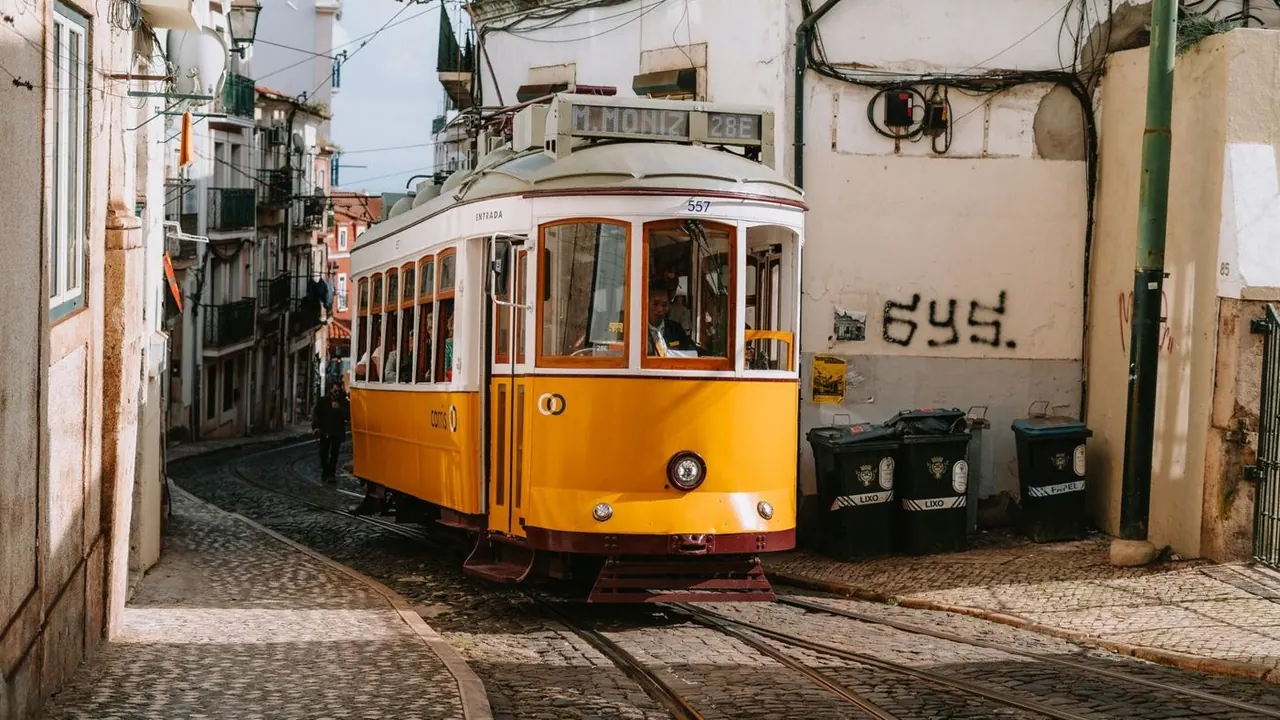
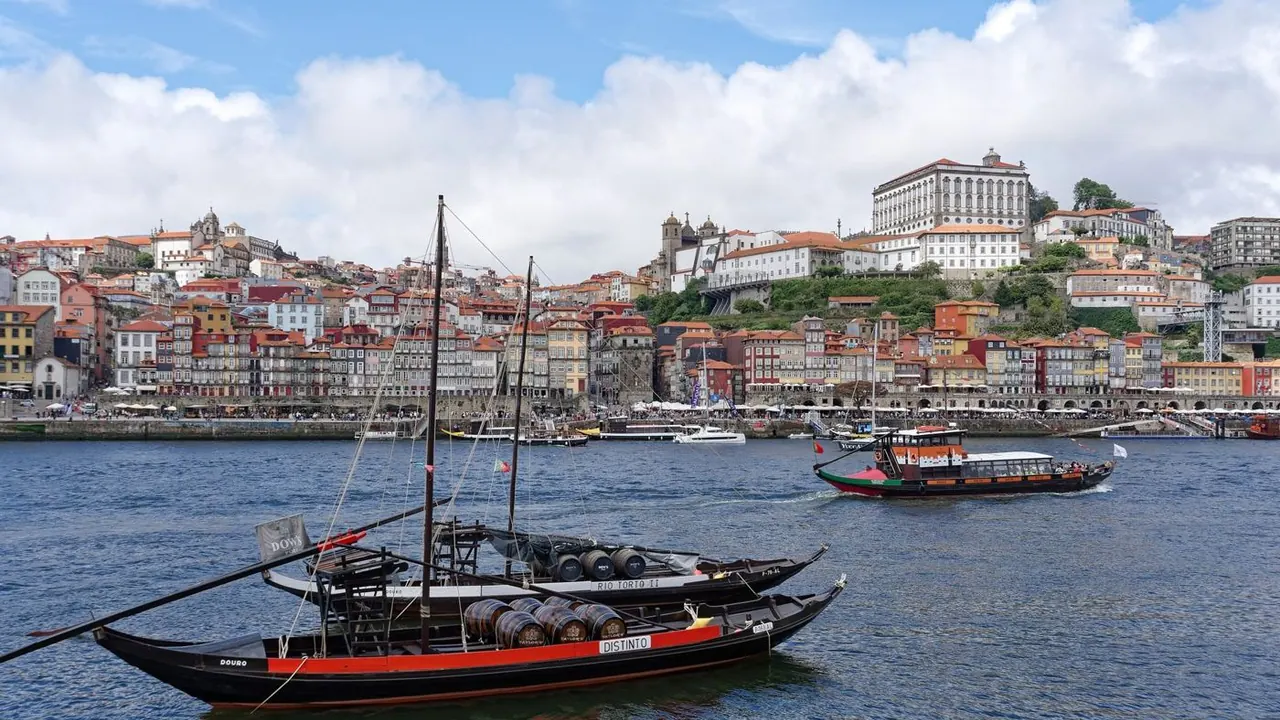
Photos: Lisbon by Riccardo Toso, Pexels License; Porto by Jakub Hałun, CC BY 4.0, cropped.
Lisbon or Porto?
Our verdict in twelve categories, each scored against the same fixed benchmark cities, and the climate month by month, so you can choose for your trip.
Choose Lisbon for
- nature and the outdoors
- beaches
- culture and sights
Lisbon suits travellers who want a capital's range in one stay. It has the monuments of Belem and the medieval lanes of Alfama, a later and larger night out, and the Sintra hills and the surf coast close by. Its summers are warmer and drier, so a beach day on the Cascais line is easy to fit in. Families get more here too, with the Oceanario and the science centre side by side on the river.
Choose Porto for
- prices
Porto is the smaller, cheaper and more concentrated trip. Its whole riverside centre is one listed townscape that a few days on foot will cover, and the port cellars are just across the bridge. Beyond the city, the north rewards anyone happy to stay in one base and spend the days on trains, from Guimarães and Braga to the Douro vineyards. It suits couples and return visitors to Portugal who would rather have granite, wine and a slower pace than the scale of a capital.
Scoreboard
Twelve categories on one fixed scale from 0 to 100. The shaded stretch is the gap between the two.
Your match
Pick a travel style or drag the sliders, and both match scores follow your weighting.
Wins on nature and the outdoors and beaches with your weighting.
Wins on prices with your weighting.
What matters to you?
Category by category
What the scores mean for a trip.
Beaches & swimming
Neither city is a beach destination, but Lisbon has more choice. The Cascais train runs past the broad surf beach at Carcavelos to the calmer bays at Estoril and Cascais. Across the river, Costa da Caparica is a long strip of Atlantic sand, and if you drive for about an hour, the Arrabida coves have the clearest and most sheltered water.
Porto's sea is closer: Foz and Matosinhos are part of the city, with granite rocks breaking up the sand, and the metro reaches Matosinhos in about half an hour. But the water is a degree or two colder and morning fog is common, so these beaches suit a walk and a quick dip more than a long lazy day.
Food & drink
The two cities share the same Portuguese basics of tascas, bacalhau and cheap local wine, and the difference is one of character. Lisbon's food leans towards the sea and the pastry counter: seafood beer halls serving clams and prawns, a bifana eaten standing, a warm custard tart with a bica, and ginjinha by the shot around Rossio. Its two markets double as places to eat, and the one trap is the tired menus around Baixa.
Porto's cooking is heartier and meatier, with the francesinha and tripe stew as its own dishes. Its best food moments involve charcoal and wine: whole streets of pavement grills in Matosinhos, and port tasted in the cool cellars of the Gaia lodges.
Culture & sights
Lisbon has more to see and far more museums. Belem alone has the Jeronimos Monastery, the Belem Tower and the Coach Museum, and the Baixa is a whole district rebuilt after the earthquake of 1755. The Gulbenkian, the Tile Museum and the Ancient Art Museum hold collections Porto cannot match, and the city needs three or four days.
Porto's strength is a single, unified townscape: the listed centre stacked up above the Ribeira, the gilded interior of São Francisco, the Arab Room of the Palácio da Bolsa and the tiled hall of São Bento. Serralves and the Casa da Música add modern architecture, but there are few major collections, and two or three days cover the essentials.
Nightlife
In both cities people drink in the street on weekend nights, but Lisbon's nightlife is bigger and goes on later. Bairro Alto's lanes fill with standing crowds, Cais do Sodre keeps going after them, and Principe Real adds cocktail bars and the core of the gay scene. The riverside warehouse clubs fill up after two in the morning and some stay open until daylight.
Porto's night out is packed into a few streets behind the Clérigos tower. It is cheap and informal, with a large student crowd, and a handful of clubs stay open until dawn. Weekends are lively, but midweek is quiet and there is less choice overall.
Nature & outdoors
Around Lisbon the outdoors means open Atlantic coast, while around Porto it means a river gorge. West of Lisbon, the misty Sintra hills run down to Cabo da Roca and the cliffs and dunes of Guincho, a serious kitesurfing spot, and the surf reserve at Ericeira is not far beyond. South of the river, the Arrabida ridges offer hiking and kayaking, and boats from Setubal go out to the resident dolphins of the Sado. Within the city, the Monsanto forest park has shaded trails.
Porto's setting is the Douro: steep granite banks below the Dom Luís I bridge, river cruises, and a flat promenade out to Foz that continues along the rocky shore to Matosinhos. Its best walking country, the granite peaks and waterfalls of Peneda-Gerês, is about an hour and a half away and in practice needs a car.
Day trips
Both are excellent bases for day trips, and they differ in the kind of outing on offer. From Lisbon the highlight is the palaces of Sintra, forty minutes away by train, followed by Mafra, walled Evora in the Alentejo and the great monasteries of Alcobaca, Batalha and Tomar.
From Porto the north is easy to reach by train: Guimarães, Braga and Bom Jesus, Coimbra's university and the canals of Aveiro. The terraced Douro vineyards upriver offer a day of quintas and tastings with no real equivalent near Lisbon.
Good for families
A single riverside district gives Lisbon its edge with children. At the Parque das Nacoes, the Oceanario, built around one huge central tank, stands beside the science centre and a cable car. The zoo is inside the city, and the yellow trams, funiculars and Santa Justa lift are rides in their own right. Both cities welcome children in restaurants late into the evening, and both are hard work with a pushchair on the hills.
Porto's outings are fewer and gentler: the aquarium at Foz, river cruises, the Gaia cable car and the peacocks in the Crystal Palace gardens. The cold, changeable seaside and sights aimed mostly at adults make a longer stay harder to fill.
Getting around
The two are evenly matched here: both have compact, walkable centres that are steep and slippery underfoot, and a car is a nuisance in either. Lisbon's network is bigger, with four metro lines, trams, three funiculars, a street lift, suburban trains and river ferries, though the metro does not reach Belem or the old quarters and the trams are crowded.
Porto's light-rail metro covers the essentials more simply, linking the airport with the centre, Matosinhos and Gaia. The Guindais funicular and the upper deck of the Dom Luís I bridge spare you part of the climb up from the river.
Shopping & style
Lisbon has the wider range: luxury houses on Avenida da Liberdade, the old shops of Chiado, local designers and antiques in Principe Real, the Feira da Ladra flea market and the independent shops of LX Factory. The things worth taking home, such as tiles, cork, wool blankets and tinned sardines, are much the same in both cities.
Porto's shopping is smaller and focused on food and crafts. Ceramics and design pieces fill the streets around Rua das Flores and Miguel Bombarda, old grocers sell tinned fish, and port comes straight from the Gaia lodges.
Affordability
Porto is the cheaper of the two. Everyday spending on counter coffees, tasca lunches and house wine is low in both cities, but rooms in Porto cost less, especially a little outside the old centre or in winter.
In Lisbon, rooms in the central quarters cost about what they would in other southern European capitals, and the bills mount quickly in the visitor restaurants of Baixa and Chiado and in the rooftop bars. Eating where residents eat helps in either city.
Live music & performing arts
Lisbon has the stronger live scene, and its centrepiece is fado. You can hear it every night in Alfama, Mouraria and Bairro Alto, in anything from polished dinner houses to tiny rooms where neighbours take turns to sing. On top of that are the Gulbenkian orchestra, the São Carlos opera house and the Centro Cultural de Belem.
Porto's main venue is the Casa da Música, home to the city's symphony orchestra, with a programme running from classical to electronic. The Rivoli and the Coliseu add dance and touring shows. Fado has shallower roots in Porto, and in both cities most theatre is in Portuguese.
Wellness & relaxation
Neither city suits a spa vacation. Neither has a bathing tradition, spa treatments mostly mean hotel spas, and rest in both comes from the pace of long lunches and evenings looking over the river.
The difference is where to go for more. In Lisbon, quieter nights mean staying out on the Cascais coast or in the Sintra hills. From Porto, the old thermal spa towns of the north, such as Caldas do Gerês, offer real mineral waters on a day out.
When should you go?
Pick your month. The climate figures are measured averages, not a forecast.
Lisbon in July
Porto in July
Daytime high, °C
Rainfall in the month, mm
Temperature and rainfall are climate normals, averaged over the years shown. Lisbon: 1991-2020 normals, Lisboa / Geof (1.1 km from centre). Porto: 1991-2020 normals, Porto / Serra Do Pilar (2.1 km from centre).
Both cities follow the same pattern of a dry summer and a wet late autumn and winter, but Lisbon is warmer, sunnier and drier all year. Summer highs reach about 28°C in Lisbon against 25°C in Porto, and Lisbon gets almost no rain from June to August, so it is the safer choice for a beach day. The Atlantic stays cool off both cities, peaking around 19°C near Lisbon and 17°C off Porto, so a swim is brisk even in August. Neither city gets too hot for walking its hills.
Spring comes earlier to Lisbon, which is already dry and sunny in May while Porto still gets regular showers. From October the rain returns to both, and it is heavier in Porto, which takes around 181mm in November, so a winter visit there means more grey days. Winters are mild in both, with highs in the mid teens, and Lisbon keeps clearly more sunshine. Spring and early autumn are the best seasons for city walking in either; for summer sun, Lisbon is the better pick.
Which traveller are you?
On a family trip with young children, Lisbon has more to offer. The Oceanario, the science centre and the cable car are all together at the Parque das Nacoes, and the train to the Cascais beaches is an easier day out than Porto's colder, foggier shore.
On a trip with a tight budget, Porto makes the money go further. Tasca lunches, Douro wine, port tastings and metro rides all cost little, and rooms a little outside the old centre, or in winter, are much cheaper than central Lisbon.
For a short city break, Porto is the easier fit. The listed riverside centre, the gilded churches, the tiles of São Bento and the Gaia cellars fit into two or three days on foot. Lisbon's sights are spread from Belem to Alfama and need longer.
Before you go
| Measure | Lisbon | Porto |
|---|---|---|
| Official language | Portuguese | Portuguese |
| Currency | Euro (EUR) | Euro (EUR) |
| Sockets | CF230 V, 50 Hz | CF230 V, 50 Hz |
| Driving side | Right | Right |
| Time zone | UTC, UTC+1 in summer | UTC, UTC+1 in summer |
| Emergency number | 112 | 112 |
| Elevation | 100 m | 104 m |
| Main airport | Lisbon Humberto Delgado Airport (LIS)7 km from centre157 non-stop destinations | Francisco de Sá Carneiro Airport (OPO)12 km from centre133 non-stop destinations |
| Public holidays this year | 14 days | 14 days |
By the numbers
| Measure | Lisbon | Porto |
|---|---|---|
| City population | 545,796 | 273,476 |
| People per km² | 5,453 | 6,606 |
| Museums within 10 km | 80 | 42 |
| UNESCO World Heritage sites within 50 km | 3 | 3 |
| Swim season, months above 21 °C | None | None |
Where else could you go?
Every comparison below shares a destination with this one, so you can follow Lisbon or Porto somewhere new.
- Sintravs Lisbon
- Coimbravs Porto
- Coimbravs Lisbon
- Santiago de Compostelavs Porto
- Farovs Lisbon
- Salamancavs Porto