Portugal
Douro Valley
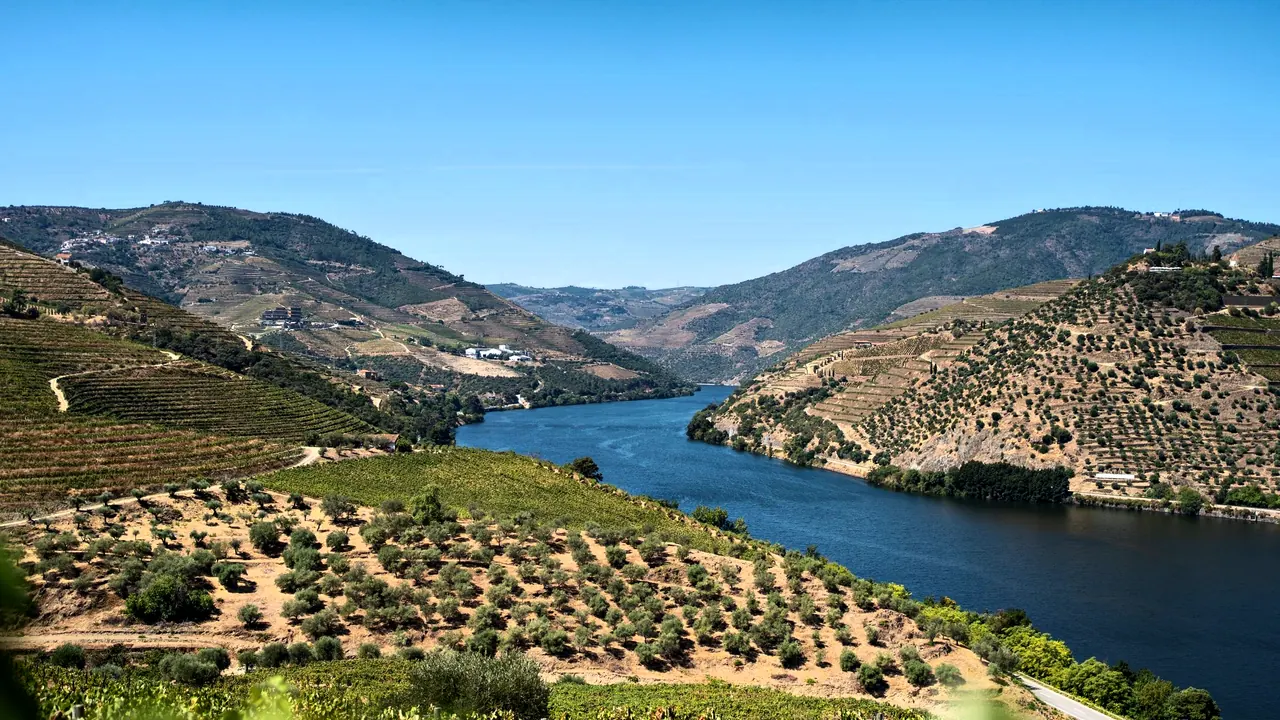
The Douro between terraced vineyards
- Nature & outdoors70
- Food & drink66
- Day trips66
Photo: Finn Ruijter, Pexels License
Match
39
Every category weighted equally
- Beach & sun41
- Culture & arts40
- Food & nightlife36
- Family trip42
- Outdoors49
- Relax & unwind45
- Shopping & style37
- On a budget42
Douro Valley in twelve categories
Our verdict on each, scored 0 to 100 against the same fixed benchmark cities, so a score means the same thing on every page.
Beaches & swimming. Scores 14 out of 100.
Food & drink. Scores 66 out of 100.
Culture & sights. Scores 50 out of 100.
Nightlife. Scores 6 out of 100.
Nature & outdoors. Scores 70 out of 100.
Day trips. Scores 66 out of 100.
Good for families. Scores 25 out of 100.
Getting around. Scores 33 out of 100.
Shopping & style. Scores 18 out of 100.
Affordability. Scores 60 out of 100.
Live music & performing arts. Scores 10 out of 100.
Wellness & relaxation. Scores 55 out of 100.
Douro Valley category by category
Beaches & swimming
14The Douro is an inland valley, and the Atlantic is a long drive back past Porto. Swimming here means the river. Summer is hot, and a handful of river beaches on the Douro and on quieter tributaries such as the Tua and the Paiva have grassy banks and calm, fairly cool water from June to September. Many quinta hotels have pools, and on a hot afternoon that is where most visitors end up. It is fine for cooling off, but it is not a reason to come.
Food & drink
66The reason to come is to drink. This is the home of port and of some of Portugal's best dry reds and whites, and the quintas along the river between Régua and Pinhão pour tastings in their cellars and on terraces above the vines. Ageing tawnies, vintage port and the valley's structured reds are best tasted where they are made, and harvest in September and October is the liveliest time.
The food is hearty mountain cooking. Expect roast kid, veal, bola de Lamego bread stuffed with meat, smoked sausages, olive oil and almonds. Some estates have ambitious dining rooms, and village tascas serve generous plates. You won't find street food, markets or much range, and evenings in the smaller villages are limited.
Culture & sights
50The valley's great monument is the landscape itself: centuries of hand-built stone terraces and walled quintas, listed together as a World Heritage wine region. The Douro Museum in Peso da Régua tells the story of port and of the river trade. Lamego has a cathedral and a long baroque stairway climbing to the sanctuary of Nossa Senhora dos Remédios, and outside Vila Real the baroque Mateus Palace and its gardens are worth a visit.
Further upriver, the Côa Valley holds open-air Palaeolithic rock engravings of world importance, with a museum above the gorge. These sights are spread out, and none of the towns has a dense historic centre.
Nightlife
6There is essentially no nightlife. Evenings are spent over a long dinner and a glass of port on a terrace, and the villages go quiet early. The university town of Vila Real has a few bars, and the local festas in summer bring music and late crowds for a night or two. Anyone wanting to go out should head back to Porto.
Nature & outdoors
70The scenery is the main draw. The river winds through a deep schist gorge, and its slopes are carved into terraces of vines, olive and almond trees, which turn gold and red in autumn and white with almond blossom in late winter. The best stretch runs between Régua and Pinhão, and above it the viewpoints at São Leonardo de Galafura and Casal de Loivos look down on the bends.
You can walk the vineyard paths between quintas, cycle the old railway trackbed along the Corgo, take boats and kayaks on the river, or ride the riverside railway upstream. The Alvão hills near Vila Real and the wilder canyon country of the Douro International far to the east add more rugged walking. July and August are fiercely hot, so spring and autumn are the seasons for being outdoors.
Day trips
66From Peso da Régua or Pinhão, Porto makes a full day out, about two hours by the riverside train. Amarante, a pretty bridge town on the Tâmega, is about an hour west. Guimarães, with its medieval centre and castle, and Braga, with its churches and the Bom Jesus stairway, are both reachable by car in about an hour and a half.
To the south, Viseu has a fine cathedral square and the Dão wine country around it. To the east lie Trancoso and the other fortified historic villages of the Beira border. The outings take some driving, but they make a varied mix of heritage towns and a second wine region.
Good for families
25This is a vacation built around wine, and children have little to do. Boat trips on the river, the scenic train, pools at the quinta hotels and grape-treading at harvest give a few good moments. Otherwise expect long, winding drives, hot summer afternoons and adults' tastings. Older children who like the outdoors will cope best. Families usually treat the valley as two or three days within a wider trip.
Getting around
33The Douro line follows the river from Porto through Régua and Pinhão to Pocinho, and river boats link the main towns, so you can see the valley's core without a car. Reaching individual quintas, the viewpoints and towns off the river is another matter. That needs a car, a driver or a tour, on narrow roads that twist up and down the slopes. Since the point of the trip is tasting, many visitors hire a driver or base themselves at a quinta they can walk around.
Shopping & style
18Shopping here means buying wine. You can take aged tawnies, vintage port and Douro reds straight from the estates, often bottles you will not find at home, along with olive oil, almonds, honey and local preserves. Lamego and Vila Real have ordinary town shops, and the region's black pottery comes from nearby Bisalhães. Beyond that there is nothing to shop for.
Affordability
60Eating and drinking are cheap. Village restaurants serve big plates for little money, and good wine costs less than you would expect. Simple guesthouses in Peso da Régua, Lamego and the smaller towns are cheap too. The stay that brings most people here costs more. Wine-estate hotels, estate tastings, private drivers and boat trips add up quickly, and harvest season is the dearest time. A visitor who drives and stays in town can keep it inexpensive.
Live music & performing arts
10There is very little to attend. Vila Real has a municipal theatre with a modest programme, and summer brings village festas with brass bands, folk groups and the pilgrimage festivities in Lamego. Harvest suppers at the estates sometimes have traditional music. For opera, concerts or fado, you need to go to Porto.
Wellness & relaxation
55The valley suits slowing down. Days follow the river and the vines, and the larger wine-estate hotels have spas with vinotherapy treatments, infinity pools over the terraces and a deep quiet after dark. Downstream near Resende, the old spa village of Caldas de Aregos has used its sulphurous springs for centuries, and further south the long-established thermal resort of São Pedro do Sul is within reach. There is no wider bathing culture to speak of, so the calm here comes from the pace and the setting more than the baths.
Where to stay in Douro Valley
Pinhão sits in the middle of the finest stretch of river, with its railway station, boat landings and quintas all within reach, so it is the natural first base for anyone who came to taste. It is small and goes quiet early, which suits couples and a slow pace. Peso da Régua, at the downstream end of the same stretch, is larger and more practical, with the Douro Museum, simple guesthouses and the train back to Porto. It works well for travellers without a car or on a tighter budget.
Many visitors skip the towns and stay at a wine estate on the slopes between the two. You can walk the vineyard paths and taste without needing a driver, and there are pools, spas and deep quiet after dark. It is the most expensive way to stay, and evenings rarely go beyond the estate's own terrace.
For exploring by car, Lamego to the south and Vila Real to the north are cheaper town bases. Lamego has its cathedral and baroque stairway, while Vila Real has a few bars, the Mateus Palace nearby and walking in the Alvão hills. One base covers two or three days. Only those heading far upriver to the Côa Valley or the Douro International need a second.
When should you go?
Pick a month to see what it is like. The climate figures are measured averages, not a forecast.
Douro Valley in July
Daytime high, °C
Rainfall in the month, mm
The whole year
Shaded against this destination’s own year: the deepest cell is its best month for that figure and the palest its weakest.
Where the figures come from
Douro Valley has no weather station within reach, so its figures come from a gridded climate model rather than a measured record, and read a broad area rather than one spot.
Temperature and rainfall are climate normals, averaged over the years shown. Douro Valley: 1991-2020 normals, TerraClimate 4 km grid at the town, no weather station within 90 km.
Before you go
| Measure | Douro Valley |
|---|---|
| Official language | Portuguese |
| Currency | Euro (EUR) |
| Sockets | CF230 V, 50 Hz |
| Driving side | Right |
| Time zone | UTC, UTC+1 in summer |
| Emergency number | 112 |
| Main airport | Francisco de Sá Carneiro Airport (OPO)134 non-stop destinations |
| Public holidays this year | 14 days |
Compare Douro Valley with
Every comparison with a written verdict behind it.