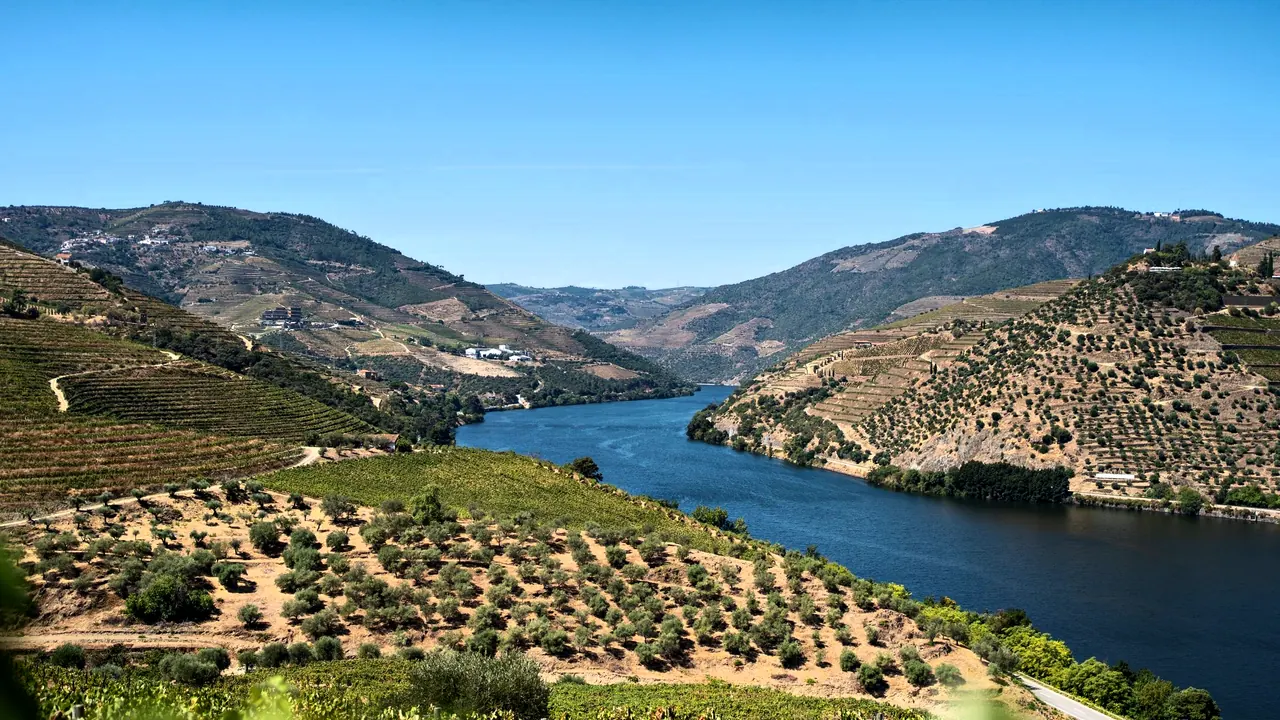
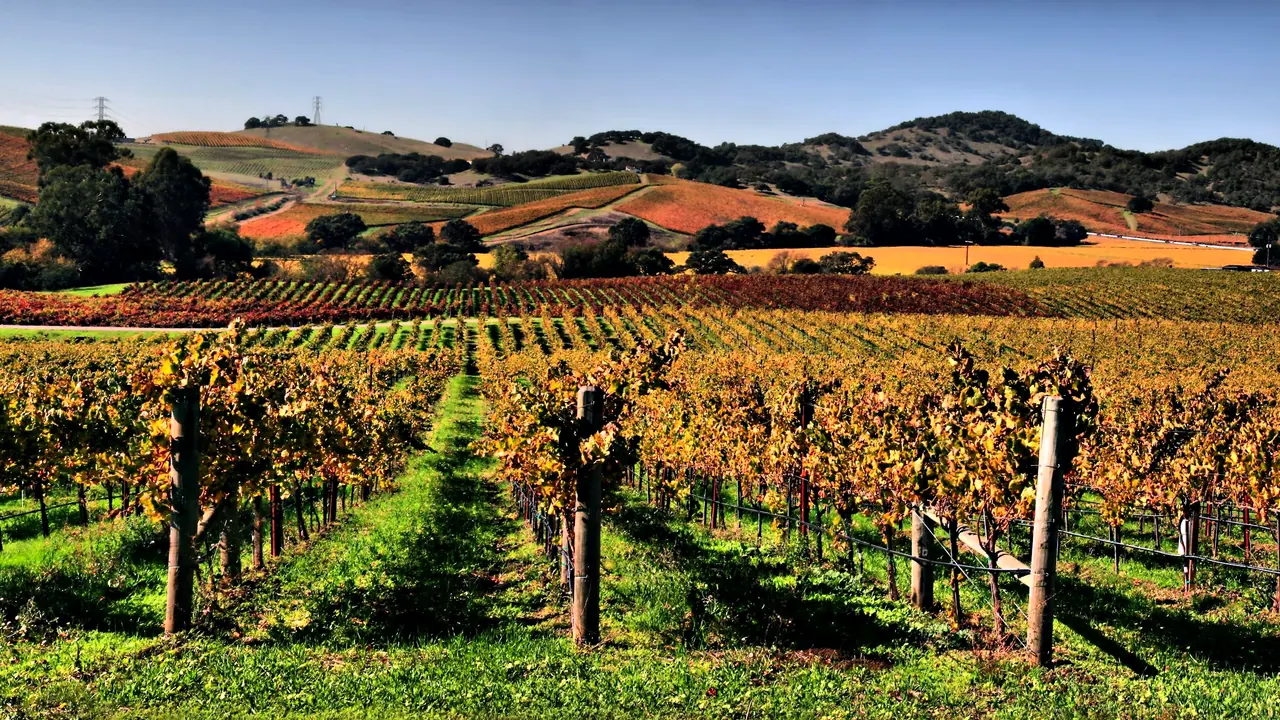
Photos: Douro Valley by Finn Ruijter, Pexels License; Napa Valley by Brocken Inaglory, CC BY-SA 3.0, cropped.
Douro Valley or Napa Valley?
Our verdict in twelve categories, each scored against the same fixed benchmark cities, and the climate month by month, so you can choose for your trip.
Choose Douro Valley for
- prices
- culture and sights
- nature and the outdoors
The Douro Valley suits travellers who want wine country with a strong sense of place and a sensible bill. You taste port at the quintas where it is made. The steep terraced gorge is a World Heritage landscape, and baroque Lamego and the Côa rock engravings are within reach, so it gives you more to see and walk than Napa. Eating and staying cost far less. In return you get fewer restaurants and quiet evenings that end early.
Choose Napa Valley for
- live music and the arts
- wellness
- shopping
Choose Napa Valley for a polished, indulgent trip where the meals and the spa matter as much as the wine. Yountville's fine dining, Calistoga's mud baths and hot springs, summer concerts at the wineries and San Francisco nearby make it the richer stay. That works as long as cost is not a worry and pleasant scenery is enough.
Scoreboard
Twelve categories on one fixed scale from 0 to 100. The shaded stretch is the gap between the two.
Your match
Pick a travel style or drag the sliders, and both match scores follow your weighting.
Too close to call, 1 point apart
Wins on prices and culture and sights with your weighting.
Wins on live music and the arts and wellness with your weighting.
What matters to you?
Category by category
What the scores mean for a trip.
Beaches & swimming
Neither valley is a place to swim, and in both most hot afternoons end at the hotel pool. The swimming they offer is different. The Douro has grassy river beaches on the main river and on side rivers such as the Tua and the Paiva, with fairly cool water from June to September. Napa's swim is Lake Berryessa, a large reservoir over the eastern hills that warms up well in summer.
The sea is no real option from either. Reaching the Atlantic means driving back past Porto, and the Pacific on the Sonoma coast stays near 12°C, too cold and rough for bathing.
Food & drink
Both valleys exist to pour wine, but Napa puts far more on the plate. Yountville's cluster of fine dining, the farm-driven bistros of St. Helena and Calistoga and the oysters and cheese at Oxbow Public Market give a range of eating the Douro cannot match, though nearly every meal there is an occasion.
The Douro's offer is narrower but has its own depth: port and dry reds tasted at the quintas between Régua and Pinhão, where they are made. The food is roast kid, smoked sausages and bola de Lamego in village tascas, generous and plain, plus a few ambitious estate dining rooms and little else.
Culture & sights
The Douro has much more history to see. Its hand-built terraces are a World Heritage landscape in their own right. Around them are the Douro Museum in Régua, Lamego's baroque stairway to Nossa Senhora dos Remédios, Mateus Palace near Vila Real and the Palaeolithic rock engravings of the Côa Valley, though the sights are spread out and you have to drive between them.
Napa's history is a century and a half of winemaking. You see it in the stone cellars, the old Greystone building in St. Helena, the Victorian frontages of downtown Napa and the Bale Grist Mill. It makes a pleasant backdrop to the tastings, and anyone after major museums goes to San Francisco.
Nightlife
Neither valley goes out at night, so plan on dinner being the evening. Napa has the edge only because downtown has wine bars, taprooms and cocktail bars along the river and First Street, quiet before midnight but there all the same. In the Douro the villages go to sleep early, a few student bars in Vila Real are the only choice, and a summer festa is the one night that runs late.
Nature & outdoors
The Douro is the more dramatic country. The river cuts a deep schist gorge terraced from top to bottom, and the views from São Leonardo de Galafura and Casal de Loivos over the bends between Régua and Pinhão have no equal in Napa. You can walk between quintas, kayak the river, cycle the old Corgo trackbed, or head further out to the Alvão hills and the Douro International canyons.
Napa is gentler: a flat floor of vineyards between oak-covered ranges, best seen from a dawn balloon or by bike on the Silverado Trail. Mount St. Helena and the redwoods of Bothe-Napa Valley make for real walks, but the country is pastoral rather than wild.
Day trips
Napa has a slightly better choice, mainly because San Francisco is about an hour and a half away, with Berkeley and Sausalito close by. Beyond the city, though, most outings are more wine country: Sonoma, Healdsburg and the Russian River.
Day trips from the Douro take longer but vary more. You can take the riverside train to Porto or drive to Amarante on the Tâmega, the medieval centre of Guimarães, Braga's churches, Viseu or the fortified villages of the Beira border. Most are heritage towns, and the Dão around Viseu is the one other wine region.
Good for families
Children come second in these two valleys. Families in both usually stop for a few days rather than spend a whole vacation there. The Douro has boat trips, the scenic train and grape-treading at harvest, which suit older children who like being outdoors. Napa has more for a single outing, from Calistoga's small geyser and petrified forest to warm hot-spring pools and a wildlife and amusement park in Vallejo.
Getting around
Both valleys need a car to reach the wineries, and since tasting is the point, many visitors hire a driver. Without a car, the Douro gives you more: the railway along the river from Porto to Pocinho and boats between the main towns reach the heart of the valley. The quintas and viewpoints, though, are up narrow, twisting roads.
Napa is easier to drive, about 50km from end to end on simple roads, but its buses are too infrequent to rely on and only three small downtowns are walkable. Highway 29 gets slow at weekends, so the Silverado Trail is the better route.
Shopping & style
In both valleys the best buy is wine from the cellar door, often bottles you cannot find elsewhere. Napa offers more beyond that. St. Helena's Main Street has homeware and kitchen boutiques, Yountville has galleries, the public market in Napa sells olive oil and cheese, and there is a large outlet centre on the edge of town. Many estates will also ship cases home.
In the Douro you can add olive oil, almonds, honey and the black pottery of Bisalhães to the port, and Lamego and Vila Real have ordinary town shops. There is nothing beyond that.
Affordability
This is where the two differ most. In the Douro, village meals and good wine cost little, and simple guesthouses in Régua or Lamego keep a trip cheap. Only the estate hotels, private drivers and stays at harvest time push the cost up.
Napa is a splurge however you plan it. The up-valley inns are priced for special occasions, tasting fees add up over a day, and dinner at the well-known restaurants costs a lot. Staying in Napa town and buying picnics from the delis saves a little, but not much.
Live music & performing arts
Napa has a real calendar, though it is mostly seasonal: a large rock and pop festival each late spring, classical, jazz and opera in summer at the wineries and the theatre in Yountville, and year-round shows at downtown Napa's restored opera house and Art Deco theatre. The Douro has village festas with brass bands and folk groups, the pilgrimage festivities in Lamego and a modest municipal theatre in Vila Real. For fado or concerts, you have to go to Porto.
Wellness & relaxation
Both valleys are made for slow days, but they rest you in different ways. In the Douro the setting does most of the work: a quinta hotel high on the terraces, a pool looking down on the river and real silence after dark, with vinotherapy at the bigger estates. The valley's spa towns are off the main stretch. Caldas de Aregos lies downstream near Resende and São Pedro do Sul further south, so taking the waters means a drive and a day set aside for it.
In Napa, bathing can be the whole point of the stay. Calistoga, at the top of the valley, grew up around its hot springs. You can spend a morning in warm mud and mineral water, in a plain old bathhouse or a smart new one, and still be in town for lunch. The Douro's restfulness comes mostly from the view. Napa has a full menu of treatments, and the resort spas around Yountville and along the Silverado Trail put them close to good restaurants.
When should you go?
Pick your month. The climate figures are measured averages, not a forecast.
Douro Valley in July
Napa Valley in July
Daytime high, °C
Rainfall in the month, mm
Where the figures come from
Douro Valley has no weather station within reach, so its figures come from a gridded climate model rather than a measured record, and read a broad area rather than one spot.
Napa Valley has no rain gauge within 25 km of the centre, so its rainfall comes from a gridded climate dataset read at the destination rather than from a gauge further away.
Napa Valley's sunshine is measured 76 km from the centre, at Sacramento Executive Airport.
Temperature and rainfall are climate normals, averaged over the years shown. Douro Valley: 1991-2020 normals, TerraClimate 4 km grid at the town, no weather station within 90 km. Napa Valley: 1991-2020 (sunshine 1981-2010) normals, Napa / Middleton (21.9 km from centre).
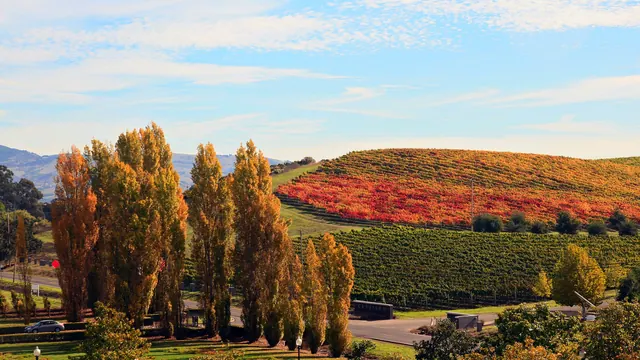
Both valleys reach about 26°C at the height of summer, but their rain comes at different times of year. Napa is almost completely dry from May to October, with sunshine passing 400 hours a month in June and July, so its September harvest is reliably warm and clear. The rain comes in winter and is heaviest from December to February, when the vineyards are at their quietest.
In the Douro the dry spell is shorter. It runs mainly from June to August, with only 11mm in July, and the wet season starts in October and lasts to January at around 170mm a month. That makes September the safer month for the harvest, and late spring, May especially, the best time to walk the terraces before the midsummer heat settles in the gorge. A river swim works from June to September in the Douro, and at Lake Berryessa through Napa's long dry summer.
Which traveller are you?
On a trip on a tight budget, the Douro is the clear choice. Village tascas, cheap local wine and simple guesthouses in Régua or Lamego keep costs low. In Napa, the inns, tasting fees and restaurant dinners make even a careful stay expensive.
For a relaxing and wellness trip, Napa wins. Calistoga's mud baths, mineral soaks and geothermal pools are a long-established tradition, and there are resort spas along the valley. The Douro's calm comes from estate pools and quiet nights more than from bathing.
On an outdoors trip, choose the Douro. The terraced schist gorge, the viewpoints above Pinhão, kayaking on the river and walks in the Alvão hills offer more drama than Napa's gentle vineyard floor, balloon flights and the climb up Mount St. Helena.
Before you go
| Measure | Douro Valley | Napa Valley |
|---|---|---|
| Official language | Portuguese | - |
| Currency | Euro (EUR) | US Dollar (USD) |
| Sockets | CF230 V, 50 Hz | AB120 V, 60 Hz |
| Driving side | Right | Right |
| Time zone | UTC, UTC+1 in summer | UTC-8, UTC-7 in summer |
| Emergency number | 112 | 911 |
| Main airport | Francisco de Sá Carneiro Airport (OPO)134 non-stop destinations | San Francisco International Airport (SFO)143 non-stop destinations |
| Public holidays this year | 14 days | 13 days |
Where else could you go?
Every comparison below shares a destination with this one, so you can follow Douro Valley or Napa Valley somewhere new.
- Sonomavs Napa Valley
- Lake Tahoevs Napa Valley
- Big Survs Napa Valley
- Yosemitevs Napa Valley
- Alentejovs Douro Valley
- Kings Canyonvs Napa Valley