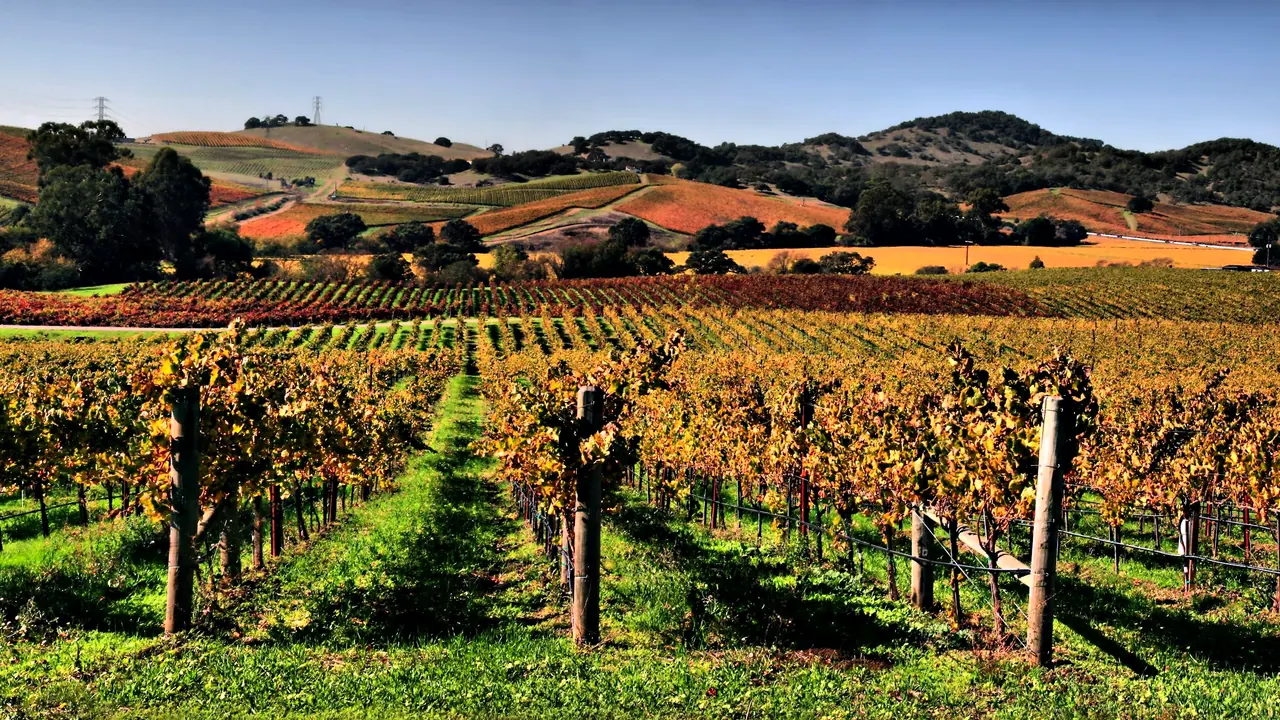
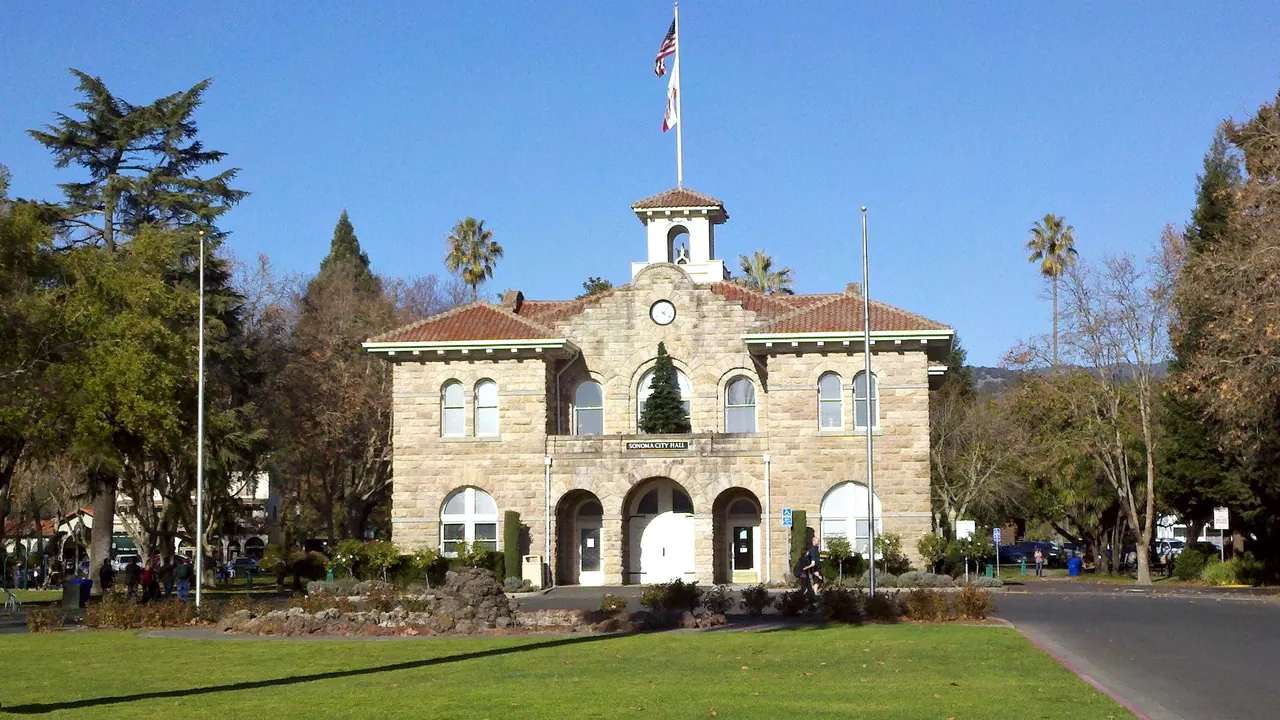
Photos: Napa Valley by Brocken Inaglory, CC BY-SA 3.0, cropped; Sonoma by Cullen328, CC BY-SA 3.0, cropped.
Napa Valley or Sonoma?
Our verdict in twelve categories, each scored against the same fixed benchmark cities, and the climate month by month, so you can choose for your trip.
Choose Napa Valley for
- wellness
- food and drink
- getting around
Napa Valley is for the traveller who wants wine country at its most polished. The dining in Yountville and the grand estates along Highway 29 go further than anything in Sonoma, and Calistoga's mud baths and mineral pools make a real bathing trip possible. It suits a couple's special-occasion vacation where tasting, eating and being looked after are the whole point, and where cost is not the first question.
Choose Sonoma for
- nature and the outdoors
- culture and sights
- prices
Sonoma suits travellers who want a town to stay in rather than a valley to drive along. The plaza, with its mission, barracks and Bear Flag history, gives you somewhere to walk in the evenings. Trails up to the Sonoma Overlook and Sugarloaf Ridge, and the wild coast within reach, make it the better base if you want hiking days between the tastings. The food is simpler and the spa side smaller, but the pace is easier.
Scoreboard
Twelve categories on one fixed scale from 0 to 100. The shaded stretch is the gap between the two.
Your match
Pick a travel style or drag the sliders, and both match scores follow your weighting.
Wins on wellness and food and drink with your weighting.
Wins on nature and the outdoors and culture and sights with your weighting.
What matters to you?
Category by category
What the scores mean for a trip.
Beaches & swimming
Neither is a swimming destination, and both send you to the same cold, dramatic shore around Bodega Bay to look at the sea rather than get in it. The difference is where you swim on a hot day: from Napa it is the coves of Lake Berryessa over the eastern hills, from Sonoma the gravel banks of the Russian River. Otherwise it is the hotel pool in both.
Food & drink
Napa Valley is the stronger food trip by some way. Yountville packs in a run of fine-dining rooms that Sonoma has no answer to, the tasting goes from grand estates on Highway 29 to appointment-only cellars on Howell and Spring Mountains, and downtown Napa's public market, with its oysters and local cheese, gives you a casual lunch between the big meals.
Sonoma's strength is having the wine on its doorstep. There are tasting rooms right on the plaza, old-vine Zinfandel and Carneros Pinot Noir are a short drive away, and the food is seasonal cooking built on local produce. The restaurants are few, though, grouped round the plaza and in Glen Ellen, so after a few nights you will have tried most of them.
Culture & sights
Sonoma has the more real history to walk through. Its plaza, where the Bear Flag Revolt of 1846 was proclaimed, faces Mission San Francisco Solano and the adobe barracks, with Vallejo's house and Jack London's ruined Wolf House nearby.
Napa's heritage is mostly in its buildings: stone cellars, the Greystone building, Victorian fronts in downtown Napa and the Bale Grist Mill. It is pleasant scenery for a wine trip, but Sonoma gives you an actual half day of sightseeing.
Nightlife
Both valleys go quiet after dinner. Downtown Napa has a little more to choose from along the riverfront and First Street, with taprooms and cocktail bars as well as wine bars. Sonoma's evenings are a brewpub, a couple of saloons and summer nights on the plaza, with Santa Rosa the nearest place for anything later.
Nature & outdoors
Sonoma is the better choice for time outdoors. You can walk from the plaza up to the Sonoma Overlook, Sugarloaf Ridge has redwoods and the view from Bald Mountain, and within about an hour lie the Sonoma Coast headlands, Point Reyes and the Marin redwoods.
Napa is tamer: a long valley floor of vines, best seen from a dawn balloon or a bike on the Silverado Trail. Mount St. Helena is its one serious hike, and Bothe-Napa Valley and Skyline Wilderness Park are gentle walks rather than wild country.
Day trips
The options are much the same from either base, and each valley is the other's obvious outing. San Francisco is a little closer from Sonoma, while Napa has the ferry from Vallejo across the bay and an easier run east to Sacramento's old riverfront. Sonoma is nearer to Petaluma's Victorian river town and Point Reyes. From both, most trips apart from the city are another valley of vineyards.
Good for families
Both are adult places where children have little to do, and families tend to visit for a short stop. What there is differs: Napa has Calistoga's small geyser and petrified forest, hot-springs pools and a wildlife and amusement park at Vallejo. Sonoma offers its plaza playground, a miniature railway park and an African wildlife park near Santa Rosa, all easy in a single day.
Getting around
Napa Valley is the easier to manage, even though you still need wheels. It runs about 50km in a single line, with Highway 29 and the quieter Silverado Trail along it, and Napa, Yountville and St. Helena each have a walkable centre to stop in.
In Sonoma, only the plaza and the tasting rooms a few blocks from it are on foot. The wineries, hill parks and coast are scattered in different directions, so a car, driver or tour is needed for nearly every day out.
Shopping & style
Napa offers a little more, with St. Helena's Main Street boutiques, galleries in Yountville and a large outlet centre on the edge of town. Sonoma's shopping is a stroll round the plaza and its arcades, good for gifts, cheese and olive oil, with a summer farmers' market. In both, the real purchase is wine from the cellar door.
Affordability
Both are expensive, and neither has a cheap way in. Napa's up-valley inns and famous dining rooms push it to the top end, so staying in Napa town or further south is the usual saving. Sonoma has fewer rooms and still needs a car or driver, and budget travellers often sleep in Santa Rosa or Petaluma and picnic among the vines instead.
Live music & performing arts
Napa has the fuller calendar. A big rock and pop festival comes to the Expo grounds every late spring, and summer brings classical, jazz and opera to wineries and the Yountville theatre. Downtown Napa's restored opera house and Art Deco theatre book shows all year.
Sonoma is mostly summer: Broadway-style concerts in Jack London State Historic Park and the 1930s theatre on the plaza. Its strong point is the Green Music Center at Sonoma State University, half an hour away, for touring orchestras.
Wellness & relaxation
Napa Valley has the real spa town. Calistoga was founded on its hot springs, and its mud baths, mineral soaks and geothermal pools run from plain old bathhouses to polished modern ones, with resort spas among the vines further down the valley.
Sonoma's bathing comes down to the historic resort at Boyes Hot Springs, open to day visitors, and some inn spas, all at resort prices. What it does offer is a quieter routine, with slow mornings on the plaza and early nights, which suits rest more than a bathing trip.
When should you go?
Pick your month. The climate figures are measured averages, not a forecast.
Napa Valley in July
Sonoma in July
Daytime high, °C
Rainfall in the month, mm
Where the figures come from
Napa Valley has no rain gauge within 25 km of the centre, so its rainfall comes from a gridded climate dataset read at the destination rather than from a gauge further away.
Napa Valley's sunshine is measured 76 km from the centre, at Sacramento Executive Airport.
Sonoma has no rain gauge within 25 km of the centre, so its rainfall comes from a gridded climate dataset read at the destination rather than from a gauge further away.
Sonoma's sunshine is measured 87 km from the centre, at Sacramento Executive Airport.
Temperature and rainfall are climate normals, averaged over the years shown. Napa Valley: 1991-2020 (sunshine 1981-2010) normals, Napa / Middleton (21.9 km from centre). Sonoma: 1991-2020 (sunshine 1981-2010) normals, Napa / Middleton (17.8 km from centre).
The two valleys share almost the same weather. June to September is warm and nearly rainless, with daytime highs around 26°C and the longest sunshine in July, which suits terraces and balloon flights more than long walks in the afternoon heat. April, May and October are the most comfortable months for walking and cycling among the vines, mild and mostly dry.
Winter is cool, around 13°C in January, and the rain comes from November to March. That is where the two part company: Sonoma is noticeably wetter, with about 169mm in December against 135mm in Napa, so the hills there are greener but outdoor days are more often lost. The Pacific near Sonoma never warms past about 14°C, even in late summer, so the coast is for views at any time of year.
Which traveller are you?
For a relaxing and wellness trip, Napa Valley is the stronger choice. Calistoga was built around its hot springs, with mud baths and geothermal pools from plain to polished, while Sonoma has one historic spa resort at Boyes Hot Springs and little else.
On an outdoors trip, Sonoma gives you more. Trails start almost from the plaza, Jack London State Historic Park and Sugarloaf Ridge are a short drive away, and the Sonoma Coast and Point Reyes are near. Napa's countryside is gentler, mostly vineyards with Mount St. Helena as its single big climb.
For a food and nightlife trip, Napa Valley wins on the food, with Yountville's fine dining, the Greystone culinary school and a wider spread of restaurants and wine bars. Neither place offers much nightlife, so plan on dinner rather than a late night.
Before you go
| Measure | Napa Valley | Sonoma |
|---|---|---|
| Currency | US Dollar (USD) | US Dollar (USD) |
| Sockets | AB120 V, 60 Hz | AB120 V, 60 Hz |
| Driving side | Right | Right |
| Time zone | UTC-8, UTC-7 in summer | UTC-8, UTC-7 in summer |
| Emergency number | 911 | 911 |
| Elevation | - | 26 m |
| Main airport | San Francisco International Airport (SFO)143 non-stop destinations | Charles M. Schulz Sonoma County Airport (STS)39 km from centre14 non-stop destinations |
| Public holidays this year | 13 days | 13 days |
By the numbers
| Measure | Napa Valley | Sonoma |
|---|---|---|
| Population | - | 10,739 |
| People per km² | - | 1,513 |
| Museums within 10 km | - | 7 |
| UNESCO World Heritage sites within 50 km | - | 0 |
| Swim season, months above 21 °C | - | None |
Where else could you go?
Every comparison below shares a destination with this one, so you can follow Napa Valley or Sonoma somewhere new.
- Napavs Sonoma
- San Franciscovs Sonoma
- San Josevs Sonoma
- Montereyvs Sonoma
- Carmel-by-the-Seavs Sonoma
- Lake Tahoevs Napa Valley