United States
Napa
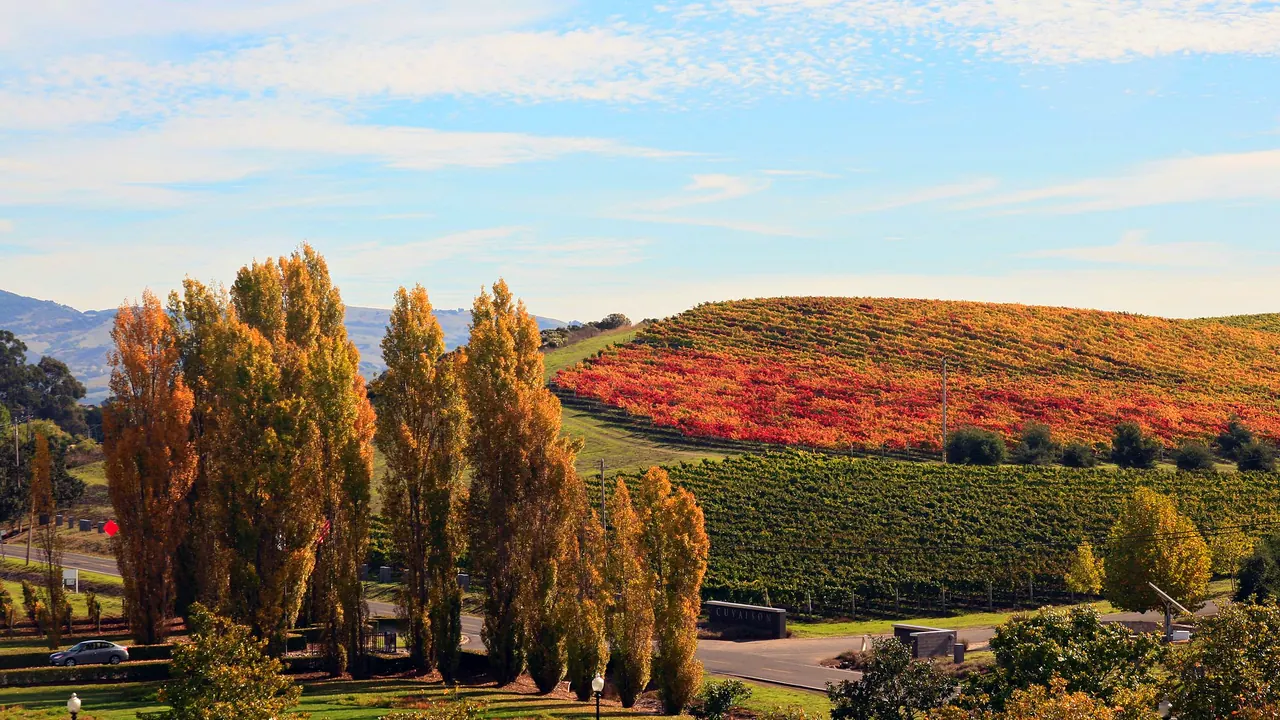
Autumn in the Napa Valley, poplars above red vineyards
- Food & drink80
- Day trips78
- Wellness & relaxation70
Photo: Brocken Inaglory, CC BY-SA 3.0, cropped
Match
39
Every category weighted equally
- Beach & sun39
- Culture & arts38
- Food & nightlife38
- Family trip37
- Outdoors46
- Relax & unwind45
- Shopping & style40
- On a budget36
Napa in twelve categories
Our verdict on each, scored 0 to 100 against the same fixed benchmark cities, so a score means the same thing on every page.
Beaches & swimming. Scores 8 out of 100.
Food & drink. Scores 80 out of 100.
Culture & sights. Scores 20 out of 100.
Nightlife. Scores 15 out of 100.
Nature & outdoors. Scores 62 out of 100.
Day trips. Scores 78 out of 100.
Good for families. Scores 30 out of 100.
Getting around. Scores 22 out of 100.
Shopping & style. Scores 38 out of 100.
Affordability. Scores 12 out of 100.
Live music & performing arts. Scores 28 out of 100.
Wellness & relaxation. Scores 70 out of 100.
Napa category by category
Beaches & swimming
8Napa is a valley town with no beach life. The nearest coast is the Sonoma shore around Bodega Bay, more than an hour's drive away, where the Pacific stays cold and rough and people go to look rather than swim. In summer some locals drive out to Lake Berryessa, a large reservoir in the eastern hills, to swim and boat. Otherwise swimming here means a hotel or resort pool, and many visitors come in the hot months mainly for those.
Food & drink
80Food here grows out of the wine, and the wine is the reason most people come. Tasting rooms line Highway 29 and the Silverado Trail, from grand estates to small family cellars in the side valleys, with Cabernet Sauvignon the signature and Carneros in the south known for Pinot Noir and sparkling wine. Within a short drive, Yountville and St Helena hold a run of serious restaurants, several of them among the most celebrated in the country, built on produce from the farms and kitchen gardens around them.
In Napa town itself, the Oxbow Public Market collects bakers, oyster counters, cheese and charcuterie under one roof, and the riverfront and downtown have wine bars and farm-to-table bistros. The gap is at the cheap end: there is good Mexican food from the taquerias that serve vineyard workers, but little street food and not much variety beyond Californian cooking and its neighbours.
Culture & sights
20Napa is not a sightseeing town. Downtown keeps a handful of Victorian and early twentieth century buildings along First Street and the river, including the restored Napa Valley Opera House of 1880, and the old residential streets have some handsome period houses. The di Rosa centre in Carneros shows Northern California contemporary art across a large estate. Up the valley, the nineteenth century stone winery buildings and the old main streets of St Helena and Calistoga add some character, but a visitor looking for museums and landmarks will run out within a day.
Nightlife
15Evenings in Napa revolve around a long dinner and perhaps a glass at a downtown wine bar afterwards. There are a few cocktail bars and pubs along the riverfront and First Street, busier on summer weekends, but the town is quiet by late evening and there is no club scene to speak of. The rest of the valley goes to bed even earlier. Anyone wanting a real night out goes into San Francisco, about an hour away.
Nature & outdoors
62The landscape is the valley itself: a long, narrow floor of vineyards between the Mayacamas range to the west and the Vaca hills to the east, golden and dry in summer, green after the winter rains, and bright with mustard flowers between the vines in early spring. Hot-air balloons lift off at dawn above it, and the flat valley floor suits cycling, with a paved trail running through much of it.
For walking, Skyline Wilderness Park sits on the edge of town, Bothe-Napa Valley State Park has redwood groves up the valley, and the climb of Mount St Helena gives wide views over the region. The Napa River can be paddled near town. Muir Woods, the Marin Headlands and Point Reyes are within reach on a longer day. Summer afternoons are hot, so outdoor plans start early.
Day trips
78Napa sits at the meeting point of two wine regions and a great city. The small towns up the valley, Yountville, St Helena and Calistoga, are each a short drive, and Sonoma, with its plaza and mission, is about half an hour over the Carneros hills. Further into Sonoma County, Healdsburg and the Russian River and Dry Creek valleys make a different wine day out in about an hour.
San Francisco is about an hour away by car, or by ferry from nearby Vallejo, and Berkeley, Sausalito and the Marin towns are on the way. Sacramento, with its old town and the state capitol, is a little over an hour east. What the list lacks is much old heritage: the oldest places within reach are the Spanish missions and Gold Rush era towns.
Good for families
30Napa is built around wine tasting and long dinners, so it is mainly a place for adults, and tasting rooms are not much fun for children even where they are allowed. Families can manage: there is a theme and animal park in Vallejo about twenty minutes south, a geyser and small petting farm near Calistoga, parks along the river and pools at many hotels. The town is safe and calm, but long drives between wineries and the heat of summer make it hard going with younger children.
Getting around
22Downtown Napa is compact and easy to walk, with the riverfront, the market hall and most restaurants close together. Beyond it, the valley's wineries and towns are spread over some 50km of road, and local buses are too infrequent to plan a day of tastings around. Most visitors drive, and because a tasting day and driving do not mix, many hire a driver or join a tour. Cycling on the valley trail works for short stretches, and the main road becomes slow on summer weekends.
Shopping & style
38Shopping in Napa mostly means buying wine, and many visitors leave with cases shipped home from the cellars they tasted at. Beyond that, the Oxbow Public Market sells food gifts, olive oil and kitchenware, downtown has a modest run of boutiques and homeware shops, and St Helena's main street is lined with gift, design and cookware stores. An outlet mall at the edge of town covers the familiar brands. There is little fashion or luxury beyond resort boutiques, and no real markets or crafts tradition.
Affordability
12Napa is one of the most expensive places to stay in the United States. Resort and boutique hotel rooms are priced for luxury travel, especially on weekends and at harvest, tastings at the well-known estates are costly, and the celebrated restaurants are aimed at special occasions. A driver or tour for a tasting day adds a lot. Visitors on a tighter budget stay in chain hotels further south, eat at taquerias and the market hall, and pick smaller cellars, but even then this is not a cheap trip.
Live music & performing arts
28For a town of its size, Napa has a little more to attend than expected. The Napa Valley Opera House downtown stages concerts, comedy and small productions, and a restored 1930s Art Deco theatre nearby hosts touring bands and singers. In summer a classical music festival takes over winery and resort venues across the valley, and a large rock and pop festival fills the fairgrounds each late spring. The rest of the year the programme is thin, and serious theatre, opera or orchestras mean an evening in San Francisco.
Wellness & relaxation
70Wellness is a natural fit for the valley. At its northern end, about forty minutes from Napa, Calistoga has been a hot spring town since the nineteenth century, and its volcanic mud baths, mineral pools and soaking tubs remain the classic way to end a day of tastings. Closer to town, the resorts in Carneros and the hills nearly all have large spas, often using grape seed and vineyard products in their treatments.
The pace helps too. A typical day here is unhurried by design: late breakfasts, a few tastings, a long lunch on a terrace and a quiet evening. Summer weekends bring traffic and crowds to the main road, so weekdays and the quieter months from late autumn to spring feel most restful.
When should you go?
Pick a month to see what it is like. The climate figures are measured averages, not a forecast.
Napa in July
Daytime high, °C
Rainfall in the month, mm
The whole year
Shaded against this city’s own year: the deepest cell is its best month for that figure and the palest its weakest.
Where the figures come from
Napa has no rain gauge within 25 km of the centre, so its rainfall comes from a gridded climate dataset read at the city rather than from a gauge further away.
Napa's sunshine is measured 73 km from the centre, at Sacramento Executive Airport.
Temperature and rainfall are climate normals, averaged over the years shown. Napa: 1991-2020 (sunshine 1981-2010) normals, Napa / Middleton (9.8 km from centre).
Before you go
| Measure | Napa |
|---|---|
| Currency | US Dollar (USD) |
| Sockets | AB120 V, 60 Hz |
| Driving side | Right |
| Time zone | UTC-8, UTC-7 in summer |
| Emergency number | 911 |
| Elevation | 6 m |
| Main airport | San Francisco International Airport (SFO)76 km from centre143 non-stop destinations |
| Public holidays this year | 13 days |
By the numbers
| Measure | Napa |
|---|---|
| City population | 79,246 |
| People per km² | 1,686 |
| Museums within 10 km | 3 |
| UNESCO World Heritage sites within 50 km | 0 |
| Swim season, months above 21 °C | None |
Compare Napa with
Every comparison with a written verdict behind it.
- Alta, Utah
- Deer Valley
- Flagstaff
- Huntington Beach
- Laguna Beach
- Las Vegas
- Los Angeles
- Monterey
- Newport Beach
- Palm Desert
- Palm Springs
- Park City
- Phoenix
- Portland
- Salt Lake City
- San Diego
- San Francisco
- San Jose
- Santa Barbara
- Santa Monica
- Scottsdale
- Seattle
- Sedona
- Snowbird