Photos: Napa by Brocken Inaglory, CC BY-SA 3.0, cropped; Santa Monica by Domenico Convertini, CC BY-SA 2.0, cropped.
Napa or Santa Monica?
Our verdict in twelve categories, each scored against the same fixed benchmark cities, and the climate month by month, so you can choose for your trip.
Choose Napa for
- wellness
- food and drink
- day trips
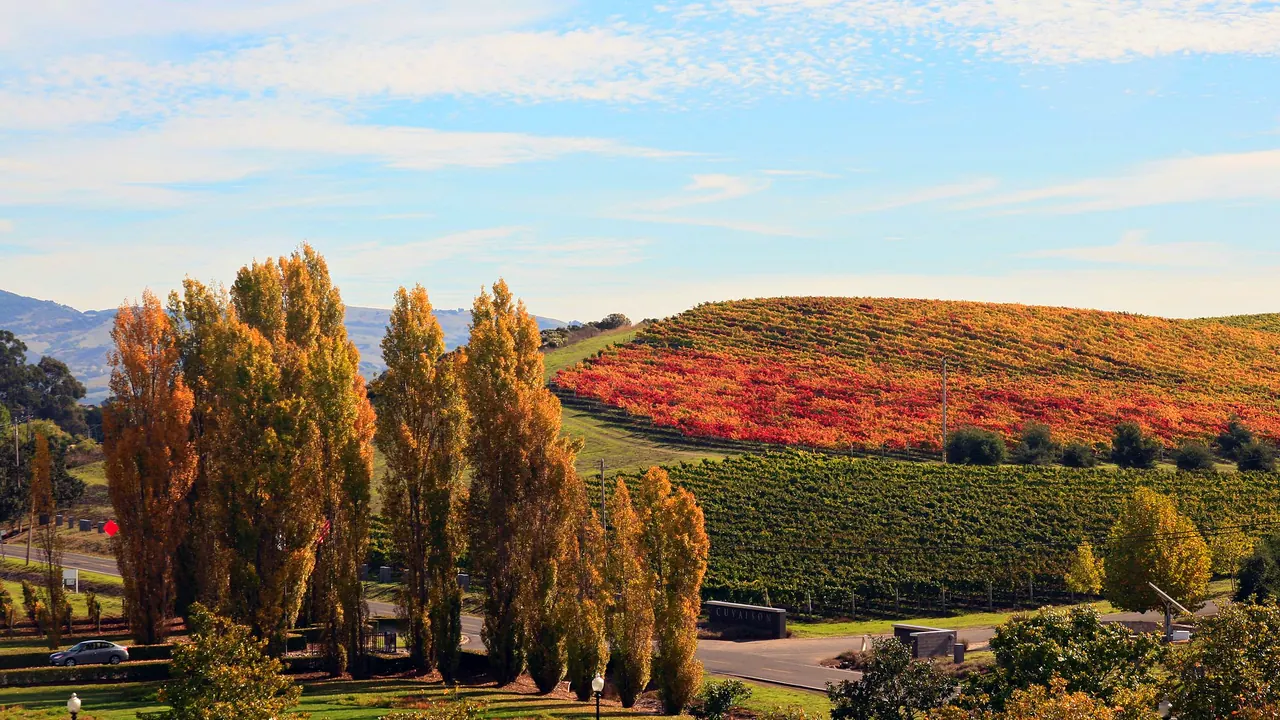
Napa is the choice for a trip built around wine, food and slowing down. The tasting rooms of Highway 29 and the Silverado Trail, the celebrated kitchens of Yountville and St Helena and the mud baths of Calistoga make it an escape for adults. Sonoma and San Francisco are close enough for a change of scene. Plan on a driver rather than wandering on foot, and expect quiet evenings.
Choose Santa Monica for
- beaches
- families
- getting around
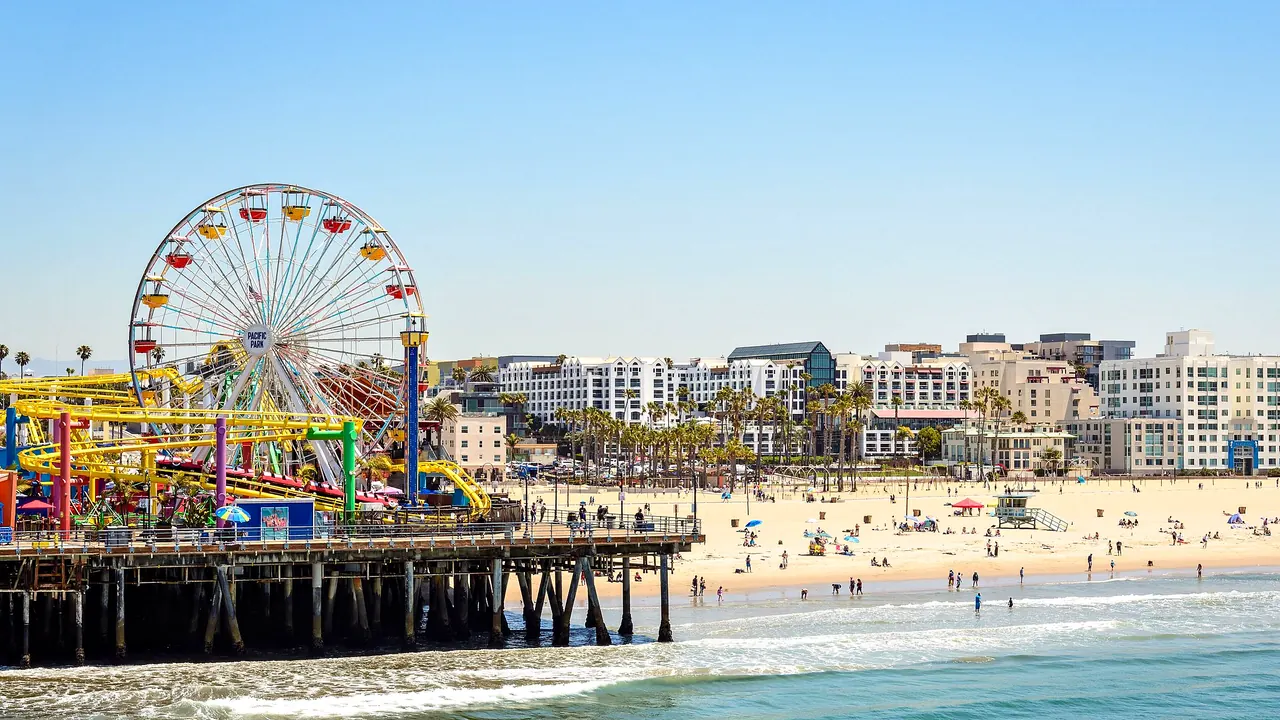
Travellers who want the ocean, an easy base for children and a bit more going on after dark will be happier in Santa Monica. Its wide lifeguarded sand, the pier, the mountain trails behind the town and a walkable centre with buses and light rail make every day easy and varied, and the two Getty museums are close by. Neither town is cheap, but here the beach and the trails cost nothing.
Scoreboard
Twelve categories on one fixed scale from 0 to 100. The shaded stretch is the gap between the two.
Your match
Pick a travel style or drag the sliders, and both match scores follow your weighting.
Wins on wellness and food and drink with your weighting.
Wins on beaches and families with your weighting.
What matters to you?
Category by category
What the scores mean for a trip.
Beaches & swimming
This is the widest gap between the two. Napa is inland and its coast is more than an hour away, too cold and rough for swimming, so summer swimming means a resort pool or the reservoir at Lake Berryessa.
Santa Monica is built around its beach: broad pale sand, lifeguard towers and the pier, with quieter, more scenic coves towards Zuma and Point Dume. The water is cool, though, and many people paddle rather than swim.
Food & drink
Napa is the stronger place to eat, because its food comes with the wine. In one day you can taste Cabernet at estates on the Silverado Trail and Pinot and sparkling wine in Carneros, then have dinner at one of the nationally famous tables in Yountville or St Helena. The Oxbow Public Market covers simpler meals.
Santa Monica eats well rather than memorably. The Wednesday farmers market supplies good seasonal Californian kitchens, seafood and brunch, but there is no wine country on the doorstep. Both share the same gap at the cheap end. In Napa that means the taquerias, and from Santa Monica it means a long drive east for the taco trucks of Los Angeles.
Culture & sights
Neither is a sightseeing destination, but Santa Monica gives a culture-minded visitor more. It has the pier with its carousel and Route 66 sign and the galleries at Bergamot Station. Above all, it has the Getty Center and the Getty Villa a short drive away, and both hold serious collections.
Napa's interest lies in its period buildings: the 1880 Opera House on First Street, old stone wineries and the main streets of St Helena and Calistoga, with contemporary art at di Rosa. A day covers it.
Nightlife
Santa Monica has more of an evening out, though neither town has clubs. Rooftop bars over the ocean around the Third Street Promenade, pubs on Main Street and the more relaxed bars of Venice keep things going until a reasonable hour.
In Napa, a night out means a long dinner and a glass at a downtown wine bar, and the valley is asleep soon after. Anyone after a late night has to travel, to San Francisco from Napa and to Hollywood from Santa Monica.
Nature & outdoors
Both have fine landscapes, but Santa Monica is the better base for getting outdoors. The Santa Monica Mountains start right behind the town, with trails in Topanga and Temescal Canyon. The beach path runs about 35km along the sand, and surf lessons and winter whale-watching add the sea.
Napa's outdoors is more about scenery than activity: dawn balloon flights over the vineyards, a cycle trail along the flat valley floor, redwoods in Bothe-Napa Valley State Park and the climb up Mount St Helena. Hot summer afternoons push walks into the early morning.
Day trips
Napa has the better range of trips within easy reach. Yountville, St Helena, Calistoga and Sonoma are each a short drive, Healdsburg and the Russian River valley make a second wine region, and San Francisco is about an hour away by car or by ferry from Vallejo.
Santa Monica's options are varied but further away. Santa Barbara and Laguna Beach are about two hours' drive, Catalina is reached by ferry, and Pasadena and Hollywood are across Los Angeles. Traffic decides how far you get.
Good for families
In Napa a child's day mostly follows the adults' plans: time in the car between cellars, waiting while the grown-ups taste, then an afternoon in the hotel pool. Anything aimed at children has to be sought out as a separate outing, such as the geyser at Calistoga or the animal park down the road in Vallejo. The valley is peaceful and safe, but children come along as guests rather than as the point of the trip.
Santa Monica turns that around. A family can spend a whole day on foot from the hotel, with sandcastles by a lifeguard tower in the morning and the Ferris wheel over the water in the afternoon, and nobody needs to sit in a car seat. The mild winters suit school breaks at any time of year, which Napa's cold, wet months do not. Only the big theme parks across Los Angeles call for a long drive.
Getting around
Santa Monica is easier without a car. Its centre, the pier and Main Street are walkable, blue buses cover the town and the E Line light rail reaches downtown Los Angeles. The Getty and Malibu still need a car or ride-hailing.
Napa's compact downtown is easy on foot, but the wineries are spread along some 50km of road and the buses run too rarely to rely on. Since tasting and driving do not mix, most visitors hire a driver or join a tour.
Shopping & style
Santa Monica has more to browse. There are chains on the Third Street Promenade, boutiques on Montana Avenue, surf shops on Main Street and design stores on Abbot Kinney in Venice, with Rodeo Drive nearby for luxury labels.
In Napa, the main purchase is wine, often shipped home by the case. Beyond that there are food gifts at the Oxbow Public Market, cookware and gift shops in St Helena and an outlet mall, but fashion barely features.
Affordability
Both are expensive, and the difference lies in where the money goes. In Napa it goes on luxury resorts, estate tastings, special-occasion restaurants and a driver for the tasting day. You can save by staying in chain hotels further south, eating at taquerias and choosing smaller cellars.
In Santa Monica the big costs are oceanfront hotels, high restaurant bills and parking. On the other hand, the beach, the pier, the trails and the bike path are free and public transport is cheap, so an ordinary day out costs less than a day of tastings.
Live music & performing arts
Santa Monica has a little more on its own stages and far more within reach. The Broad Stage puts on chamber music, dance and theatre, there is a long-running folk and acoustic scene, and the pier has free summer concerts. The Hollywood Bowl and Walt Disney Concert Hall are worth the long drive.
Napa's programme centres on the 1880 Opera House and an Art Deco theatre for touring acts. It also has a summer classical festival in winery venues and a large spring rock and pop festival at the fairgrounds. Outside those, a good evening means the trip to San Francisco.
Wellness & relaxation
Napa is the more restful stay. People have come to Calistoga's hot springs since the nineteenth century, and its mud baths and mineral pools sit alongside large resort spas that use vineyard products. Days in the valley are slow by design.
Wellness in Santa Monica is more active: yoga on the sand, runs along the ocean, juice bars and day spas, with sunset over the bay to end the day. It has no springs or bathing culture to match Calistoga.
When should you go?
Pick your month. The climate figures are measured averages, not a forecast.
Napa in July
Santa Monica in July
Daytime high, °C
Rainfall in the month, mm
Where the figures come from
Napa has no rain gauge within 25 km of the centre, so its rainfall comes from a gridded climate dataset read at the city rather than from a gauge further away.
Napa's sunshine is measured 73 km from the centre, at Sacramento Executive Airport.
Temperature and rainfall are climate normals, averaged over the years shown. Napa: 1991-2020 (sunshine 1981-2010) normals, Napa / Middleton (9.8 km from centre). Santa Monica: 1991-2020 normals, Los Angeles Airport (13.4 km from centre).
Napa has two clear seasons. From June to September the valley is dry and sunny, with highs around 26°C and almost no rain, which suits tastings in the morning and the pool in the afternoon. Rain sets in from November and is heaviest in midwinter, at about 138mm a month. Days are cool then and the hills turn green. Spring is mild and good for walking, and the ocean off the nearby coast stays cold all year.
Santa Monica changes far less over the year. Highs sit around 19°C in winter and reach 25°C in late summer, so walking is comfortable in any month, and its winter rain is roughly half of Napa's. The sea is best for swimming from July to September, when it reaches about 20°C.
Which traveller are you?
For a beach and sun trip, Santa Monica wins easily. A wide band of lifeguarded sand is on the doorstep and Malibu's coves are up the road. Napa has no beach at all, so swimming means a hotel pool or a drive to Lake Berryessa.
On a family trip with children, Santa Monica is far easier. The pier's rides and aquarium, the playgrounds along the beach and a flat bike path keep days simple. Napa's tasting rooms, long drives between wineries and summer heat are hard going for young children.
On a relaxing and wellness trip, Napa is the better pick. Calistoga's volcanic mud baths and mineral pools, the large resort spas and an unhurried rhythm of tastings and long lunches give more rest than Santa Monica's yoga classes and day spas, which have no bathing tradition behind them.
Before you go
| Measure | Napa | Santa Monica |
|---|---|---|
| Currency | US Dollar (USD) | US Dollar (USD) |
| Sockets | AB120 V, 60 Hz | AB120 V, 60 Hz |
| Driving side | Right | Right |
| Time zone | UTC-8, UTC-7 in summer | UTC-8, UTC-7 in summer |
| Emergency number | 911 | 911 |
| Elevation | 6 m | 32 m |
| Main airport | San Francisco International Airport (SFO)76 km from centre143 non-stop destinations | Los Angeles International Airport (LAX)11 km from centre177 non-stop destinations |
| Public holidays this year | 13 days | 13 days |
By the numbers
| Measure | Napa | Santa Monica |
|---|---|---|
| City population | 79,246 | 93,076 |
| People per km² | 1,686 | 4,270 |
| Museums within 10 km | 3 | 19 |
| UNESCO World Heritage sites within 50 km | 0 | 1 |
| Swim season, months above 21 °C | None | None |
Where else could you go?
Every comparison below shares a destination with this one, so you can follow Napa or Santa Monica somewhere new.
- Los Angelesvs Santa Monica
- Huntington Beachvs Santa Monica
- San Franciscovs Napa
- Newport Beachvs Santa Monica
- Laguna Beachvs Santa Monica
- San Josevs Napa