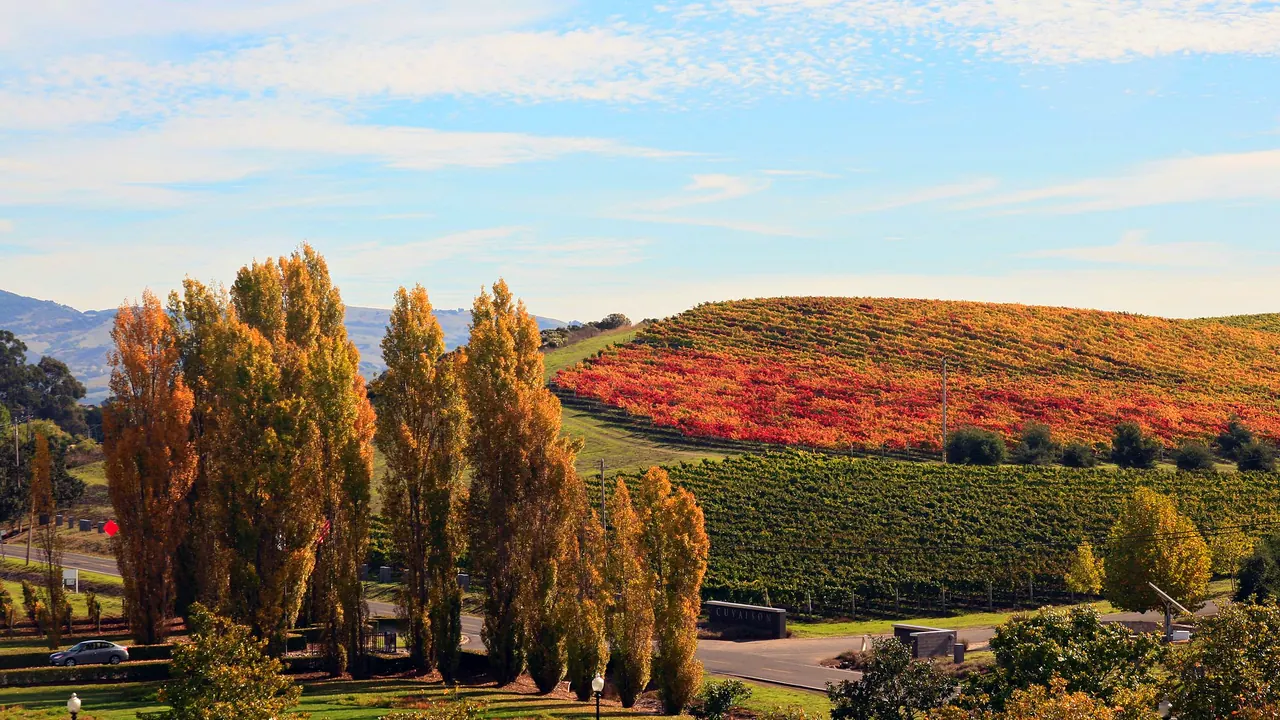
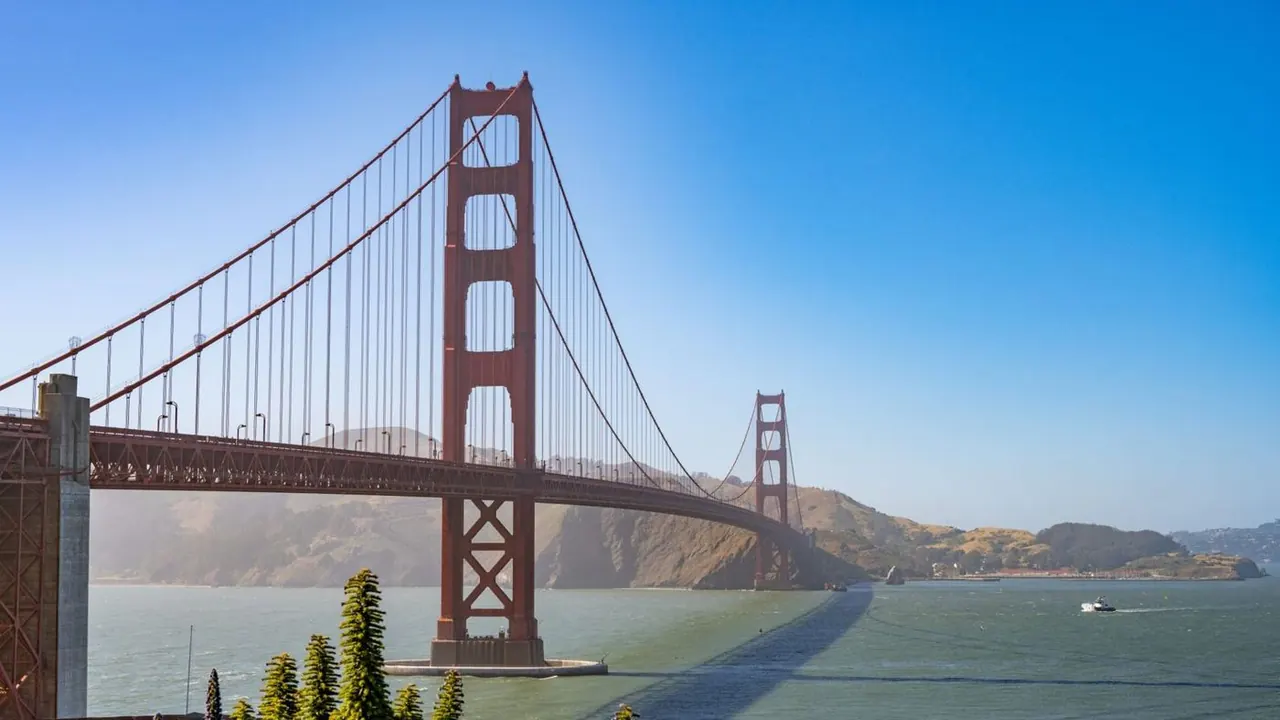
Photos: Napa by Brocken Inaglory, CC BY-SA 3.0, cropped; San Francisco by Elijah Cobb, Pexels License.
Napa or San Francisco?
Our verdict in twelve categories, each scored against the same fixed benchmark cities, and the climate month by month, so you can choose for your trip.
Choose Napa for
- wellness
- day trips
Napa suits couples and groups of friends whose trip is really about wine: days of tastings along Highway 29 and the Silverado Trail, long lunches in Yountville or St Helena, and an afternoon soaking in the mud baths and mineral pools of Calistoga. It is a slow place built for adults. It works best with a driver booked, and it asks you to do little more than eat, drink and rest well.
Choose San Francisco for
- culture and sights
- getting around
- live music and the arts
Anyone who wants a proper city should pick San Francisco. It has the Golden Gate Bridge and Alcatraz, strong art museums, opera, ballet and a full symphony season at the Civic Center, bars from the Mission to the Castro, and cliff walks at Lands End, and you can reach all of it without a car. Children have far more to do here, and wine country remains an easy day out.
Scoreboard
Twelve categories on one fixed scale from 0 to 100. The shaded stretch is the gap between the two.
Your match
Pick a travel style or drag the sliders, and both match scores follow your weighting.
Wins on wellness and day trips with your weighting.
Wins on culture and sights and getting around with your weighting.
What matters to you?
Category by category
What the scores mean for a trip.
Beaches & swimming
Neither city offers swimming in the sea, but San Francisco at least has a real shoreline within the city. You can walk the length of Ocean Beach, watch the sunset from Baker Beach below the bridge, or see the wetsuited swimmers at Aquatic Park. The water is cold and the rip currents keep you on the sand.
Napa has no coast at all. Bodega Bay is more than an hour's drive away, so swimming here means a resort pool or a summer trip out to Lake Berryessa. Because Napa's summers are so much hotter, that pool gets far more use than one in foggy San Francisco.
Food & drink
Both are excellent places to eat, and the difference is in kind. Napa's food is built around the wine. You taste Cabernet on the estates and Pinot in Carneros, then eat at the celebrated restaurants of Yountville and St Helena or at the counters of the Oxbow Public Market. Beyond Californian cooking and the taquerias, the range is narrow.
San Francisco is about variety. You can have dim sum in Chinatown and the Richmond, burritos in the Mission, Italian bakeries in North Beach, sourdough, and Dungeness crab in season. The Ferry Building market is a fine morning out, and the same valley wines are on every list.
Culture & sights
Here San Francisco is far ahead. It has world-famous sights, including the Golden Gate Bridge, Alcatraz, the cable cars on Nob Hill and the painted houses of Alamo Square, plus four serious museums and neighbourhoods with their own histories, such as the Mission's murals and the Castro. Seeing the essentials takes several days.
Napa has a few Victorian streets, the 1880 Opera House, the di Rosa art estate in Carneros and some old stone wineries up the valley. That is pleasant for a morning or an afternoon, but it is not a reason to come.
Nightlife
A night in Napa means a long dinner and maybe a glass at a downtown wine bar, and the town is quiet soon after. There are no clubs, and locals who want a big night drive to San Francisco.
San Francisco has dive bars and mezcal bars along Valencia Street, old saloons in North Beach, the well-known gay bars of the Castro and warehouse clubs in SoMa. Cocktails are taken seriously. Bars stop serving at 2am, and the action is spread across several districts rather than one.
Nature & outdoors
Napa's scenery is the valley itself: rows of vines between two ranges of hills, with mustard flowers in early spring and hot-air balloons at dawn. A flat cycling trail runs along the valley floor, there are redwoods at Bothe-Napa Valley State Park, and Mount St Helena is a good climb.
San Francisco has wilder landscapes closer to hand. Lands End, the Presidio and Golden Gate Park are all inside the city, and the Marin Headlands, Muir Woods and Mount Tamalpais are within half an hour across the bridge. For Napa these same places are a long day out. The city also has sailing, kayaking and whale watching on the bay.
Day trips
Each city is the other's best day out, but Napa has a little more within easy reach. Sonoma's plaza and mission are half an hour over the Carneros hills, Healdsburg and the Russian River are about an hour away, and San Francisco itself is an hour by car or by ferry from Vallejo. Sacramento's old town is a short drive further east.
San Francisco's trips lean towards the coast. Ferries cross the bay to Sausalito and Tiburon, and Santa Cruz, Monterey and Carmel are to the south, along with Stanford and Silicon Valley. Wine country is an hour or more north.
Good for families
Families have a much easier time in San Francisco. The Exploratorium can fill a whole day, the California Academy of Sciences has an aquarium, a planetarium and a rainforest under one roof, and Golden Gate Park adds a carousel and paddle boats. The downsides are the steep hills, which are hard with a pushchair, and street poverty on some downtown blocks.
Napa is built for adults, and tasting rooms bore children. A theme and animal park in Vallejo and the geyser near Calistoga help, but long drives and summer heat make it hard going with young children.
Getting around
San Francisco is about 11km across, and buses, streetcars, BART, the cable cars and the bay ferries all take one Clipper card, so a car is more trouble than it is worth. Walking is the main effort, because the hills are steep.
In Napa, downtown is easy on foot, but the wineries are spread along some 50km of road and the buses are too infrequent to rely on. Since tasting and driving do not mix, most visitors hire a driver or join a tour.
Shopping & style
San Francisco is the better place to browse. It has department stores and flagship shops around Union Square, design boutiques in Hayes Valley, bookshops and vintage on Valencia Street, upmarket clothes on Fillmore Street, and Haight-Ashbury's old counterculture.
In Napa, most of the shopping is buying wine, often by the case and shipped home from the cellars you visited. The rest is food gifts at the Oxbow market, cookware and homeware on St Helena's main street, and an outlet mall.
Affordability
Both are among the most expensive places to visit in the country, but the costs pile up differently. In Napa they come from luxury resort rooms, tastings at well-known estates, special-occasion restaurants and paying a driver. You can save by staying further south in a chain hotel, eating at taquerias and the market hall, and picking smaller cellars.
San Francisco's hotels get dearer during big conferences, and tax and tipping add to every meal. It is easier to fill a day cheaply there, though, with the parks, the bridge walk, the coastal trails and museum free days.
Live music & performing arts
San Francisco has a full year of performances. The opera, the country's oldest professional ballet company and the symphony are all at the Civic Center, with serious drama at the American Conservatory Theater. For music there is the SFJAZZ Center, the Fillmore and the free summer concerts in Stern Grove.
Napa does well for a small town, with shows at the restored Opera House and an Art Deco theatre. It also has a summer classical festival held at wineries and a large rock and pop festival each late spring. The rest of the year is thin.
Wellness & relaxation
Napa is the place to unwind. Calistoga's mud baths and mineral pools are about forty minutes up the valley, the resorts in Carneros and the hills have large spas using grape seed treatments, and the whole day moves slowly. Weekdays and the months from late autumn to spring are the most restful.
San Francisco has a Japanese-style bathhouse in Japantown, plenty of day spas and yoga studios, and quiet hours in the Japanese Tea Garden. The centre still feels hectic, and Calistoga is two hours away.
When should you go?
Pick your month. The climate figures are measured averages, not a forecast.
Napa in July
San Francisco in July
Daytime high, °C
Rainfall in the month, mm
Where the figures come from
Napa has no rain gauge within 25 km of the centre, so its rainfall comes from a gridded climate dataset read at the city rather than from a gauge further away.
Napa's sunshine is measured 73 km from the centre, at Sacramento Executive Airport.
Temperature and rainfall are climate normals, averaged over the years shown. Napa: 1991-2020 (sunshine 1981-2010) normals, Napa / Middleton (9.8 km from centre). San Francisco: 1981-2010 normals, Alameda Naval Air Station (9.1 km from centre).
Napa gets properly hot in summer, with afternoons around 26°C from June to September, almost no rain and long sunny days that peak in July. That makes summer good for pools and tastings, but plan walking and cycling for the early morning. San Francisco stays cooler all year. It is warmest in August and September at about 23°C, often with fog in the afternoon, and that mild weather suits walking the hills. Autumn is usually the clearest season there.
Winter days are similarly cool in both, and both get most of their rain then. Napa is wetter, with about 138mm in January and heavy rain from December to February. San Francisco is somewhat drier through the same months. Spring is a good time for either. The rain eases by April, and Napa's valley is green and warming up, while San Francisco stays mild. The Pacific off both stays near 14°C even at its warmest, so neither has a beach season.
Which traveller are you?
On a culture and arts trip, San Francisco is the clear choice. It has SFMOMA, the de Young and the Asian Art Museum, the opera and ballet at the Civic Center, and jazz at SFJAZZ. Napa's museums and landmarks can be seen in a single day.
For a relaxing and wellness trip, choose Napa. Calistoga's volcanic mud baths and mineral pools have drawn visitors since the nineteenth century, the resorts in the hills have large spas, and days are slow by design. San Francisco's centre is busy and driven by work.
On a family trip with children, San Francisco works much better. The Exploratorium, the California Academy of Sciences, the sea lions at Fisherman's Wharf and cable car rides keep children busy. Napa is a valley of tasting rooms, long drives and hot summer afternoons.
Before you go
| Measure | Napa | San Francisco |
|---|---|---|
| Currency | US Dollar (USD) | US Dollar (USD) |
| Sockets | AB120 V, 60 Hz | AB120 V, 60 Hz |
| Driving side | Right | Right |
| Time zone | UTC-8, UTC-7 in summer | UTC-8, UTC-7 in summer |
| Emergency number | 911 | 911 |
| Elevation | 6 m | 16 m |
| Main airport | San Francisco International Airport (SFO)76 km from centre143 non-stop destinations | San Francisco International Airport (SFO)18 km from centre143 non-stop destinations |
| Public holidays this year | 13 days | 13 days |
By the numbers
| Measure | Napa | San Francisco |
|---|---|---|
| City population | 79,246 | 873,965 |
| People per km² | 1,686 | 1,455 |
| Museums within 10 km | 3 | 51 |
| UNESCO World Heritage sites within 50 km | 0 | 0 |
| Swim season, months above 21 °C | None | None |
Where else could you go?
Every comparison below shares a destination with this one, so you can follow Napa or San Francisco somewhere new.
- San Josevs San Francisco
- San Josevs Napa
- Montereyvs San Francisco
- Montereyvs Napa
- Santa Barbaravs San Francisco
- Santa Barbaravs Napa