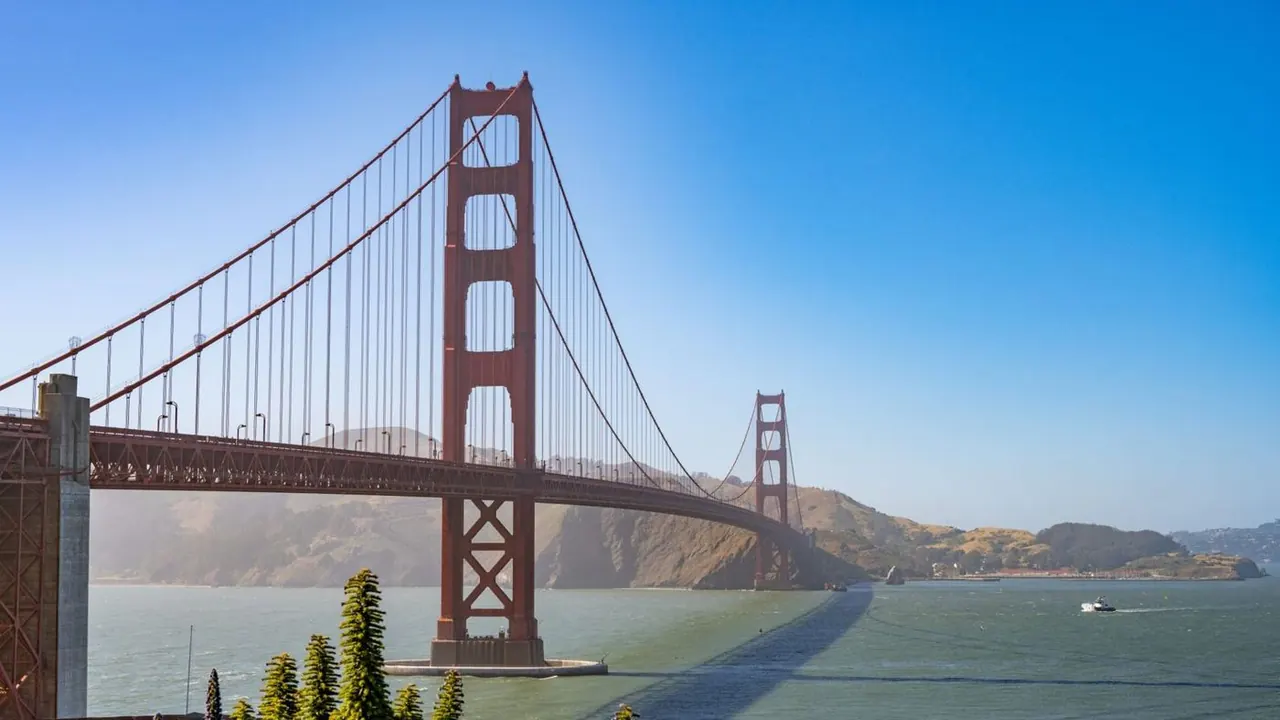
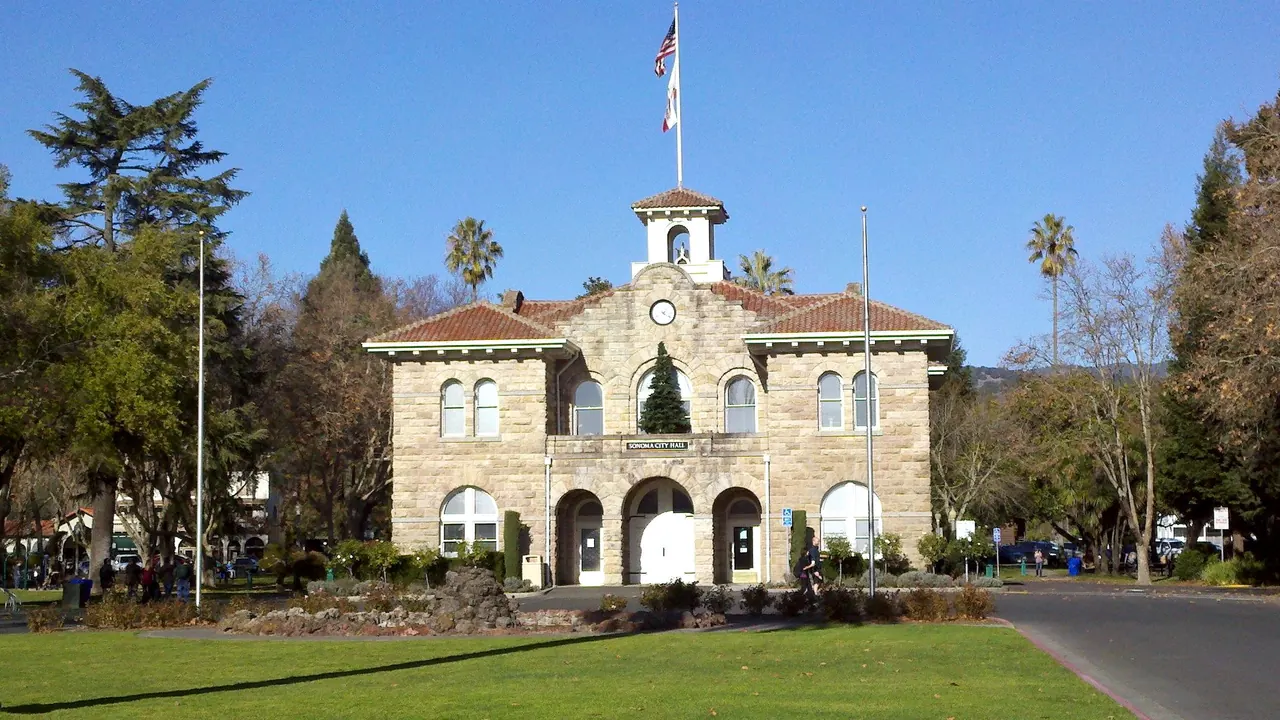
Photos: San Francisco by Elijah Cobb, Pexels License; Sonoma by Cullen328, CC BY-SA 3.0, cropped.
San Francisco or Sonoma?
Our verdict in twelve categories, each scored against the same fixed benchmark cities, and the climate month by month, so you can choose for your trip.
Choose San Francisco for
- nightlife
- live music and the arts
- getting around
San Francisco suits the traveller who wants a whole city around them: the Golden Gate Bridge and Alcatraz, strong museums, opera, ballet and jazz, food from Mission taquerias to tasting menus, and a night out spread across the Mission, the Castro and SoMa. It is also much easier with children, and Muni, BART and the cable cars mean you can do without a car.
Choose Sonoma for
- wellness
For a slow few days among the vines, Sonoma is the better pick. Its plaza, mission and tasting rooms make a quiet base, and the mineral pools at Boyes Hot Springs and long lunches on a terrace set the pace. Evenings end early. It rewards couples who will hire a car or a driver and want rest more than variety, and San Francisco is close enough for a day in town.
Scoreboard
Twelve categories on one fixed scale from 0 to 100. The shaded stretch is the gap between the two.
Your match
Pick a travel style or drag the sliders, and both match scores follow your weighting.
Wins on nightlife and live music and the arts with your weighting.
Wins on wellness with your weighting.
What matters to you?
Category by category
What the scores mean for a trip.
Beaches & swimming
Neither is a place to swim, but San Francisco at least has the shore on its doorstep. Ocean Beach, Baker Beach below the bridge and the small cove at China Beach are fine for sunset walks and bonfires, even though the water is cold and Ocean Beach's currents make it unsafe.
From Sonoma the sea is more than an hour's drive away at Bodega Bay, and it is just as cold and rough there. Swimming here means a summer afternoon on the gravel beaches of the Russian River, where the water warms up, or a hotel pool in the valley heat.
Food & drink
San Francisco has far more range. There is Cantonese food and dim sum in Chinatown and the Richmond, Italian bakeries in North Beach and burritos in the Mission, along with Dungeness crab, sourdough, the Ferry Building market and a top fine-dining scene. You could eat in a different neighbourhood and cuisine every night for a week.
Sonoma is narrower but focused on the wine itself: Pinot Noir from Carneros and Zinfandel from old vines, with seasonal Californian cooking, local cheese and oysters from the coast around the plaza and in Glen Ellen. It is very good at long lunches, but it offers little late eating and few other cuisines.
Culture & sights
San Francisco has the much bigger list of sights. The Golden Gate Bridge, Alcatraz, the cable cars on Nob Hill and the Victorians at Alamo Square are known worldwide, and SFMOMA, the de Young and the Legion of Honor are serious museums. Three or four days cover the essentials.
Sonoma's history is older than much of the city's, which was rebuilt after 1906, but it is small in scale. The plaza where the Bear Flag Revolt broke out in 1846, the last Franciscan mission, the adobe barracks and Vallejo's house fill a pleasant half day. The ruins of Jack London's house in Glen Ellen make a good extra.
Nightlife
San Francisco offers a real night out, though it is spread across districts. There are mezcal and cocktail bars on Valencia Street in the Mission, old saloons in North Beach, busy gay bars in the Castro and warehouse clubs in SoMa, with last orders at 2am. In Sonoma the evening is dinner and perhaps a glass in a wine bar or saloon on the plaza. There are no clubs, and the town is quiet by late evening.
Nature & outdoors
Both have fine country close by, but San Francisco has more of it within easy reach. Inside the city are the cliff trail at Lands End, Golden Gate Park and the Presidio. Across the bridge are the Marin Headlands, the redwoods of Muir Woods and Mount Tamalpais, and there is kayaking and whale watching on top.
Sonoma's landscape is gentler and more rural: vineyards between the Mayacamas and the Sonoma Mountains, trails from the plaza up to the Overlook, and Sugarloaf Ridge a short drive up the valley. Spring wildflowers are lovely, but summer heat and smoke in the fire season can spoil things. In the city, the summer problem is fog.
Day trips
Both make good bases for day trips, and they share the same wine country, approached from opposite ends. From San Francisco, Napa and Sonoma are about an hour north and ferries cross to Sausalito. Berkeley is a short train ride away, and the coast to the south leads to Santa Cruz, Monterey and Carmel.
From Sonoma the big outing is San Francisco itself, about an hour away, and Napa, Healdsburg and the river town of Petaluma are closer still. The catch is that most outings from Sonoma are another wine valley, and nearly all need a car.
Good for families
San Francisco is far easier with children. The Exploratorium and the California Academy of Sciences can each fill a day, and the sea lions at Fisherman's Wharf, the zoo, the cable cars and the paddle boats in Golden Gate Park add plenty more. The steep hills are hard work with a pushchair, though.
Sonoma is calm and safe, but days there revolve around tasting rooms. The playground on the plaza, a miniature railway park and an African wildlife park near Santa Rosa are enough for a day or two. Families usually do better staying in the city and visiting Sonoma for a day.
Getting around
San Francisco is compact, about 11km across, and with Muni, BART, the cable cars and the bay ferries most visitors never need a car. The catch is that some short walks turn into steep climbs.
In Sonoma only the area around the plaza is walkable. The wineries, parks and coast are spread across the valley and the buses are infrequent, so a hire car, a driver or a tour is close to essential. Cycling the flat valley roads works for nearby wineries.
Shopping & style
San Francisco has proper range, from the department stores and flagship stores around Union Square to design boutiques in Hayes Valley, bookshops and vintage on Valencia Street, and Haight-Ashbury's second-hand clothes. Sonoma's plaza and arcades are pleasant for galleries, kitchenware, olive oil and cheese, and above all for wine bought straight from the producer, but there is little fashion. Both send you home with good food to give as gifts, but only San Francisco is worth a whole day of shopping.
Affordability
Both are expensive, and neither suits a tight budget. San Francisco's costs come from hotel rooms and restaurant bills with tax and tips added. Mission taquerias, dim sum in Chinatown, free parks and coastal trails, and reasonably priced transport help keep spending down.
Sonoma's costs are of a different kind: there are few rooms and they are expensive, tasting fees add up over several days, and a car or driver is hard to avoid. Staying in Santa Rosa or Petaluma and picnicking among the vines is the usual way to save.
Live music & performing arts
San Francisco is a serious arts city. The War Memorial Opera House holds the opera and the oldest professional ballet company in the country, the symphony plays at Davies Symphony Hall and the American Conservatory Theater stages serious drama. Jazz has its home at SFJAZZ, and the Fillmore is the place for rock.
Sonoma's performances are mostly seasonal: outdoor shows among the ruins in Jack London's park, concerts at wineries and the 1930s theatre on the plaza. The Green Music Center, half an hour away, brings touring orchestras. Outside summer, visitors to Sonoma drive to the city for a performance.
Wellness & relaxation
Sonoma is the better place to unwind. At Boyes Hot Springs, on the edge of town, natural mineral water feeds a historic resort spa that sells day passes, and Calistoga's mud baths are an hour away. Most of all, the town's slow pace does the work.
San Francisco has a Japanese-style bathhouse in Japantown, day spas, yoga studios and the Japanese Tea Garden. The nearest hot springs, though, mean a two-hour trip to Calistoga, and the rest of the city moves fast.
When should you go?
Pick your month. The climate figures are measured averages, not a forecast.
San Francisco in July
Sonoma in July
Daytime high, °C
Rainfall in the month, mm
Where the figures come from
Sonoma has no rain gauge within 25 km of the centre, so its rainfall comes from a gridded climate dataset read at the city rather than from a gauge further away.
Sonoma's sunshine is measured 87 km from the centre, at Sacramento Executive Airport.
Temperature and rainfall are climate normals, averaged over the years shown. San Francisco: 1981-2010 normals, Alameda Naval Air Station (9.1 km from centre). Sonoma: 1991-2020 (sunshine 1981-2010) normals, Napa / Middleton (17.8 km from centre).
San Francisco never gets properly hot. Highs stay in the low twenties from June to October and peak at 23°C in August and September. That warmth comes with almost no rain, so late summer and early autumn are the best time for walking the hills and crossing the bridge. Rain starts in November and lasts until March, with January the wettest month, but winter days stay mild enough for sightseeing. The sea is cold all year and never goes above 14°C, so the beaches are for walking.
Sonoma has a warmer, sunnier summer, with highs of 26°C from June to September and well over 400 hours of sunshine in June and July. That is good weather for a pool but hard going on the valley floor in the middle of the day. Its winter is much wetter than the city's, close to 170mm in both December and January. The sunny spring weeks of April and May and the dry harvest months of September and October are the best times to go. The coast is an hour away and just as cold as San Francisco's.
Which traveller are you?
For a culture and arts trip, San Francisco wins easily. Alongside famous landmarks it has SFMOMA, the de Young and the Asian Art Museum, plus opera, ballet, a symphony and SFJAZZ in the evenings. Sonoma has a mission, a plaza and summer concerts.
On a food and nightlife trip, San Francisco again, for its range: dim sum in the Richmond, burritos in the Mission and serious fine dining, followed by cocktail bars, the Castro and the SoMa clubs. Sonoma eats beautifully at lunch but is quiet by late evening.
For a relaxing and wellness trip, Sonoma is the calmer choice. It has mineral pools at Boyes Hot Springs and spas in the local inns, and its quiet mornings and silent evenings set an easy pace. San Francisco's centre runs on work and can feel hectic.
Before you go
| Measure | San Francisco | Sonoma |
|---|---|---|
| Currency | US Dollar (USD) | US Dollar (USD) |
| Sockets | AB120 V, 60 Hz | AB120 V, 60 Hz |
| Driving side | Right | Right |
| Time zone | UTC-8, UTC-7 in summer | UTC-8, UTC-7 in summer |
| Emergency number | 911 | 911 |
| Elevation | 16 m | 26 m |
| Main airport | San Francisco International Airport (SFO)18 km from centre143 non-stop destinations | Charles M. Schulz Sonoma County Airport (STS)39 km from centre14 non-stop destinations |
| Public holidays this year | 13 days | 13 days |
By the numbers
| Measure | San Francisco | Sonoma |
|---|---|---|
| City population | 873,965 | 10,739 |
| People per km² | 1,455 | 1,513 |
| Museums within 10 km | 51 | 7 |
| UNESCO World Heritage sites within 50 km | 0 | 0 |
| Swim season, months above 21 °C | None | None |
Where else could you go?
Every comparison below shares a destination with this one, so you can follow San Francisco or Sonoma somewhere new.
- Napavs Sonoma
- Napavs San Francisco
- San Josevs San Francisco
- San Josevs Sonoma
- Montereyvs San Francisco
- Carmel-by-the-Seavs San Francisco