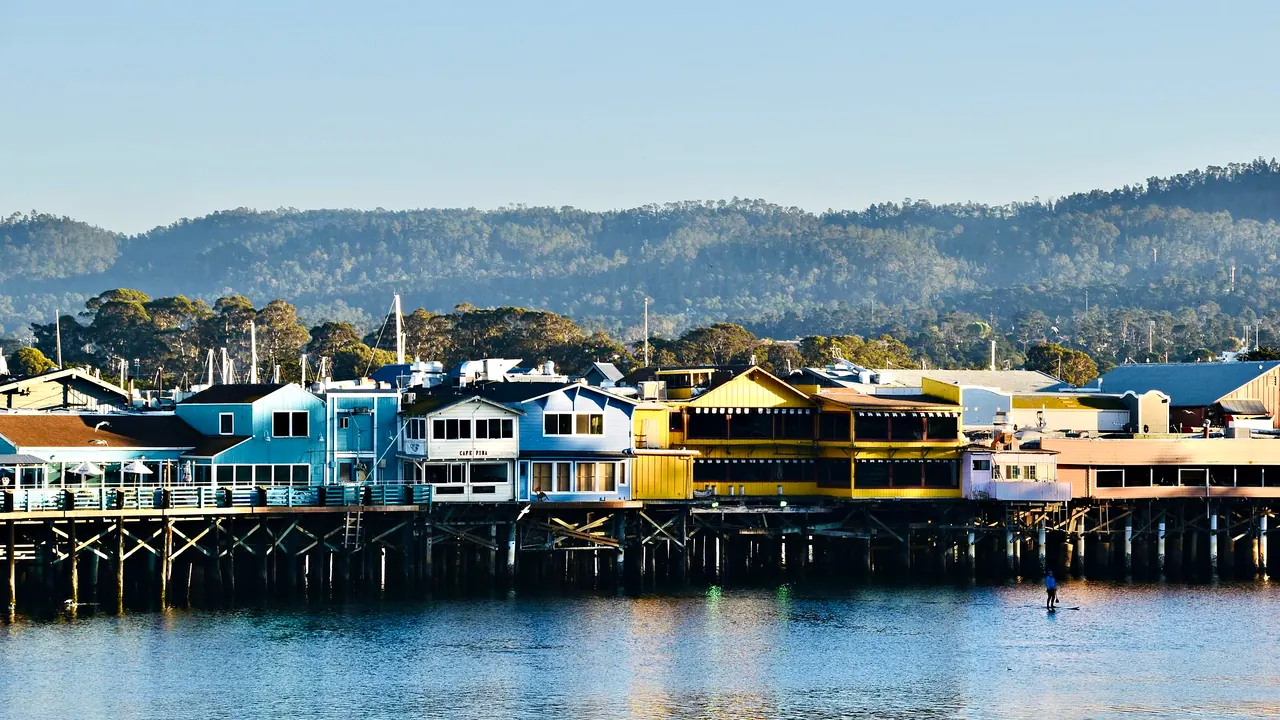
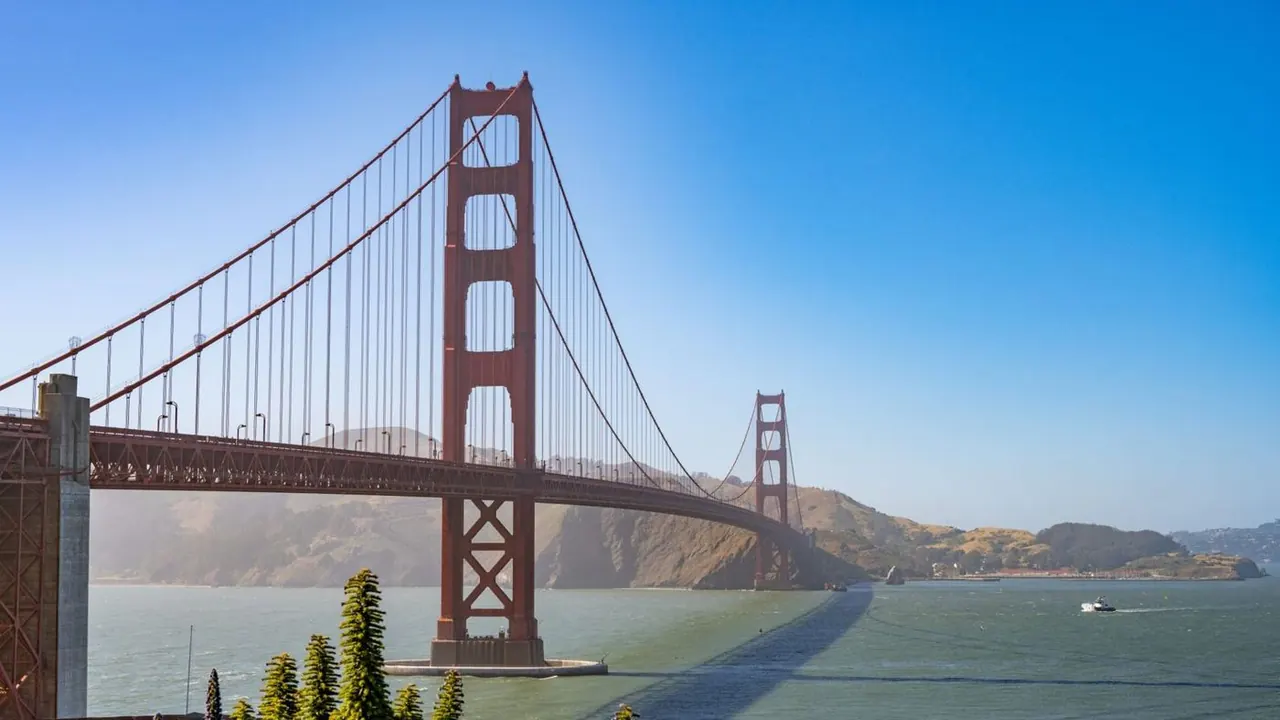
Photos: Monterey by Lesli Whitecotton, Pexels License; San Francisco by Elijah Cobb, Pexels License.
Monterey or San Francisco?
Our verdict in twelve categories, each scored against the same fixed benchmark cities, and the climate month by month, so you can choose for your trip.
Choose Monterey for
- prices
- nature and the outdoors
- beaches
Monterey suits travellers who want the coast itself to be the trip. Otters in the kelp, whale boats leaving from the harbour, the tide pools of Pacific Grove and the road south to Point Lobos and Big Sur make a slow, scenic stay. It works best with a car and with modest hopes for dinner and evenings, and the Monterey Bay Aquarium makes it an easy choice for families.
Choose San Francisco for
- live music and the arts
- food and drink
- nightlife
San Francisco is the better pick for anyone who wants a proper city around the scenery. The food runs from Mission taquerias to fine dining, the opera, ballet and symphony play full seasons, and the bars stay open late. Trams, BART and ferries mean you can do without a car, and Napa, Sonoma and the Marin Headlands are all within a day's reach.
Scoreboard
Twelve categories on one fixed scale from 0 to 100. The shaded stretch is the gap between the two.
Your match
Pick a travel style or drag the sliders, and both match scores follow your weighting.
Wins on prices and nature and the outdoors with your weighting.
Wins on live music and the arts and food and drink with your weighting.
What matters to you?
Category by category
What the scores mean for a trip.
Beaches & swimming
Neither town is for swimming. The water stays cold off both, so the shore is for walking and watching the sea. In Monterey that means the white sand and cypresses of Carmel Beach and the dunes at Asilomar. On a sunny autumn day, families paddle near the wharf and kayakers and divers head out into the calmer bay.
San Francisco's shore is wilder and more urban. Ocean Beach is long, often foggy and dangerous to enter. Baker Beach has the Golden Gate Bridge as its backdrop, and the evening ritual there is a bonfire, not a dip.
Food & drink
San Francisco is one of the country's great places to eat, and Monterey is not in the same league. Across the city you can eat Cantonese food in Chinatown, Italian bakeries in North Beach, Mexican cooking in the Mission and sourdough and cioppino on the waterfront. The Ferry Building farmers' market and top-tier tasting menus round it out.
Monterey's cooking is narrower but rooted in its place. It means squid, sand dabs and Dungeness crab from the bay, vegetables from the Salinas Valley and Pinot Noir from the Santa Lucia Highlands. The catch is finding it: skip the chowder bowls on the wharf and look in Old Monterey, Pacific Grove or Carmel.
Culture & sights
San Francisco gives a sightseer much more to fill the days with. There are landmarks known worldwide, from Alcatraz to the cable cars and the Golden Gate Bridge, and real museums in SFMOMA, the Legion of Honor and the Asian Art Museum. Neighbourhoods such as Chinatown and the Castro carry their own history.
Monterey's history is older but small in scale. It was once the capital of Spanish and Mexican California, and the adobes of the State Historic Park, the Custom House and the Carmel Mission take a morning or two rather than several days.
Nightlife
San Francisco offers a real night out and Monterey mostly does not. The city's evenings are spread across several districts: mezcal and dive bars in the Mission, old saloons in North Beach, the Castro's gay bars and warehouse clubs in SoMa.
In Monterey, an evening means dinner and perhaps a glass in one of the wine bars or brewpubs on Alvarado Street, with the town quiet well before midnight. Anyone wanting a club would have to drive north.
Nature & outdoors
Both sit in superb coastal country, but they show it differently. In Monterey the draw is the sea and its animals. The deep submarine canyon brings whales close to the harbour, sea lions crowd the wharf, and the cycle path to Lovers Point runs beside the kelp. Point Lobos and the redwood canyons of Big Sur are a short drive south.
San Francisco's nature starts inside the city, with Golden Gate Park, the Presidio and the Lands End cliffs. Across the bridge are the Marin Headlands, the old-growth redwoods of Muir Woods and the trails of Mount Tamalpais, all close by. Point Reyes with its elk adds a full day out.
Day trips
San Francisco is the better base for day trips. Napa and Sonoma are about an hour away, ferries run across to Sausalito and Tiburon, Berkeley is a short train ride, and the coast south to Half Moon Bay and Santa Cruz is easy to reach.
Monterey's outings are lovely but few and close by: Carmel's cottages and galleries, Pacific Grove, the Carmel Valley wineries, Steinbeck's Salinas and the mission at San Juan Bautista. San Francisco is technically possible from there, but it deserves its own stay rather than a long return drive.
Good for families
Children are equally well served, each around a different kind of big attraction. Monterey has the Bay Aquarium, with its towering kelp tank, sea otters and jellyfish, and adds tide pools, whale boats and Dennis the Menace Park in a small, safe town where you will still want a car.
San Francisco answers with the Exploratorium and the California Academy of Sciences, plus the zoo and cable car rides. Parents will need more energy there, for steep hills with a pushchair and some downtown streets they may rather avoid on foot.
Getting around
San Francisco can be done entirely without a car. Muni, BART, the F-line streetcars, the cable cars and the bay ferries all run on one card, though the hills make some short walks hard work.
Monterey is the opposite. The flat recreation trail makes the waterfront from Fisherman's Wharf to the aquarium easy on foot or by bike, but buses are sparse. Big Sur, Point Lobos, the 17-Mile Drive and Carmel Valley really need a car.
Shopping & style
San Francisco has proper shopping streets. Union Square has the department stores and flagship brands, while Hayes Valley, Valencia Street, Fillmore Street and Haight-Ashbury cover design boutiques, vintage and bookshops.
Monterey's own shops are mostly sea-otter gifts and saltwater taffy along Cannery Row. For better browsing, head next door to Carmel's galleries and boutiques or Pacific Grove's antique shops.
Affordability
Both are expensive, but Monterey is a little easier on the wallet. Hotels there are dear on summer weekends and during the August classic-car week. Still, chain motels in Seaside and Marina and midweek winter stays offer a way out, and the coastal trail and the tide pools cost nothing.
San Francisco is harder going. Central hotels are costly, especially during conferences, and tax, service charges and tips pile onto restaurant bills. What helps is cheap food in Mission taquerias and Richmond dim sum houses, affordable public transport and museum free days.
Live music & performing arts
Monterey's music comes in bursts, while San Francisco's runs all year. The peninsula has two moments worth timing a trip around. One is the Monterey Jazz Festival, held every September since 1958 on the fairgrounds that also hosted the 1967 Pop Festival. The other is the summer Carmel Bach Festival in local churches and halls. Outside those weeks there is little beyond the Monterey Symphony and touring acts at the Golden State Theatre.
San Francisco gives far more choice on any night of the year. The Opera, the Symphony and San Francisco Ballet, the oldest professional ballet company in the country, all perform at the Civic Center. The American Conservatory Theater stages serious drama, SFJAZZ has its own hall in Hayes Valley, and the Fillmore still carries its psychedelic-era history.
Wellness & relaxation
Neither place has a bathing tradition, and both are equally good for slowing down, in different ways. Monterey's calm comes from the place itself, with foggy mornings on the bay, shoreline walks in Pacific Grove and vineyard resort spas in sunny Carmel Valley.
San Francisco feels more hectic, but it has a long-established Japanese-style communal bathhouse in Japantown. Calistoga's mud baths and mineral pools are reachable in about two hours.
When should you go?
Pick your month. The climate figures are measured averages, not a forecast.
Monterey in July
San Francisco in July
Daytime high, °C
Rainfall in the month, mm
Temperature and rainfall are climate normals, averaged over the years shown. Monterey: 1991-2020 normals, Monterey / Pacific Grove Acres (5 km from centre). San Francisco: 1981-2010 normals, Alameda Naval Air Station (9.1 km from centre).
The two share the same dry summer. Rain all but stops from May to September, and the warmest weather comes late, in September and October, when both reach about 23°C and the light is often at its clearest. That is the best time for walking the cliffs and waterfronts in either place. Neither is ever too hot for sightseeing. Neither has a beach season either, because the Pacific stays cold all year and only touches about 15°C off Monterey in September.
Winter is where they part. Monterey stays milder and a little drier, while San Francisco drops to about 14°C in January and has the heavier rain, with around 105mm that month against 86mm on the peninsula. From November to March, Monterey is the gentler place for walking outside. San Francisco's museums and theatres help it get through the wet months.
Which traveller are you?
On a culture and arts trip, San Francisco is the clear choice. It has big museums such as SFMOMA and the de Young, the opera and ballet at the Civic Center, and jazz and rock halls. Monterey offers lovely adobe history and festival-season music, but not much else.
For a food and nightlife trip, go to San Francisco. Dim sum in the Richmond, burritos in the Mission and serious cocktail bars give you far more range. Monterey's wharf chowder and quiet Alvarado Street pubs are mostly done by midnight.
On an outdoors trip built around wildlife and wild coast, Monterey has the edge in kind. Whales pass close offshore, otters float beside the waterfront trail, there is kelp-forest diving, and Point Lobos and Big Sur are just down the road.
Before you go
| Measure | Monterey | San Francisco |
|---|---|---|
| Currency | US Dollar (USD) | US Dollar (USD) |
| Sockets | AB120 V, 60 Hz | AB120 V, 60 Hz |
| Driving side | Right | Right |
| Time zone | UTC-8, UTC-7 in summer | UTC-8, UTC-7 in summer |
| Emergency number | 911 | 911 |
| Elevation | 8 m | 16 m |
| Main airport | Mineta San Jose International Airport (SJC)85 km from centre38 non-stop destinations | San Francisco International Airport (SFO)18 km from centre143 non-stop destinations |
| Public holidays this year | 13 days | 13 days |
By the numbers
| Measure | Monterey | San Francisco |
|---|---|---|
| City population | 30,218 | 873,965 |
| People per km² | 991 | 1,455 |
| Museums within 10 km | 5 | 51 |
| UNESCO World Heritage sites within 50 km | 0 | 0 |
| Swim season, months above 21 °C | None | None |
Where else could you go?
Every comparison below shares a destination with this one, so you can follow Monterey or San Francisco somewhere new.
- Napavs San Francisco
- San Josevs San Francisco
- San Josevs Monterey
- Napavs Monterey
- Santa Barbaravs Monterey
- Santa Monicavs Monterey