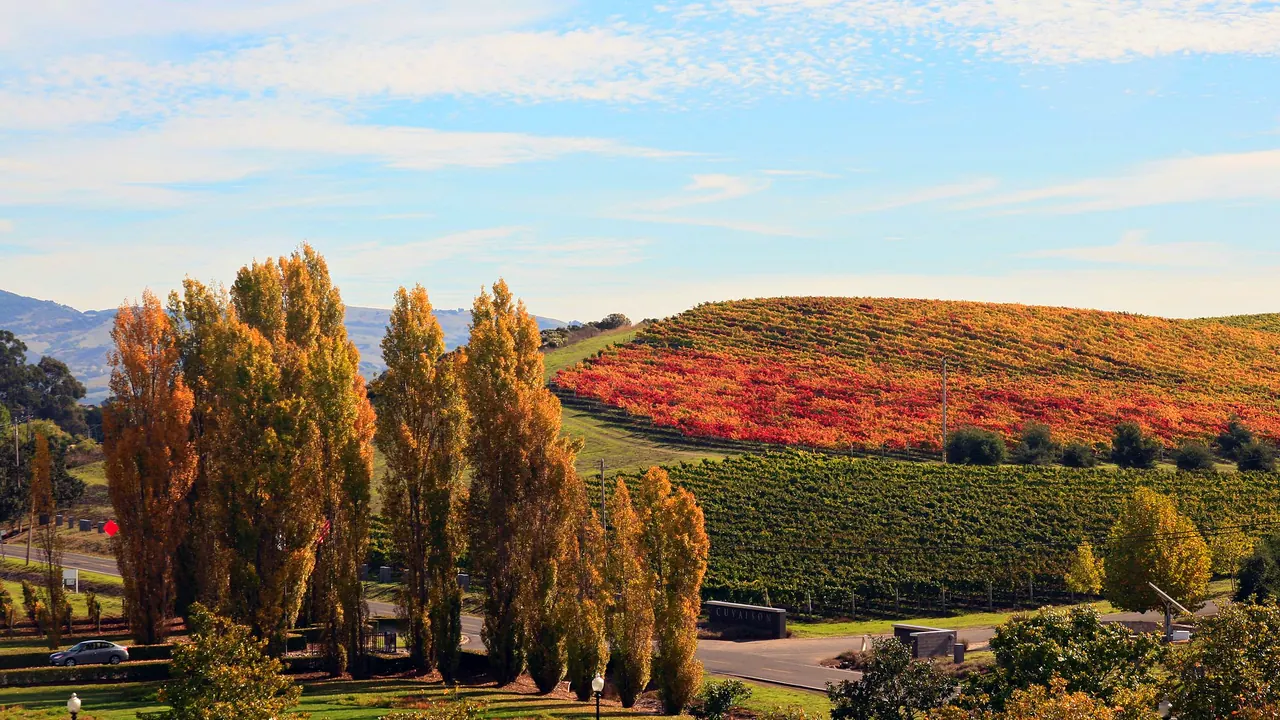
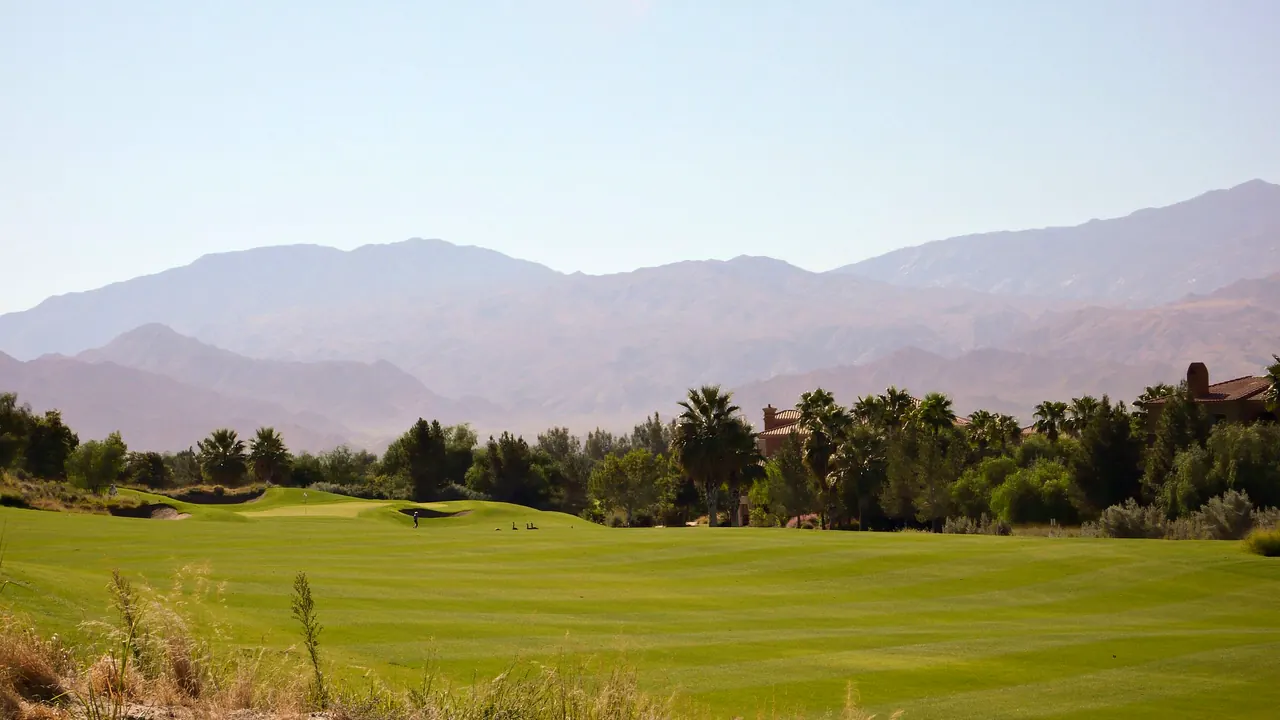
Photos: Napa by Brocken Inaglory, CC BY-SA 3.0, cropped; Palm Desert by David Balmer, CC BY 3.0, cropped.
Napa or Palm Desert?
Our verdict in twelve categories, each scored against the same fixed benchmark cities, and the climate month by month, so you can choose for your trip.
Choose Napa for
- food and drink
- day trips
- getting around
Napa is the choice for a trip built around the table and the glass. The cellars along Highway 29 and the Silverado Trail, the celebrated kitchens of Yountville and St Helena and easy days out to Sonoma, Healdsburg or San Francisco make it ideal for couples and food lovers. It suits people who are happy to spend generously and keep their evenings quiet.
Choose Palm Desert for
- prices
- families
- shopping
Travellers chasing dry winter warmth and open landscape will do better in Palm Desert. The Santa Rosa Mountains start at the edge of town and Joshua Tree is close. The Living Desert, the resort pools and the McCallum Theatre give families and older couples more to do between rounds of golf, and usually for less money than a stay in wine country.
Scoreboard
Twelve categories on one fixed scale from 0 to 100. The shaded stretch is the gap between the two.
Your match
Pick a travel style or drag the sliders, and both match scores follow your weighting.
Too close to call, level with your weighting
Wins on food and drink and day trips with your weighting.
Wins on prices and families with your weighting.
What matters to you?
Category by category
What the scores mean for a trip.
Beaches & swimming
Neither town is a beach destination, and in both the day's swim usually happens in a hotel pool. Napa has one extra option in summer: Lake Berryessa, a reservoir in the eastern hills, for swimming and boating. The cold Sonoma coast is a little over an hour away if you want to watch the surf.
Palm Desert relies even more on its pools, many of them heated through the winter. The Salton Sea is no place to swim, and the nearest Pacific sand is a two-hour drive over the mountains.
Food & drink
Napa wins comfortably. The wine is the reason to come, and the restaurants of Yountville and St Helena, supplied by the valley's farms, are among the most celebrated in the country. For more casual meals there are the Oxbow Public Market and the downtown wine bars.
Palm Desert eats well but predictably. Its resort steakhouses and patio bistros along El Paseo tend to blur together. The real local flavours are further east, in the taquerias of Indio and Coachella and the date shakes sold at the groves.
Culture & sights
Sightseeing is thin in both, and neither will keep a museum lover busy for more than a day or so. What there is differs in kind. Napa has older buildings, with its Victorian First Street, the opera house of 1880 and the stone wineries up the valley, plus contemporary art at di Rosa in Carneros.
Palm Desert was built after the Second World War. It has a branch of the Palm Springs Art Museum with an outdoor sculpture garden, and the mid-century modern houses of Palm Springs are a short drive away, a draw for design fans that Napa has no equivalent of.
Nightlife
Both towns go quiet after dinner, but Palm Desert has slightly more for a late night. Its patio bars around El Paseo close early. The tribal casinos, though, keep their lounges open into the small hours, and Palm Springs, twenty minutes away, has the valley's liveliest bars and a well-known gay scene.
In Napa the evening usually ends with a glass at a downtown wine bar. A proper night out means the hour's drive to San Francisco.
Nature & outdoors
Palm Desert has the more dramatic outdoors. Trails climb straight from town into the Santa Rosa Mountains, fan-palm oases hide in the Indian Canyons and the tramway lifts walkers up to cool pine forest. Joshua Tree's boulders and night skies are an hour away, though all of this is best from October to May.
Napa's landscape is gentler. Its vineyard valley suits dawn balloon flights and flat cycling. There are redwoods at Bothe-Napa Valley State Park and wide views from the climb of Mount St Helena, with Point Reyes or Muir Woods on a longer day.
Day trips
Napa has far more within easy reach. Yountville, St Helena, Calistoga and Sonoma are each a short drive away, and Healdsburg and the Russian River valley about an hour. San Francisco can be reached by car or by ferry from Vallejo, with Sausalito and Berkeley along the way.
From Palm Desert the obvious outing is Palm Springs. After that come odder choices such as Pioneertown, Salvation Mountain or the cooler air of Idyllwild. Temecula's wineries are an hour and a half away, and Los Angeles or San Diego are too far to do justice in a day.
Good for families
Palm Desert is the easier base with children, thanks largely to the Living Desert, a zoo and botanical garden in town with giraffes and cheetahs. Big resorts with slides and lawns fill the time between outings, though summer middays are too hot for small children to be outdoors.
Napa is built for adults, and tasting rooms soon bore children. The geyser and petting farm near Calistoga and the animal park in Vallejo help, but the long drives between stops wear thin.
Getting around
You need a car for both, but Napa is a little easier on foot. Its downtown keeps the riverfront, the market hall and the restaurants close together, and the valley trail suits short bike rides. The catch is that tasting days call for a hired driver or a tour, and Highway 29 slows down on summer weekends.
Palm Desert is a car town of wide boulevards and gated communities, and only a few blocks of El Paseo are pleasant to walk. In return, the roads are clear and parking is easy, with ride-hailing for evenings out.
Shopping & style
Palm Desert is the better place to shop. El Paseo lines up fashion boutiques, jewellers and galleries for a wealthy winter crowd, and a large mall covers the familiar chains. A major designer outlet and the mid-century furniture shops of Palm Springs are both within easy reach.
In Napa the main purchase is wine shipped home from the cellars, along with food gifts from the market hall and cookware from St Helena's main street. There is little fashion beyond the resort boutiques.
Affordability
Napa is the harder place to keep costs down, because the expense sits in the very things people come for. The well-known estates charge for their tastings, the celebrated restaurants are priced as special occasions, and a day in the cellars needs someone else at the wheel. Weekends and the harvest push room rates higher still, so saving money mostly means giving up some of the wine and food that are the point of the trip.
In Palm Desert the money goes on the room rather than on the days. Once you have a bed and a hire car, the mountain trails, the desert views and long hours by the pool cost little, and only golf and spa treatments run up a serious bill. The calendar also matters far more here than in Napa: winter and the big valley events carry the top rates, while the hot months bring them right down.
Live music & performing arts
Palm Desert has the stronger programme. It centres on the McCallum Theatre, which brings touring Broadway shows, ballet, orchestras and well-known singers through the winter, while the casinos and an arena add big concerts. Coachella and Stagecoach in nearby Indio make the spring famous, if you can get tickets and a room.
Napa's offer is smaller: concerts and comedy at the restored opera house, touring bands at an Art Deco theatre, a summer classical festival in winery venues and a rock and pop festival each late spring. For serious opera or theatre, you go to San Francisco.
Wellness & relaxation
Both are made for unwinding, and the main difference is in the water. Napa's classic ritual is a volcanic mud bath and mineral pool at Calistoga, a hot spring town since the nineteenth century. Nearer town there are large vineyard resort spas, and the days follow a slow rhythm of tastings and long lunches.
Palm Desert's equivalent is Desert Hot Springs, where small spa hotels fill their pools straight from natural mineral springs. In town, the resort spas and the dry winter sun do most of the work. Napa feels calmest in its quiet late autumn and spring, Palm Desert in its warm, settled winter.
When should you go?
Pick your month. The climate figures are measured averages, not a forecast.
Napa in July
Palm Desert in July
Daytime high, °C
Rainfall in the month, mm
Where the figures come from
Napa has no rain gauge within 25 km of the centre, so its rainfall comes from a gridded climate dataset read at the city rather than from a gauge further away.
Napa's sunshine is measured 73 km from the centre, at Sacramento Executive Airport.
Palm Desert has no rain gauge within 25 km of the centre, so its rainfall comes from a gridded climate dataset read at the city rather than from a gauge further away.
Temperature and rainfall are climate normals, averaged over the years shown. Napa: 1991-2020 (sunshine 1981-2010) normals, Napa / Middleton (9.8 km from centre). Palm Desert: 2006-2020 (rainfall 1991-2020) normals, Palm Springs (17.2 km from centre).
Napa is at its best from late spring to October, when the valley is dry and days settle around 26°C. That is warm enough for terrace tastings and cycling the valley trail without anything like the desert's summer heat, and the sunshine is long through these months. Winter is the wet season: rain builds from November and peaks at around 138mm in January, when highs sit near 13°C and the vineyards turn green. The nearby Pacific stays cold all year, so the coast is for looking at rather than swimming.
Palm Desert runs the other way. Winter is its high point, with dry, sunny days around 21°C from December to February and almost no rain in any month. Spring and autumn are warm enough for long afternoons by the pool. From June to September highs reach 42°C, too hot for walking or hiking after mid-morning. Put simply, Palm Desert is for October to May and Napa for May to October.
Which traveller are you?
For a food and nightlife trip, Napa is the clear pick for the food: tasting rooms, the Oxbow Public Market and some of the country's most celebrated restaurants. Neither town stays up late, though Palm Desert's casinos and nearby Palm Springs keep bars open longer.
On a family trip with children, Palm Desert works better. The Living Desert zoo fills a morning, the Palm Springs tramway thrills older children and resort pools take care of the afternoons. In Napa, days of tastings and long dinners leave children with little to do.
On a tight budget, Palm Desert is the more forgiving of the two, especially in summer, when resort rates fall sharply. Chain hotels and rentals stay cheaper all year. Napa remains costly even for visitors who stick to taquerias and small cellars.
Before you go
| Measure | Napa | Palm Desert |
|---|---|---|
| Currency | US Dollar (USD) | US Dollar (USD) |
| Sockets | AB120 V, 60 Hz | AB120 V, 60 Hz |
| Driving side | Right | Right |
| Time zone | UTC-8, UTC-7 in summer | UTC-8, UTC-7 in summer |
| Emergency number | 911 | 911 |
| Elevation | 6 m | 67 m |
| Main airport | San Francisco International Airport (SFO)76 km from centre143 non-stop destinations | Palm Springs International Airport (PSP)17 km from centre29 non-stop destinations |
| Public holidays this year | 13 days | 13 days |
By the numbers
| Measure | Napa | Palm Desert |
|---|---|---|
| City population | 79,246 | 51,163 |
| People per km² | 1,686 | 731 |
| Museums within 10 km | 3 | 2 |
| UNESCO World Heritage sites within 50 km | 0 | 0 |
| Swim season, months above 21 °C | None | - |
Where else could you go?
Every comparison below shares a destination with this one, so you can follow Napa or Palm Desert somewhere new.
- Palm Springsvs Palm Desert
- San Franciscovs Napa
- San Josevs Napa
- Laguna Beachvs Palm Desert
- San Diegovs Palm Desert
- Newport Beachvs Palm Desert