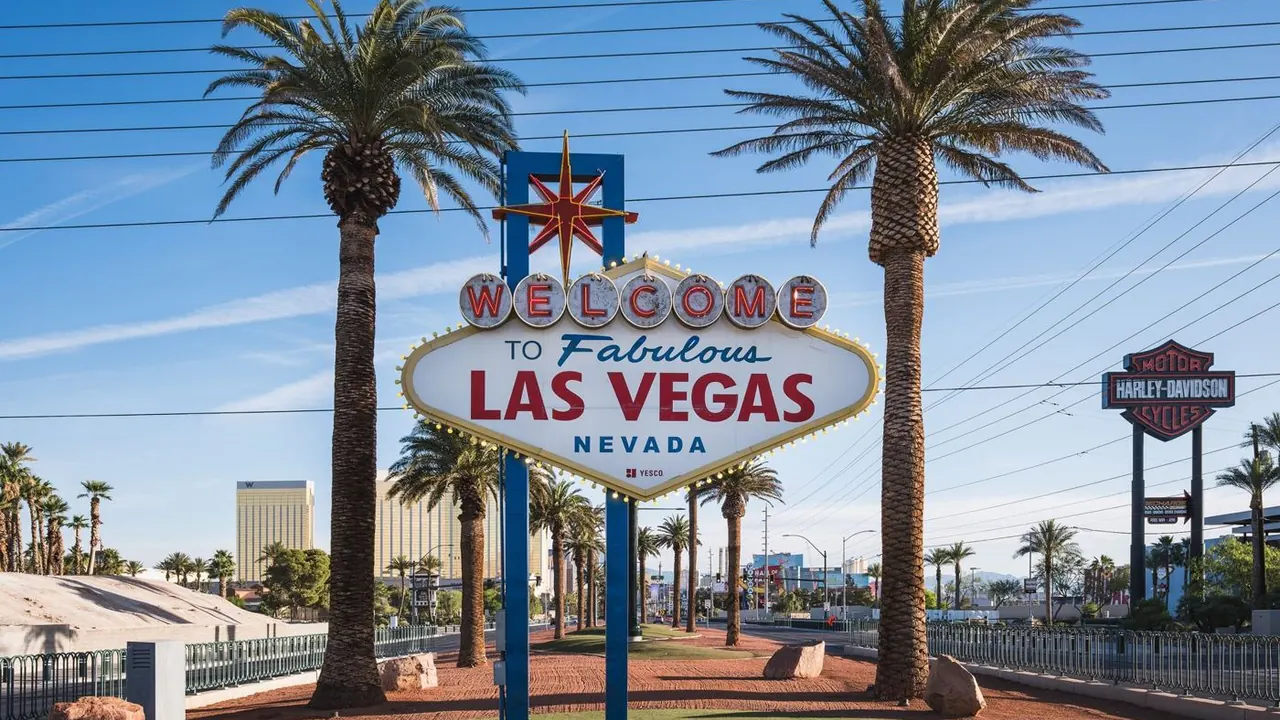
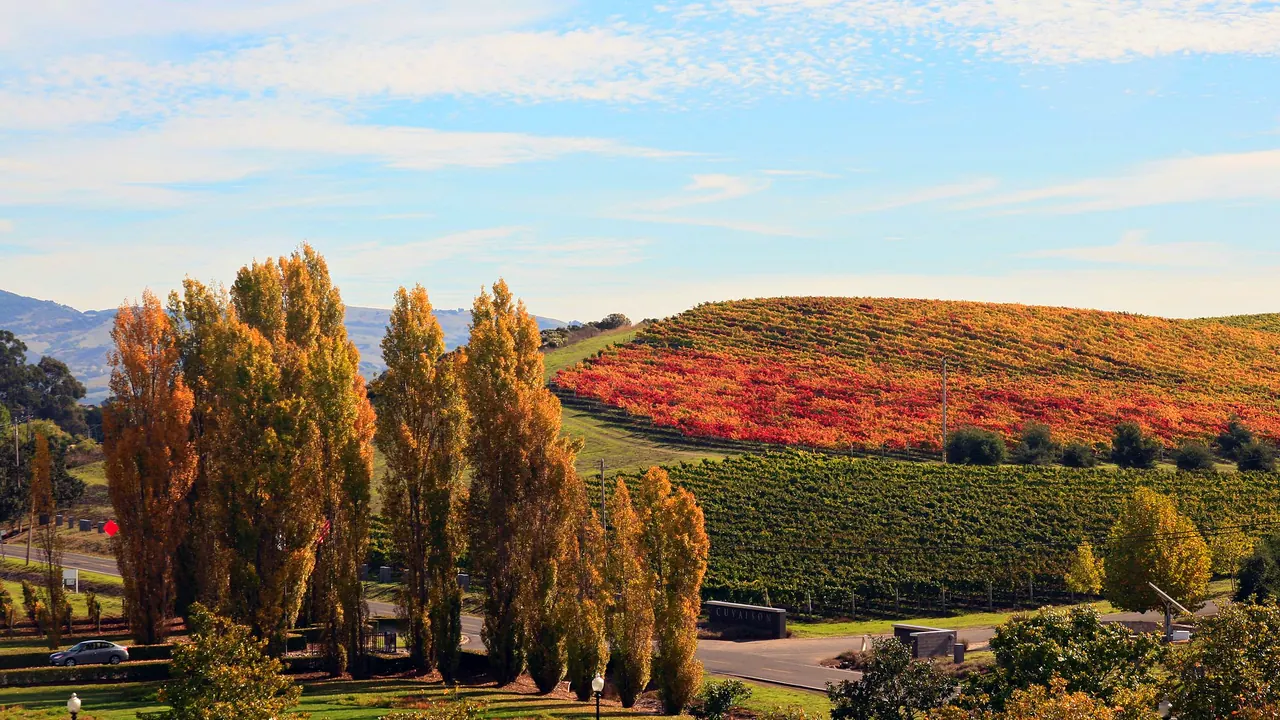
Photos: Las Vegas by Christian David, CC BY-SA 4.0, cropped; Napa by Brocken Inaglory, CC BY-SA 3.0, cropped.
Las Vegas or Napa?
Our verdict in twelve categories, each scored against the same fixed benchmark cities, and the climate month by month, so you can choose for your trip.
Choose Las Vegas for
- nightlife
- live music and the arts
- shopping
Las Vegas is the pick for a group trip built around nights out and shows: casino bars that never close, superstar DJs in the resort clubs, and residencies by stars who rarely tour. It also has more shopping and cheaper midweek rooms. With a car, the red-rock desert of Red Rock Canyon and Valley of Fire is close by.
Choose Napa for
- day trips
- wellness
- food and drink
Choose Napa for a slower, adult trip centred on wine and food. It has tasting rooms the length of the valley, celebrated restaurants in Yountville and St Helena, and the mud baths of Calistoga to end the day. It costs more and goes quiet after dinner, but the outings are far better, with Sonoma, the Sonoma County valleys and San Francisco all within about an hour.
Scoreboard
Twelve categories on one fixed scale from 0 to 100. The shaded stretch is the gap between the two.
Your match
Pick a travel style or drag the sliders, and both match scores follow your weighting.
Wins on nightlife and live music and the arts with your weighting.
Wins on day trips and wellness with your weighting.
What matters to you?
Category by category
What the scores mean for a trip.
Beaches & swimming
Neither city offers a beach. In Las Vegas, swimming means the resort pools, some with sand-lined wave pools and lazy rivers, or a drive to the gravel shore of Lake Mead, where the summer water is warm but the setting is bare desert.
Napa's nearest coast, around Bodega Bay, is cold and rough, so people go there to look rather than swim. In summer the choice is a hotel pool or Lake Berryessa in the eastern hills. Las Vegas has the warmer lake and the more elaborate pools. Napa has the ocean within a drive, though not for swimming.
Food & drink
Napa eats better, and its food comes from the place itself. The wine comes from estates along Highway 29 and the Silverado Trail. Yountville and St Helena have a cluster of nationally celebrated restaurants that cook from the farms and kitchen gardens around them, and the market hall in town adds oysters, cheese and bakeries.
Las Vegas has range rather than roots. The Strip gathers famous chefs' outposts, steakhouses and buffets, while the long Chinatown on Spring Mountain Road is more varied and better value, with Asian kitchens open late. What it cannot match is Napa's sense of eating close to where the food and wine are made.
Culture & sights
Neither is a sightseeing destination, and a visitor will run out of sights in both within a day or so. Las Vegas offers spectacle: themed resorts, the fountains and the Fremont Street light show. Downtown it adds two good museums, the Neon Museum's yard of retired signs and the Mob Museum in the old federal courthouse.
Napa's interest is quieter and lies more in its buildings. It has Victorian streets and the 1880 opera house on First Street, stone wineries up the valley, and contemporary art at the di Rosa estate in Carneros. Las Vegas tells the more vivid story, while Napa has more period architecture.
Nightlife
This is where the two differ most. Las Vegas runs all night, with casino bars that never close, world-famous DJs in the resort clubs and dayclub pool parties. Around Fremont Street and the arts district there is a cheaper, looser scene of dive bars and cocktail lounges.
In Napa an evening means a long dinner and perhaps a glass at a downtown wine bar, and the town is quiet by late evening. For a real night out, people drive the hour to San Francisco.
Nature & outdoors
Both have fine landscapes close by, and the Las Vegas desert is a little more dramatic. Red Rock Canyon, Valley of Fire and Lake Mead offer sandstone cliffs, petroglyphs, climbing and boating within an hour. Mount Charleston adds pine forest and winter skiing, though summer heat limits desert hiking to the early morning.
Napa's outdoors is gentler and greener. There is the vineyard floor for cycling, balloon flights at dawn, redwood groves in Bothe-Napa Valley State Park and the climb up Mount St Helena, with Muir Woods and Point Reyes within reach on a longer day. In both places most of it needs a car.
Day trips
Napa wins clearly here. Yountville, St Helena and Calistoga are short drives away, and Sonoma's plaza and mission are about half an hour over the hills. Healdsburg and the Russian River valley make a second wine region to explore, and San Francisco, Sausalito, Berkeley and Sacramento are all around an hour away.
Las Vegas has one classic outing, Hoover Dam with Boulder City, and beyond that mostly desert. The trips sold to the Grand Canyon, Zion and Death Valley are long days on the road to reach landscapes rather than towns.
Good for families
Neither city is built for children, but for different reasons. Las Vegas has more to fill a day, with an indoor amusement park, a shark aquarium, thrill rides on the observation tower and the Discovery Children's Museum. But the routes through the resorts cross casino floors, and the late-night adult atmosphere is hard to avoid.
Napa is calm and safe, with a theme and animal park in Vallejo and a geyser near Calistoga. Its days, though, revolve around tastings and long drives that children soon tire of.
Getting around
Las Vegas is easier to manage without a car for the main sights. Buses run the Strip and on to downtown day and night, a monorail runs behind the resorts and taxis are everywhere. The giant resorts still make walking slower than it looks, and a car or tour is needed for the desert.
In Napa, the compact downtown is easy to walk, but the wineries are spread along some 50km of valley and the buses are too infrequent to rely on. Because tasting and driving do not mix, many visitors pay for a driver or join a tour.
Shopping & style
Las Vegas has far more choice. Its resort malls hold most of the big fashion and jewellery houses, a large mall adds department stores, and two outlet centres sit north and south of the Strip, all open late.
Napa's shopping is mostly wine, shipped home by the case. Beyond that there are food gifts in the market hall, cookware and design stores on St Helena's main street and a single outlet mall. Neither city has markets or a crafts tradition, but Napa is better for something tied to the place.
Affordability
Neither is cheap, but Las Vegas is easier to do for less. Midweek rooms on and near the Strip can be good value, downtown is cheaper still and Chinatown dinners cost little. Weekends, resort fees, shows and clubs push the spending up fast.
Napa is among the most expensive places to stay in the country. Hotels are priced for luxury, estate tastings are costly, the famous restaurants are aimed at special occasions and a driver adds more. Chain hotels to the south, taquerias and smaller cellars help, but the gap remains.
Live music & performing arts
Live shows are one of the main reasons to visit Las Vegas. Permanent theatres stage acrobatic and water-based productions, with magicians and comedians every night and residencies by stars who seldom tour. The Smith Center downtown adds touring Broadway musicals and the Philharmonic.
Napa's programme is small for most of the year. There are concerts and comedy at the old opera house and bands at a 1930s Art Deco theatre, plus a summer classical festival and a late-spring rock and pop festival. Serious theatre and opera mean an evening in San Francisco.
Wellness & relaxation
Napa is the more restful choice. Calistoga's mud baths and mineral pools have drawn visitors since the nineteenth century, and the resorts have large spas that use grape seed and vineyard products. The unhurried rhythm of tastings and long lunches does the rest.
Las Vegas has some of the largest hotel spas in the country, with thermal circuits and salt rooms open to day visitors. But the casinos around them are noisy and lit all night, so relaxing there takes planning: stay in a non-gaming hotel and book spa time in the morning.
When should you go?
Pick your month. The climate figures are measured averages, not a forecast.
Las Vegas in July
Napa in July
Daytime high, °C
Rainfall in the month, mm
Where the figures come from
Napa has no rain gauge within 25 km of the centre, so its rainfall comes from a gridded climate dataset read at the city rather than from a gauge further away.
Napa's sunshine is measured 73 km from the centre, at Sacramento Executive Airport.
Temperature and rainfall are climate normals, averaged over the years shown. Las Vegas: 1991-2020 (sunshine 1981-2010) normals, McCarran International Airport (8.5 km from centre). Napa: 1991-2020 (sunshine 1981-2010) normals, Napa / Middleton (9.8 km from centre).
Las Vegas is a desert city with almost no rain at any time of year, so heat sets its calendar. From June to September afternoons reach about 40°C. That is too hot for walking the Strip or hiking the canyons except at dawn, and the day moves to the pools. March, April, October and November are the comfortable months for both the streets and the desert. Winter days stay mild and sunny, cool rather than cold.
Napa runs the other way. Its summers are dry and warm rather than scorching, around 26°C from June to September. That long dry season, running into the autumn harvest, is when the valley is at its best. The rain arrives in November and peaks in midwinter at about 138mm a month, which turns the hills green but makes tasting days damp and grey. The nearby Pacific stays around 12°C to 14°C all year, so the coast is for looking at rather than swimming.
Which traveller are you?
On a shopping trip, Las Vegas is the clear choice. You can spend whole days browsing under one roof, out of the summer heat, mixing luxury labels with bargain hunting and slipping back to the hotel in between. In Napa, shopping mostly means buying wine.
On a trip on a tight budget, Las Vegas stretches further if you go on weekdays and skip the clubs and headline shows. Napa leaves little room to economise, because the tastings and dinners that make it worth going are the main expense.
For a relaxing and wellness trip, Napa is the better fit. Las Vegas can give you a good spa morning, but the city is built to keep you awake and spending. In Napa, slowing down is the whole point, and evenings end early and quietly.
Before you go
| Measure | Las Vegas | Napa |
|---|---|---|
| Currency | US Dollar (USD) | US Dollar (USD) |
| Sockets | AB120 V, 60 Hz | AB120 V, 60 Hz |
| Driving side | Right | Right |
| Time zone | UTC-8, UTC-7 in summer | UTC-8, UTC-7 in summer |
| Emergency number | 911 | 911 |
| Elevation | 610 m | 6 m |
| Main airport | Harry Reid International Airport (LAS)4 km from centre160 non-stop destinations | San Francisco International Airport (SFO)76 km from centre143 non-stop destinations |
| Public holidays this year | 11 days | 13 days |
By the numbers
| Measure | Las Vegas | Napa |
|---|---|---|
| City population | 641,903 | 79,246 |
| People per km² | 1,843 | 1,686 |
| Museums within 10 km | 21 | 3 |
| UNESCO World Heritage sites within 50 km | 0 | 0 |
| Swim season, months above 21 °C | - | None |
Where else could you go?
Every comparison below shares a destination with this one, so you can follow Las Vegas or Napa somewhere new.
- San Franciscovs Napa
- San Josevs Napa
- Montereyvs Napa
- Palm Springsvs Las Vegas
- Palm Desertvs Las Vegas
- Flagstaffvs Las Vegas