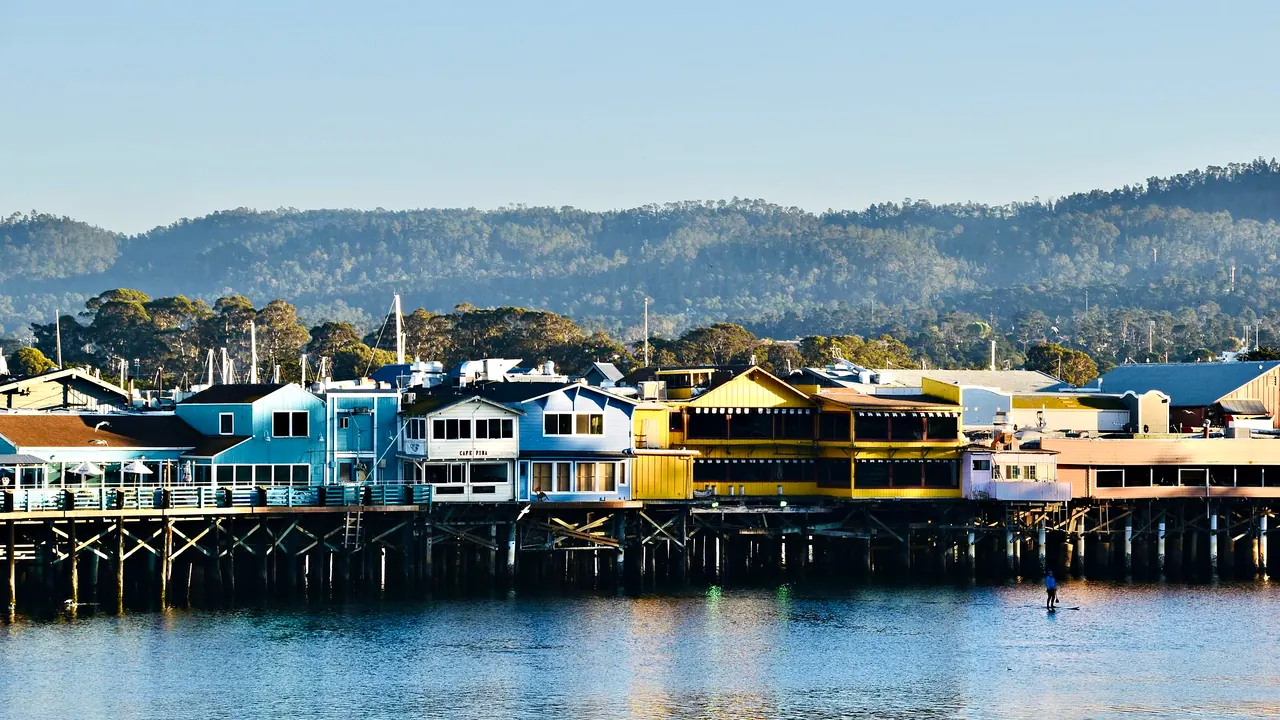
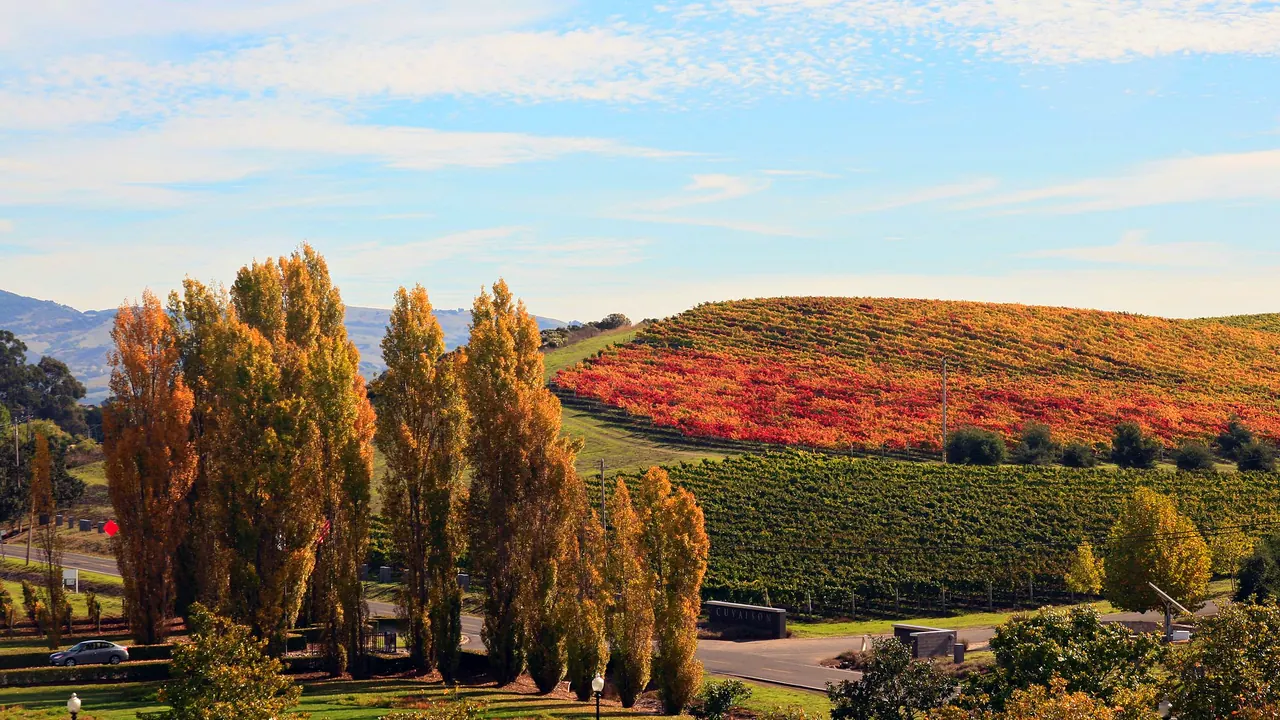
Photos: Monterey by Lesli Whitecotton, Pexels License; Napa by Brocken Inaglory, CC BY-SA 3.0, cropped.
Monterey or Napa?
Our verdict in twelve categories, each scored against the same fixed benchmark cities, and the climate month by month, so you can choose for your trip.
Choose Monterey for
- families
- nature and the outdoors
- culture and sights
Monterey suits travellers who want the coast and its wildlife: whales offshore, otters in the kelp, the aquarium, and Point Lobos and Big Sur within a short drive. It also has more history to walk through, with the adobes of the old Alta California capital and the Carmel Mission. Families and active couples will find more to do here, and the flat waterfront trail makes the town easy without a car.
Choose Napa for
- food and drink
- wellness
- day trips
Napa is the better choice for an unhurried adult trip built around wine, long lunches and a soak at the end of the day. The valley's restaurants and cellars are far ahead of anything on the Monterey peninsula, Calistoga's mud baths and the resort spas make relaxing easy, and Sonoma, Healdsburg and San Francisco are all close enough for a day out. Bring a driver and an appetite, but leave the children with someone else.
Scoreboard
Twelve categories on one fixed scale from 0 to 100. The shaded stretch is the gap between the two.
Your match
Pick a travel style or drag the sliders, and both match scores follow your weighting.
Wins on families and nature and the outdoors with your weighting.
Wins on food and drink and wellness with your weighting.
What matters to you?
Category by category
What the scores mean for a trip.
Beaches & swimming
Neither town suits a beach vacation, but Monterey at least has a shoreline worth visiting. Del Monte Beach, the white sand of Carmel Beach and the Asilomar dunes are fine for walks, picnics and watching the surf, though the cold water and rip currents keep swimming to a brief paddle.
Napa sits inland with no beach at all. The nearest coast is over an hour away at Bodega Bay, so swimming means a hotel pool or a summer drive to Lake Berryessa in the eastern hills.
Food & drink
Napa is one of the country's great places to eat and drink, and Monterey is not in the same league. Cabernet estates line Highway 29 and the Silverado Trail, Carneros adds Pinot Noir and sparkling wine, and Yountville and St Helena have some of the most celebrated restaurants in America. In town, the Oxbow Public Market covers oysters, cheese and bread.
Monterey's strength is its seafood, with local squid, Dungeness crab and sand dabs, plus artichokes and greens from the Salinas Valley. Skip the chowder bowls on the wharf and eat in Old Monterey's side streets or Pacific Grove, with Carmel Valley's tasting rooms nearby for a smaller taste of wine country.
Culture & sights
Monterey has much more history to see. As the capital of Spanish and Mexican Alta California, it keeps a walkable group of adobes, including the Custom House and Colton Hall, along with the Royal Presidio Chapel, the Carmel Mission and the Steinbeck-era canneries of Cannery Row.
Napa offers a morning's worth at most: the 1880 Opera House, some Victorian buildings on First Street, the old stone wineries up the valley and contemporary art at the di Rosa estate in Carneros.
Nightlife
Both places wind down early, but Monterey has slightly more going on. Alvarado Street has pubs and brewpubs filled with students from the language and naval schools, and Cannery Row gets busier on weekends. Napa's evenings are a long dinner and then a wine or cocktail bar near the river.
For a real night out, Napa is better placed, with San Francisco about an hour away. From Monterey the nearest option is Santa Cruz.
Nature & outdoors
Monterey is the stronger choice for nature. The submarine canyon offshore brings humpbacks, grey whales and orcas within reach of harbour boats, sea otters float beside the shore trail, and Point Lobos and Big Sur's cliffs and redwood canyons are close by. Kayaking and kelp diving start right from town.
Napa's landscape is gentler: a valley of vineyards that turns gold in summer and has mustard flowers in spring, with dawn balloon flights and a flat cycling trail. Bothe-Napa Valley's redwoods and the climb up Mount St Helena are good, but the summer heat means setting out early.
Day trips
Napa is the better base for day trips. Sonoma's plaza and mission are half an hour away, Healdsburg and the Russian River valleys make a different wine day, and San Francisco is about an hour by car or by ferry from Vallejo. Sacramento's capitol and old town are also within reach.
From Monterey, the good outings are close by but few: Carmel, Pacific Grove, Steinbeck's Salinas, San Juan Bautista's mission and Santa Cruz's boardwalk. San Francisco is about two hours each way.
Good for families
Monterey is far easier with children. The aquarium alone can fill a day, with its kelp forest, otters and jellyfish, and the tide pools, sea lions at the wharf and Dennis the Menace Park fill the rest.
Napa is built for adults, and tasting rooms soon bore children. A theme park in Vallejo, the geyser and petting farm near Calistoga and hotel pools help, but the hot summers and long drives between stops make it hard work with small children.
Getting around
Monterey is simpler to get around. The flat coastal trail links the wharf, downtown, Cannery Row and the aquarium on foot or by bike, and you only need a car for Carmel Valley, Point Lobos and Big Sur.
Napa's downtown is easy to walk, but the wineries are spread along some 50km of valley road and the buses are sparse. Because tasting and driving don't mix, many visitors end up paying for a driver or a tour.
Shopping & style
Shopping is a side activity in both, and what you buy is different. In Napa it mostly means cases of wine shipped home, plus olive oil and kitchenware from the Oxbow market, cookware and design shops on St Helena's main street and an outlet mall for familiar brands.
Monterey's own streets sell taffy and sea-otter souvenirs, so the better browsing is in Carmel's galleries and independent boutiques and in Pacific Grove's antique shops.
Affordability
Both are expensive, but Monterey is easier on a budget. You can stay in highway motels or in Seaside and Marina, and many of the best things cost nothing: the coastal trail, the tide pools and wildlife watching from shore.
Napa is priced for luxury travel. Hotels, tastings at well-known estates, the famous restaurants and a driver for a tasting day all add up, and even staying further south and eating at taquerias still makes for a costly trip.
Live music & performing arts
Neither has much on through the year, and in both it pays to plan around the festivals. Monterey's are more famous: the Monterey Jazz Festival has run every September since 1958, the 1967 Monterey Pop Festival was held on the same fairgrounds, and the summer Carmel Bach Festival and the open-air Forest Theater under the pines add more.
Napa's offer is more mixed. The Victorian Opera House puts on concerts and comedy, an Art Deco theatre from between the wars hosts touring bands, and summer brings a classical series to winery venues, with a large rock festival on the fairgrounds in late spring.
Wellness & relaxation
Monterey is restful if you like to be out of doors. The air is cool and mild, the shore path runs past Lovers Point and the Asilomar dunes, and there are otters to watch in the kelp, so it suits people who unwind by walking. Pampering takes more effort here. The spas belong to the Pebble Beach golf resorts and the vineyard hotels of Carmel Valley, and the hot springs down the Big Sur coast are retreats you book into, not somewhere to spend an afternoon.
Napa makes rest easier and does more of it. A slow, warm day is the whole point of a visit, the springs at the top of the valley give it a soaking tradition the peninsula lacks, and most resorts can book you a treatment without leaving the grounds. Both get crowded on summer weekends, so in either place a weekday or the quieter months from late autumn to spring are the calmest.
When should you go?
Pick your month. The climate figures are measured averages, not a forecast.
Monterey in July
Napa in July
Daytime high, °C
Rainfall in the month, mm
Where the figures come from
Napa has no rain gauge within 25 km of the centre, so its rainfall comes from a gridded climate dataset read at the city rather than from a gauge further away.
Napa's sunshine is measured 73 km from the centre, at Sacramento Executive Airport.
Temperature and rainfall are climate normals, averaged over the years shown. Monterey: 1991-2020 normals, Monterey / Pacific Grove Acres (5 km from centre). Napa: 1991-2020 (sunshine 1981-2010) normals, Napa / Middleton (9.8 km from centre).
Monterey is mild all year and never truly hot. Early summer often brings fog, and the clearest, warmest weeks come in September and October, when afternoons reach about 23°C. The rain falls mostly from December to March, and the bay never warms past about 15°C, so there is no real swimming season. Any month suits walking, and the dry, bright autumn is the best time to go.
Napa has stronger seasons. Summer days climb to around 26°C with long, cloudless skies, peaking at about 442 hours of sunshine in July, so tastings and walks are best kept to the mornings. Winter is cool and much wetter than on the coast, with up to 138mm of rain a month from December to February. Spring and early autumn are the most comfortable months for the valley, while Monterey stays pleasant through the summer heat that slows Napa down.
Which traveller are you?
On a family trip with children, Monterey is the clear pick. The aquarium, tide pools at Pacific Grove, whale-watching boats and the flat waterfront path keep young visitors busy, while Napa's tasting rooms, long drives and summer heat suit adults far better.
For an outdoors trip, choose Monterey. Kayaking among sea otters, diving in the kelp forest, the cliff paths at Point Lobos and the redwood canyons of Big Sur are a step above Napa's vineyard cycling and valley-edge walks.
On a relaxing and wellness trip, Napa wins. Calistoga's volcanic mud baths and mineral pools have a long tradition, the resorts nearly all have large spas, and the days follow an easy rhythm of tastings and terrace lunches, which Monterey's quiet shoreline can't quite match.
Before you go
| Measure | Monterey | Napa |
|---|---|---|
| Currency | US Dollar (USD) | US Dollar (USD) |
| Sockets | AB120 V, 60 Hz | AB120 V, 60 Hz |
| Driving side | Right | Right |
| Time zone | UTC-8, UTC-7 in summer | UTC-8, UTC-7 in summer |
| Emergency number | 911 | 911 |
| Elevation | 8 m | 6 m |
| Main airport | Mineta San Jose International Airport (SJC)85 km from centre38 non-stop destinations | San Francisco International Airport (SFO)76 km from centre143 non-stop destinations |
| Public holidays this year | 13 days | 13 days |
By the numbers
| Measure | Monterey | Napa |
|---|---|---|
| City population | 30,218 | 79,246 |
| People per km² | 991 | 1,686 |
| Museums within 10 km | 5 | 3 |
| UNESCO World Heritage sites within 50 km | 0 | 0 |
| Swim season, months above 21 °C | None | None |
Where else could you go?
Every comparison below shares a destination with this one, so you can follow Monterey or Napa somewhere new.
- San Franciscovs Napa
- San Josevs Monterey
- San Josevs Napa
- San Franciscovs Monterey
- Santa Barbaravs Monterey
- Santa Monicavs Monterey