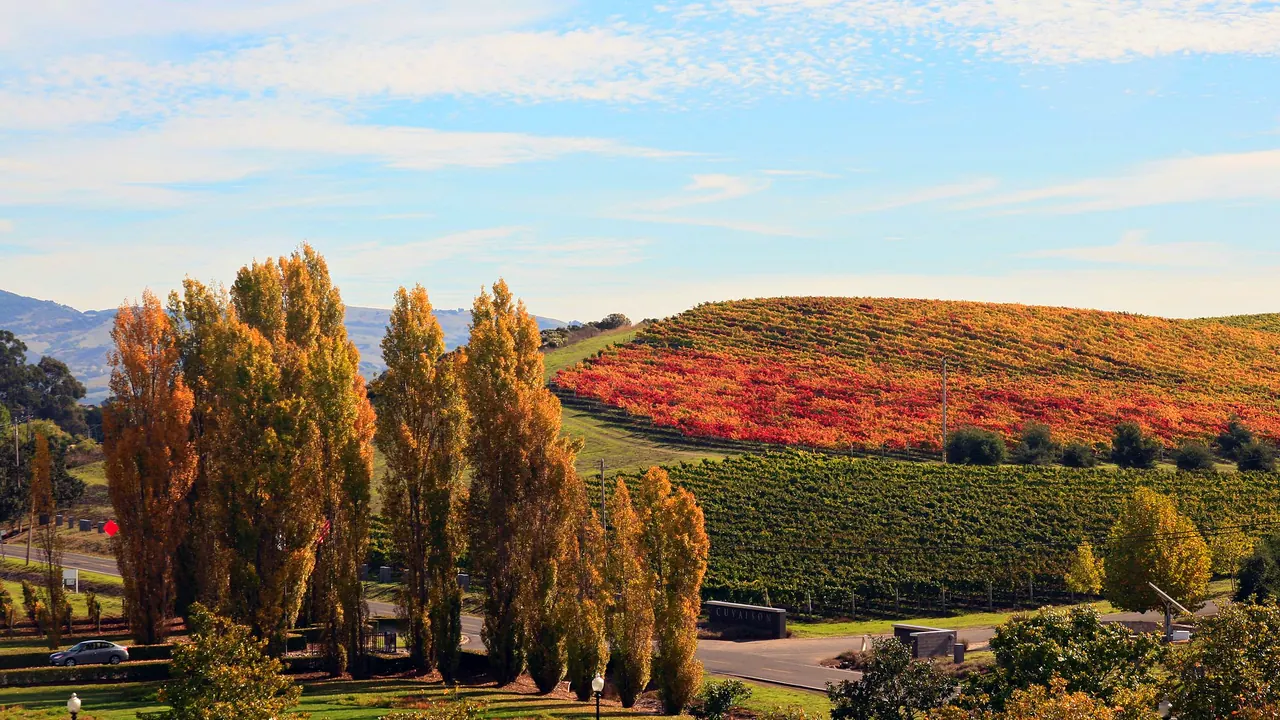
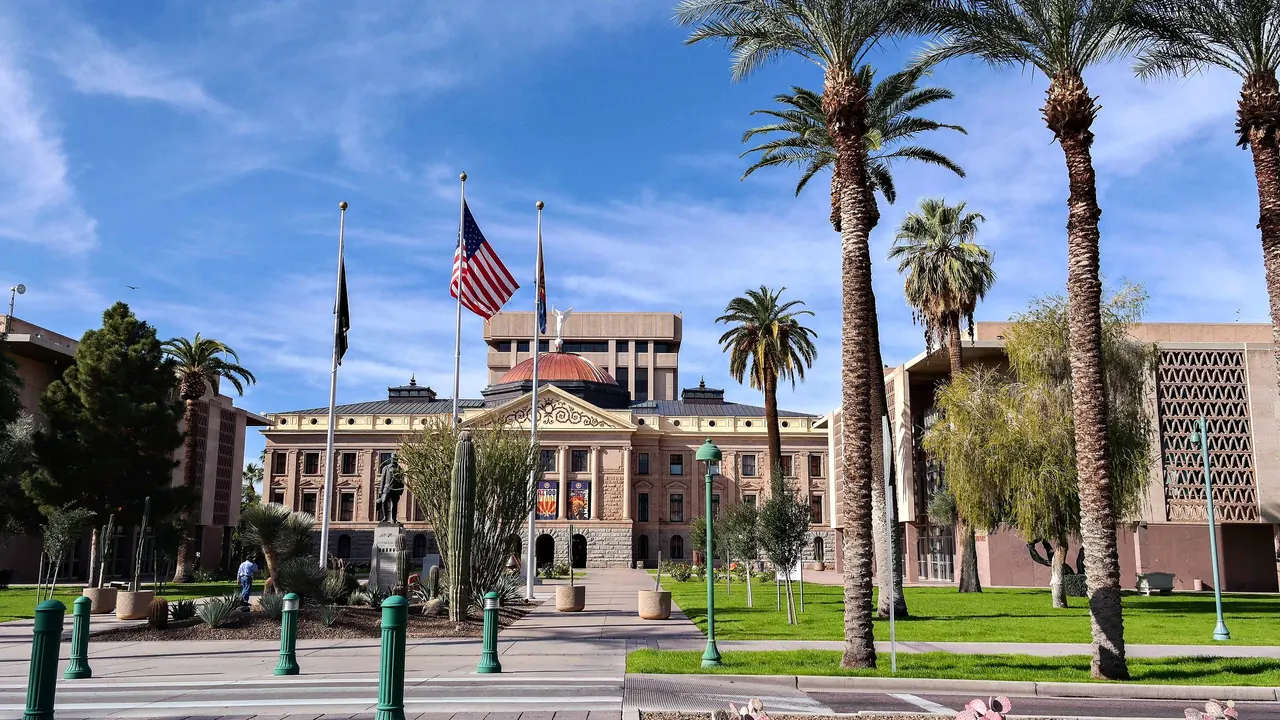
Photos: Napa by Brocken Inaglory, CC BY-SA 3.0, cropped; Phoenix by Visitor7, CC BY-SA 3.0, cropped.
Napa or Phoenix?
Our verdict in twelve categories, each scored against the same fixed benchmark cities, and the climate month by month, so you can choose for your trip.
Choose Napa for
- day trips
- food and drink
- wellness
Napa suits couples and friends whose trip is built around wine and food: days of tastings along the valley's cellar roads, long lunches in Yountville and St Helena, and an evening soak in Calistoga's mud baths. It is quiet and expensive and works best with a driver. It rewards travellers who want to slow down, and San Francisco and Sonoma are close enough for a change of scene.
Choose Phoenix for
- nightlife
- families
- prices
Choose Phoenix for winter sun, desert hiking and a broader trip at a gentler price. Its mountain parks and saguaro trails, plus museums such as the Heard, give you more to do between pool days. Families get zoos, science centres and water parks, and Scottsdale offers a proper night out. Plan around the summer heat and a rental car.
Scoreboard
Twelve categories on one fixed scale from 0 to 100. The shaded stretch is the gap between the two.
Your match
Pick a travel style or drag the sliders, and both match scores follow your weighting.
Wins on day trips and food and drink with your weighting.
Wins on nightlife and families with your weighting.
What matters to you?
Category by category
What the scores mean for a trip.
Beaches & swimming
Neither city offers a beach vacation, and both send swimmers to reservoirs or pools. Napa's lake is Lake Berryessa in the eastern hills, and the nearest coast at Bodega Bay is cold, rough and more than an hour away. Phoenix has Saguaro and Canyon lakes among bare desert cliffs, plus the summer custom of tubing down the Salt River.
The pools differ too. Phoenix resorts build theirs with slides and lazy rivers for the hot months, while Napa's are calmer hotel and spa pools.
Food & drink
For food, Napa is clearly ahead, because eating there grows out of the wine. Tasting rooms line Highway 29 and the Silverado Trail, Yountville and St Helena have some of the most celebrated restaurants in the country, and the Oxbow Public Market fills a hall downtown. Cheap eating is its weak point, and that mostly means the taquerias.
In Phoenix the best food is the cheap kind: Sonoran carne asada, paper-thin flour tortillas and bacon-wrapped hot dogs from evening carts, along with good wood-fired pizza. Beyond that the restaurant scene is dependable rather than memorable, and it is spread out enough that a good dinner usually means a drive.
Culture & sights
Phoenix has much more to see, though nearly all of it is inside museums: the Heard Museum's Native American collections, the Musical Instrument Museum and Frank Lloyd Wright's Taliesin West. The Hohokam ruins at Pueblo Grande add older history, but each sight is a separate drive.
Napa offers a pleasant hour or two rather than a full programme. There are the 1880 Opera House and the Victorian fronts on First Street, the di Rosa art estate in Carneros and the stone wineries up the valley. A visitor after landmarks will be done within a day.
Nightlife
Phoenix gives a real choice of nights out. There are the clubs and rooftop bars of Old Town Scottsdale, the student bars on Tempe's Mill Avenue, and craft beer and cocktails around Roosevelt Row. The districts are far apart, so you pick one and take a ride home.
A Napa evening is dinner and perhaps a glass at a downtown wine bar. The town is quiet by late evening and has no clubs, so anyone wanting more goes to San Francisco, an hour away.
Nature & outdoors
The landscape is a draw in both places, but Phoenix's outdoors are wilder and more dramatic. You can scramble up Camelback Mountain and Piestewa Peak, walk through saguaro forest in the McDowell Sonoran Preserve or explore the huge South Mountain park, and Sedona's red rock is two hours north. Its season runs from October to April.
Napa's nature is gentler and farmed: a vineyard valley between two ranges, seen from a dawn balloon or by bike on the valley trail. Bothe-Napa Valley has redwood groves, and the climb up Mount St Helena gives wide views.
Day trips
Napa is much better placed for days out. Yountville, St Helena and Calistoga are minutes up the road, and Sonoma's plaza and mission are about half an hour away. The Russian River and Dry Creek valleys make a different wine day, and San Francisco is an hour away by car or by ferry from Vallejo.
Phoenix's outings are fewer and longer. To the north are Jerome on its hillside, Prescott's saloon street, Montezuma Castle and Sedona, and to the south are Tucson and Mission San Xavier del Bac. The Grand Canyon is too far for a comfortable day.
Good for families
Phoenix is much easier with children, as long as you come between autumn and spring. It has the zoo, the Scottsdale aquarium, the Arizona Science Center, a children's museum, water parks and spring training baseball in March. Expect long drives between them, and summer heat that is risky for young children.
Napa is built for adults, and tasting rooms bore children. The animal park in Vallejo, the geyser near Calistoga and hotel pools can fill a short stay, but not much more.
Getting around
Both cities are hard to see without a car, but in different ways. Napa town is small and easy to walk. The difficulty is the valley: some 50km of wineries, buses too infrequent to plan around, and tastings that do not mix with driving, so many visitors hire a driver or join a tour.
Phoenix is a vast flat grid where even the sights are far apart. The light rail line between the airport, downtown and Tempe helps within that corridor, and roads and parking are easy with a rental car.
Shopping & style
Phoenix has more shopping. Luxury malls in Scottsdale and near the Biltmore carry the main brands, and Old Town Scottsdale adds Western wear and galleries. The real local buy is Native American work: Navajo and Zuni silver and turquoise, Hopi katsina carvings, pottery and rugs, best bought from museum shops and reputable galleries.
In Napa the main purchase is wine shipped home from the cellars. The market hall sells food gifts and kitchenware, and St Helena has cookware and design shops. Beyond an outlet mall, there is little fashion.
Affordability
Phoenix is a noticeably cheaper trip. Outside the busy January to April season, resort rooms drop sharply. Chain hotels by the freeways are good value all year, Sonoran Mexican food is cheap and hiking costs nothing. The rental car is the main extra cost.
Napa is among the most expensive places to stay in the country, and tastings, the celebrated restaurants and a driver for the day all add up. Taquerias, the market hall and chain hotels further south help, but it never becomes a budget trip.
Live music & performing arts
Phoenix has the full set of institutions you would expect in a large city. There are the Phoenix Symphony, Arizona Opera and Ballet Arizona, touring Broadway shows at ASU Gammage (a round hall by Frank Lloyd Wright) and an intimate concert hall at the Musical Instrument Museum. The season runs from autumn to spring.
Napa has its old Opera House and an Art Deco theatre for touring acts. In summer a classical festival plays in winery venues, and a big rock festival comes in late spring. For serious opera or an orchestra you need an evening in San Francisco.
Wellness & relaxation
Napa is the better place to rest. Calistoga's volcanic mud baths and mineral pools, part of a hot spring tradition dating back to the nineteenth century, are something Phoenix has no equivalent of. The valley's whole day is slow by design, from late breakfasts to long lunches.
Phoenix's strength is the large desert resort along Camelback Mountain and in north Scottsdale, with spas using sage, clay and agave and winter sun by the pool. Outside the resorts it is a sprawling car city, with no baths to visit.
When should you go?
Pick your month. The climate figures are measured averages, not a forecast.
Napa in July
Phoenix in July
Daytime high, °C
Rainfall in the month, mm
Where the figures come from
Napa has no rain gauge within 25 km of the centre, so its rainfall comes from a gridded climate dataset read at the city rather than from a gauge further away.
Napa's sunshine is measured 73 km from the centre, at Sacramento Executive Airport.
Temperature and rainfall are climate normals, averaged over the years shown. Napa: 1991-2020 (sunshine 1981-2010) normals, Napa / Middleton (9.8 km from centre). Phoenix: 1991-2020 (sunshine 1981-2010) normals, Phoenix Sky Harbor Airport (2.8 km from centre).
Napa is mild all year. Summer highs sit around 26°C and there is almost no rain from June to September, which makes this the easy season for walking the town and touring the cellars. The rain sets in from November to March, with the wettest months around 138mm in midwinter, though early spring turns the valley green. The nearby Pacific stays cold at about 13°C, so the sea is for looking at, not swimming.
Phoenix runs the other way. Winter brings highs near 20°C and plenty of sunshine, and October to April is the time for trails and sightseeing. From May to September the heat climbs to 41°C, too hot for streets or hikes beyond early morning, and the pool takes over. For a summer trip Napa is the comfortable choice, and in winter Phoenix is.
Which traveller are you?
For a relaxing and wellness trip, Napa is the better choice. Calistoga's mud baths and mineral pools, large spas in Carneros and an unhurried rhythm of tastings and long terrace lunches make rest the point of the stay rather than an extra.
On a family trip with children, Phoenix works far better. Its zoo, aquarium, science centre, water parks and resort pools with slides keep children busy, while Napa's tasting rooms and long drives between wineries are made for adults. Come between autumn and spring.
On a tight budget, Phoenix makes your money go much further. Summer resort rates, chain hotels by the freeways, cheap Sonoran Mexican food and free desert hiking keep costs down. In Napa, the hotels, estate tastings and drivers for tasting days make even a careful trip expensive.
Before you go
| Measure | Napa | Phoenix |
|---|---|---|
| Currency | US Dollar (USD) | US Dollar (USD) |
| Sockets | AB120 V, 60 Hz | AB120 V, 60 Hz |
| Driving side | Right | Right |
| Time zone | UTC-8, UTC-7 in summer | UTC-7 |
| Emergency number | 911 | 911 |
| Elevation | 6 m | 331 m |
| Main airport | San Francisco International Airport (SFO)76 km from centre143 non-stop destinations | Phoenix Sky Harbor International Airport (PHX)6 km from centre149 non-stop destinations |
| Public holidays this year | 13 days | 12 days |
By the numbers
| Measure | Napa | Phoenix |
|---|---|---|
| City population | 79,246 | 1,608,139 |
| People per km² | 1,686 | 1,199 |
| Museums within 10 km | 3 | 10 |
| UNESCO World Heritage sites within 50 km | 0 | 1 |
| Swim season, months above 21 °C | None | - |
Where else could you go?
Every comparison below shares a destination with this one, so you can follow Napa or Phoenix somewhere new.
- Scottsdalevs Phoenix
- San Franciscovs Napa
- San Josevs Napa
- Sedonavs Phoenix
- Tucsonvs Phoenix
- Montereyvs Napa