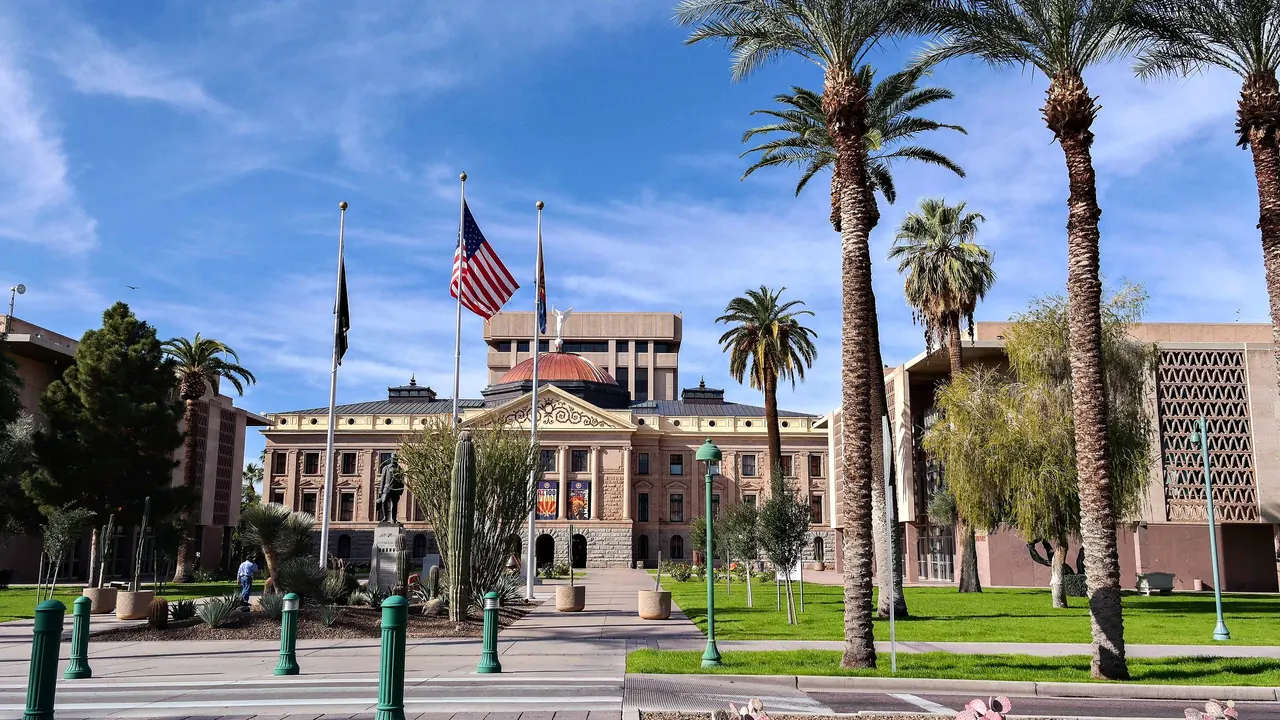
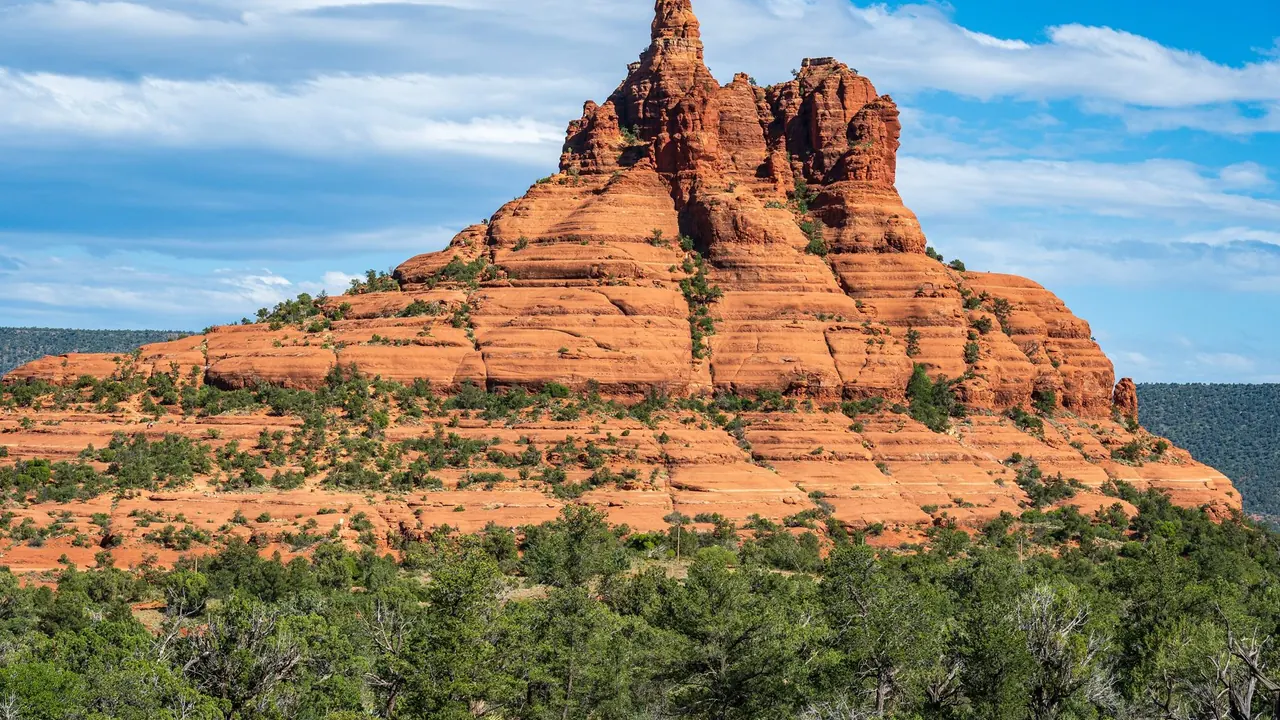
Photos: Phoenix by Visitor7, CC BY-SA 3.0, cropped; Sedona by dconvertini, CC BY-SA 2.0, cropped.
Phoenix or Sedona?
Our verdict in twelve categories, each scored against the same fixed benchmark cities, and the climate month by month, so you can choose for your trip.
Choose Phoenix for
- nightlife
- live music and the arts
- prices
Phoenix suits travellers who want a proper city around their desert scenery. It has Sonoran Mexican kitchens, serious museums such as the Heard, nights out in Old Town Scottsdale or Tempe, and attractions built for children. It is also the cheaper base of the two, which matters on a longer stay. Its rocky mountains make good morning hikes, and a winter week by a resort pool is easy to arrange.
Choose Sedona for
- wellness
- nature and the outdoors
- beaches
Sedona is for people who come for the land itself and want quiet evenings once they're off the trail. The red rock buttes, canyon walks and slickrock riding are far more striking than anything around Phoenix, and the town's retreat culture suits a slow, restorative trip. It pays that back in cost and in what is missing: little to do after dark, few sights indoors and not much aimed at children.
Scoreboard
Twelve categories on one fixed scale from 0 to 100. The shaded stretch is the gap between the two.
Your match
Pick a travel style or drag the sliders, and both match scores follow your weighting.
Wins on nightlife and live music and the arts with your weighting.
Wins on wellness and nature and the outdoors with your weighting.
What matters to you?
Category by category
What the scores mean for a trip.
Beaches & swimming
Neither city has a coast, and swimming in Phoenix mostly means a resort pool with a lazy river. The Salt River reservoirs, Saguaro Lake and Canyon Lake, and summer tubing on the river add some natural water, but all of them are a drive out of the city.
Sedona's swimming is better, because Oak Creek runs right past town. You can ride the natural sandstone chute at Slide Rock or swim in the deeper holes at Grasshopper Point below the red cliffs. The water is cold and the spots fill up on hot weekends, but it is a far more memorable swim than a hotel pool.
Food & drink
Phoenix eats much better. Its own food comes from the Sonoran borderlands: carne asada, machaca, paper-thin flour tortillas and bacon-wrapped hot dogs from evening carts. On top of that it has a strong name for wood-fired pizza and bread, and enough independent places in central Phoenix to keep a week interesting, as long as you don't mind driving to them.
Sedona's dining is built around the view. It means terraces facing the red rocks, Southwestern menus and plenty of vegetarian cooking, and the choice runs out after a few good meals. Its strength is drink, with Verde Valley tasting rooms just down the road.
Culture & sights
Phoenix has the stronger sights, although they are museums rather than streets. The Heard Museum's Native American collection and the Musical Instrument Museum are each worth half a day, and Frank Lloyd Wright's Taliesin West is a real draw for anyone interested in architecture.
In Sedona the main sight is the Chapel of the Holy Cross, built into a butte, along with the town's many galleries. The Sinagua cliff dwellings at Palatki and Honanki give it an older layer that Phoenix's Pueblo Grande cannot really match, but altogether they fill a day rather than a week.
Nightlife
Phoenix has a real night out, split across districts that each feel different. Old Town Scottsdale has clubs and rooftop bars for groups, Tempe's Mill Avenue is cheap and full of students, and Roosevelt Row has craft beer and cocktails with a more local crowd. Bars close at 2am, and you'll usually need a ride-hail home.
Sedona has a brewpub or a wine bar for one drink after dinner, and then bed, because most visitors are on the trail at dawn. What it offers after dark is the sky: dark enough for proper stargazing.
Nature & outdoors
Phoenix has good desert walking for a big city. You can scramble up Camelback Mountain or Piestewa Peak, walk the trails of South Mountain, or go through saguaro forest in the McDowell Sonoran Preserve. Those giant cacti are a landscape Sedona's juniper country doesn't have. Summer heat, though, rules out hiking after mid-morning.
Sedona is in another league. Red sandstone buttes and spires rise around the town, trails lead to Cathedral Rock, Bell Rock and Devil's Bridge, and West Fork climbs into the pine forest of Oak Creek Canyon. Its mountain biking and jeep routes are widely known, and its cooler summers leave longer hours for being outside.
Day trips
The two have about the same range of outings, and some of them are shared. Jerome and Montezuma Castle are well under an hour from Sedona but close to two hours from Phoenix, so Sedona makes the easier base for that part of Arizona.
Phoenix looks south instead, to Tucson's adobe barrios and the white Mission San Xavier del Bac, and to cowboy Wickenburg. From Sedona you can reach the Verde Canyon Railroad, Tuzigoot, Flagstaff and the pueblos of Walnut Canyon and Wupatki, but these places are small and a few days covers them.
Good for families
Phoenix is much better set up for children. It has a zoo, an aquarium, a science centre, a children's museum and several water parks, plus resorts with slides and spring training baseball in March. The cost is a lot of time in the car, and in summer the heat keeps young children indoors.
Sedona works mainly for active families. Children enjoy Slide Rock, jeep rides over the slickrock and the lower paths around Bell Rock, but there is little else made for them, and many hotels are aimed at couples. It works best as a stop of a couple of nights on a wider Grand Canyon trip.
Getting around
You'll need a car in both, but for different reasons. Phoenix is huge, a flat grid of arterial roads stretching for dozens of kilometres, and light rail is useful only along a limited corridor linking the airport, downtown and Tempe. On the other hand, roads and parking are easy.
Sedona is small, and you can walk around Uptown, but a trailhead shuttle is about all the public transport there is. The real problems there are weekend traffic at the Y and trailhead car parks that fill early.
Shopping & style
Phoenix has the broader shopping. A luxury mall in Scottsdale and an open-air one near the Biltmore carry the international brands, and Old Town Scottsdale adds Western wear and galleries. It is also the safer place to buy Navajo and Zuni silver or Hopi katsinas, from museum shops such as the Heard's.
Sedona's shopping is narrower but has more character. There is the courtyard arts village of Tlaquepaque, galleries along the main road and a cluster of crystal and metaphysical shops you won't find in the valley. For clothes or department stores, though, people from Sedona drive down to Phoenix.
Affordability
Phoenix is the cheaper place to stay. Chain hotels along the freeways are reasonable all year, resorts drop their rates sharply in summer, and Sonoran Mexican food costs little. The main extra is a rental car.
Sedona is a resort town and prices match, from the lodges to the restaurants, with jeep tours, balloon flights and spa treatments adding more. Its hiking is nearly free, just as it is in Phoenix, but the cheapest beds are in Cottonwood or Flagstaff, a drive away.
Live music & performing arts
Phoenix has a full arts calendar from autumn to spring. The Phoenix Symphony, Arizona Opera and Ballet Arizona all run regular seasons, touring Broadway shows play Frank Lloyd Wright's round ASU Gammage, and the Musical Instrument Museum has its own intimate concert hall.
Sedona has occasional events rather than seasons: chamber concerts, local theatre, the long-running film festival in late winter and Native American flute players in resort lounges. People in Sedona who want an orchestra or a touring band drive to Phoenix.
Wellness & relaxation
Phoenix is built for the classic resort rest. Large spa resorts with several pools and golf courses sit along the foot of Camelback, and a winter week in the dry warmth asks very little of you. Beyond the resort gates, though, it is a busy car city.
Sedona makes the whole stay about rest. It has spas with views of the canyons, plus yoga, meditation and breathwork across town, sunrise walks to the vortexes, clear air and silent nights. Neither place has hot springs or a bathing tradition, and the best of both comes at resort prices.
When should you go?
Pick your month. The climate figures are measured averages, not a forecast.
Phoenix in July
Sedona in July
Daytime high, °C
Rainfall in the month, mm
Where the figures come from
Sedona's station stands 153 m above the city centre, so the centre is likely a little warmer than the figures say.
Sedona has no rain gauge within 25 km of the centre, so its rainfall comes from a gridded climate dataset read at the city rather than from a gauge further away.
Temperature and rainfall are climate normals, averaged over the years shown. Phoenix: 1991-2020 normals, Phoenix Sky Harbor Airport (2.8 km from centre). Sedona: 2009-2025 (rainfall 1991-2020) normals, Sedona / West Sedona (1.3 km from centre).
Phoenix is a winter and spring destination. From November to March the days are warm, with highs around 20°C in midwinter, which is ideal for hiking, golf and lying by the pool. April to June is the driest stretch, with almost no rain by June. From June to September the heat reaches 41°C, so outdoor time shrinks to early mornings and the resort pool. July and August bring the summer storms and some of the year's highest rainfall, though even then the totals are modest.
Sedona sits higher and stays several degrees cooler all year. It is at its best in April, May, September and October, when the trails are pleasantly warm. Summer peaks at around 34°C, so from June to September it is the easier of the two, and that is also the season for swimming in Oak Creek. August is its wettest month, with about 56mm, and July and February are not far behind. Winter is cool, around 12°C, and wetter than in the valley, so from December to February Phoenix has the better weather.
Which traveller are you?
On a food and nightlife trip, Phoenix is the clear choice. It has Sonoran street food and wood-fired pizza, plus three separate places to go out: the clubs of Old Town Scottsdale, the student bars of Mill Avenue and the cocktail lounges of Roosevelt Row. Sedona closes early.
For an outdoors trip, choose Sedona. Trails to Cathedral Rock, Devil's Bridge and West Fork start almost in town, the slickrock singletrack is famous among mountain bikers, and the Grand Canyon is within a day's reach. Its summers are also milder than in Phoenix.
On a tight budget, Phoenix goes further. Chain hotels along the freeways are good value all year, Sonoran Mexican food is cheap, and summer rates drop sharply. Sedona's resorts and lodges are expensive, and budget visitors there often end up sleeping in Cottonwood or Flagstaff.
Before you go
| Measure | Phoenix | Sedona |
|---|---|---|
| Currency | US Dollar (USD) | US Dollar (USD) |
| Sockets | AB120 V, 60 Hz | AB120 V, 60 Hz |
| Driving side | Right | Right |
| Time zone | UTC-7 | UTC-7 |
| Emergency number | 911 | 911 |
| Elevation | 331 m | 1,319 m |
| Main airport | Phoenix Sky Harbor International Airport (PHX)6 km from centre149 non-stop destinations | Phoenix Sky Harbor International Airport (PHX)160 km from centre149 non-stop destinations |
| Public holidays this year | 12 days | 12 days |
By the numbers
| Measure | Phoenix | Sedona |
|---|---|---|
| City population | 1,608,139 | 9,684 |
| People per km² | 1,199 | 195 |
| Museums within 10 km | 10 | 0 |
| UNESCO World Heritage sites within 50 km | 1 | 0 |
Where else could you go?
Every comparison below shares a destination with this one, so you can follow Phoenix or Sedona somewhere new.