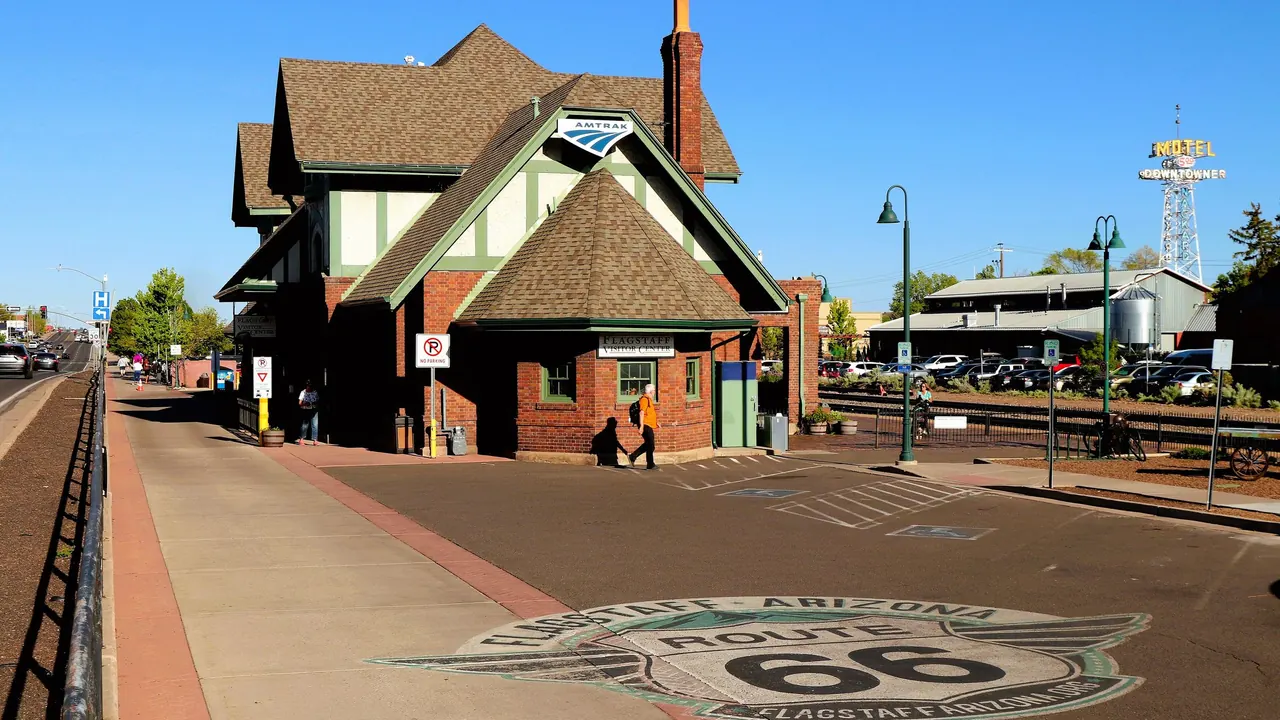
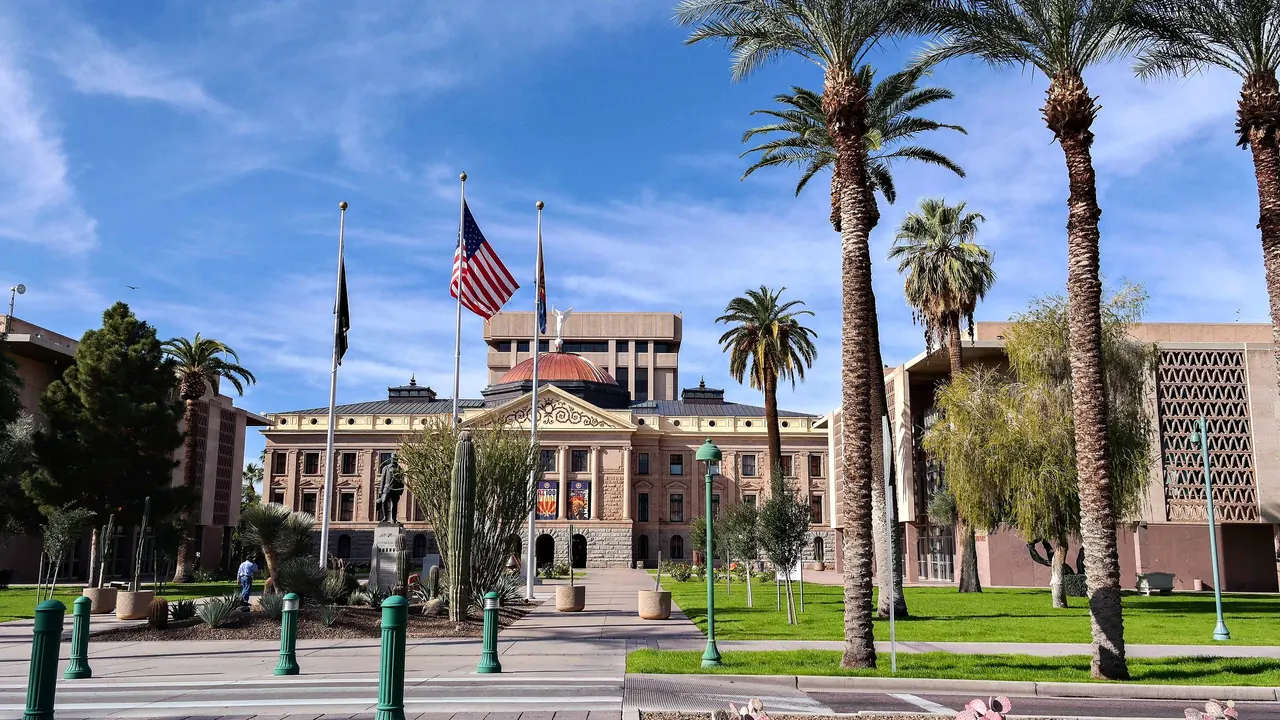
Photos: Flagstaff by Thank You (25 Millions) views, CC BY 2.0, cropped; Phoenix by Visitor7, CC BY-SA 3.0, cropped.
Flagstaff or Phoenix?
Our verdict in twelve categories, each scored against the same fixed benchmark cities, and the climate month by month, so you can choose for your trip.
Choose Flagstaff for
- nature and the outdoors
- getting around
- day trips
Flagstaff suits travellers who come for the land itself. It is a small pine-forest town at the foot of the San Francisco Peaks, with the Grand Canyon, Sedona's red rock and the volcanic country of Sunset Crater close by, and some of the darkest night skies in the country. Choose it for a summer or autumn trip spent on trails and at viewpoints, when you are happy to finish the day with a brewery patio rather than a big night out.
Choose Phoenix for
- wellness
- shopping
- food and drink
Phoenix is the better pick if you want a city with resorts around it. It has a far deeper spa and pool scene, better Sonoran Mexican food, real malls and nightlife districts such as Old Town Scottsdale. Desert hiking starts right at the edge of the suburbs. It belongs to the cooler half of the year, and it works best for travellers who don't mind driving everywhere.
Scoreboard
Twelve categories on one fixed scale from 0 to 100. The shaded stretch is the gap between the two.
Your match
Pick a travel style or drag the sliders, and both match scores follow your weighting.
Wins on nature and the outdoors and getting around with your weighting.
Wins on wellness and shopping with your weighting.
What matters to you?
Category by category
What the scores mean for a trip.
Beaches & swimming
Neither city offers a beach vacation, since both are several hours inland. The kind of swimming does differ, though. Around Flagstaff it means the cold, slippery creek pools of Oak Creek Canyon and Slide Rock on a summer day. In Phoenix it means resort pools with lazy rivers, the small beaches at Saguaro and Canyon lakes, and tubing down the Salt River.
Food & drink
Phoenix eats noticeably better. It has a regional cuisine of its own in Sonoran borderland cooking: machaca, paper-thin flour tortillas and bacon-wrapped hot dogs from evening carts. Add a strong reputation for wood-fired pizza and polished resort dining in Scottsdale, and the range is wider.
Flagstaff's strength is its beer, from the breweries clustered downtown and in Southside. Its food is mostly diner, burger and New Mexican cooking, with the occasional plate of Navajo frybread. It feeds hungry hikers well enough but rarely gives anyone a meal to remember.
Culture & sights
Phoenix has the stronger museums. The Heard Museum's Native American collection, the Musical Instrument Museum and Frank Lloyd Wright's Taliesin West are each worth half a day, but they sit far apart, and the city has no old centre to wander.
Flagstaff's list is shorter but has more sense of place. You get the Lowell Observatory, where Pluto was discovered, the Museum of Northern Arizona's Hopi and Navajo collections, and a brick Route 66 railroad downtown you can cover on foot in a day or two.
Nightlife
A night out in Phoenix offers real choice. There are clubs and rooftop bars in Old Town Scottsdale, cheap student drinking on Tempe's Mill Avenue and cocktail lounges around Roosevelt Row. The districts are far apart, though, so you pick one and take a ride-hail home.
Flagstaff is a gentler evening of taprooms, a few cocktail bars and old Route 66 saloons, all a short walk apart. There are hardly any clubs and most places close early, which suits people with an early start for the Grand Canyon.
Nature & outdoors
Both are outdoor destinations, but Flagstaff has more to offer. The San Francisco Peaks rise to 3,850m above one of the largest ponderosa forests in the world, Sunset Crater's cinder cones lie just north of town and the Grand Canyon's South Rim is about an hour and a half away. The high altitude keeps all of it walkable in summer.
Phoenix has a different kind of landscape: saguaro forest in the McDowell Sonoran Preserve, steep scrambles up Camelback Mountain and the huge South Mountain park, all starting from the suburbs. The desert heat closes most of it after mid-morning from late spring to early autumn.
Day trips
The two share much of the same day-trip country. Jerome, Montezuma Castle and Sedona are reachable from both, Sedona more easily from Flagstaff. The difference is in what lies beyond. Flagstaff adds the Grand Canyon by historic railway from Williams, the Sinagua ruins at Walnut Canyon and Wupatki, and the Hopi mesas.
Phoenix looks south to Tucson's adobe barrios and Mission San Xavier del Bac, and has Prescott's saloon street and cowboy Wickenburg closer in. From either base you need a car.
Good for families
Both work for families, in different seasons. Flagstaff offers telescope evenings at Lowell, dinosaur displays, summer rope courses and winter sledding on the mountain, against altitude that tires small children and nights that are cold even in summer.
Phoenix has the bigger set of attractions: a zoo, an aquarium, a science centre, water parks and resort pools with slides. They are spread across a huge metro area, though, and from June to September the heat keeps young children indoors after early morning.
Getting around
Flagstaff is a little easier without a car. Its downtown and Southside are compact enough to walk, an urban trail network makes cycling practical and long-distance trains stop at the downtown station. Once you head for the mountain, the monuments or the canyon, though, you are driving.
Phoenix is harder still. It is a flat grid of arterial roads covering dozens of kilometres, with one light rail line running from the airport through downtown to Tempe. Summer heat makes even short walks unpleasant, so a rental car is close to essential.
Shopping & style
Phoenix is the better place to shop. Scottsdale's large luxury mall and the open-air centre near the Biltmore carry the international brands, and Old Town adds Western wear and galleries.
Both are good places to buy Navajo silver, Hopi carvings and rugs. Flagstaff's trading posts and museum shop put you closer to the source, but beyond that the town has outdoor gear, a few bookshops and Route 66 souvenirs.
Affordability
Costs are much the same in both, and in both a hire car and tipping add to the bill. What differs is when prices peak. Flagstaff's rooms rise on summer weekends, when it fills as the bed base for the Grand Canyon. Phoenix is dearest from January to April and drops sharply in summer, when the heat empties its resorts.
Live music & performing arts
Flagstaff's stage is smaller and more modest. The symphony and the university music school perform on campus, the restored Orpheum downtown brings in touring folk and indie acts, and community theatre carries on through the year. Summer adds outdoor concerts in the pines. It makes a good evening out, but not a reason to go.
Phoenix keeps a proper big-city calendar. Arizona Opera and Ballet Arizona run full seasons, the symphony plays at Symphony Hall, touring Broadway shows fill Wright's round ASU Gammage in Tempe and the Musical Instrument Museum has an intimate concert hall. Most of it runs from autumn to spring.
Wellness & relaxation
This is one of the widest gaps between the two. Phoenix and Scottsdale are a classic American resort-spa destination, with big desert properties beneath Camelback Mountain, several pools apiece and treatments built on clay and agave, all at their best in the dry winter warmth.
Flagstaff offers quiet rather than pampering: cool evenings, pine air and bright stars. Anyone wanting a spa usually drives down to Sedona.
When should you go?
Pick your month. The climate figures are measured averages, not a forecast.
Flagstaff in July
Phoenix in July
Daytime high, °C
Rainfall in the month, mm
Where the figures come from
Flagstaff has no rain gauge within 25 km of the centre, so its rainfall comes from a gridded climate dataset read at the city rather than from a gauge further away.
Temperature and rainfall are climate normals, averaged over the years shown. Flagstaff: 1991-2020 normals, Flagstaff / Fort Tuthill (7.4 km from centre). Phoenix: 1991-2020 normals, Phoenix Sky Harbor Airport (2.8 km from centre).
The two cities run on opposite calendars. Flagstaff is cold from November to March, with January highs around 5°C and real snow, so winter suits skiing and snow play more than strolling the streets. It warms through spring and is at its best from June to September, when days reach about 27°C in the pines. From July the afternoon monsoon storms arrive, and August is the wettest month at around 64mm, so plan hikes for the mornings.
Phoenix is the mirror image. From November to March the days are mild, around 20°C in January, with only light winter rain, which makes it ideal for hiking and sitting out by the pool. By May it is hot, and from June to August highs of about 41°C make anything beyond the pool hard going. The simple split is a winter trip to Phoenix and a summer one to Flagstaff. April and October are the in-between months, warm in Phoenix and cool and crisp in Flagstaff.
Which traveller are you?
For an outdoors trip, Flagstaff is the clear choice. Alpine trails on Humphreys Peak, a huge ponderosa forest, lava flows and the Grand Canyon rim within easy reach give it more varied country than Phoenix's desert preserves. It also stays cool enough for hiking all summer.
On a relaxing and wellness trip, Phoenix wins comfortably. Scottsdale's big desert resorts, with full spas, several pools and treatments using sage and agave, are a long way beyond Flagstaff's handful of massage studios. Winter sun makes lying by the pool the whole point.
For a food and nightlife trip, Phoenix has much more to offer. Sonoran carne asada, wood-fired pizza, Old Town Scottsdale's clubs and Tempe's student bars outclass Flagstaff, where the evening mostly comes down to craft beer taprooms that quieten early.
Before you go
| Measure | Flagstaff | Phoenix |
|---|---|---|
| Currency | US Dollar (USD) | US Dollar (USD) |
| Sockets | AB120 V, 60 Hz | AB120 V, 60 Hz |
| Driving side | Right | Right |
| Time zone | UTC-7 | UTC-7 |
| Emergency number | 911 | 911 |
| Elevation | 2,106 m | 331 m |
| Main airport | Flagstaff Pulliam Airport (FLG)7 km from centre2 non-stop destinations | Phoenix Sky Harbor International Airport (PHX)6 km from centre149 non-stop destinations |
| Public holidays this year | 12 days | 12 days |
By the numbers
| Measure | Flagstaff | Phoenix |
|---|---|---|
| City population | 76,831 | 1,608,139 |
| People per km² | 464 | 1,199 |
| Museums within 10 km | 1 | 10 |
| UNESCO World Heritage sites within 50 km | 0 | 1 |
Where else could you go?
Every comparison below shares a destination with this one, so you can follow Flagstaff or Phoenix somewhere new.