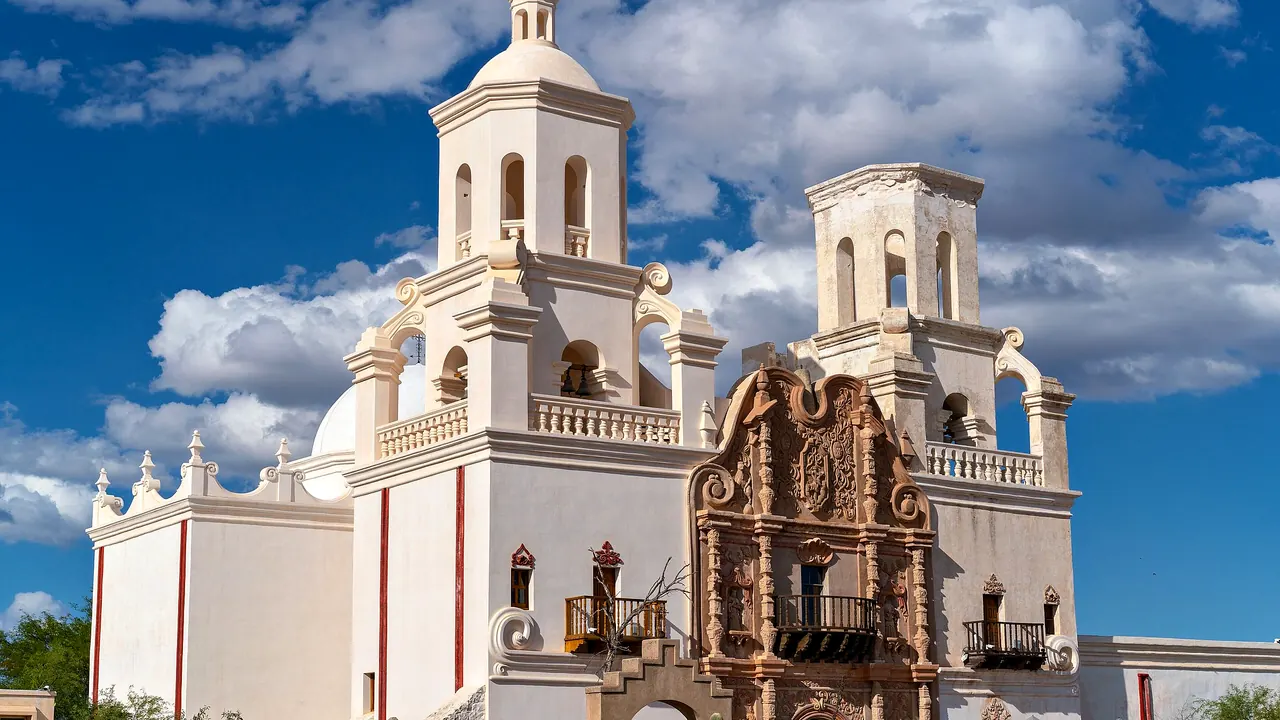
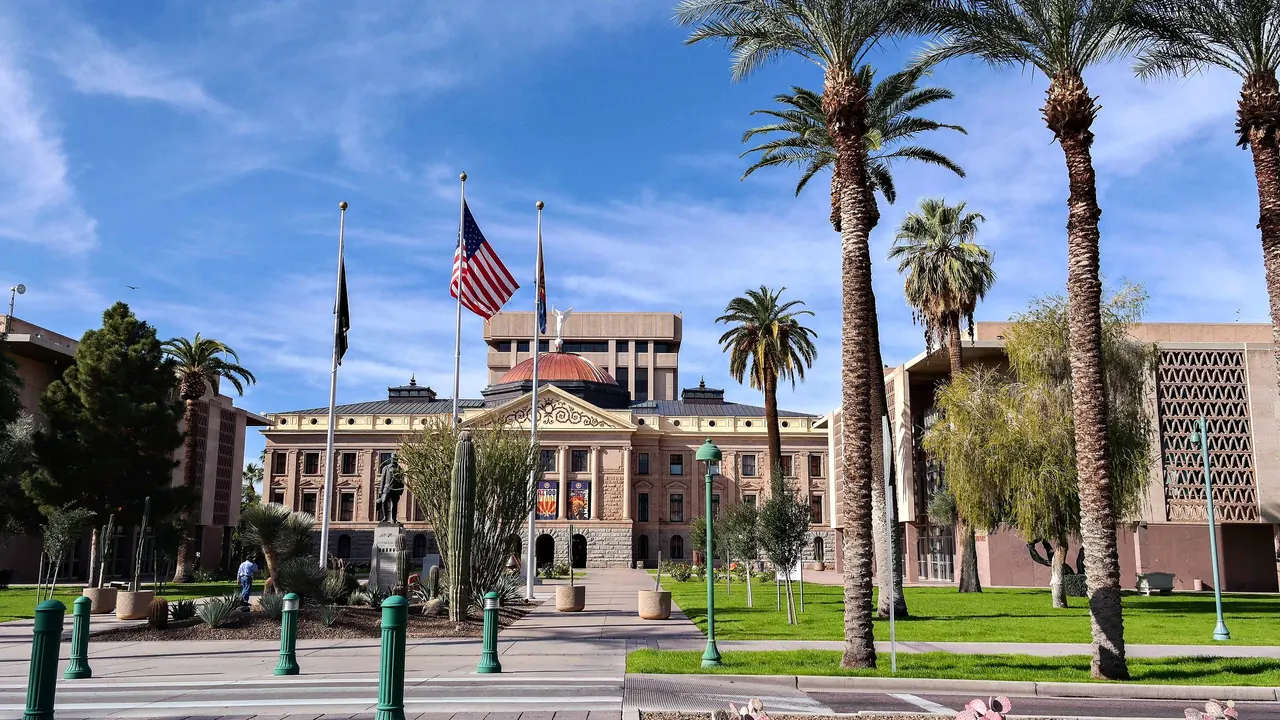
Photos: Tucson by Steve and Kimberly Rader, CC BY-SA 4.0, cropped; Phoenix by Visitor7, CC BY-SA 3.0, cropped.
Tucson or Phoenix?
Our verdict in twelve categories, each scored against the same fixed benchmark cities, and the climate month by month, so you can choose for your trip.
Choose Tucson for
- nature and the outdoors
- day trips
- prices
Tucson rewards those who came for the desert itself. Saguaro National Park sits on both edges of town, Mount Lemmon climbs from cactus to pine forest in an hour, and the frontier towns of Bisbee and Tombstone make better outings than anything around Phoenix. Rooms cost less, the old core around Fourth Avenue and Congress Street is small enough to walk, and the city has a slower, more local feel that suits a quiet active winter break.
Choose Phoenix for
- shopping
- nightlife
- beaches
Phoenix is the better choice for travellers who want a big-city resort trip in the desert: weekends of rooftop bars and clubs in Old Town Scottsdale, luxury malls and galleries selling Navajo and Zuni silver, and the large golf resorts along the foot of Camelback Mountain. It suits people who are happy to drive between separate pockets of the city and want more choice once they get there.
Scoreboard
Twelve categories on one fixed scale from 0 to 100. The shaded stretch is the gap between the two.
Your match
Pick a travel style or drag the sliders, and both match scores follow your weighting.
Too close to call, 2 points apart
Wins on nature and the outdoors and day trips with your weighting.
Wins on shopping and nightlife with your weighting.
What matters to you?
Category by category
What the scores mean for a trip.
Beaches & swimming
Neither city is a beach destination, and swimming in both comes down mostly to a resort pool. Where Phoenix has something extra is the chain of Salt River reservoirs to the east, Saguaro Lake and Canyon Lake, with small beaches below bare cliffs, plus the local summer custom of tubing down the river.
Tucson has nothing quite like that. The Gulf of California is about four hours away in Mexico, and the creek pools in Sabino Canyon only appear after rain.
Food & drink
The two eat from the same Sonoran tradition of mesquite-grilled carne asada, near-translucent flour tortillas and bacon-wrapped hot dogs from carts, and neither is a fine-dining city. Phoenix spreads wider, with a strong name for wood-fired pizza and bread, Scottsdale steakhouses and resort dining, and independent places around Roosevelt Row, though most of it means driving.
Tucson goes deeper rather than wider. Decades-old family kitchens along South 12th Avenue and in the old barrios, plus heritage desert ingredients such as tepary beans and cholla buds, make it the place to eat the border food at its most traditional.
Culture & sights
Neither has a historic centre that would fill a long stay, and they are about even, but the strengths are different. Phoenix is a city of museums: the Heard for Native American art, the Musical Instrument Museum, and Frank Lloyd Wright's Taliesin West in Scottsdale, each of them a separate drive.
Tucson's best sights are older and more rooted in place. Mission San Xavier del Bac, with its gilded interior, and the adobe rows of Barrio Viejo carry a Spanish and Mexican past that Phoenix lacks, and the Pima Air & Space Museum gives it an unusual aviation draw.
Nightlife
Phoenix offers the bigger night out. Old Town Scottsdale has proper clubs and dance-floor bars packed with weekend groups, Tempe's Mill Avenue adds a student strip, and downtown brings cocktail lounges, though each district is a separate ride-hail away.
In Tucson everything happens on two streets you can walk between: dive bars and patios on Fourth Avenue, cocktail bars and rooftops on Congress Street. It is easier going and more local, but there are few clubs, and the city falls quiet early, especially in summer.
Nature & outdoors
Phoenix's outdoors is a set of desert mountains with the suburbs built around them. There are steep scrambles up Camelback Mountain and Piestewa Peak, the vast South Mountain park, and saguaro trails in the McDowell Sonoran Preserve, with the Superstition Mountains and the wild horses of the lower Salt River further out. It is good country for mountain biking and horse riding, but from late spring the heat ends hiking by mid-morning, and real relief is a drive of about two hours to the high country around Prescott or the Mogollon Rim.
Tucson has the bigger landscape. It sits in a basin ringed by four ranges, with protected desert reaching right to the edge of the city, so the setting feels like the main event rather than peaks scattered among the houses. Its range of altitude is also far wider, from low desert washes up to a small ski area, which changes how summer works: when the lowlands pass 40°C, cooler ground is within an hour, so even a July visit can include a full day outside.
Day trips
Tucson has the better list of outings. Bisbee's Victorian mining streets, Tombstone, the artists' village of Tubac with the Tumacácori mission ruins, and the Sonoita wineries all lie within about an hour and a half, and Biosphere 2 is closer still.
From Phoenix, the good trips run north to hillside Jerome, Prescott's saloon street, Montezuma Castle and Sedona, but the distances are longer and the choice thinner. Each city lists the other as a day trip, roughly two hours apart.
Good for families
Families will do about equally well in either between October and April, and both mean a lot of driving. Phoenix has more of the standard set: zoo, aquarium, science centre, children's museum, several water parks, and relaxed spring training baseball in March.
Tucson's draws are more particular to the desert. The Arizona-Sonora Desert Museum shows mountain lions and javelinas in their own landscape, the giant aircraft and the old western film set please most children, and Mount Lemmon gives you a cool escape when summer heat rules out the lowlands.
Getting around
You will want a hire car in either city, but Tucson is the more manageable of the two. Its streetcar ties downtown, Fourth Avenue and the university into one small walkable core, and traffic is mild.
Phoenix sprawls across a far larger grid, with Scottsdale, Tempe and the trailheads dozens of kilometres apart. Its light rail between the airport, downtown and Tempe helps within that corridor, but very little else works without a car.
Shopping & style
Phoenix is the better place to shop, mainly because of Scottsdale. It has a large luxury mall, an open-air centre near the Biltmore, department stores, and Old Town galleries and Western wear shops, along with a strong trade in Navajo, Zuni and Hopi work.
Tucson sells similar regional crafts, including Tohono O'odham baskets and Mexican folk art, and Fourth Avenue has vintage shops, but there are no luxury streets. Its one unmatched event is the winter gem and mineral show, which brings collectors from around the world.
Affordability
Tucson is the cheaper of the two. Mid-range hotels cost less than in the larger city, and cheap Sonoran food is everywhere on the south side.
Phoenix sits squarely at middling American prices, and its winter peak of golf, spring training and Scottsdale resorts pushes rooms up sharply. Both fall in summer, both need a rental car, and Tucson's own peak comes during the gem show.
Live music & performing arts
Phoenix has the broader set of institutions: a symphony at Symphony Hall, Ballet Arizona, touring Broadway shows at Frank Lloyd Wright's round ASU Gammage in Tempe, and an intimate concert hall inside the Musical Instrument Museum.
Tucson's stage is smaller but has more of its own character. There is the restored Fox Theatre, desert folk and rock in the small rooms along Congress Street, and a mariachi tradition celebrated at its annual conference. Arizona Opera divides its productions between the two cities, and in both the seasons run from autumn to spring.
Wellness & relaxation
Both are classic places for a resort rest, both lack any public baths or hot springs, and they come out close. Phoenix leans towards the grand golf resort, with big spas, several pools and desert-ingredient treatments along Camelback Mountain and in north Scottsdale.
Tucson is one of the places where the American destination spa began, so it suits a structured stay better: fitness, guided desert walks and meditation programmes in the Catalina foothills, with quieter evenings around them.
When should you go?
Pick your month. The climate figures are measured averages, not a forecast.
Tucson in July
Phoenix in July
Daytime high, °C
Rainfall in the month, mm
Temperature and rainfall are climate normals, averaged over the years shown. Tucson: 1991-2020 (sunshine 1981-2010) normals, Tucson International Airport (10.1 km from centre). Phoenix: 1991-2020 (sunshine 1981-2010) normals, Phoenix Sky Harbor Airport (2.8 km from centre).
Phoenix and Tucson share the same desert calendar and are at their best from October to April, when the days are warm and dry enough for hiking and walking the streets from morning to evening. December and January are mild by day in both, and March and April are the easiest months for long trails. Neither has a beach, so the heat matters mainly because it limits how much of the day you can spend outside.
From May to September both cities mean early starts and afternoons indoors. Phoenix is the hotter, reaching 41°C in July and August. Those are also its wettest months, though its summer storms bring only about 24mm. Tucson peaks a few degrees lower, at around 38°C, but its monsoon is much heavier, with roughly 56mm in July, most of it falling in sudden afternoon downpours.
Which traveller are you?
For an outdoors trip, Tucson is the stronger base. Saguaro National Park and Sabino Canyon begin at the edge of town, Mount Lemmon offers cooler trails and rock climbing at altitude, and the sky island ranges are known for serious road cycling and birdwatching.
On a shopping trip, Phoenix gives you far more to work with. Scottsdale has a large luxury mall, department stores and Old Town galleries, and Native American silver and katsina carvings from reputable dealers. Tucson's offer is smaller and mostly regional, apart from its winter gem show.
On a tight budget, Tucson stretches money further. Mid-range hotels cost less than in Phoenix, the south side's taquerías and hot dog stands make eating cheaply easy, and much of the best hiking is free. You will still need a car in either city.
Before you go
| Measure | Tucson | Phoenix |
|---|---|---|
| Currency | US Dollar (USD) | US Dollar (USD) |
| Sockets | AB120 V, 60 Hz | AB120 V, 60 Hz |
| Driving side | Right | Right |
| Time zone | UTC-7 | UTC-7 |
| Emergency number | 911 | 911 |
| Elevation | 728 m | 331 m |
| Main airport | Tucson International Airport (TUS)12 km from centre18 non-stop destinations | Phoenix Sky Harbor International Airport (PHX)6 km from centre149 non-stop destinations |
| Public holidays this year | 12 days | 12 days |
By the numbers
| Measure | Tucson | Phoenix |
|---|---|---|
| City population | 542,629 | 1,608,139 |
| People per km² | 923 | 1,199 |
| Museums within 10 km | 10 | 10 |
| UNESCO World Heritage sites within 50 km | 0 | 1 |
Where else could you go?
Every comparison below shares a destination with this one, so you can follow Tucson or Phoenix somewhere new.
- Scottsdalevs Phoenix
- Sedonavs Phoenix
- Scottsdalevs Tucson
- Flagstaffvs Phoenix
- Sedonavs Tucson
- Flagstaffvs Tucson