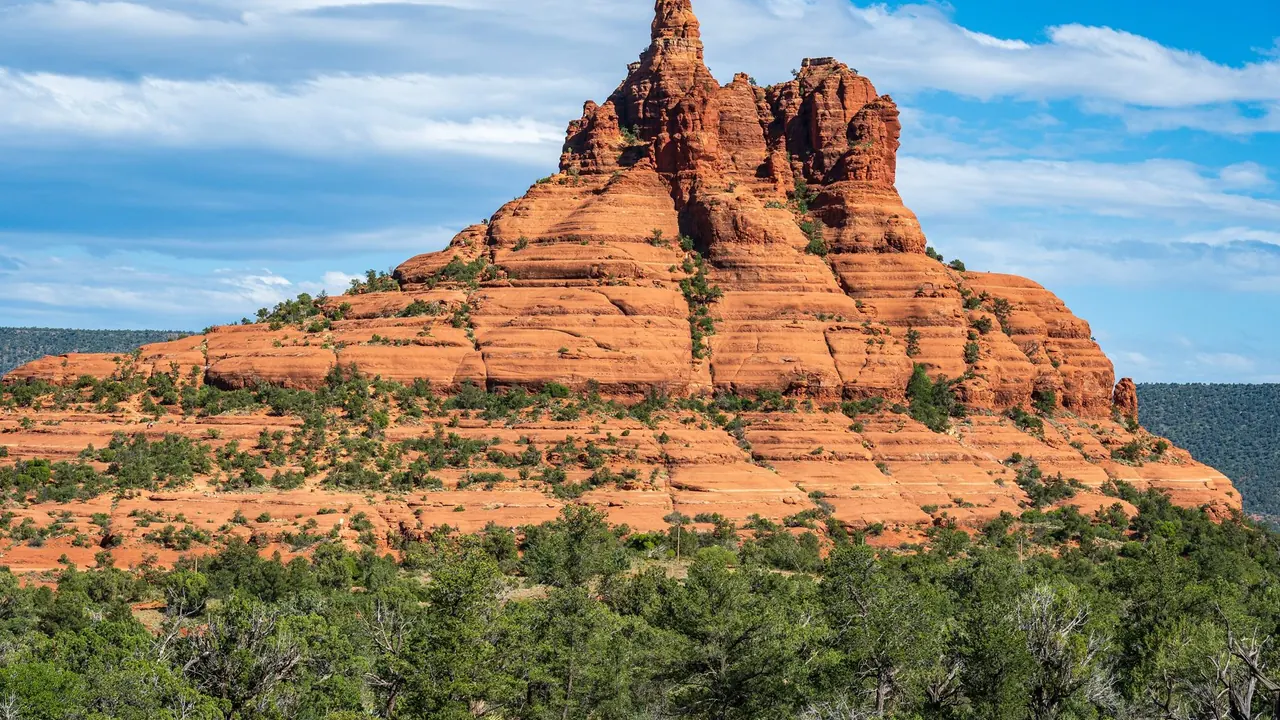
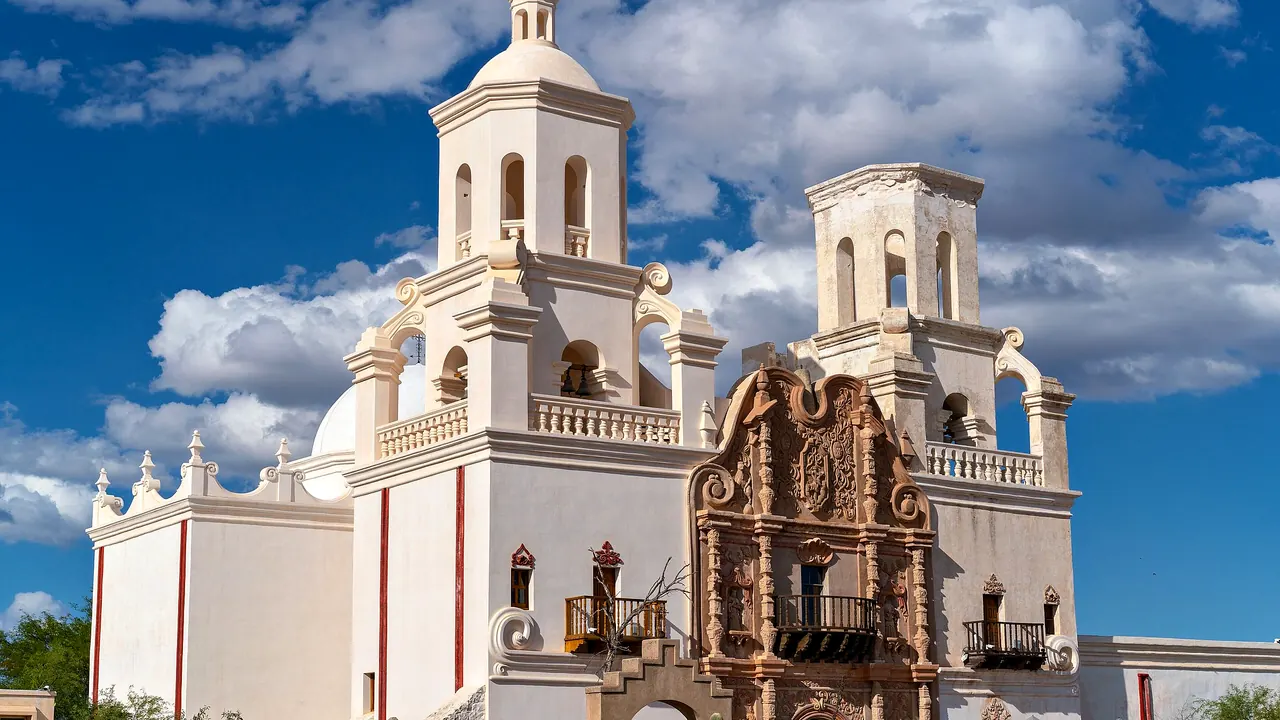
Photos: Sedona by dconvertini, CC BY-SA 2.0, cropped; Tucson by Steve and Kimberly Rader, CC BY-SA 4.0, cropped.
Sedona or Tucson?
Our verdict in twelve categories, each scored against the same fixed benchmark cities, and the climate month by month, so you can choose for your trip.
Choose Sedona for
- wellness
- nature and the outdoors
- beaches
Sedona suits travellers who come for the landscape and want to slow down. Red rock buttes, slickrock trails and Oak Creek Canyon begin at the edge of a small town, and its spas, yoga studios and sunrise walks to the vortexes make it a natural retreat. Evenings are quiet, the choice of restaurants is short and prices are high, so it rewards a few days of hiking, treatments and stargazing rather than a city stay.
Choose Tucson for
- prices
- nightlife
- live music and the arts
For a more rounded trip with more going on at the table and after dark, Tucson is the better pick. It is a real city, with Sonoran Mexican cooking, a mission church of national rank, a symphony and theatre season, and bars on Fourth Avenue and Congress Street. Saguaro forests and Mount Lemmon still give it serious desert outdoors. It is also easier on the budget and on families with children, especially from autumn to spring.
Scoreboard
Twelve categories on one fixed scale from 0 to 100. The shaded stretch is the gap between the two.
Your match
Pick a travel style or drag the sliders, and both match scores follow your weighting.
Wins on wellness and nature and the outdoors with your weighting.
Wins on prices and nightlife with your weighting.
What matters to you?
Category by category
What the scores mean for a trip.
Beaches & swimming
Neither city has a coast, but Sedona has the better water. Oak Creek gives it real natural swimming: the sandstone chute at Slide Rock and the deeper holes at Grasshopper Point and Red Rock Crossing below the cliffs, cold even in high summer.
In Tucson, swimming means the resort pool. Sabino Canyon's pools appear only after rain, and the sea at Puerto Peñasco is about four hours away.
Food & drink
In Sedona you eat for the view. You get resort terraces facing the red rock at sunset, Southwestern menus and plenty for vegetarians, but no street food and only a handful of kitchens worth seeking out. Breakfast before the trail and wine tasting in the Verde Valley are what it does best.
Tucson has a real food culture of its own. Its Sonoran Mexican cooking means carne asada grilled over mesquite, near-translucent flour tortillas and bacon-wrapped hot dogs, with deep roots in the family kitchens along South 12th Avenue. Desert ingredients such as tepary beans and cholla buds give it a local stamp.
Culture & sights
Sedona's sights fit into a day. There is the Chapel of the Holy Cross set into its butte, a heritage museum on the orchard and ranching settlers, and galleries of Western and Native American art, plus the Sinagua cliff dwellings at Palatki and Honanki out in the backcountry.
Tucson has more depth. Mission San Xavier del Bac, with its painted and gilded interior, is a landmark of Spanish colonial building. The adobe streets of Barrio Viejo, the Native American collections at the Arizona State Museum and the hundreds of aircraft at Pima Air & Space fill two or three days.
Nightlife
Sedona goes to bed early, because its visitors are up for the trail at dawn. An evening there means a brewpub or resort lounge in Uptown, then a long look at a sky dark enough for proper stargazing.
Tucson has an actual night out, if a modest one. There are dive bars and patios on Fourth Avenue full of university students, with cocktail bars, rooftops and a few dance floors on Congress Street a short walk away. Weekends during term are the liveliest, and summer is much calmer.
Nature & outdoors
Both are superb for the outdoors, but Sedona's red rock country is the more striking. Cathedral Rock, Bell Rock, Devil's Bridge and Boynton Canyon all start minutes from town, and the slickrock singletrack draws mountain bikers. Oak Creek Canyon climbs into pine forest, and the South Rim of the Grand Canyon is about two hours away.
Tucson's desert is a different kind. Saguaro forests in the national park stand on both sides of the city, and the drive up Mount Lemmon takes you from cactus to pine in about an hour, with climbing and serious road cycling along the way. Birdwatchers have the edge here, thanks to the sky island ranges.
Day trips
Both have a good ring of small towns and old sites within driving distance, and neither has a single outing of the first rank. Sedona's lean towards ancient history: Montezuma Castle and Tuzigoot are within half an hour, Wupatki and Walnut Canyon lie beyond Flagstaff, and there are also hillside Jerome and the Verde Canyon Railroad.
Tucson's run into frontier and mining country. Tombstone trades on the Wild West, Bisbee is a Victorian copper town and Tubac is an artists' village, while the Tumacácori mission ruins, the Sonoita wineries and Biosphere 2 add variety.
Good for families
Sedona works for active families. Children love the chute at Slide Rock, the lower trails at Bell Rock are short enough for young legs, and jeep tours over the slickrock go down well. Beyond that, the town is aimed at couples and spa guests.
Tucson gives children much more to do between outings. The Arizona-Sonora Desert Museum shows mountain lions and javelinas in desert settings, and Reid Park Zoo, the Children's Museum, the Flandrau planetarium and the giant aircraft at Pima fill the other days. Summer heat rules out much of this, though.
Getting around
In both places a car is all but essential. Sedona is a small town strung along two highways that meet at the Y. Only Uptown is walkable, a shuttle serves some of the busy trailheads, and the main problems are weekend traffic and trailhead car parks that fill early.
Tucson is a big, spread-out city, but its roads are easy and parking is simple. The Sun Link streetcar ties together downtown, Fourth Avenue and the university, a walkable core that Sedona lacks, though the parks and the mission still need a car.
Shopping & style
Both sell the Southwest rather than fashion, with Native American jewellery and pottery at the heart of it. Sedona adds the courtyards of Tlaquepaque, galleries of Western painting and its well-known crystal and metaphysical shops.
Tucson's offer is a little wider. You will find Tohono O'odham baskets and Mexican folk art around the old town, vintage stores on Fourth Avenue and everyday malls in the foothills. Each winter it also hosts the gem and mineral show, which draws collectors from around the world.
Affordability
Sedona is costly. Rooms are in resorts and boutique lodges and restaurants charge resort-town prices, with jeep tours, balloon flights and spa treatments on top. Budget travellers often sleep in Cottonwood or Flagstaff and drive in.
Tucson is much kinder to your wallet. Mid-range hotels are cheaper, taquerías and hot dog stands make it easy to eat for little, and rates drop sharply in the summer heat. The exception is the winter high season, above all the weeks of the gem show.
Live music & performing arts
Sedona has a few occasions rather than a season. There are chamber concerts, local theatre, acoustic sets and Native American flute in resort lounges, and the Sedona International Film Festival in late winter.
Tucson has a proper season from autumn to spring, if a small one. The Tucson Symphony, Arizona Opera and Arizona Theatre Company all perform here, touring Broadway shows play Centennial Hall, and the restored Fox Theatre hosts concerts. Mariachi runs through the city's music.
Wellness & relaxation
Sedona is the retreat. Its spas look onto the red rock canyons, and yoga, meditation, breathwork and alternative therapies are found all over town, along with sunrise walks to the vortexes that many visitors come for.
Tucson's tradition is the destination spa resort in the Catalina foothills and out towards Oracle, built around fitness programmes and desert walks. It suits a sunny winter break, but you stay inside the resort rather than finding wellness across the whole town. Neither city has thermal baths.
When should you go?
Pick your month. The climate figures are measured averages, not a forecast.
Sedona in July
Tucson in July
Daytime high, °C
Rainfall in the month, mm
Where the figures come from
Sedona's station stands 153 m above the city centre, so the centre is likely a little warmer than the figures say.
Sedona has no rain gauge within 25 km of the centre, so its rainfall comes from a gridded climate dataset read at the city rather than from a gauge further away.
Temperature and rainfall are climate normals, averaged over the years shown. Sedona: 2009-2025 (rainfall 1991-2020) normals, Sedona / West Sedona (1.3 km from centre). Tucson: 1991-2020 normals, Tucson International Airport (10.1 km from centre).
Sedona sits higher and stays cooler. Spring and autumn are its best seasons, mild enough for hiking all day. By July the highs reach about 34°C, so trails mean dawn starts, though June to September is also when a dip in Oak Creek is welcome. Winter is crisp, around 12°C in January, with steady rain or the odd dusting of snow from December to March.
Tucson runs hotter all year. In June highs reach about 39°C, and from May to September walking the streets or the desert in the middle of the day is hard going. Its season is winter, with highs near 19°C in January and drier months than Sedona gets. Both are hit by the monsoon in July and August, when afternoon storms bring around 50mm a month.
Which traveller are you?
On a relaxing and wellness trip, Sedona is the clear choice. Spa resorts face the red rock canyons, yoga, meditation and therapies fill the town, and the slow pace, clear air and dark, silent nights do the rest. Tucson's foothill spa resorts are fine, but they keep wellness behind the resort gates.
For a food and nightlife trip, Tucson wins easily. It has Sonoran Mexican cooking in the old barrios and hot dog carts on the south side, then patios on Fourth Avenue and cocktail bars on Congress Street. In Sedona the evening is a sunset terrace followed by an early night.
On a trip on a tight budget, your money goes much further in Tucson. It has cheaper mid-range hotels, taquerías and family Mexican kitchens for everyday meals, and real bargains in the summer heat. Sedona's resorts, restaurants and tours are costly, and staying cheaply there often means sleeping in Cottonwood or Flagstaff.
Before you go
| Measure | Sedona | Tucson |
|---|---|---|
| Currency | US Dollar (USD) | US Dollar (USD) |
| Sockets | AB120 V, 60 Hz | AB120 V, 60 Hz |
| Driving side | Right | Right |
| Time zone | UTC-7 | UTC-7 |
| Emergency number | 911 | 911 |
| Elevation | 1,319 m | 728 m |
| Main airport | Phoenix Sky Harbor International Airport (PHX)160 km from centre149 non-stop destinations | Tucson International Airport (TUS)12 km from centre18 non-stop destinations |
| Public holidays this year | 12 days | 12 days |
By the numbers
| Measure | Sedona | Tucson |
|---|---|---|
| City population | 9,684 | 542,629 |
| People per km² | 195 | 923 |
| Museums within 10 km | 0 | 10 |
| UNESCO World Heritage sites within 50 km | 0 | 0 |
Where else could you go?
Every comparison below shares a destination with this one, so you can follow Sedona or Tucson somewhere new.